
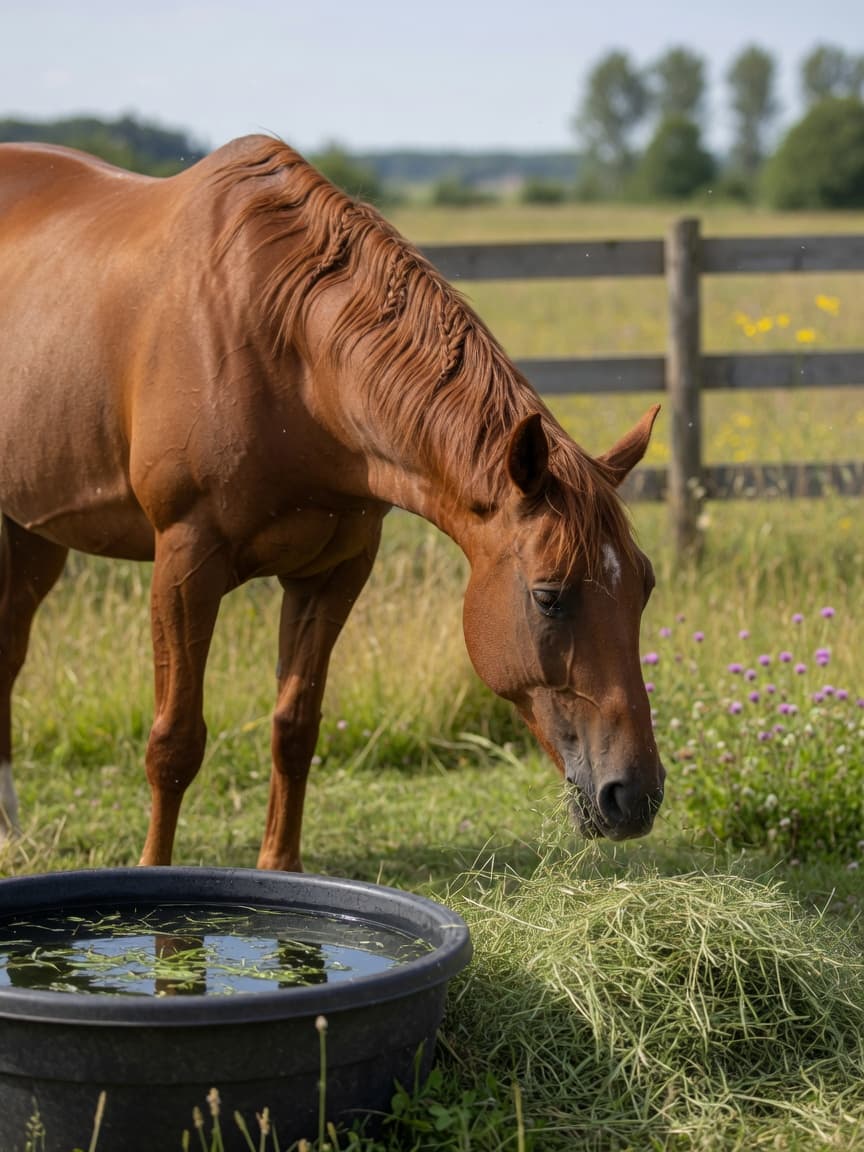
Understanding Equine Colic
Colic is not a single disease but a symptom — the term describes abdominal pain in horses, which can range from mild and transient to life-threatening and requiring emergency surgery. It is one of the most common reasons for emergency veterinary call-outs across Europe and remains a leading cause of equine mortality. Understanding the different types of colic, what causes them, and how to reduce your horse's risk is one of the most important things you can do as an owner.
Types of Colic
Spasmodic Colic
Spasmodic colic is caused by increased gut motility — essentially, spasms in the intestinal wall. It is one of the most common and usually milder forms of colic. Horses often show intermittent discomfort, pawing, and looking at their flank. It frequently resolves with antispasmodic medication or on its own, though veterinary assessment is always advised even in apparently mild cases.
Impaction Colic
Impaction colic occurs when ingested material becomes stuck at specific points in the large intestine, most commonly at the pelvic flexure. Risk factors include reduced water intake, sudden changes in feed or forage type, reduced exercise, and dental problems that lead to poor chewing. Impactions often require fluid therapy — either oral via nasogastric tube or intravenous — and veterinary monitoring to resolve safely.
Displacement Colic
Displacement colic occurs when sections of the large colon shift from their normal position within the abdomen. The nephrosplenic entrapment (left dorsal displacement) is one well-known example, where the colon becomes trapped over the nephrosplenic ligament. Displacements may resolve medically but sometimes require surgery depending on their severity and the horse's response to treatment.
Strangulation Colic
Strangulation or obstructive colic is the most serious category and represents a surgical emergency. It occurs when a portion of bowel becomes twisted (volvulus) or trapped in a way that cuts off the blood supply. Strangulation leads to rapid tissue death and can be fatal within hours without surgical intervention. Horses with strangulation colic typically show severe, unrelenting pain that does not respond to pain relief. Immediate veterinary attention is critical.
EU-Licensed Treatments for Colic
Several EU-licensed medicines are used by veterinary professionals in the initial management of colic:
- Buscopan (Hyoscine Butylbromide) — an antispasmodic injection used to relieve intestinal spasm and reduce pain in spasmodic colic. It also temporarily increases heart rate, which vets sometimes use diagnostically. Buscopan is a prescription veterinary medicine and is widely available across EU member states.
- Phenylbutazone (Bute) — an NSAID used for pain relief in musculoskeletal conditions but also used in some colic cases. Bute is subject to strict withdrawal times under the FEI prohibited substances list. It should only be administered under veterinary direction.
- Flunixin Meglumine (Finadyne) — a potent NSAID with strong analgesic and anti-endotoxaemic properties, making it particularly useful in severe colic cases where endotoxaemia is a risk. It is an EU-licensed prescription veterinary medicine and is frequently used in colic management across Europe.
It is important that owners do not administer pain relief without veterinary guidance, as masking pain can make it harder for the vet to assess the severity of the condition and the horse's response to treatment.
Emergency Signs That Require an Immediate Vet Call
Some signs indicate that colic may be severe or surgical. Call your vet immediately — do not wait and see — if your horse shows any of the following:
- Violent, uncontrollable rolling or throwing itself to the ground
- Pain that does not improve or worsens after 30 to 45 minutes
- Continuous sweating with no improvement
- Elevated heart rate (above 50 beats per minute at rest)
- Pale, grey, or blue-tinged gums
- Absence of gut sounds on all four quadrants
- Distension of the abdomen
- Rapid, shallow breathing
Time is critical in surgical colic cases. The sooner a horse reaches an equine hospital and receives appropriate treatment, the better the prognosis.
Feeding Management for Colic Prevention
Feeding practice is central to reducing colic risk. The following strategies are evidence-based and form the foundation of good colic prevention:
- Ensure continuous access to clean, fresh water. Dehydration is one of the most significant risk factors for impaction colic. Check water sources daily and ensure they do not freeze in winter.
- Base the diet on good-quality forage (hay or haylage) fed ad libitum or as close to constant as possible. Avoid long periods without forage.
- Make any changes to feed type or quantity gradually over a minimum of one to two weeks to allow the hindgut microbiome to adjust.
- Use slow feeders or small-holed hay nets to extend eating time and reduce the speed at which forage is consumed.
- Minimise high-starch concentrate feeds, particularly in horses with a history of colic.
Dental Care and Its Link to Colic
Poor dental health is an underappreciated risk factor for impaction colic. Horses with sharp enamel points, missing teeth, or other dental problems cannot chew their forage adequately, resulting in poorly masticated material entering the digestive tract. This increases the risk of impaction. Annual dental examinations by a qualified equine dental technician or veterinary surgeon should be part of every horse's preventive healthcare routine.
Parasite Control and ESCCAP Equine Guidelines
Intestinal parasite burdens — particularly large strongyles (bloodworms) and encysted small strongyles — have historically been associated with colic. The ESCCAP equine parasitology guidelines recommend a targeted selective treatment (TST) approach to worming rather than routine blanket treatments on a calendar basis. Under TST, faecal egg counts (FECs) are carried out to assess each individual horse's parasite burden, and anthelmintic treatment is only given when counts exceed a defined threshold.
This approach reduces unnecessary anthelmintic use, slows the development of resistance, and allows treatment to be focused on horses that genuinely need it. A yearly or bi-yearly strategic treatment targeting encysted small strongyles (using Moxidectin) is typically included regardless of FEC results. Work with your vet to develop a worming plan aligned with the current ESCCAP equine guidelines for your region and horse's risk profile.