
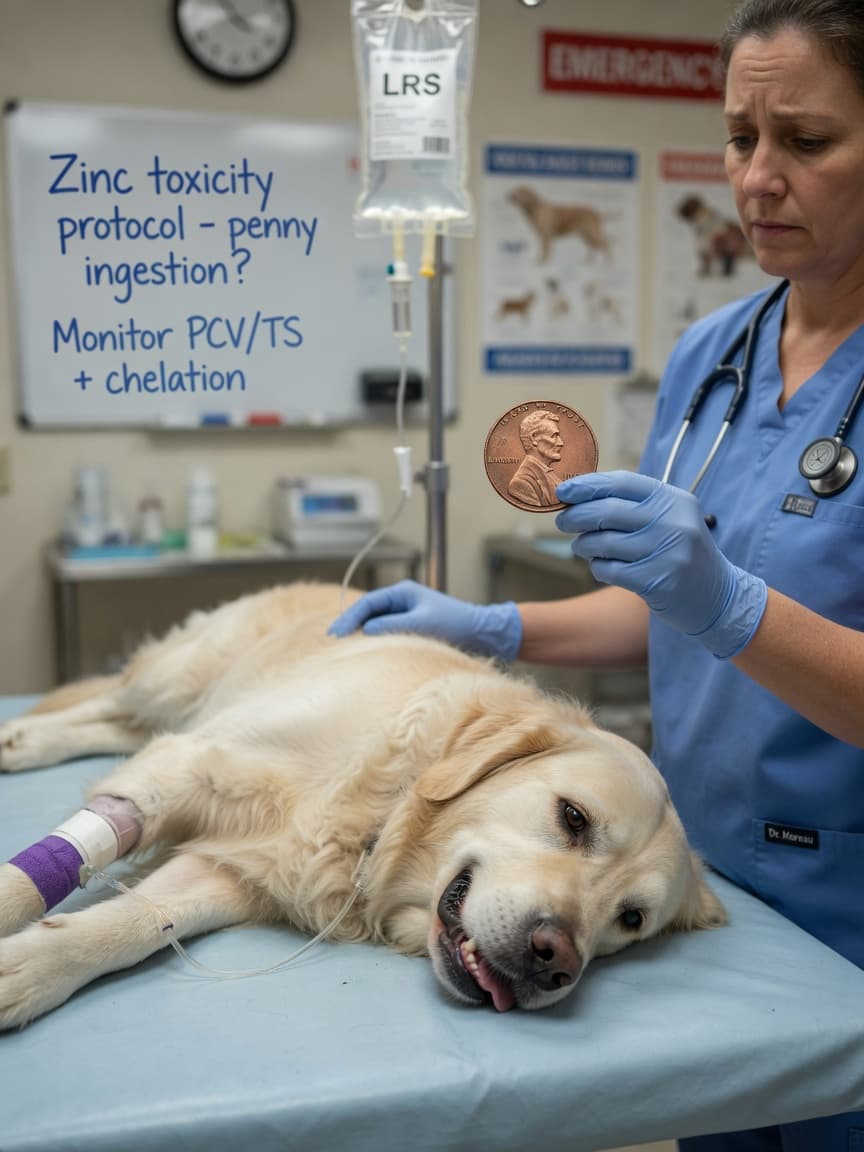
A Penny Could Cost You Your Dog
In 1982, the United States Mint changed the composition of the one-cent coin from 95% copper to 97.5% zinc with copper plating. Since then, zinc toxicity has become one of the more commonly reported heavy metal poisonings in dogs — largely because coins are small, shiny, and accessible, and dogs swallow objects that fit in their mouths with unnerving frequency. But coins are only one source. Understanding the full picture of zinc exposure is essential for any dog owner.
Sources of Zinc Exposure
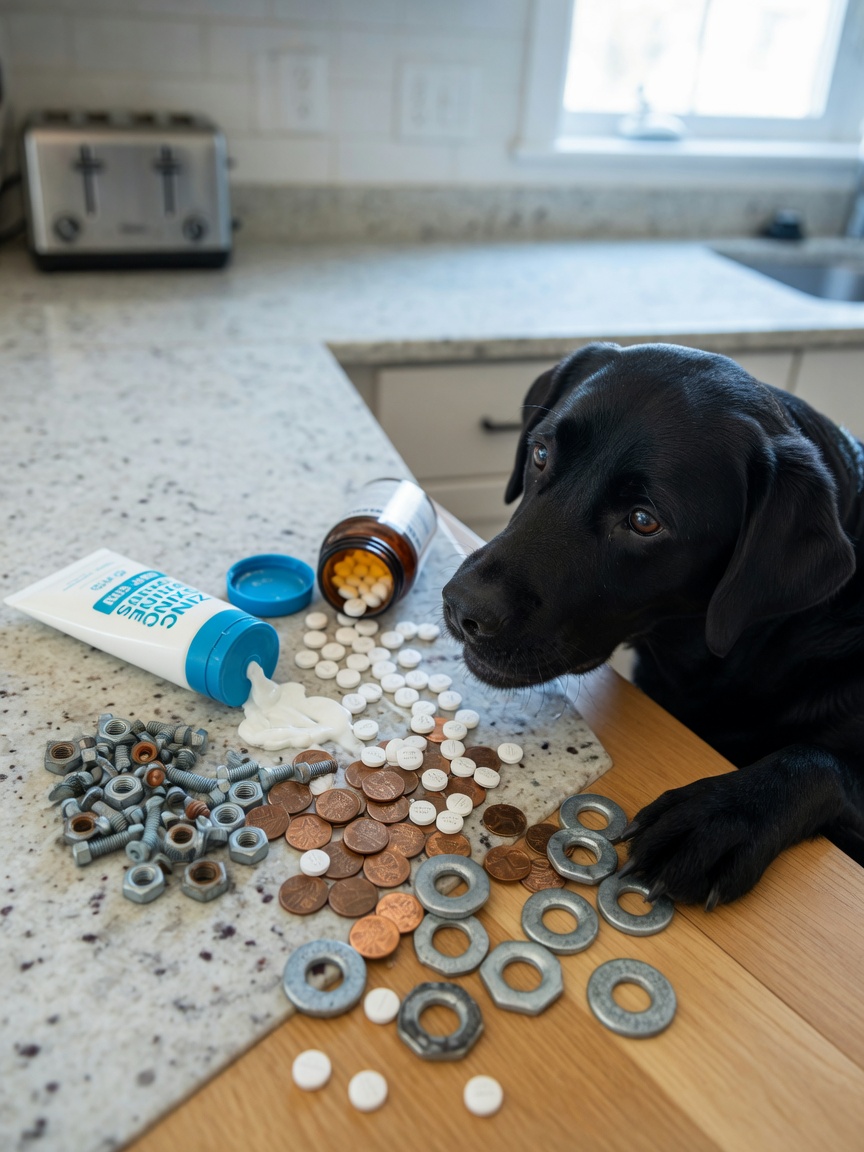
Zinc is present in a wider range of household and environmental items than most owners realise, and the concentration in some of these objects is high enough to cause systemic toxicity from a single ingestion.
Metallic Sources
Post-1982 US pennies are the most frequently implicated source in documented toxicity cases. UK two-pence coins minted before 1992 contain significant zinc. Zinc-coated nuts, bolts, and washers — particularly from hardware supplies — are another vector. Galvanised metal, including some pet caging and outdoor furniture hardware, can leach zinc when chewed. Zips, jewellery clasps, and certain toy components made from zinc alloy are also documented sources.
Topical and Dietary Sources
Zinc oxide is present in high concentrations in some sunscreens, nappy rash creams, and calamine lotion. Dogs that ingest these products — often by licking treated skin — can absorb toxic quantities depending on the concentration and amount consumed. Certain zinc-containing dietary supplements, when accessed directly from packaging, can cause toxicity if enough is consumed, though dietary zinc from commercial pet food formulated to AAFCO or FEDIAF standards does not cause toxicity under normal feeding conditions.
Zinc Supplements
Zinc supplements intended for human use contain far higher elemental zinc per tablet than veterinary products. A dog accessing a bottle of human zinc supplement represents a genuine toxicity risk, particularly for smaller breeds where the toxic threshold is reached with fewer tablets.
How Zinc Causes Harm
Once ingested, zinc dissolves in the acidic environment of the stomach and is absorbed into circulation. The primary mechanism of toxicity is haemolytic anaemia — zinc directly damages red blood cell membranes, causing them to rupture. The resulting haemoglobin release overwhelms renal filtration capacity and causes haemoglobinuria (rust or brown-tinged urine), while the rapidly falling red blood cell count produces the clinical signs of anaemia. Concurrent effects include damage to the liver, pancreas, and kidneys, with severity proportional to the amount absorbed and the duration of exposure.
Recognising the Symptoms

Zinc toxicity symptoms typically appear within 24 to 48 hours of ingestion, though onset varies with the source and amount consumed. Some clinical signs, particularly those associated with gastrointestinal irritation, may appear within hours.
- Vomiting, often repeated and sometimes containing blood
- Lethargy and profound weakness
- Loss of appetite
- Pale, yellow-tinged (icteric), or muddy grey gums — all indicating red blood cell destruction
- Rust-coloured, orange, or brown urine from haemoglobin excretion
- Rapid or laboured breathing as anaemia reduces oxygen-carrying capacity
- Collapse in severe or advanced cases
The combination of vomiting and discoloured urine following known or suspected metallic ingestion should be treated as a veterinary emergency. Do not wait for symptoms to progress before seeking help.
Emergency Treatment
Zinc toxicity is time-critical. The primary treatment goals are source removal, supportive care for anaemia, and protection of organ function.
Source Removal
If an object containing zinc remains in the stomach, it must be removed before ongoing dissolution continues to elevate blood zinc levels. Endoscopic retrieval is preferred when the object is accessible and the dog is stable enough for sedation. Surgical removal may be required for objects that have passed into the small intestine. Radiographs will typically confirm the presence and location of metallic objects, and baseline blood work including a packed cell volume (PCV) is performed immediately to assess the degree of haemolytic damage already present.
Managing Haemolytic Anaemia
Dogs with severe anaemia — typically defined as PCV below 15–20% — require blood transfusion to restore oxygen-carrying capacity while the body clears residual zinc. Dogs with moderate anaemia are monitored closely with serial PCV measurements. Intravenous fluid therapy supports renal perfusion and assists clearance of haemoglobin from circulation.
Chelation Therapy
In cases of significant systemic zinc absorption, chelation therapy using agents such as calcium EDTA may be used to bind circulating zinc and facilitate renal excretion. This is a decision made by the treating veterinary team based on blood zinc levels and clinical trajectory. It is not a home treatment option.
Prevention and What to Do Immediately
Prevention centres on awareness and access control. Keep coins, hardware supplies, zinc-containing ointments, and human supplements entirely out of reach of dogs. If your dog has swallowed or likely swallowed a coin or metallic object, do not induce vomiting without veterinary guidance — some metals are caustic on the way back up, and timing matters.
- Contact your vet or an emergency animal poison line immediately — do not wait for symptoms.
- Note the approximate time of ingestion and the object involved if known.
- Do not attempt home treatment, including inducing vomiting, without direct veterinary instruction.
- Bring any packaging or the actual object (if retrievable without risk) to the clinic to assist identification.
- Be explicit about symptoms including any urine colour changes — this information directly influences triage priority.
Zinc toxicity is survivable with prompt treatment. The cases that result in permanent organ damage or death are almost exclusively those where presentation was delayed. When in doubt, treat ingestion of any zinc-containing object as an emergency and act immediately.