
Cold Weather Carries Risks Both Inside and Out
A survey by the PDSA found that a significant proportion of UK pet owners did not know their dog could suffer from hypothermia, and fewer still were aware that road salt — the grit spread across pavements and roads throughout winter — can cause painful chemical burns to paw pads. Winter demands a different kind of vigilance: one that extends from icy outdoor walks to the warm indoors, where seasonal decorations and heating changes introduce their own hazards.
Hypothermia: When Cold Becomes a Medical Emergency
All pets can suffer from hypothermia when their core body temperature drops below safe thresholds, but small breeds, puppies, elderly animals, and short-coated dogs are most vulnerable. Cats that spend time outdoors are also at risk, particularly if they shelter in places that become colder overnight, such as garden sheds, outbuildings, or beneath parked vehicles.
Recognising the Signs
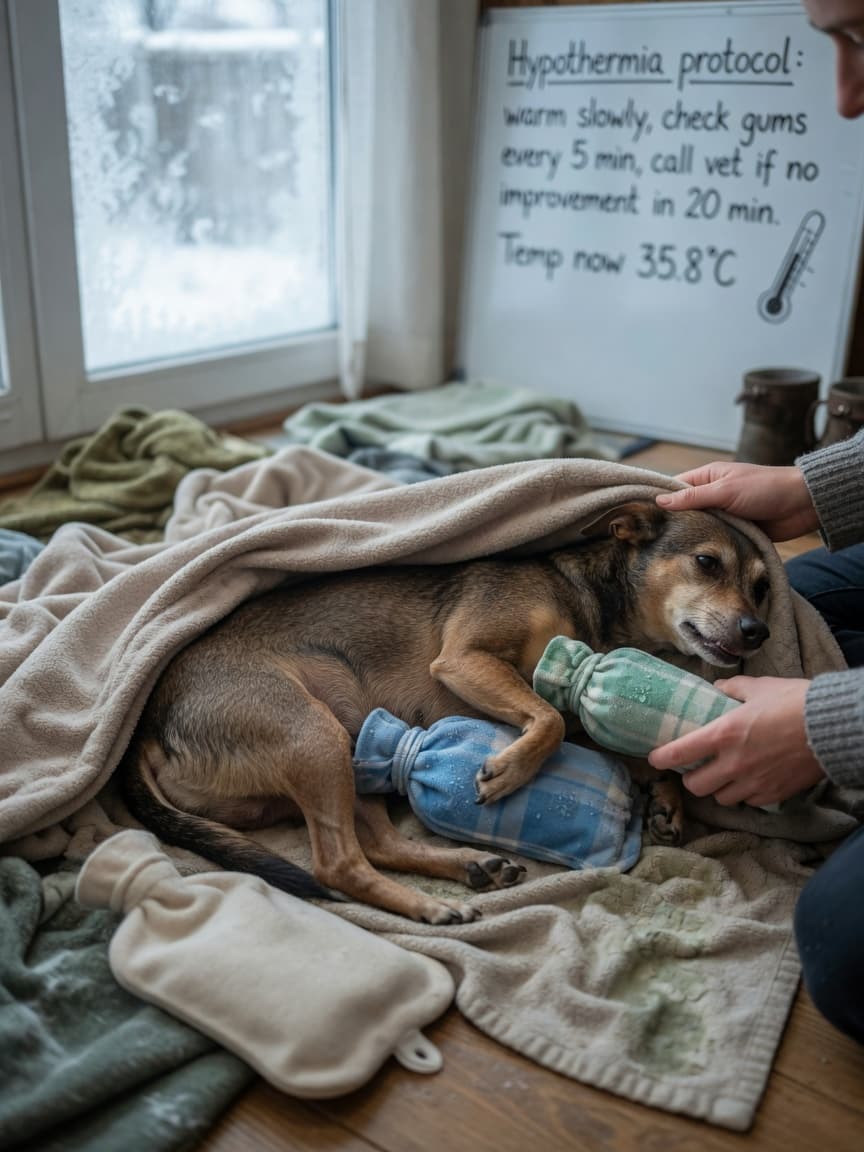
Early signs of hypothermia include shivering, lethargy, and reluctance to move. As the condition progresses, shivering may stop — which is not a sign of recovery but rather an indication that the body has lost its ability to generate heat. Muscle stiffness, pale or blue-tinged gums, slow breathing, and loss of consciousness follow in severe cases.
What to Do
Move the animal to a warm environment immediately. Wrap them in dry blankets and apply warm (not hot) water bottles wrapped in cloth to the groin, armpits, and neck. Offer warm fluids if the animal is conscious and able to swallow. Contact your vet as quickly as possible — hypothermia can mask or cause other complications that require professional assessment.
Road Salt and Grit: Paw Pad Burns
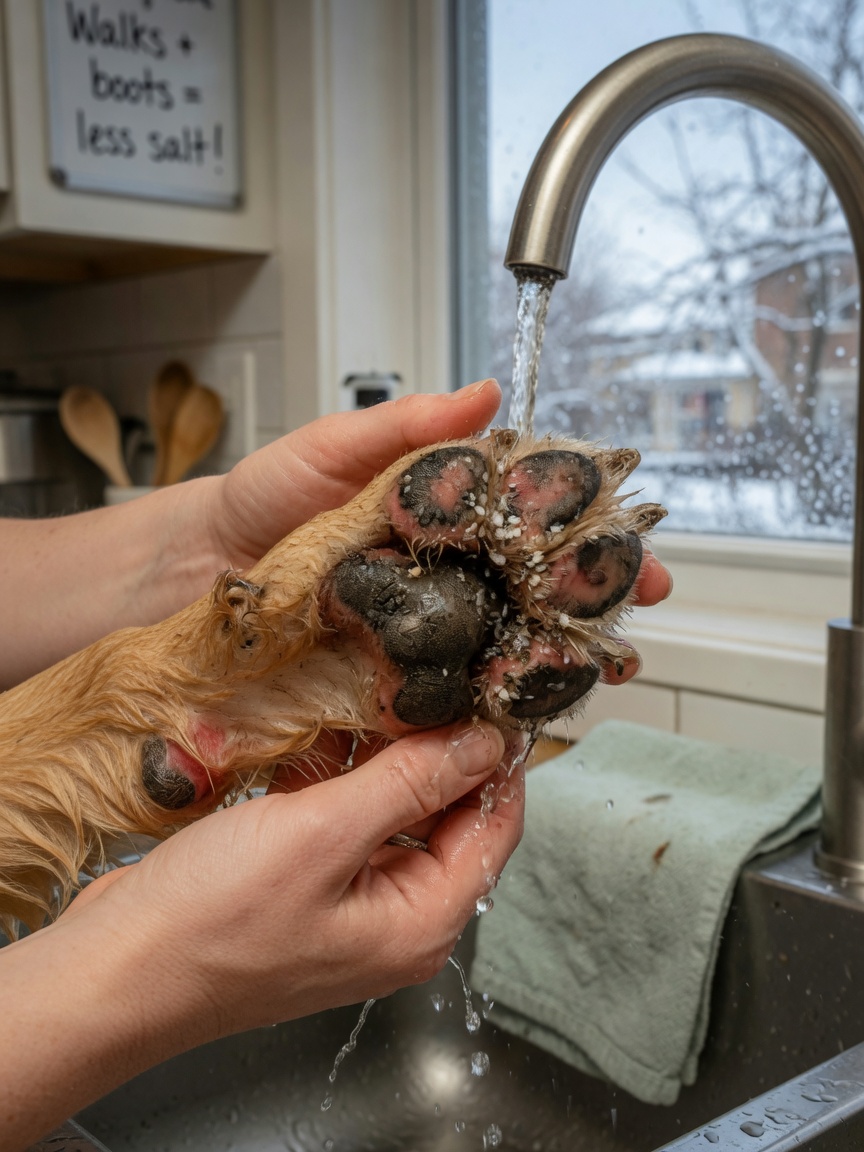
Road grit used during icy conditions typically contains salt, sand, and sometimes chemical de-icers. Prolonged contact with salt and these compounds can cause chemical irritation, cracking, and burns to paw pads. Pets that lick their paws after winter walks may also ingest these substances, leading to gastrointestinal upset or, in larger quantities, salt toxicity.
After every walk on treated roads or pavements, rinse your pet's paws thoroughly with clean, lukewarm water and dry them carefully. Pay attention to the spaces between toes, where grit accumulates and sits against the skin longest. If your dog will tolerate them, protective paw wax or canine boots provide a useful barrier. Check pads regularly for cracks or redness, and consult your vet if you notice limping or persistent licking.
Ice and Frozen Water Surfaces
Frozen ponds, lakes, and rivers present a genuine danger to curious dogs. Ice rarely freezes evenly or to a safe thickness, and a dog that runs onto ice can break through into freezing water beneath. Rescue from frozen water is dangerous for owners and can lead to secondary drowning or hypothermia even if the animal is successfully retrieved. Keep dogs on leads near frozen water bodies throughout winter and recall any dog that approaches ice immediately.
Indoor Winter Hazards

Festive Plants and Decorations
The winter home introduces a seasonal rotation of hazards. Poinsettia, holly, mistletoe, and ivy are all toxic to pets to varying degrees, causing symptoms ranging from mild mouth irritation to vomiting and cardiac effects. Christmas trees — real and artificial — pose additional risks: real tree water can harbour bacteria and resin compounds, while tinsel and baubles are irresistible to cats and can cause intestinal obstruction if swallowed.
Chocolate and Festive Foods
The concentration of chocolate in UK households peaks dramatically over winter, and chocolate toxicity in pets similarly spikes. Theobromine content varies by type — dark and cooking chocolate are significantly more toxic than milk chocolate — but all forms should be kept entirely away from pets. Mince pies, Christmas pudding, and raisins also contain grapes or sultanas, which can cause acute kidney failure in dogs even in small amounts.
Heating and Fire Safety
Open fires, log burners, and portable heaters attract pets seeking warmth. Burns from direct contact with hot surfaces are a genuine risk, as is smoke inhalation from poorly ventilated stoves. Use fireguards consistently and ensure any pet sleeping near a heat source cannot accidentally trap themselves against it during the night.
Winter Care Checklist
- Shorten walks for vulnerable pets in extreme cold and invest in a well-fitting coat for small or short-haired breeds
- Rinse and dry paws thoroughly after every walk on salted roads
- Keep dogs on leads near any frozen water and do not allow access to frozen ponds or rivers
- Remove or secure all festive plants and place Christmas tree water covers to prevent drinking
- Store chocolate, dried fruit, and alcohol safely out of reach throughout the festive period
- Use fireguards consistently around any open flame or hot surface
- Check outdoor shelters, sheds, and vehicles for sheltering cats before starting engines or closing doors
Winter health concerns can escalate quickly in cold conditions. If your pet shows signs of hypothermia, paw injury, or suspected ingestion of a toxic substance, contact your vet promptly. Early intervention during winter emergencies routinely saves lives that delayed treatment cannot.