
A Difference That Can Be Life-Threatening
If you share your home with a male cat, understanding his heightened vulnerability to urinary blockages could one day save his life. Urethral obstruction — a complete or near-complete blockage preventing urine from leaving the bladder — is a genuine veterinary emergency, and male cats are dramatically overrepresented in cases. The anatomical reasons for this are straightforward, but the implications are serious and every owner of a male cat should understand them.
Anatomy Is the Root Cause
The fundamental difference comes down to the urethra — the tube that carries urine from the bladder to the outside of the body. In female cats, the urethra is short and relatively wide, making it much easier for small crystals, debris, or mucus plugs to pass through without obstruction. In male cats, the urethra is considerably longer and narrows significantly at the penile section, creating a pinch point through which blockages can lodge and refuse to move.
This narrow penile urethra in the male cat is only about 0.4 millimetres in diameter at its most constricted point. Even a tiny urethral plug composed of mucus, sloughed cells, proteins, and crystalline material can completely occlude this passage. Once that happens, urine backs up into the bladder and eventually into the kidneys, and the cat's condition deteriorates rapidly.
What Causes the Blockage?
Several types of material can cause a urethral obstruction in male cats:
- Urethral plugs — the most common cause, composed of a soft matrix of inflammatory debris, mucus, and crystals
- Uroliths — actual mineralised stones, typically struvite or calcium oxalate, that have migrated from the bladder into the urethra
- Urethral spasm — where severe inflammation causes the urethra to clamp shut without a physical object present
- Strictures — scar tissue narrowing the urethra, sometimes a consequence of repeated blockages or catheterisation
Urethral plugs account for the majority of obstructions in male cats, and these are closely associated with feline idiopathic cystitis. During an FIC episode, the inflamed bladder wall sheds debris and produces excess mucus, which can accumulate and form a plug that travels into the narrow penile urethra and becomes stuck.
Neutered Males: Still at Risk
A common misconception is that neutering a male cat reduces his risk of urinary blockage. Neutering does reduce the risk of certain reproductive cancers and eliminates hormone-driven territorial spraying, but it has no meaningful protective effect against urethral obstruction. In fact, some research has suggested that neutering before full physical maturity may result in slightly reduced urethral diameter compared to intact males, though the clinical significance of this remains debated.
The risk for neutered male cats remains real, and overweight, sedentary, indoor-only neutered males are consistently identified in the veterinary literature as the highest-risk group for obstructive FLUTD.
Recognising a Blockage: Time Is Critical
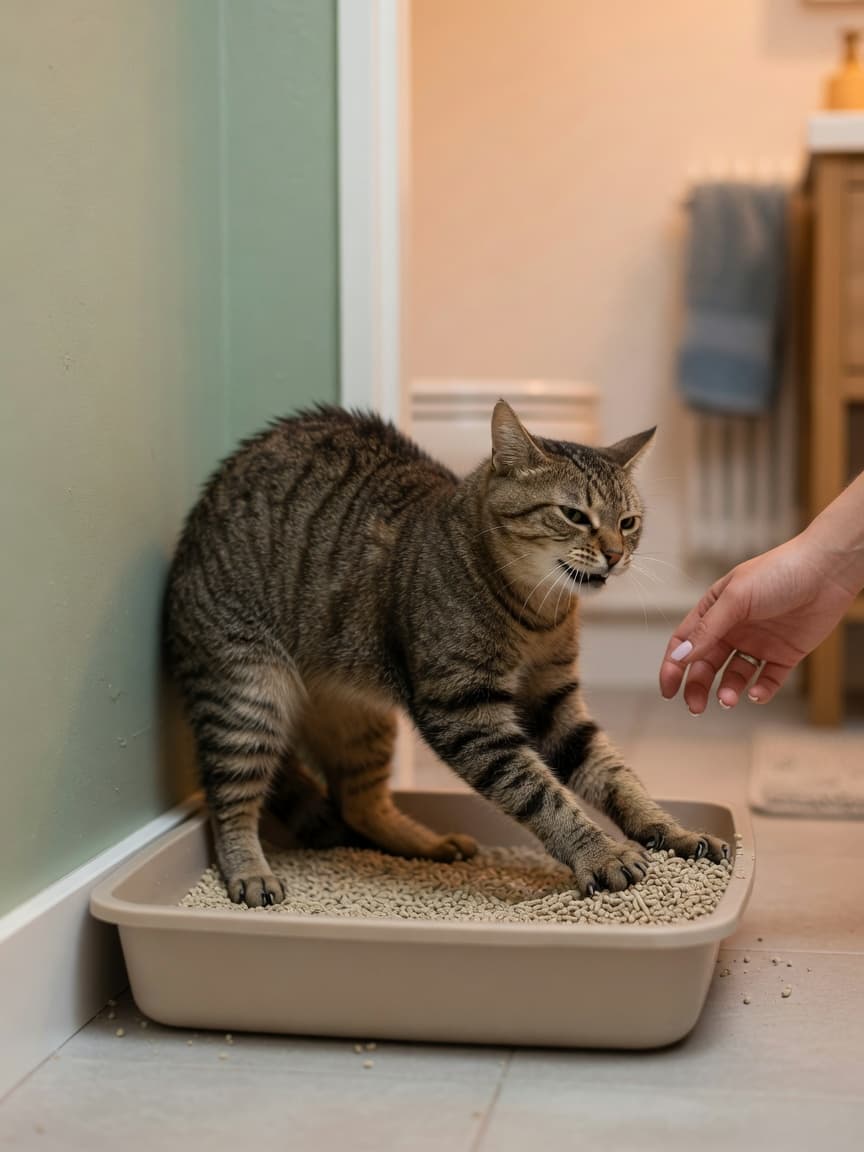
The symptoms of a urethral blockage can initially look similar to those of a non-obstructive urinary problem — straining in the litter tray, vocalising, frequent attempts to urinate. The key distinguishing sign is the complete absence of urine production despite repeated straining. A blocked cat may also cry out when picked up around the abdomen, become lethargic, begin vomiting, or lose interest in food.
As the obstruction progresses, potassium accumulates in the blood (a condition called hyperkalaemia), which can cause life-threatening cardiac arrhythmias. The bladder, stretched beyond normal capacity, risks rupture. A male cat that has been fully blocked for more than 24 hours is in critical condition. Beyond 48 hours, the prognosis worsens considerably. This is emphatically not a condition to monitor at home overnight.
Treatment and What to Expect at the Vet
Treatment for a urethral obstruction requires immediate veterinary intervention. The cat will typically be stabilised with intravenous fluids, particularly if bloodwork reveals elevated potassium or kidney markers. Once stable, the blockage is relieved under sedation or anaesthesia by flushing the urethra with sterile saline and passing a urinary catheter.
In most cases, the catheter remains in place for 24 to 72 hours to allow the urethra to recover and to monitor urine output. Post-catheter urethral spasm can cause re-obstruction in the days following removal — statistics suggest that approximately 15 to 20 percent of cats re-block within the first few weeks after their initial episode.
For cats that experience recurrent blockages, a surgical procedure called a perineal urethrostomy (PU) may be recommended. This surgery widens the urethral opening by removing the narrow penile portion, creating a broader passage that is far less susceptible to future obstructions. It is not without its own risks — urinary tract infections become more likely post-surgery — but for cats with repeated life-threatening blockages, it is often the best long-term solution.
Prevention: What Owners Can Do
While no preventive strategy offers complete protection, several evidence-based approaches reduce the risk of obstruction in male cats:
- Transitioning to a wet food diet to increase hydration and dilute urine
- Ensuring access to multiple fresh water sources, including fountains if the cat prefers moving water
- Maintaining a healthy body weight through appropriate portion control
- Providing environmental enrichment to reduce chronic stress, particularly in indoor-only cats
- Attending regular veterinary check-ups that include urinalysis, especially if the cat has a prior history of urinary issues
Knowing the early warning signs and having a plan to reach emergency veterinary care quickly is equally important. Male cat owners should identify their nearest out-of-hours clinic before they ever need it. With a condition that can turn fatal within two days, preparation is not excessive — it is simply responsible ownership.