ForPetsHealthcare
Dogs

Why Is My Dog Licking Their Paws? Causes & How to Help

By Julia WrenfieldUpdated August 4, 20264 min read
Evidence-based · Sources checked
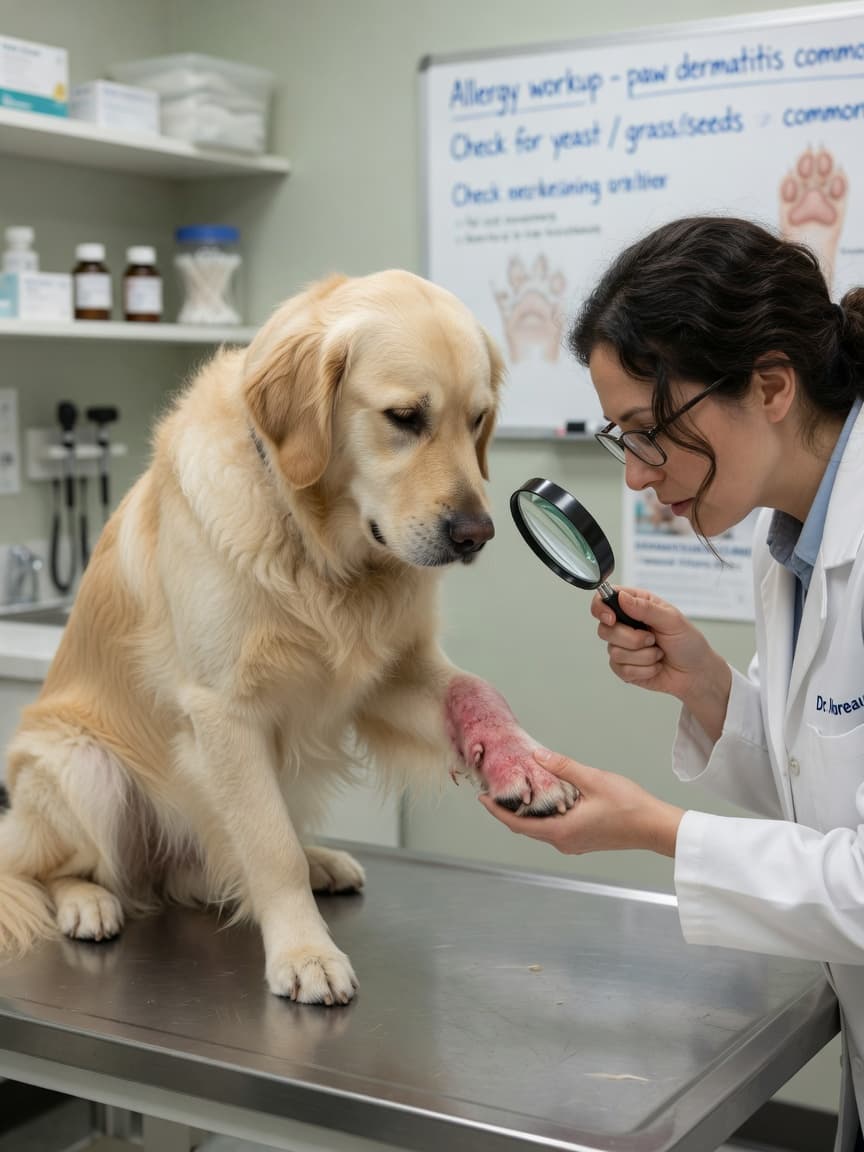
{"en": "Dog licking paw, examining skin irritation and excessive grooming behavior", "es": "Perro lamiendo la pata, examinando irritaci\u00f3n de la piel y comportamiento de acicalamiento excesivo", "fr": "Chien se l\u00e9chant la patte, examinant l'irritation cutan\u00e9e et le comportement de toilettage excessif", "de": "Hund leckt Pfote, untersucht Hautreizung und exzessives Putzverhalten", "nl": "Hond likken aan poot, onderzoekt huidirritatie en excessief groominggedrag", "pt": "C\u00e3o lambendo a pata, examinando irrita\u00e7\u00e3o da pele e comportamento de higiene excessiva", "it": "Cane che lecca la zampa, esamina irritazione della pelle e comportamento di toelettatura eccessiva"}

If you've noticed your dog constantly licking their paws, you're not alone – this is one of the most common concerns pet owners bring to veterinary surgeries. Whilst occasional paw licking is normal grooming behaviour, excessive licking can signal underlying health issues, allergies, or emotional distress. Understanding the root cause is the first step toward helping your furry friend feel more comfortable and preventing potential complications like skin infections.

Common Medical Causes of Paw Licking
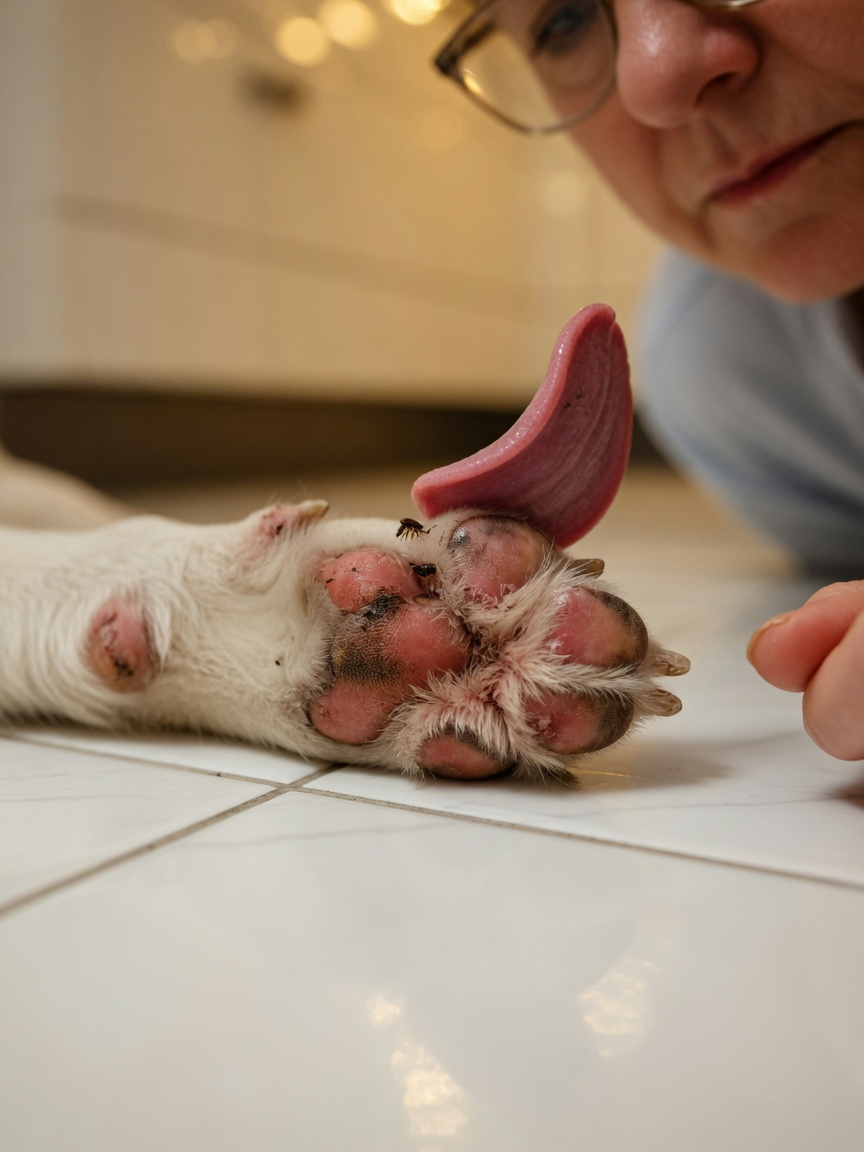
Close-up of a dog's irritated paw pad showing redness and signs of flea infestation

The most frequent reason dogs lick their paws excessively is discomfort or irritation. Several medical conditions can trigger this behaviour:

  • Allergies: Food allergies and environmental allergies (pollen, dust mites, moulds) often manifest as itchy paws. Your dog may lick specific paws or all four feet.
  • Parasites: Fleas, mites, and lice cause intense itching. Even a single flea bite can trigger excessive licking in sensitive dogs.
  • Skin infections: Bacterial or yeast infections thrive in warm, moist areas like paw pads, causing redness, odour, and itching.
  • Injuries or pain: Splinters, cuts, or joint pain may cause localised licking of one particular paw.
  • Ear infections: Dogs sometimes lick their front paws when their ears are uncomfortable, as this provides psychological relief.

Behavioural and Emotional Reasons

Not all paw licking is physical. Stress, anxiety, and boredom can drive dogs to develop this self-soothing habit:

  • Separation anxiety or storm phobia
  • Compulsive disorders (particularly in certain breeds like Bull Terriers)
  • Lack of mental stimulation or exercise
  • Changes in routine or environment

Behavioural licking tends to be rhythmic and continuous, often worsening when your dog is left alone or during stressful situations.

When to Contact Your Veterinarian

Schedule a vet appointment if your dog's paw licking:

  1. Lasts more than a few days or occurs several times daily
  2. Causes visible irritation, swelling, or redness
  3. Results in hair loss or open sores
  4. Is accompanied by discharge, odour, or signs of infection
  5. Coincides with other symptoms (scratching, ear shaking, vomiting)

Your vet can perform skin scrapings, fungal cultures, or allergy testing to identify the underlying cause.

Practical Steps to Help Your Dog
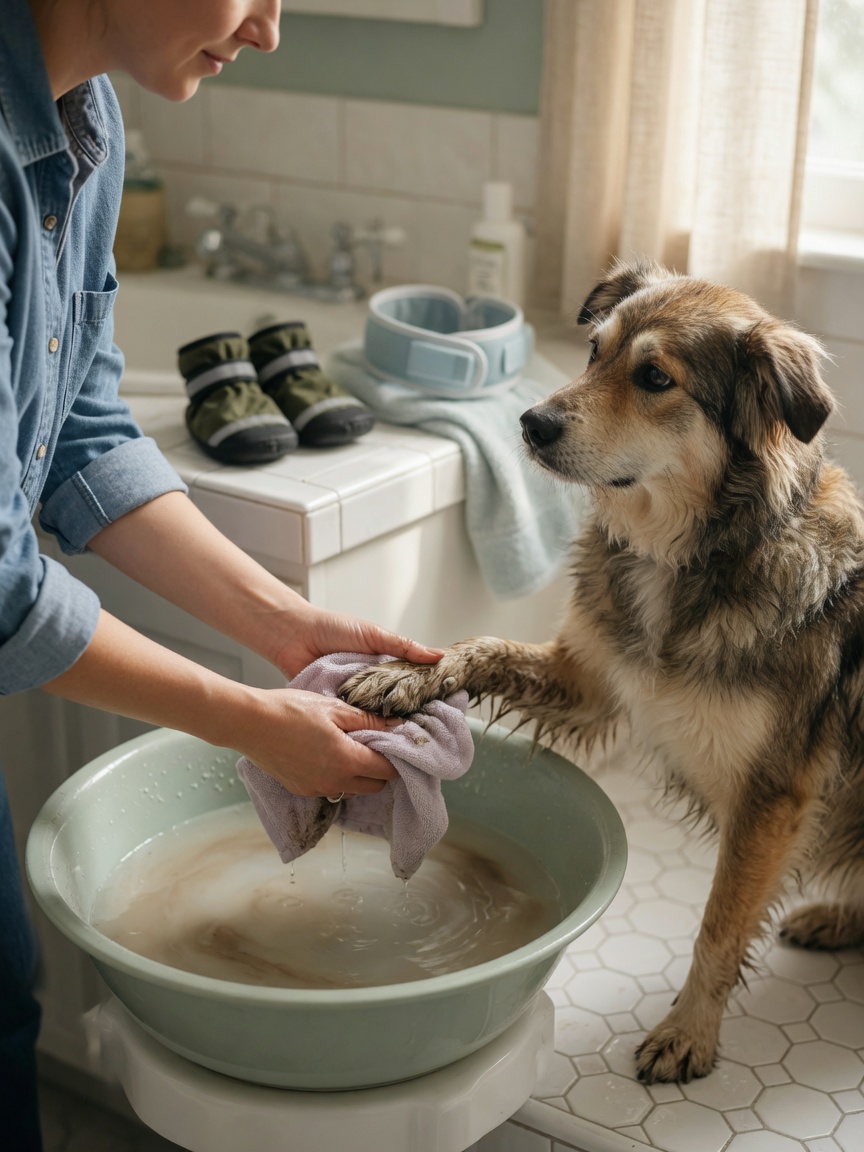
Dog owner gently washing their dog's paws in a basin of water after a walk

Whilst awaiting a veterinary diagnosis, you can take these helpful measures:

  • Check for parasites: Ensure your dog is on appropriate flea and tick prevention year-round.
  • Wash paws regularly: Gently clean paws after walks with lukewarm water to remove allergens and irritants.
  • Increase exercise: Aim for at least 30–60 minutes of daily activity to reduce stress and boredom.
  • Provide mental enrichment: Use puzzle toys, sniff games, and training sessions to occupy their mind.
  • Use protective measures: Consider dog booties during walks or soft cones to prevent further damage from excessive licking.
  • Maintain hygiene: Keep paw pads trimmed and dry, especially between the toes where yeast thrives.

Treatment Options

Once your vet identifies the cause, treatment might include antiparasitic medications, antibiotics for infections, antihistamines for allergies, or dietary changes. For behavioural issues, your vet may recommend behavioural modification techniques or, in some cases, anxiety medication.

Key Takeaways

Excessive paw licking is your dog's way of communicating discomfort or distress. By recognising the signs and taking prompt action, you can prevent secondary infections and improve your dog's quality of life. Most cases respond well to treatment once the underlying cause is identified. When in doubt, consult your veterinarian – they're your best partner in keeping your beloved companion healthy and happy.

#why is my dog licking their paws causes how to help#dog health#dog nutrition#forpetshealthcare

Sources & further reading

This article is based on peer-reviewed veterinary research and reputable animal-health sources. Explore the underlying science in our Research Library.

Related articles

The 19 Best Animal Shelters in the Netherlands (2026)

the Netherlands's animal shelters, rescue associations and refuges save thousands of dogs, cats and other animals every year, almost always on tiny budgets and volunteer power. To build the most objective ranking possible, we analysed public Google reviews across more than 56 registered animal-prote…

Read more →

The 25 Best Animal Shelters in Italy (2026)

Italy's animal shelters, rescue associations and refuges save thousands of dogs, cats and other animals every year, almost always on tiny budgets and volunteer power. To build the most objective ranking possible, we analysed public Google reviews across more than 121 registered animal-protection org…

Read more →

The 48 Best Animal Shelters in Germany (2026)

Germany's animal shelters, rescue associations and refuges save thousands of dogs, cats and other animals every year, almost always on tiny budgets and volunteer power. To build the most objective ranking possible, we analysed public Google reviews across more than 152 registered animal-protection o…

Read more →

The 32 Best Animal Shelters in France (2026)

France's animal shelters, rescue associations and refuges save thousands of dogs, cats and other animals every year, almost always on tiny budgets and volunteer power. To build the most objective ranking possible, we analysed public Google reviews across more than 89 registered animal-protection org…

Read more →

The 8 Best Animal Shelters in Portugal (2026)

Portugal's animal shelters, rescue associations and municipal centros de recolha save thousands of dogs, cats and other animals every year, almost always on tiny budgets and volunteer power. To build the most objective ranking possible, we analysed public Google reviews across more than 86 registere…

Read more →

Sphynx Cat Skin care and hygiene: Causes, Signs & Care

Sphynx cats have little to no coat, which means the skin itself takes on jobs that fur normally does — insulation, oil dispersal, and barrier protection — leaving it prone to greasiness, blocked pores, fungal infections, and sunburn. The single most important thing to know is that a Sphynx's skin ne…

Read more →
Disclaimer:This article is for informational purposes only and does not constitute veterinary advice. Always consult a qualified veterinarian for your pet's health concerns.

Free newsletter

Pet health tips, straight to your inbox

Weekly science-backed advice for dog & cat owners. No spam, unsubscribe anytime.