
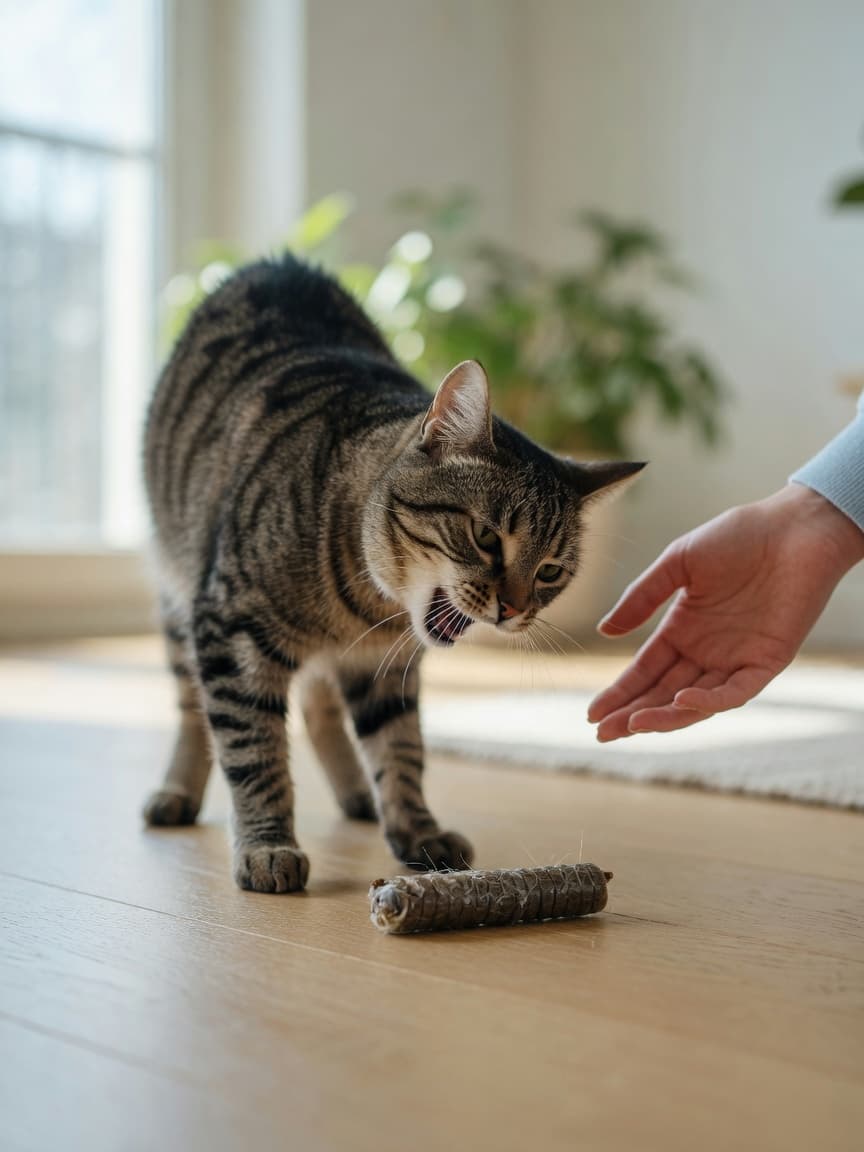
Not All Vomiting Is Created Equal
Cats vomit. Experienced cat owners come to accept this as a background feature of life with a feline. But acceptance should not slide into complacency, because the same outward behaviour — retching and producing stomach contents — can represent anything from a benign hairball to a medical emergency requiring urgent intervention. Learning to distinguish one from the other is one of the most practical skills a cat owner can develop.
Hairballs: What Normal Actually Looks Like
Cats ingest fur during grooming. Most passes through the digestive tract uneventfully. When enough accumulates in the stomach, the cat retches repetitively, often making a distressing hacking or gagging sound, and eventually produces a tubular mass of compacted fur, usually surrounded by a small amount of mucus or digestive fluid. The key features of a typical hairball episode are that it is infrequent (once every week or two at most in a healthy cat), the cat recovers immediately and behaves normally afterwards, and there is no blood, no bile, and no undigested food in the produced material.
Long-haired breeds and cats who groom excessively produce hairballs more often. Regular brushing to remove loose fur before the cat ingests it, combined with hairball-specific diets or occasional lubricant pastes, reduces frequency meaningfully. If hairballs are occurring more than once a week, this is not simply a grooming issue and warrants a veterinary opinion.
Acute Vomiting: Common and Usually Manageable
Dietary indiscretion
A cat who eats something unusual, receives a new food abruptly, or raids the bin may vomit once or twice and then return entirely to normal. This is the feline equivalent of an upset stomach. A brief period of bland, easily digestible food alongside normal water access usually resolves the issue within 24 hours.
Eating too quickly
Some cats, particularly those in multi-cat households where competition for food exists, eat so rapidly that they regurgitate almost immediately after a meal. The produced material looks like barely digested food, and the cat is often willing to eat it again, which is unpleasant to witness but diagnostically informative. Puzzle feeders, raised bowls, or smaller more frequent meals typically resolve this.
When Vomiting Signals Something Serious
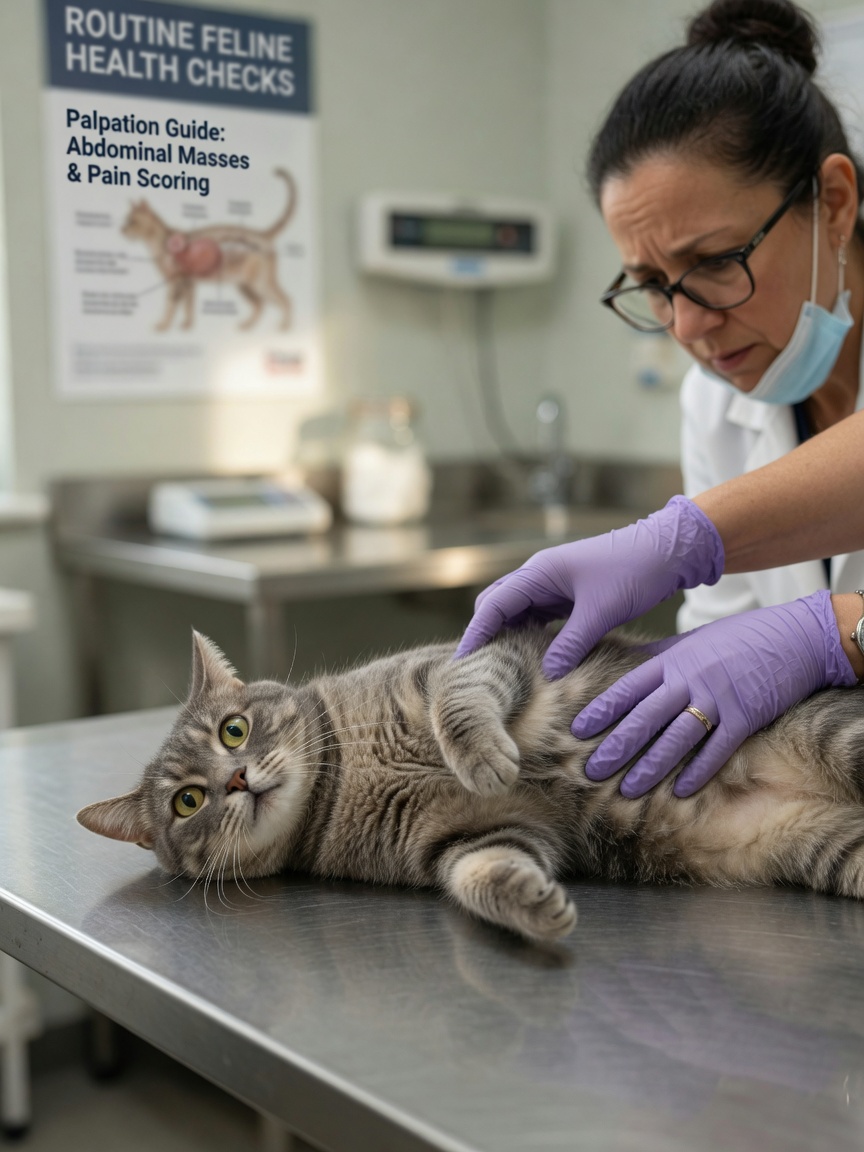
Chronic vomiting
Vomiting that occurs several times a week over more than two to three weeks is by definition chronic and requires investigation. Inflammatory bowel disease, intestinal lymphoma, chronic pancreatitis, and hyperthyroidism all commonly present with chronic vomiting. Each requires distinct diagnostic tests and different treatment approaches. Chronic vomiting should never be attributed to hairballs without a proper examination confirming there is no underlying disease.
Blood in the vomit
Bright red blood indicates active bleeding in the oesophagus or stomach. Dark, coffee-ground material suggests partially digested blood from higher in the tract. Either requires same-day veterinary attention. Causes range from ulcers and foreign bodies to clotting disorders and certain toxins.
Repeated vomiting with no production
A cat retching repeatedly without producing anything, particularly with abdominal distension, may have a gastrointestinal obstruction. Foreign bodies including string, elastic bands, and toy components are particularly dangerous in cats, as linear foreign bodies can cause the intestine to bunch and perforate. This is a surgical emergency.
Vomiting with other systemic signs
Vomiting accompanied by lethargy, loss of appetite, weight loss, increased thirst, jaundice, or neurological signs suggests systemic disease affecting multiple body systems. Kidney failure, liver disease, diabetes, and certain toxin ingestions all produce this pattern.
A Practical Framework for Decision Making
- Single episode of vomiting in an otherwise bright, alert cat: monitor for 24 hours, offer water, withhold food briefly, and reintroduce a small bland meal
- Two to three episodes within 24 hours with the cat still alert and drinking: contact your vet for telephone advice
- Any blood in vomit, repeated unproductive retching, or obvious abdominal distension: seek emergency veterinary care immediately
- Vomiting more than once weekly for over two weeks: book a non-urgent but prompt veterinary appointment for investigation
- Vomiting alongside lethargy, weight loss, or changes in thirst or urination: do not delay, book an appointment within 24 to 48 hours
What to Tell Your Vet
The more detail you can provide, the more efficiently your vet can direct diagnostics. Note the frequency of vomiting episodes, the timing in relation to meals, the appearance of the vomited material, any changes in appetite or drinking, access to plants or household chemicals, and any recent dietary changes. If possible, a photograph or video of the episode is genuinely useful, as the difference between vomiting and regurgitation (which occurs without abdominal effort) influences where in the digestive tract the problem likely lies.
Hairballs are real, common, and manageable. But the cat who vomits regularly deserves proper attention rather than reflexive reassurance. When in doubt, a veterinary check provides clarity and, in cases of genuine illness, gives your cat the best chance of prompt and effective treatment.