
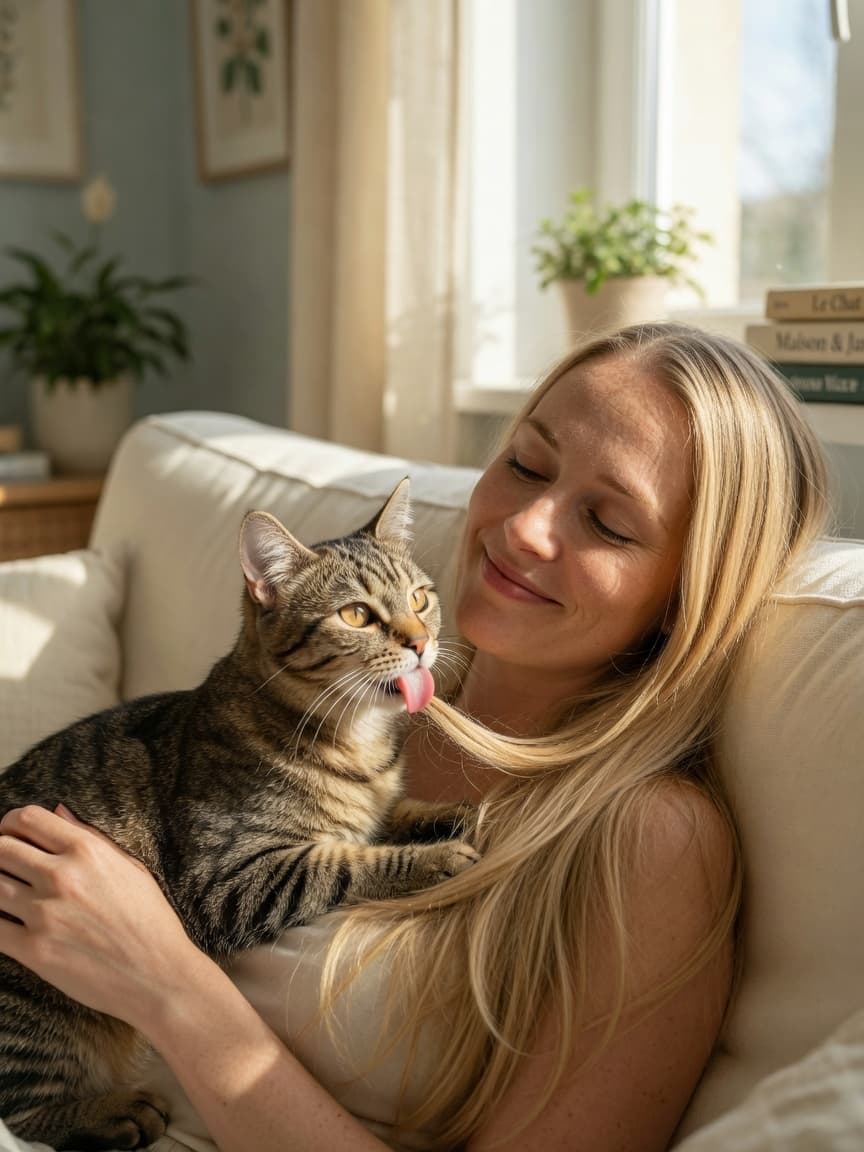
If you've ever felt the surprising sensation of your cat's sandpaper tongue working through your hair, you're not alone. This peculiar behaviour puzzles many cat owners, but rest assured, it's usually a sign of affection and bonding rather than cause for concern. Understanding why your feline friend engages in this grooming ritual can deepen your connection with them and help you respond appropriately. Let's explore the most common reasons behind this quirky habit.
1. Social Bonding and Affection
Cats are social creatures, despite their independent reputation. When your cat licks your hair, they're often expressing trust and fondness. In the feline world, mutual grooming—called allogrooming—is a primary way cats bond with one another. By extending this behaviour to you, your cat is essentially treating you as a member of their family group. This is a genuine compliment and indicates your cat feels safe and comfortable in your presence.
2. Recognising You as Part of Their Family
Hair licking serves another important function: scent marking. Your cat is mingling their scent with yours, creating a communal smell that reinforces family bonds. This behaviour is especially common if your cat has grown up with you from a young age or if you've recently become their trusted caregiver. It's their way of saying, "You belong to our family."
3. Grooming Instinct and Caretaking
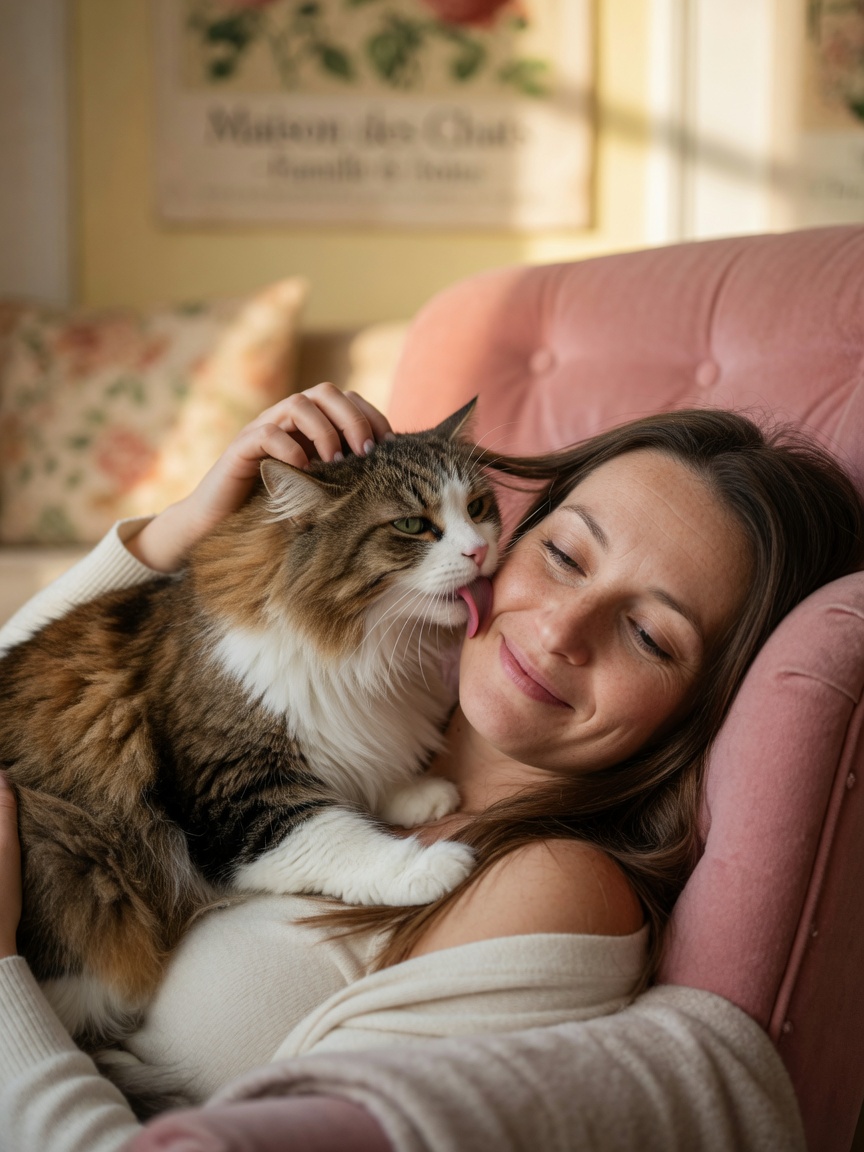
Mother cats groom their kittens meticulously, and this maternal instinct often carries into adulthood. If your cat licks your hair, they may view you as someone who needs caring for. This is particularly true if your cat has a particularly nurturing personality. Some cats take on a "parent" role within the household, grooming other pets or their human companions as part of their natural caregiving impulse.
4. Your Hair Texture and Scent Appeal
Let's be practical: your hair might simply feel pleasant to your cat. The texture provides satisfying sensory stimulation, and if you've recently used a new shampoo or conditioner, the scent could be attracting your feline friend. Some cats are particularly drawn to certain fragrances, especially those containing coconut oil or other natural ingredients. However, ensure any hair products you use are cat-safe, as some can be toxic if ingested in large quantities.
5. Stress Relief and Self-Soothing
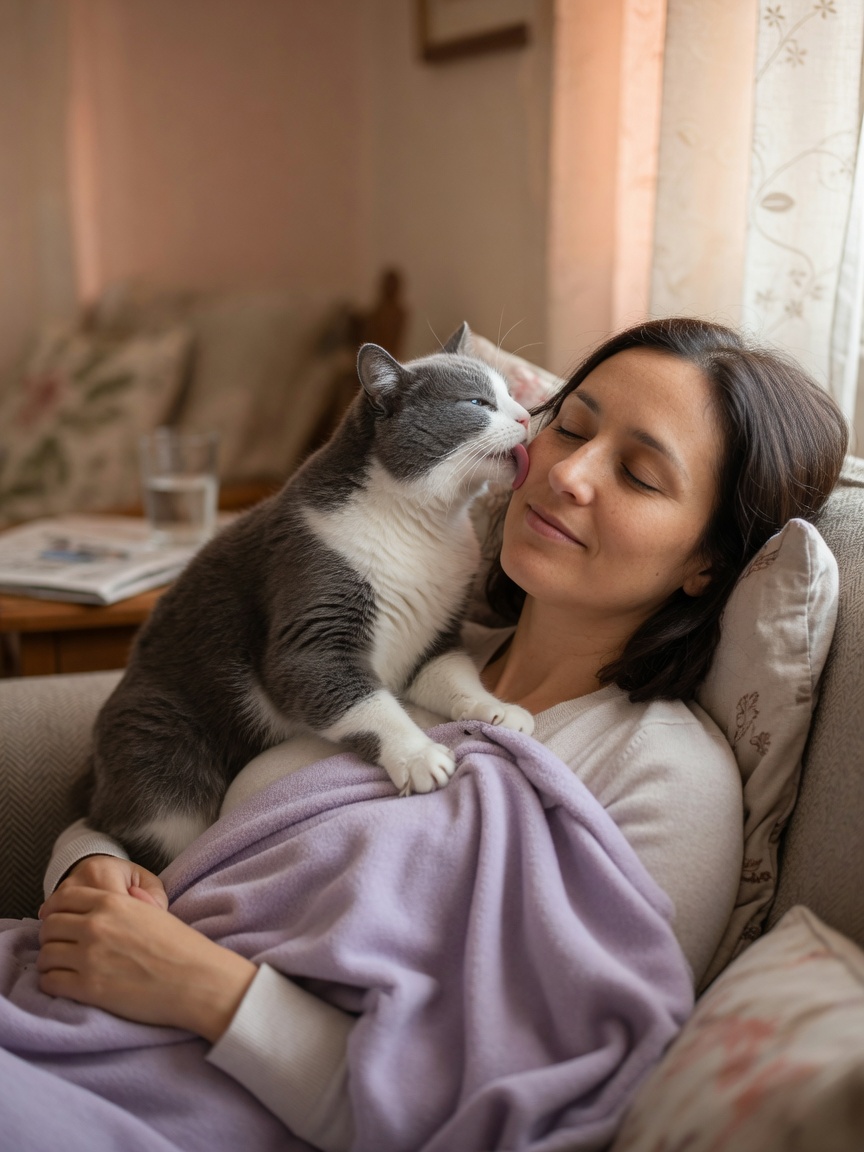
Grooming activities have a calming effect on cats. When your cat licks your hair whilst purring or kneading nearby, they may be self-soothing during stressful moments. This behaviour can indicate that your presence is comforting to them, making you an emotional anchor during uncertain times. It's a positive sign that your cat trusts you to help them feel secure.
6. Medical or Behavioural Concerns
Occasionally, excessive hair licking can signal underlying issues. If your cat is obsessively targeting your hair or suddenly changes their grooming habits, consider these possibilities:
- Skin allergies or parasitic infections (which might cause over-grooming)
- Dental problems making grooming uncomfortable
- Anxiety or stress-related compulsive behaviours
- Nutritional deficiencies affecting grooming patterns
If the behaviour seems excessive or is accompanied by hair loss on your cat, consult your veterinary surgeon.
How to Respond to Your Cat's Hair Licking
Most hair licking is harmless and endearing. However, if you'd prefer to redirect this behaviour, try offering alternative grooming experiences—such as gentle brushing or interactive play—immediately when your cat attempts to lick your hair. Reward positive responses with treats and praise.
Key Takeaways
Your cat's hair licking is usually a sign of genuine affection and family bonding. Whether it's social grooming, scent marking, or simple caretaking, this behaviour demonstrates that your cat values your companionship. Unless the licking becomes excessive or obsessive, embrace this quirky ritual as a unique expression of your special bond with your feline friend. If concerns arise, your veterinary surgeon can provide personalised guidance based on your cat's individual health profile.