
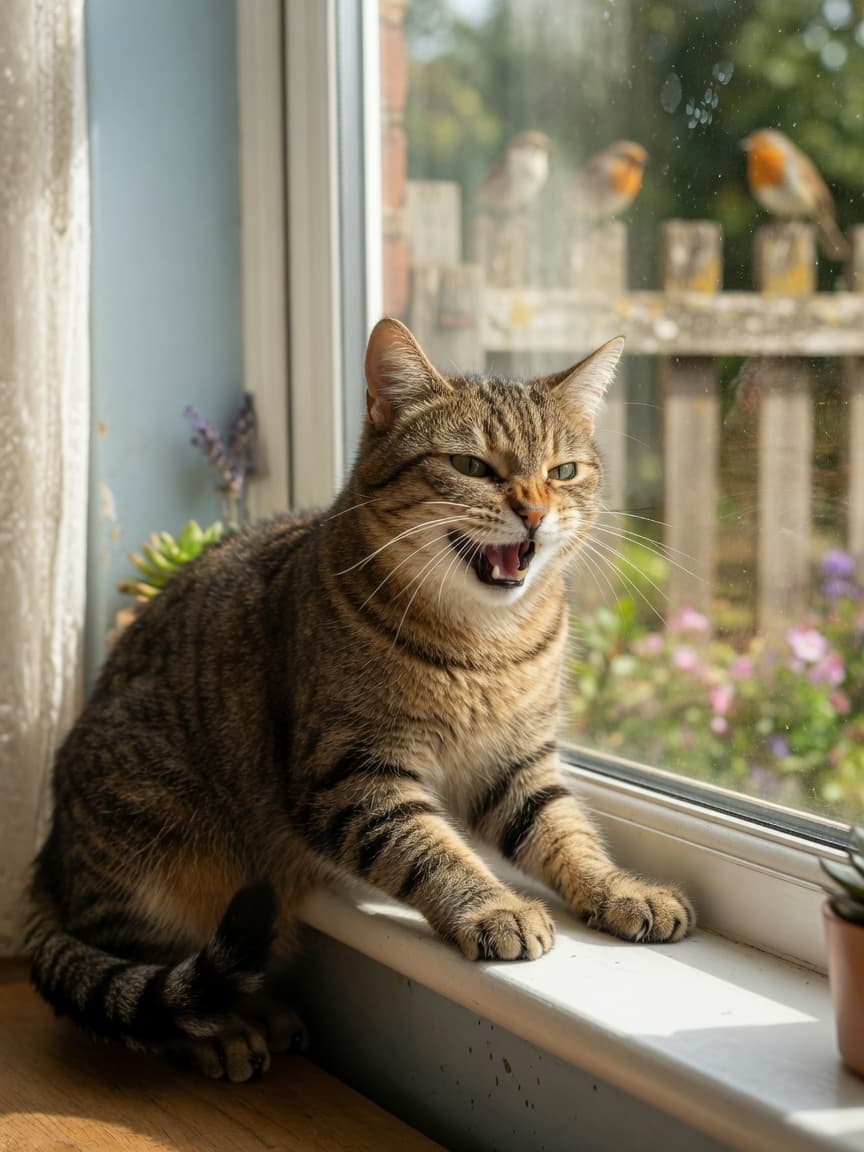
The Chatter at the Window: What Is Your Cat Actually Doing?
You have almost certainly heard it — that rapid, staccato clicking or chirping sound your cat produces whilst watching a bird on the garden fence or a squirrel running along a wall. The jaw quivers, the teeth chatter, and the cat's gaze becomes utterly transfixed. It often sounds something like a rapid "ek-ek-ek" or a cross between a chirp and a chittering click. It is one of the most unusual vocalisations in the domestic cat's repertoire, and scientists are not entirely in agreement about what it means.
The Frustrated Predator Hypothesis
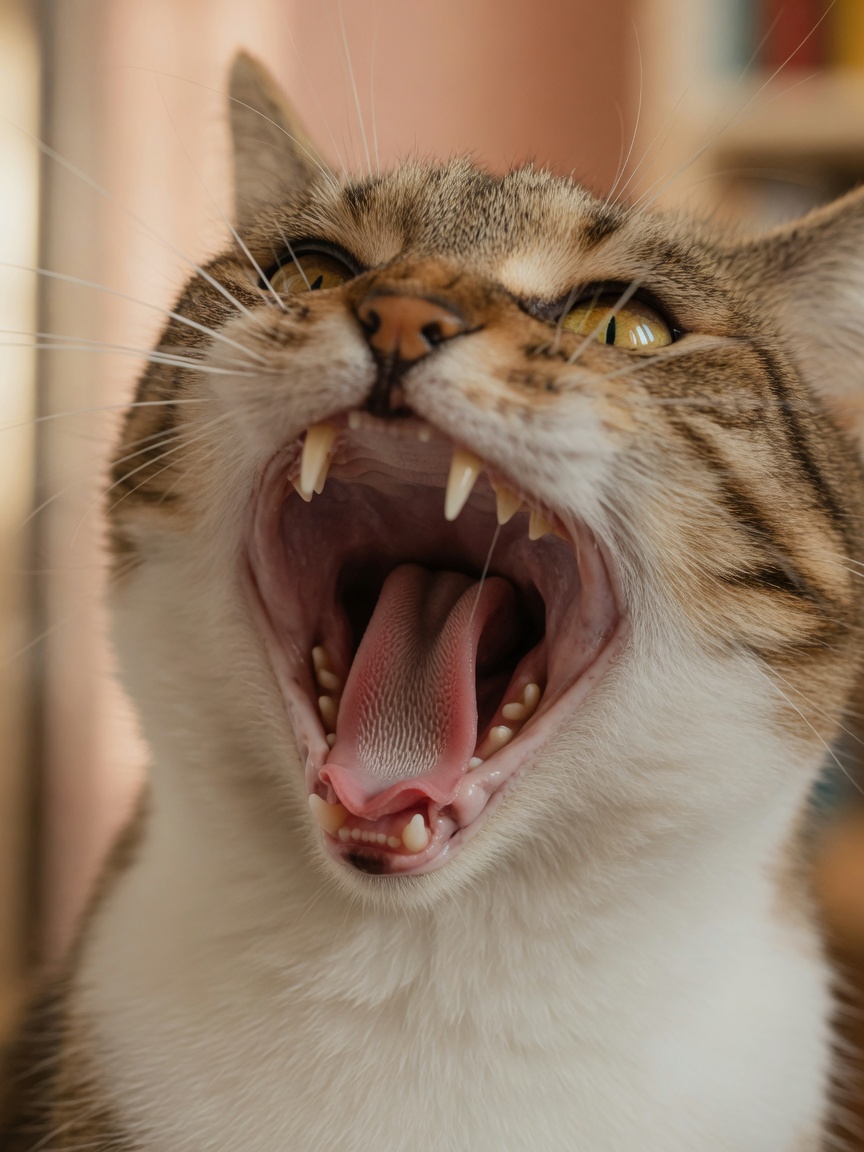
The most widely accepted explanation is the frustrated predator hypothesis. When a cat sees prey — particularly birds and squirrels, which are high-value targets in the feline predatory hierarchy — the full predatory sequence is activated: stalk, rush, catch, kill, eat. But when a window, glass door, or physical barrier prevents the completion of that sequence, the cat experiences an intensely frustrated predatory state.
The chattering sound is thought to be a physical expression of that frustration — a kind of overflow of the kill-bite impulse. In wild felids, the killing bite to the back of the neck is delivered with a rapid chattering jaw movement. The domestic cat watching an unreachable bird may be performing a truncated, anticipatory version of that killing bite, driven by a neural cascade that has been activated but cannot be completed.
Studies on patas monkeys and other primates have documented similar "vacuum activity" — instinctive motor patterns performed without the triggering stimulus being reachable — and the feline chattering phenomenon appears to follow a comparable neurological logic. The body prepares for action the environment will not allow.
The Jaw-Quivering Mimicry Theory: Controversial but Intriguing
A more controversial hypothesis, gaining some attention following research published by the Wildlife Conservation Society, proposes that cats may be mimicking the calls of their prey species. Researchers in the Brazilian Amazon recorded a wild margay — a small spotted wild cat — producing calls remarkably similar to those of a pied tamarin monkey, apparently to lure it closer.
If domestic cats retain a similar capacity, the chattering at birds through the window could represent a vestigial attempt to mimic avian sounds — to call the bird in rather than simply react to it. The fact that the sound cats make does bear some tonal resemblance to certain bird contact calls lends this theory superficial plausibility.
However, most feline behaviour researchers remain sceptical. The mimicry theory requires the cat to have both the intent to lure and an understanding that the bird will respond to its own species' calls, which demands a level of cognitive abstraction that has not been demonstrated in domestic cats. For now, this hypothesis is better classified as intriguing speculation than established science.
Chattering as Excitement Overflow
A third and complementary explanation is simply that chattering is a form of emotional overflow triggered by extreme arousal. Cats vocalise during intense states — pain, mating, distress, play — and the sight of highly desirable prey at close but inaccessible range produces an intensity of excitement that may simply need some form of physical expression. The chattering jaw and the accompanying chirps are the physical outlet for a nervous system running at high activation.
This is supported by the observation that not all cats chatter, and the ones that do tend to be those with particularly strong prey drives. Chattering is most common in young adult cats and in breeds with high working instincts, though individual variation is enormous.
Indoor Cats Versus Outdoor Cats
Outdoor cats still chatter — but less frequently than indoor cats. An outdoor cat with regular access to live prey can complete the predatory sequence, which discharges the neural activation that leads to chattering. Indoor cats, permanently separated from live prey by glass and walls, experience repeated incomplete predatory sequences throughout every day that birds visit the garden. The frustration accumulates, and the chattering may be more intense as a result.
This does not mean outdoor access is inherently better for all cats. The International Society of Feline Medicine (ISFM) strongly advocates for indoor cat welfare whilst acknowledging the challenges of managing a cat's predatory drive indoors. ISFM guidelines emphasise that indoor cats can live entirely fulfilled lives when their environment is sufficiently enriched — but that this requires active effort from their owners.
Enrichment Tips for Indoor Cats Who Chatter
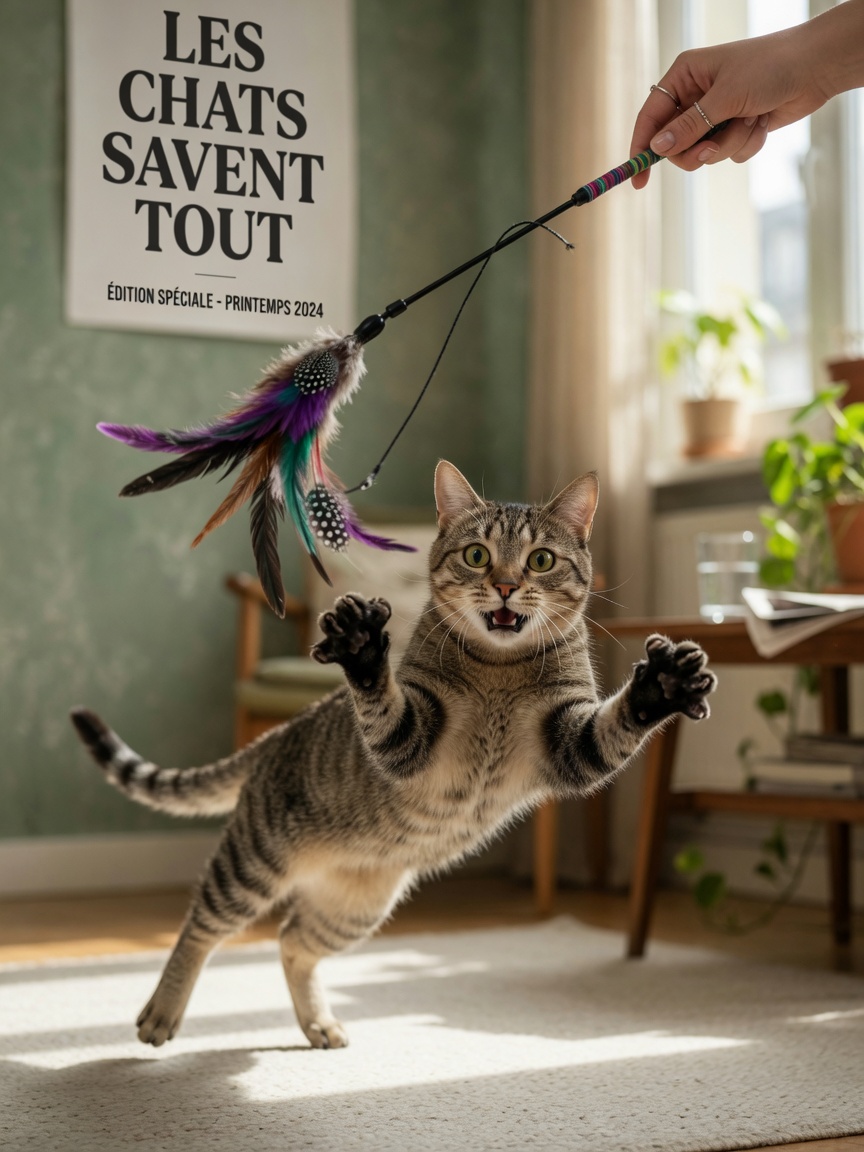
If your cat regularly chatters at windows, they have a strong and active predatory drive that needs appropriate outlets. ISFM indoor cat welfare guidance recommends:
- Interactive wand toys that mimic the erratic movement of birds or small mammals — feather wands, in particular, are highly effective for cats with a strong avian prey drive.
- Scheduled daily hunting play sessions of at least two separate ten-to-fifteen-minute periods, ideally timed for crepuscular periods (dawn and dusk) when cats are naturally most active.
- Window bird feeders positioned where your cat can watch visiting birds — this provides stimulation and allows your cat to express the predatory watching behaviour without the cost to wildlife.
- Puzzle feeders and foraging toys that require the cat to "hunt" for their food, extending the predatory sequence in a controlled and fulfilling way.
- Nature videos designed for cats, featuring birds and small animals, which many cats find highly stimulating as a secondary enrichment tool.
Is Chattering Ever a Sign of a Problem?
Chattering at birds and squirrels is a normal, healthy expression of the predatory drive and requires no intervention beyond enrichment. It is not a sign of frustration in a pathological sense, nor does it indicate that your cat is suffering.
However, there are some adjacent situations worth monitoring:
- If your cat chatter-vocalises frequently in contexts unrelated to prey — such as when watching moving lights, ceiling fans, or their own reflection — this could indicate a heightened arousal state that enrichment should address.
- Cats that become highly agitated at windows, pacing and vocalising for extended periods after prey has gone, may benefit from limiting window access to supervised periods to prevent chronic frustration.
- If the chattering is accompanied by head tremors, jaw spasms, or appears involuntary rather than predatory in context, a veterinary assessment is warranted to rule out neurological or dental causes of jaw movement.
See Your Vet If...
- The jaw chattering appears involuntary or occurs outside of predatory contexts entirely.
- Your cat shows signs of oral discomfort — pawing at the mouth, difficulty eating, drooling — alongside the jaw movement.
- The behaviour is accompanied by apparent disorientation, head shaking, or balance issues.
A Sound Older Than Domestication
Whether the chirp at the window is frustrated instinct, emotional overflow, or a distant echo of ancestral mimicry, it is a reminder of the hunting mind operating inside even the most pampered indoor cat. That rapid jaw-quiver is your cat being, in the most essential sense, exactly what evolution made them. Understanding it helps you enrich their lives in ways that genuinely matter.