ForPetsHealthcare
Dogs

Why Do Cats Lie On Your Chest?

By Julia WrenfieldUpdated August 4, 20263 min read
Evidence-based · Sources checked
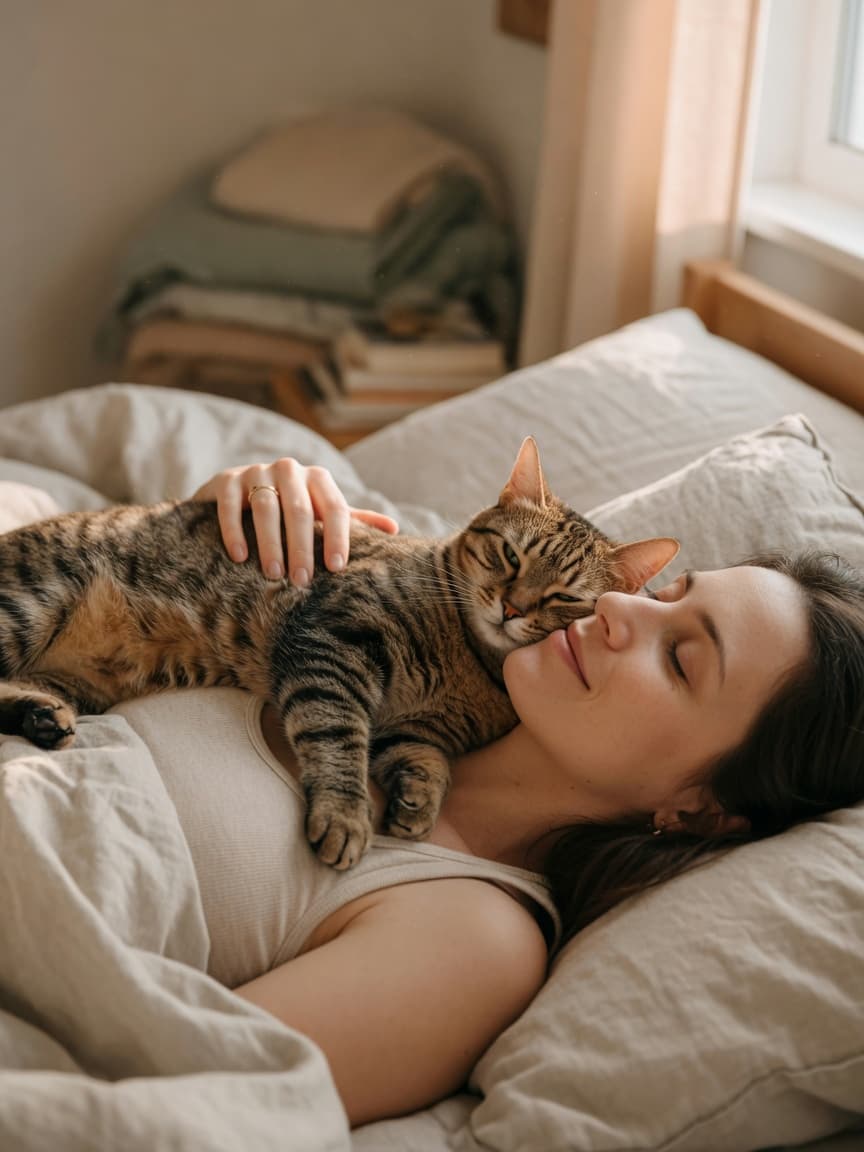
{"en": "Relaxed cat lying on owner's chest while person rests, showing affectionate feline behavior and bonding", "es": "Gato relajado acostado en el pecho del due\u00f1o mientras la persona descansa, mostrando comportamiento felino afectuoso", "fr": "Chat d\u00e9tendu allong\u00e9 sur la poitrine du propri\u00e9taire pendant le repos, montrant un comportement f\u00e9lin affectueux", "de": "Entspannte Katze liegt auf der Brust des Besitzers w\u00e4hrend die Person ruht und zeigt liebevolles Katzenverhalten", "nl": "Ontspannen kat ligt op de borst van eigenaar terwijl persoon rust, tonend affectueus kattengedrag", "pt": "Gato relaxado deitado no peito do dono enquanto pessoa descansa, mostrando comportamento felino carinhoso", "it": "Gatto rilassato sdraiato sul petto del proprietario mentre la persona riposa, mostrando affettuoso comportamento felino"}

If you've ever had a cat settle onto your chest whilst you're relaxing, you've experienced one of the most comforting moments of pet ownership. That warm, purring bundle pressed against your heart isn't random—it's a deliberate behaviour rooted in feline biology, psychology, and affection. Understanding why cats choose your chest reveals fascinating insights into how they communicate trust and bond with their human companions.

The Science of Chest Lying
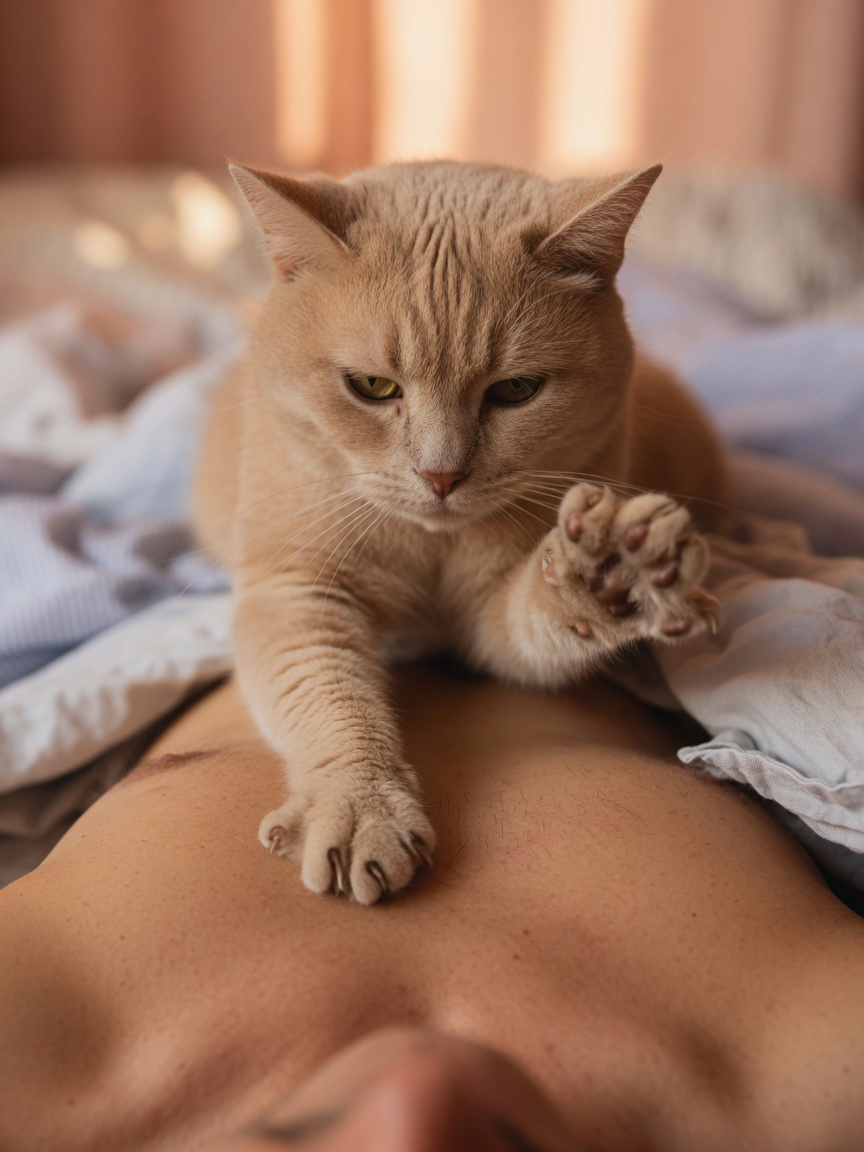
A cat kneading gently on a person's chest, demonstrating the comforting behavior of paw paddling during bonding

When your cat lies on your chest, they're engaging in behaviour that serves multiple purposes. The chest area provides warmth, comfort, and proximity to your heartbeat, which can be deeply soothing for cats. Your cat's body temperature naturally runs between 38-39°C—higher than humans—so they're naturally drawn to heat sources, particularly during cooler months or when they're feeling unwell.

The rhythmic sound of your heartbeat mimics the maternal heartbeat kittens experience during nursing, creating a sense of security and calm. This is why many cats seem particularly drawn to chests and why they often knead (make paddling motions with their paws) whilst lying there—it's a throwback to kittenhood behaviour.

Trust and Bonding

A cat lying on your chest is demonstrating significant trust. Your chest is a vulnerable area, and cats only rest in exposed positions when they feel safe. This behaviour indicates your cat considers you a secure attachment figure—essentially their safe haven.

  • Cats choose to rest on chests of people they trust implicitly
  • This position allows them to monitor their surroundings whilst feeling protected
  • The behaviour strengthens your emotional bond and mutual affection
  • Cats that lie on your chest are more likely to be confident and well-adjusted

Scent Marking and Territory

Your chest isn't just a comfortable resting spot—it's also a prime location for scent marking. Cats have scent glands in their cheeks, paws, and flanks. By lying on your chest, they're depositing their scent and claiming you as part of their family group. This behaviour, called allorubbing, is how cats create social cohesion within their community.

Health Monitoring Behaviours

Interestingly, cats sometimes increase chest-lying behaviour when they or their owners are unwell. Some theories suggest cats may detect subtle changes in body temperature, heart rate, or stress hormones. Whilst we shouldn't read too much into this, many cat owners report their cats became particularly clingy during illnesses.

If your cat suddenly changes their chest-lying habits—either dramatically increasing or ceasing the behaviour—it's worth monitoring their overall health and consulting your veterinarian if other changes occur.

Creating the Perfect Chest-Lying Environment

To encourage this bonding behaviour safely:

  1. Ensure you're in a relaxed state—cats respond to your calm energy
  2. Avoid sudden movements that might startle your cat
  3. Let your cat initiate the contact rather than forcing them onto your chest
  4. Respect their boundaries if they decide to leave
  5. Keep your bedroom temperature comfortable for both of you

Key Takeaways

Your cat lying on your chest is a gift—it represents trust, affection, and contentment. This behaviour combines practical thermoregulation with deep emotional bonding, creating a mutually beneficial experience. By understanding the reasons behind this endearing habit, you'll appreciate these moments even more and can reciprocate your cat's trust by providing a safe, warm, and calm presence. Whether your cat visits your chest occasionally or makes it their preferred napping spot, you can be assured they're showing you one of the highest forms of feline affection.

#why do cats lie on your chest#cat health#feline nutrition#forpetshealthcare

Sources & further reading

This article is based on peer-reviewed veterinary research and reputable animal-health sources. Explore the underlying science in our Research Library.

Related articles

The 19 Best Animal Shelters in the Netherlands (2026)

the Netherlands's animal shelters, rescue associations and refuges save thousands of dogs, cats and other animals every year, almost always on tiny budgets and volunteer power. To build the most objective ranking possible, we analysed public Google reviews across more than 56 registered animal-prote…

Read more →

The 25 Best Animal Shelters in Italy (2026)

Italy's animal shelters, rescue associations and refuges save thousands of dogs, cats and other animals every year, almost always on tiny budgets and volunteer power. To build the most objective ranking possible, we analysed public Google reviews across more than 121 registered animal-protection org…

Read more →

The 48 Best Animal Shelters in Germany (2026)

Germany's animal shelters, rescue associations and refuges save thousands of dogs, cats and other animals every year, almost always on tiny budgets and volunteer power. To build the most objective ranking possible, we analysed public Google reviews across more than 152 registered animal-protection o…

Read more →

The 32 Best Animal Shelters in France (2026)

France's animal shelters, rescue associations and refuges save thousands of dogs, cats and other animals every year, almost always on tiny budgets and volunteer power. To build the most objective ranking possible, we analysed public Google reviews across more than 89 registered animal-protection org…

Read more →

The 8 Best Animal Shelters in Portugal (2026)

Portugal's animal shelters, rescue associations and municipal centros de recolha save thousands of dogs, cats and other animals every year, almost always on tiny budgets and volunteer power. To build the most objective ranking possible, we analysed public Google reviews across more than 86 registere…

Read more →

Sphynx Cat Skin care and hygiene: Causes, Signs & Care

Sphynx cats have little to no coat, which means the skin itself takes on jobs that fur normally does — insulation, oil dispersal, and barrier protection — leaving it prone to greasiness, blocked pores, fungal infections, and sunburn. The single most important thing to know is that a Sphynx's skin ne…

Read more →
Disclaimer:This article is for informational purposes only and does not constitute veterinary advice. Always consult a qualified veterinarian for your pet's health concerns.

Free newsletter

Pet health tips, straight to your inbox

Weekly science-backed advice for dog & cat owners. No spam, unsubscribe anytime.