
Why Do Cats Purr? It's Not Just Happiness
Here's the twist that surprises most cat owners: cats also purr when they're stressed, injured, giving birth, and dying. Purring is not a simple happiness meter — it's a complex, multi-purpose biological tool that cats use to communicate, self-heal, and regulate their emotional state. The warm rumble on your lap feels like pure contentment, and sometimes it is. But that same sound is also your cat's internal medicine cabinet, stress ball, and emotional SOS signal rolled into one.
How Do Cats Actually Purr?
The mechanics of purring were debated for decades. We now know it's produced by the rapid movement of the laryngeal (voice box) muscles, which dilate and constrict the glottis — the part of the larynx that surrounds the vocal cords — about 25 to 150 times per second. This creates a pressure change in the airstream as the cat breathes in and out, producing that continuous vibrating sound on both the inhale and exhale. It's a completely separate mechanism from vocalisation, which is why cats can purr while simultaneously meowing, eating, or nursing.
Purring as Contentment
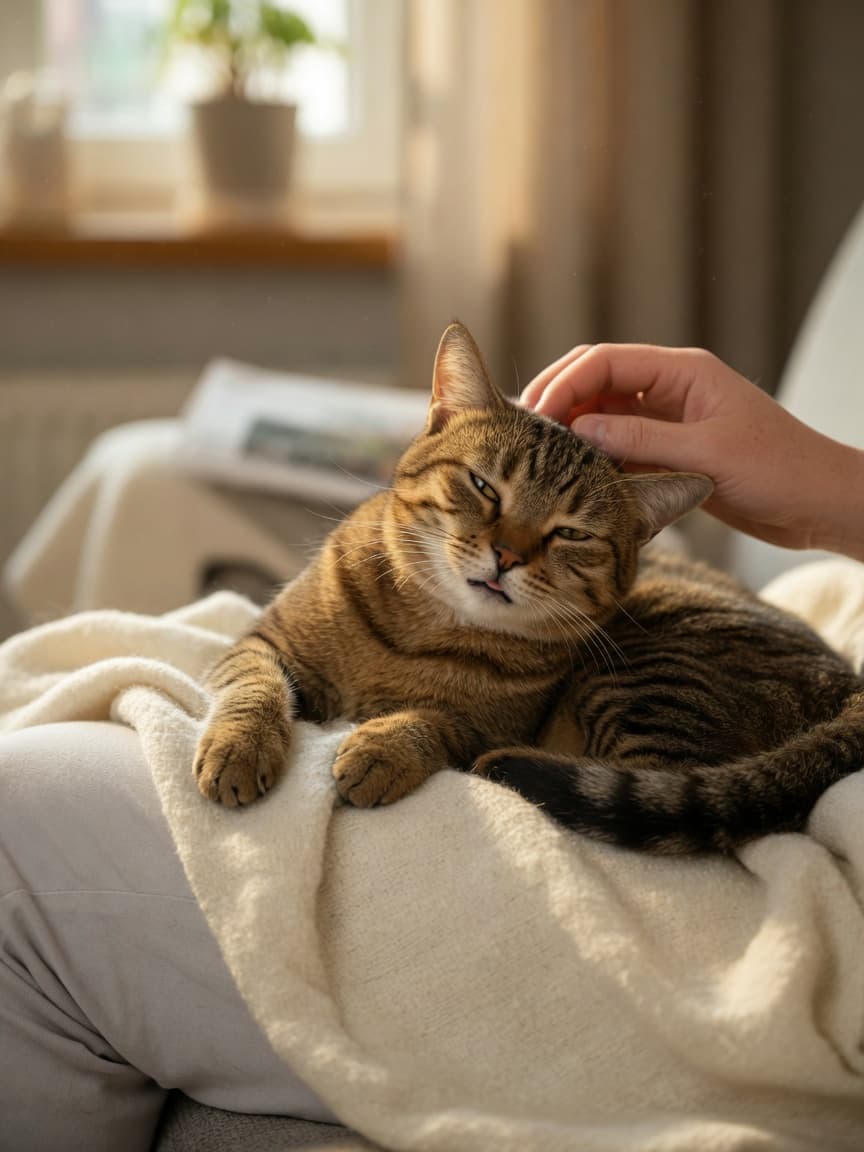
Yes, cats do purr when they're happy — let's not overcomplicate that. A cat kneading your lap, eyes half-closed, purring steadily, is almost certainly experiencing something we'd recognise as contentment. The purr in this context is a social communication: "I am comfortable, I am safe, I am not a threat, and I enjoy your company." Kittens begin purring within days of birth, and mother cats purr while nursing — it creates a mutual feedback loop of calm and connection that continues into adulthood with their human families.
Purring as Self-Healing
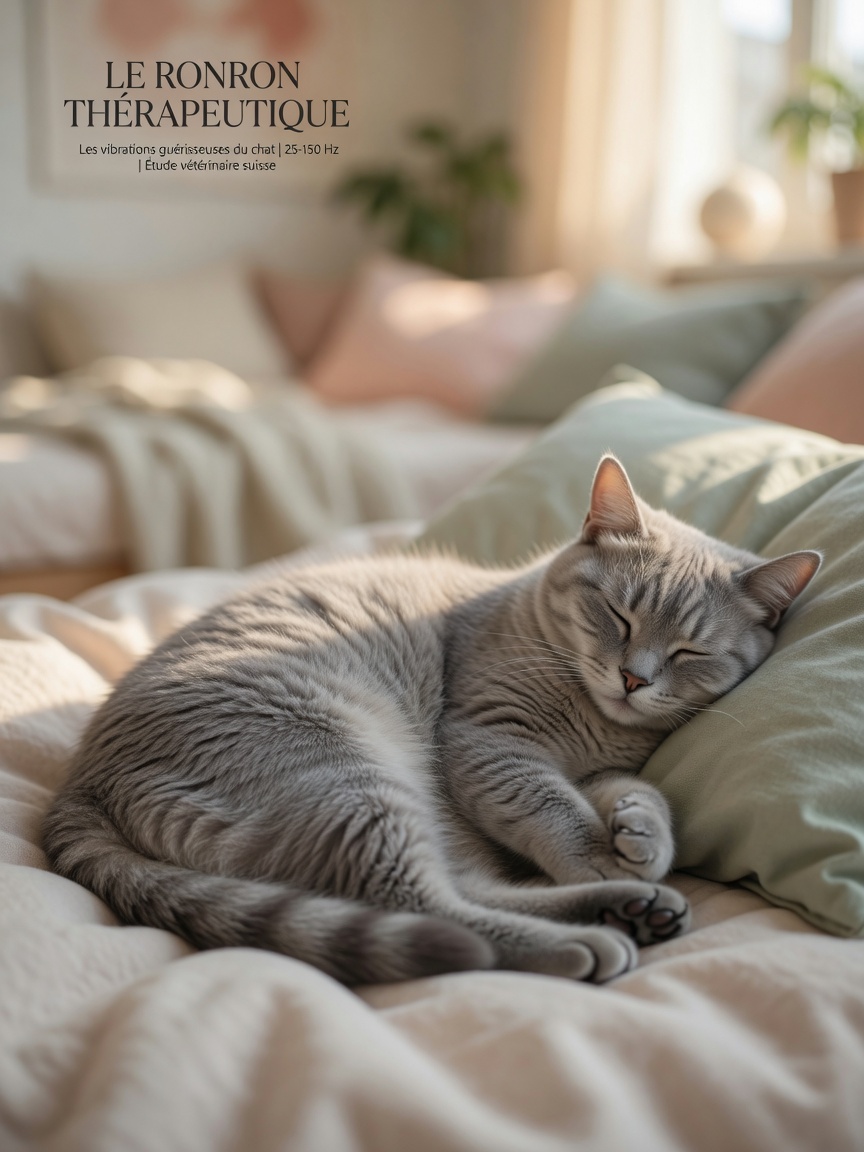
This is where it gets genuinely extraordinary. Numerous studies have investigated the therapeutic effects of low-frequency vibrations on bone and tissue, and the frequencies produced by cat purring sit squarely in the therapeutic range. Specifically, vibrations between 25–50 Hz have been shown to promote bone density and healing, while frequencies up to 150 Hz aid muscle repair, tendon healing, and reduction of swelling. Some researchers have proposed that cats evolved purring partly as a mechanism to maintain bone and muscle health during long periods of inactivity — since cats are crepuscular and spend up to 16 hours per day resting. They're running their own ultrasound machine while they nap.
Purring Under Stress and Pain
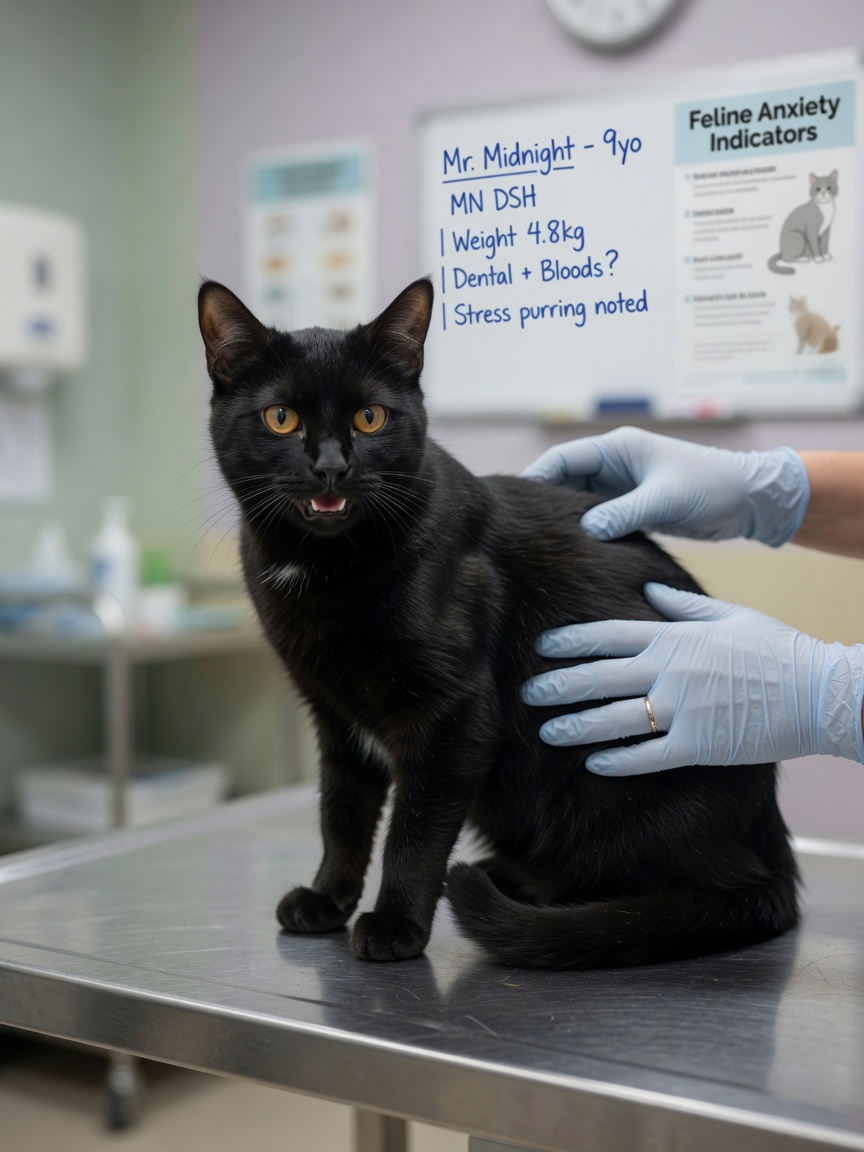
Vets regularly observe cats purring on the examination table — not because they enjoy being poked and prodded, but because purring appears to be a coping mechanism. Cats in pain, recovering from surgery, or in frightening situations will often purr as a form of self-soothing. It's analogous to a human humming quietly to themselves when anxious. The vibration activates the body's calming response and may also serve as a low-energy signal to others (human or animal) that "I am not aggressive, please don't hurt me."
The "Solicitation Purr" — When Cats Manipulate You
Researchers at the University of Sussex identified a specific type of purr that cats use exclusively when they want something — typically food. They called it the "solicitation purr." What makes it distinct is that it contains an embedded higher-frequency cry component, similar to a baby's cry in its acoustic profile. Humans find this sound harder to ignore than a regular purr — it triggers a mild urgency response. Cats seem to have figured this out and deploy the solicitation purr strategically when they want feeding, attention, or access to a room. If your cat's 6am purring has ever felt weirdly compelling despite your best efforts to sleep, this is why.
Do Big Cats Purr?
Only some. The ability to purr and the ability to roar are generally mutually exclusive. Lions, tigers, leopards, and jaguars can roar but cannot purr continuously — they can produce purr-like sounds only on the exhale. Cheetahs, cougars, and ocelots can purr properly (on both inhale and exhale) but cannot roar. This is due to differences in the hyoid bone structure in the throat. Domestic cats are firmly in the purring camp, sharing this trait with smaller wild felids. So while your tabby can't roar, their purr is the real deal — and medically more interesting anyway.
Purring in Senior Cats
As cats age, purring behaviour can change. Some senior cats purr more, possibly because they seek more reassurance and have higher pain levels that trigger self-soothing. Others purr less as they become less interactive. A sudden change in purring frequency — particularly a cat that stops purring altogether — can sometimes signal significant pain or neurological issues. If a cat who used to purr regularly goes quiet, it's worth noting alongside other symptoms and mentioning to your vet.
Can Purring Help Humans Too?
There is some evidence that it can. Studies on the stress-relieving effects of pet ownership consistently find that interacting with a purring cat reduces cortisol levels and lowers blood pressure in humans. Whether it's the vibration frequency, the warmth, or simply the psychological comfort of contact with a calm animal is hard to separate — but the effect is real enough that cat ownership has been linked in several epidemiological studies with reduced risk of heart attack and stroke. Turns out having a purring cat on your chest might be genuinely good for your cardiovascular health. Prescribe accordingly.
Key Takeaways
- Cats purr for many reasons: contentment, stress relief, pain management, communication, and manipulation.
- Purring frequencies (25–150 Hz) fall within the therapeutic range for promoting bone density and tissue healing.
- The "solicitation purr" contains a hidden cry-like frequency that humans find hard to ignore — cats use it deliberately to get what they want.
- Purring under stress or pain is a coping and appeasement mechanism, not a sign of happiness.
- A cat that stops purring after a lifetime of purring may be signalling pain or illness — worth monitoring.
Sources
- McComb K, Taylor AM, Wilson C, Charlton BD. "The cry embedded within the purr." Current Biology. 2009;19(13):R507-R508. PubMed PMID: 19602409.
- Muggenthaler E. "The felid purr: A healing mechanism?" Journal of the Acoustical Society of America. 2001;110(5):2666. doi:10.1121/1.4777098.
Written by Julia Wrenfield, Pet Wellness Researcher | ForPetsHealthcare.com