
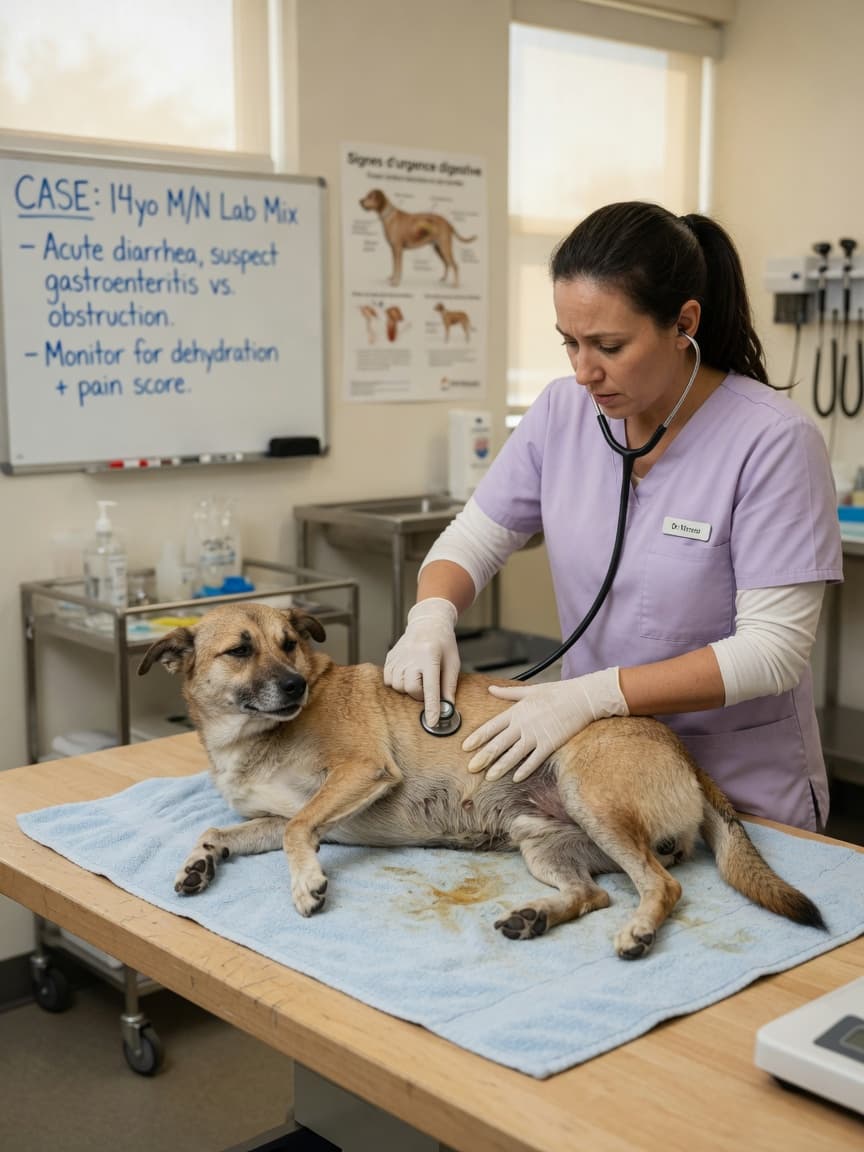
Dog diarrhoea is one of the most common concerns I see in practice, and whilst many cases resolve within 24-48 hours, knowing when to seek emergency veterinary care can be the difference between a minor upset and a serious health crisis. As a certified animal nutritionist and veterinary consultant, I've treated countless dogs experiencing digestive distress, and I'm here to help you recognise the red flags that demand immediate attention.
The Four Emergency Situations That Require Immediate Vet Care
1. Severe Dehydration and Bloody Diarrhoea
If your dog's stools contain blood (either bright red or dark, tar-like consistency) or your pet shows signs of dehydration—including dry gums, excessive panting, or lethargy—contact your vet immediately. Bloody diarrhoea can indicate conditions like haemorrhagic gastroenteritis (HGE), inflammatory bowel disease, or internal parasites. Dehydration in dogs progresses rapidly and can lead to organ failure if left untreated.
Check your dog's hydration status by gently pulling the skin on their neck. It should snap back quickly; if it moves slowly, dehydration is present.
2. Persistent Vomiting Combined with Diarrhoea
When your dog experiences both vomiting and diarrhoea simultaneously for more than 6-8 hours, this signals potential intestinal obstruction, pancreatitis, or severe gastroenteritis. These conditions can deteriorate rapidly. A dog unable to retain water or food risks shock and organ damage within hours.
Take note of how frequently your dog is vomiting and whether they're attempting to eat or drink between episodes—this information helps your vet immensely.
3. Abdominal Distension and Signs of Severe Pain
A distended (swollen or hard) abdomen, particularly when combined with whimpering, restlessness, or reluctance to move, suggests a surgical emergency such as bloat, intussusception (where the intestine telescopes into itself), or peritonitis. These conditions require emergency surgical intervention and cannot wait for a routine appointment.
4. Diarrhoea in Puppies, Elderly Dogs, or Immunocompromised Pets
Puppies under six months, senior dogs over ten years, and those with compromised immune systems cannot tolerate fluid loss as well as healthy adult dogs. Even mild-to-moderate diarrhoea in these populations warrants same-day veterinary evaluation. Young puppies particularly risk fatal conditions like parvovirus, whilst elderly dogs often have underlying conditions that complicate diarrhoea.
When to Schedule a Routine Vet Appointment
If your dog has mild diarrhoea without the emergency signs mentioned above, you can typically manage at home with a bland diet and close monitoring. However, schedule a routine appointment if:
- Diarrhoea persists beyond 2-3 days
- Your dog seems otherwise unwell (fever, lethargy, loss of appetite)
- Diarrhoea recurs frequently or cyclically
- Your dog is losing weight
- You notice mucus or unusual consistency
First Aid Whilst Awaiting Veterinary Care
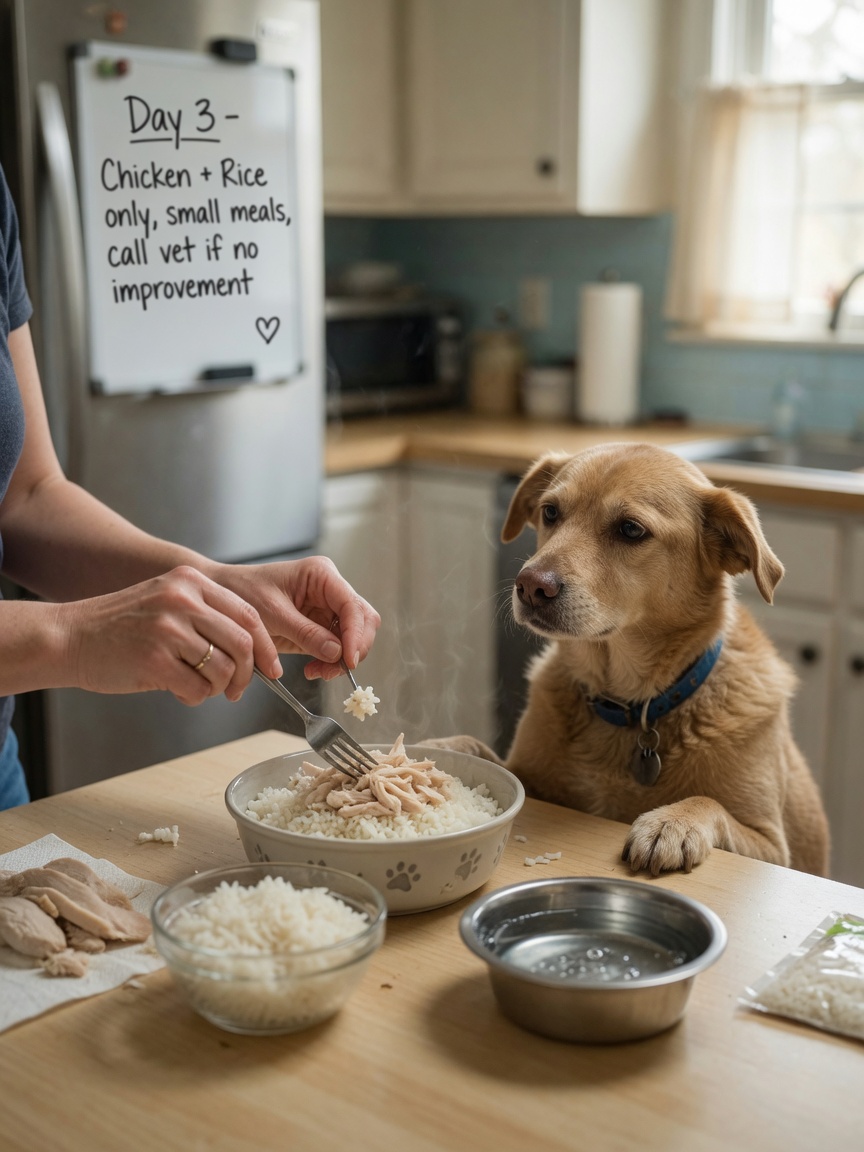
If your dog has mild diarrhoea and you're awaiting a routine appointment:
- Withhold food for 12-24 hours to allow the digestive system to settle
- Provide fresh water frequently in small amounts to prevent overhydration
- Introduce bland foods gradually—boiled chicken and white rice are excellent options
- Monitor bathroom habits and keep notes for your vet consultation
- Avoid treats, table scraps, and rich foods during recovery
Key Takeaways: When to Act Fast
Remember: you know your dog best. If something feels seriously wrong—trust your instinct. Emergency situations include bloody or severe diarrhoea with dehydration, combined vomiting and diarrhoea lasting over 6-8 hours, visible abdominal pain, or diarrhoea in vulnerable populations. For all other cases, aim for a routine appointment within 2-3 days if symptoms persist. When in doubt, ring your veterinary practice for guidance—it's what we're here for, and it's always better to seek advice early than face a genuine emergency.
```