
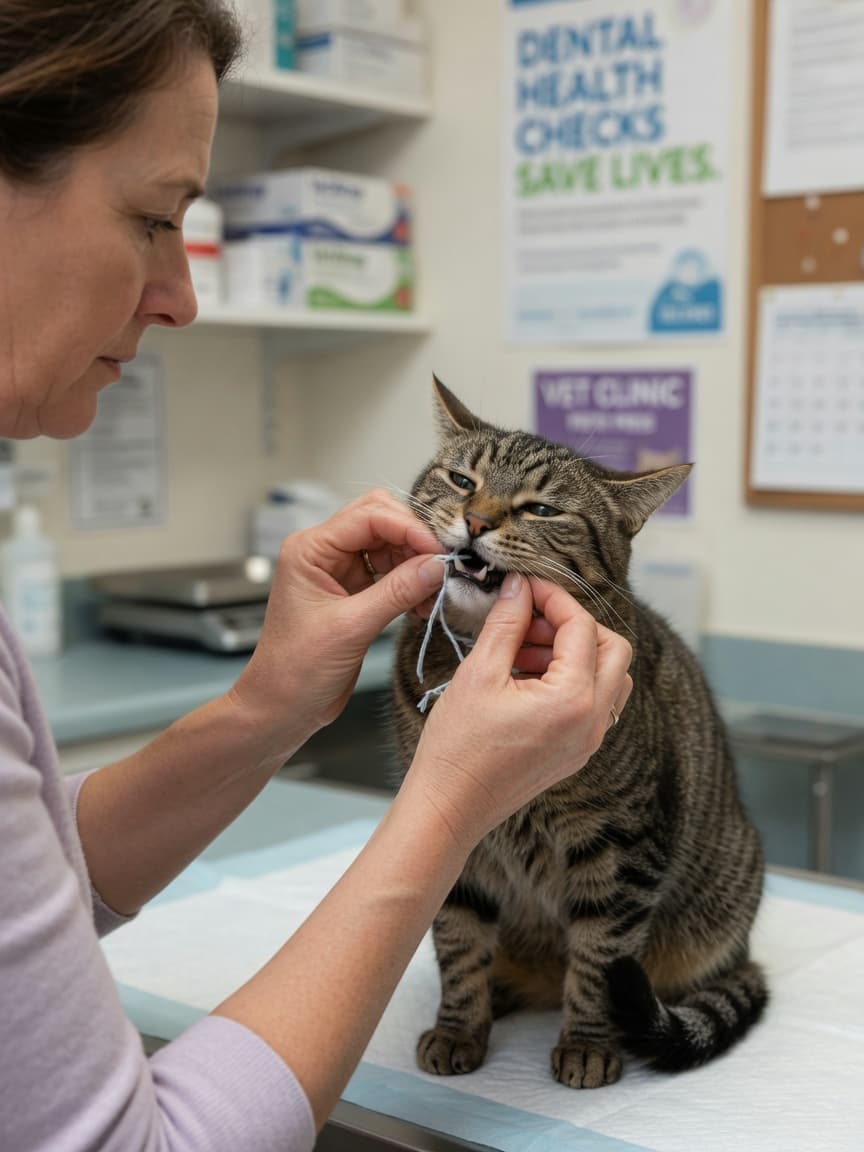
Finding a piece of string dangling from your cat's mouth or discovering it's gone missing can be alarming. Cats are naturally drawn to string-like objects, but swallowing them poses serious health risks. Linear foreign bodies—such as string, thread, tinsel, and dental floss—are among the most common causes of intestinal obstruction in cats and may require emergency veterinary intervention. Knowing how to respond quickly and appropriately could save your cat's life.
Why String Is Dangerous for Cats
String doesn't pass through a cat's digestive system like it might in larger animals. Instead, it can become anchored in the stomach or small intestine, causing the bowel to bunch up like an accordion as the intestines try to move it along. This creates a potentially life-threatening obstruction that cuts off blood supply to the affected tissue. Even small amounts of string can cause serious problems, and the damage can occur within hours or develop gradually over several days.
Immediate Steps to Take
If you believe your cat has swallowed string, don't panic—but do act quickly:
- Stop pulling: If you see string protruding from your cat's mouth or rear end, resist the urge to pull it out. This can cause severe internal damage to the digestive tract. Your cat needs professional help.
- Contact your vet immediately: Call your veterinary surgery or emergency clinic straight away. Describe what happened and how long ago it occurred. Many vets will recommend bringing your cat in for examination urgently.
- Restrict food and water: Stop feeding your cat until you've spoken to your vet, as they may need imaging or surgery and should have an empty stomach.
- Monitor for symptoms: Watch for signs of distress, including vomiting, lethargy, abdominal pain, constipation, or loss of appetite.
Diagnosis and Veterinary Treatment
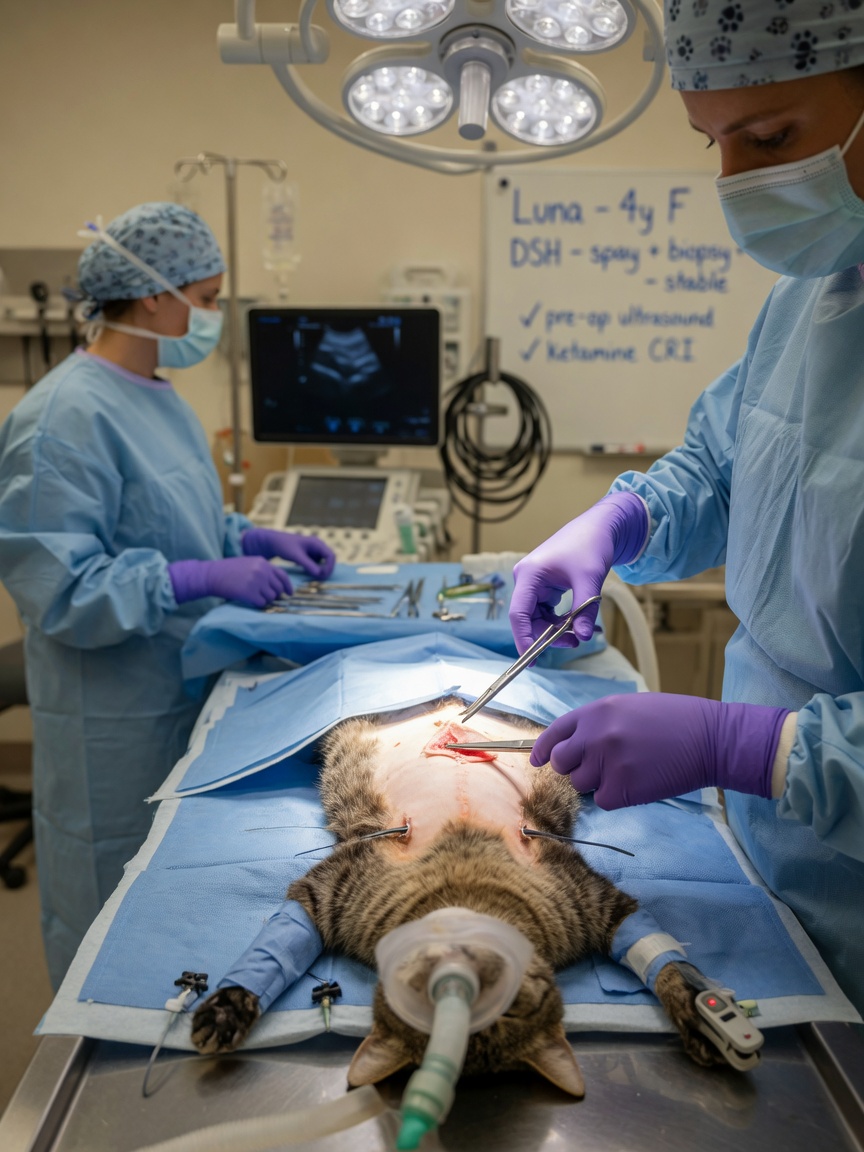
Your vet will perform a physical examination and likely recommend diagnostic imaging, such as X-rays or ultrasound, to confirm an obstruction. If string is confirmed, surgery is usually the only effective treatment. During the procedure, your vet will locate the blockage and carefully remove it, checking for any damage to the intestinal lining.
In some cases, if the string was swallowed very recently and the cat shows no symptoms, your vet may monitor the situation closely with follow-up imaging. However, most linear foreign bodies require surgical removal.
Prevention: Protecting Your Cat
Prevention is far easier and safer than treatment:
- Store yarn, thread, and string securely in closed containers
- Keep tinsel, ribbon, and decorations out of reach during festive seasons
- Supervise playtime with toy mice or fishing rod toys, and put them away after use
- Use sturdy, purpose-designed cat toys rather than improvised items
- Be cautious with household items like rubber bands, hair ties, and dental floss
- Keep your rubbish bin secure and inaccessible
- Regularly inspect toys for loose threads or damaged seams
When to Seek Emergency Care
Contact an emergency vet immediately if your cat shows any of these signs:
- Persistent vomiting
- Inability to defecate or constipation lasting more than a few hours
- Severe abdominal pain or a hunched posture
- Lethargy or collapse
- Loss of appetite
- Visible string protruding from the mouth or rear
Key Takeaways
String ingestion is a genuine emergency that requires prompt veterinary attention. Never attempt to remove string yourself, and always contact your vet immediately if you suspect your cat has swallowed it. Most cases require surgery, but early intervention offers the best outcomes and reduces the risk of serious complications. By securing string-like objects and choosing safe toys, you can significantly reduce the chances of this frightening scenario happening in your home. Your cat's safety depends on quick action and professional veterinary care.