
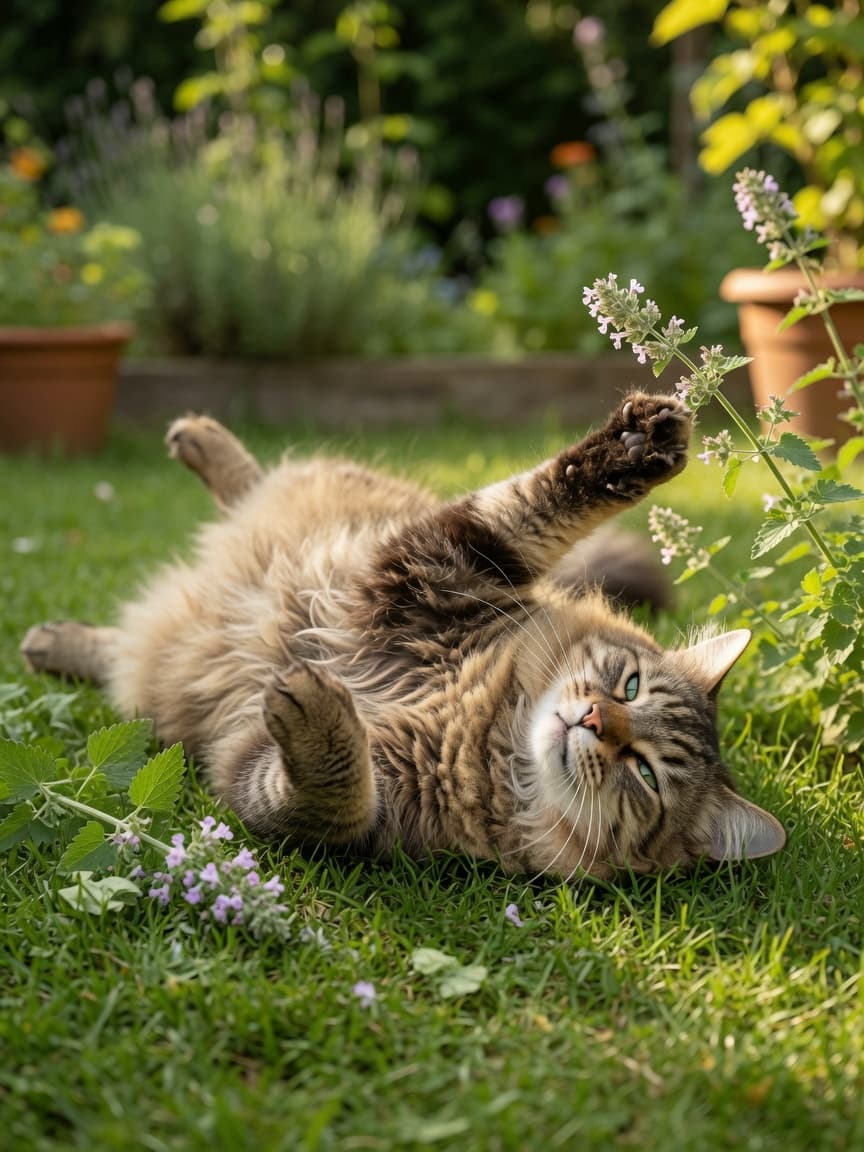
If you've ever watched your cat transform from a calm, dignified pet into a rolling, purring ball of joy at the mere whiff of catnip, you've witnessed one of nature's most fascinating feline phenomena. But what exactly is this mysterious plant, and why does it have such a dramatic effect on our beloved cats? Understanding catnip can help you use it safely and effectively to enrich your cat's life, and it might even explain some of your pet's strangest behaviours.
What Is Catnip, Exactly?
Catnip, scientifically known as Nepeta cataria, is a perennial herb from the mint family native to Central Asia, the Middle East, and parts of Europe. The plant produces small, pale purple or white flowers and reaches heights of around 50-100 centimetres when fully grown. You might even find it growing wild in European gardens.
The magic ingredient in catnip is an essential oil called nepetalactone. This organic compound is naturally present in the plant's leaves, stems, and seeds, and it's what triggers the characteristic response in cats. Interestingly, humans cannot smell nepetalactone in the same way cats can, which is why we can't understand the appeal—but your cat finds it absolutely irresistible.
How Does Catnip Affect Cats?
When a cat encounters catnip, the nepetalactone molecules bind to receptors in the cat's nasal tissue, which then sends signals to the brain's olfactory centre. This triggers a response that most cat owners find absolutely entertaining:
- Rolling and rubbing: Cats often roll around on catnip, seemingly unable to control themselves
- Purring and vocalisation: Many cats become extra vocal and affectionate
- Increased playfulness: Your pet may suddenly become energetic and playful
- Salivation: Some cats drool slightly when exposed to catnip
- Relaxation: After the initial excitement wears off, cats often become very calm
This response typically lasts between 5 and 15 minutes, after which your cat will need a break. Most cats won't respond to catnip again for a couple of hours, even if exposed to it repeatedly.
Why Don't All Cats Respond to Catnip?
Not every cat is affected by catnip—in fact, approximately 30-40% of felines show no response whatsoever. This variation is entirely genetic. Kittens under eight weeks old also rarely respond to catnip; their sensitivity develops as they mature. Senior cats and those with certain health conditions may also show reduced interest.
If your cat doesn't respond to catnip, don't worry. It's perfectly normal, and many cats find alternative enrichment sources equally rewarding, such as silvervine or valerian.
Safe and Sensible Use of Catnip
Catnip is entirely safe for cats when used responsibly. Here's how to use it wisely:
- Limit catnip sessions to 2-3 times weekly to prevent habituation and maintain your cat's interest
- Store dried catnip in an airtight container away from light and heat to preserve potency
- Start with small amounts and observe your cat's reaction
- Never force catnip on an unwilling cat
- Ensure your cat cannot accidentally ingest large quantities of the plant material
Fresh catnip plants in your garden (if you have one) can also provide ongoing enrichment, though keep them away from outdoor areas where your cat might overindulge.
Key Takeaways
Catnip is a safe, natural way to enrich your cat's environment and provide mental stimulation. Its effects are temporary, non-addictive, and harmless, making it an excellent tool for encouraging exercise and play. Remember that not all cats respond to it, and that's perfectly fine—every feline is unique. When used occasionally and appropriately, catnip can be a delightful part of your cat's enrichment routine.