
The Debate That Has Run For Decades
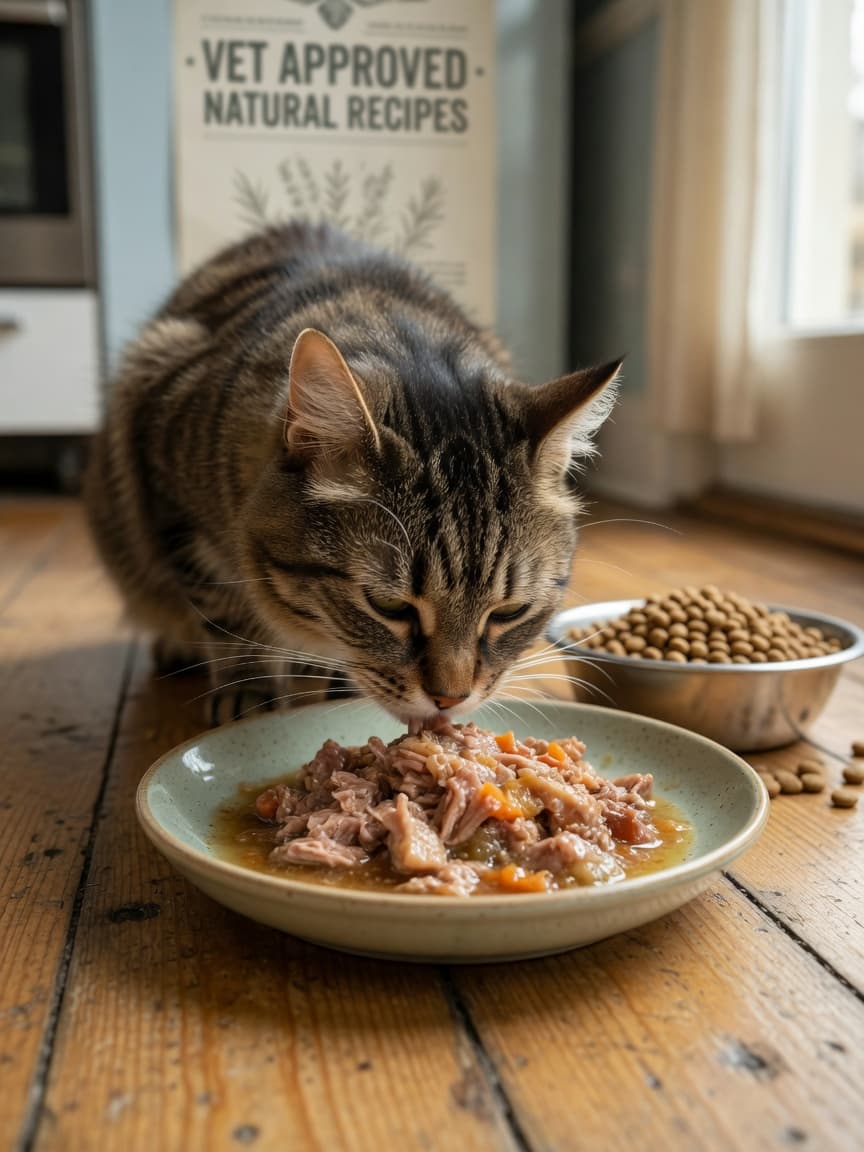
Ask ten cat owners whether wet or dry food is better and you will get ten different answers — usually delivered with considerable conviction. The dry food camp points to dental health and convenience. The wet food camp cites hydration and protein content. Both sides have a point, and the honest nutritional picture is more nuanced than either camp typically acknowledges. Here is what the science actually says, without the brand loyalty and marketing spin.
The Hydration Argument Is Genuinely Important
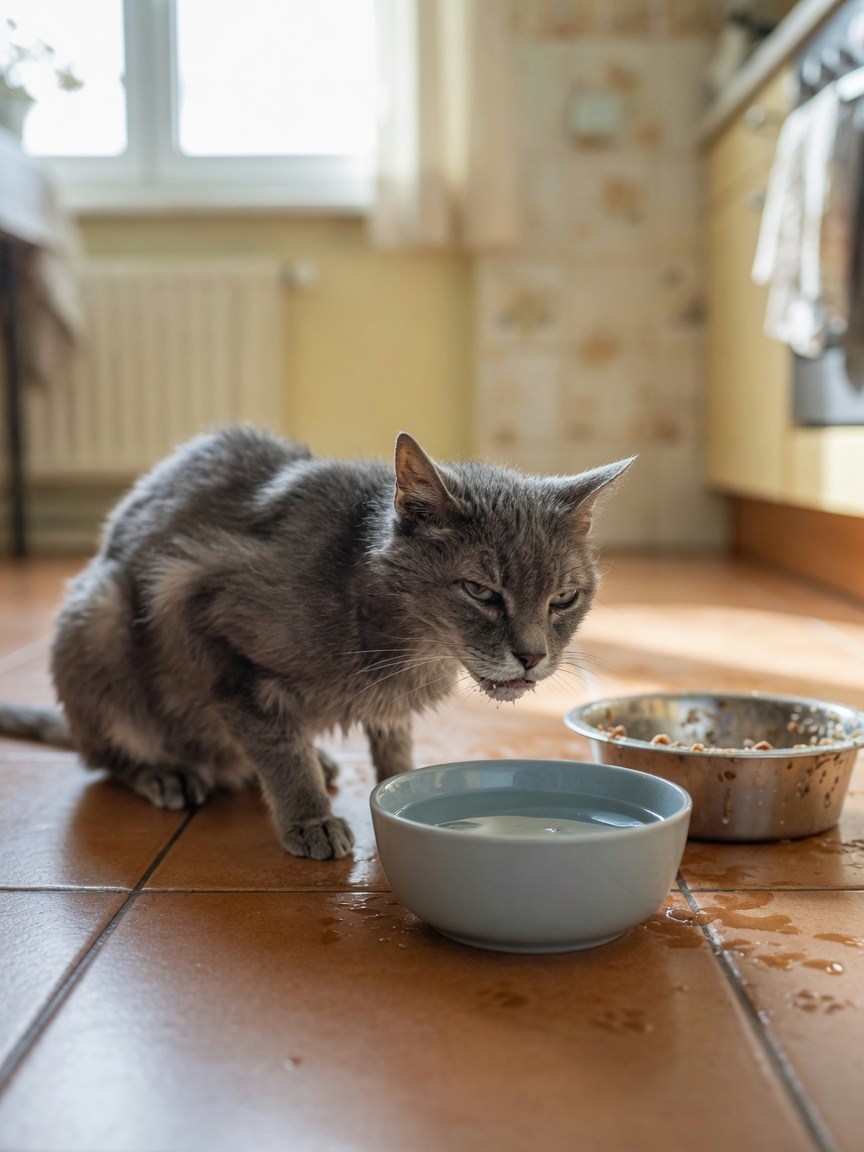
Cats evolved in arid environments and have a notoriously low thirst drive compared to other mammals. Their ancestral diet — small prey animals — was approximately 70% water, which meant they obtained most of their hydration from food rather than from a separate water source. Domestic cats retain this evolutionary characteristic. Many cats on dry food diets drink less total water than they need, existing in a state of chronic mild dehydration.
This matters significantly for kidney function and urinary tract health. Concentrated urine produced by an insufficiently hydrated cat increases the risk of urolithiasis — bladder stones and crystals — and creates an environment that irritates the bladder lining, contributing to feline idiopathic cystitis. Chronic low-grade dehydration is also thought to accelerate the progression of chronic kidney disease over time.
Wet food, which typically contains 70 to 80% moisture, effectively mimics the water content of prey. A cat eating wet food as its primary diet will obtain a substantial portion of its daily water requirement from food, significantly reducing the burden on its kidneys and urinary tract.
Protein and Carbohydrate Profiles Differ Significantly
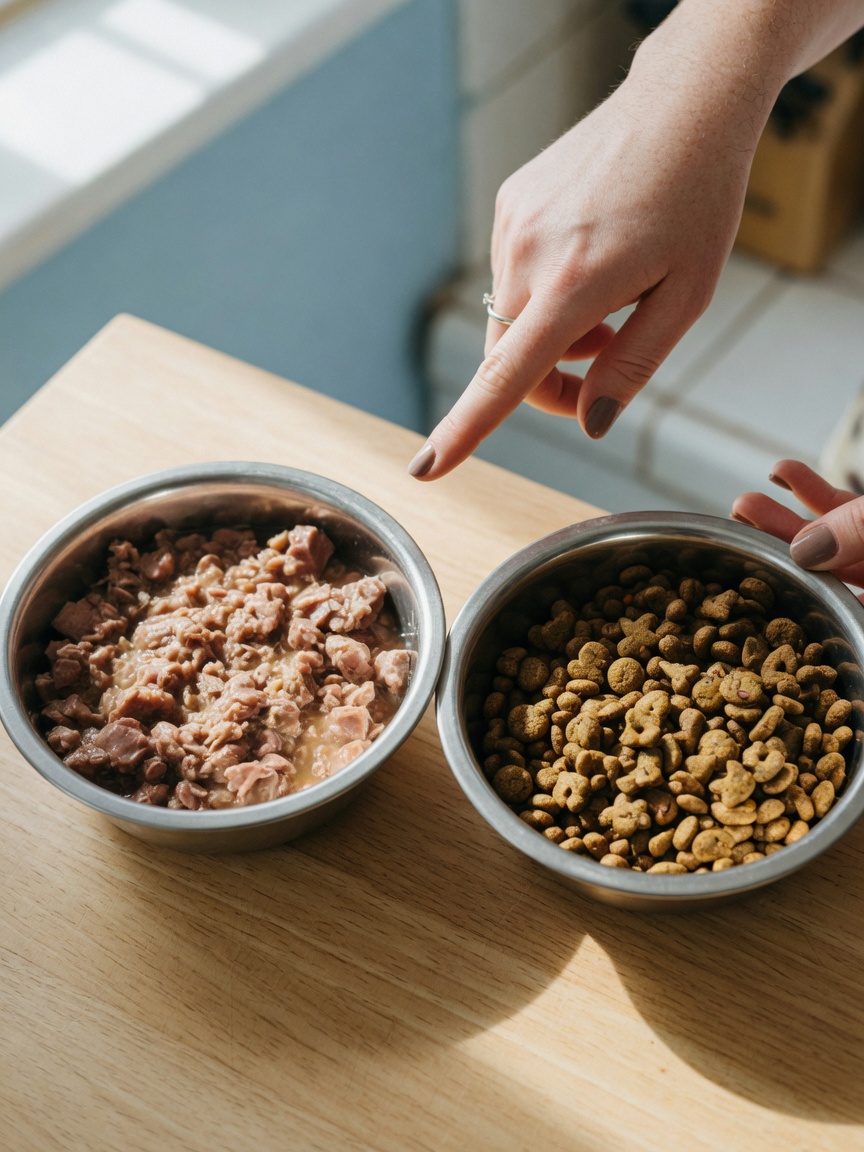
The macronutrient composition of wet and dry cat food tends to differ in ways that matter for feline physiology. Dry cat food requires a binding agent — something to hold the kibble together through the extrusion process — and carbohydrates serve this role. Most dry cat foods contain between 25 and 50% carbohydrates on a dry matter basis. Some premium formulations achieve lower figures, but the physical requirements of kibble production impose a floor.
Cats have limited ability to utilise dietary carbohydrates. They have low amylase activity in their saliva and intestine, and their liver enzymes for processing glucose are not designed for high-carbohydrate loads. Research has linked high-carbohydrate diets in cats to obesity and type 2 diabetes — conditions that have increased substantially in prevalence as dry food has become the dominant feeding method in many households.
Wet cat food, by contrast, can achieve much lower carbohydrate levels — often below 10% on a dry matter basis — while maintaining adequate protein from named animal sources. This more closely reflects the macronutrient profile a cat is designed to process.
The Dental Health Claim Deserves Scrutiny
One of the most frequently cited arguments in favour of dry food is that the mechanical action of chewing kibble cleans teeth and reduces tartar build-up. This claim is not well supported by the evidence. Most cats do not chew kibble thoroughly — they tend to crack it and swallow, with minimal abrasive contact with the tooth surface. Studies examining dental health outcomes between wet and dry-fed cats have not found convincing evidence that standard dry kibble provides meaningful dental benefit.
Certain prescription dental diets are different — these are specifically formulated with a larger kibble size and a texture engineered to provide mechanical cleaning, and they have clinical evidence behind them. Standard dry food, however, should not be fed primarily on the grounds of dental health without appropriate scepticism.
The most effective approaches to feline dental health are tooth brushing, veterinary descaling under anaesthesia when needed, and dental treats or diets with genuine clinical evidence — not relying on daily kibble as a de facto dental intervention.
Palatability, Variety, and Behavioural Wellbeing
Wet food tends to be more palatable for most cats, which matters when feeding elderly, sick, or finicky eaters. The aroma and moisture content of wet food stimulate appetite more reliably than dry food for many individuals. For cats recovering from illness, managing chronic conditions, or simply losing interest in eating as they age, palatability can be the difference between adequate and insufficient intake.
Variety in texture, protein source, and format also matters for behavioural wellbeing. Cats fed exclusively on one type of food from kittenhood can develop strong food preferences that make dietary transitions difficult later in life — including when a prescription diet becomes necessary for health reasons. Introducing variety early and rotating between protein sources and formats supports dietary flexibility.
What About Cost and Convenience?
These are legitimate considerations for most owners and are worth acknowledging rather than dismissing. Wet food is generally more expensive per calorie than dry food, and it requires refrigeration after opening. For households managing budgets carefully, an exclusively wet food diet may not be feasible.
A practical middle ground adopted by many nutritionists and veterinarians is a predominantly wet food diet supplemented with a smaller portion of high-quality dry food. This approach improves hydration outcomes compared to dry-only feeding while remaining more manageable in cost and convenience than an exclusively wet diet. If dry food is fed, choosing formulations with the lowest carbohydrate content, named animal protein sources, and no inorganic phosphate additives represents the best available option within that category.
The Honest Verdict
Wet food more closely mirrors the moisture content, protein levels, and macronutrient profile that feline physiology is designed for. The evidence for wet food's benefits in hydration, urinary tract health, and blood glucose management is more robust than the evidence for any specific benefit of dry food. If budget and circumstances allow, wet food should form the majority of an adult cat's diet.
Dry food is not harmful when fed as part of a balanced approach, but positioning it as equal or superior to wet food on nutritional grounds requires ignoring a significant body of evidence. The clearest, most defensible advice is to feed as much wet food as is practically feasible, choose quality over marketing claims, and keep fresh water available at all times regardless of diet type.