
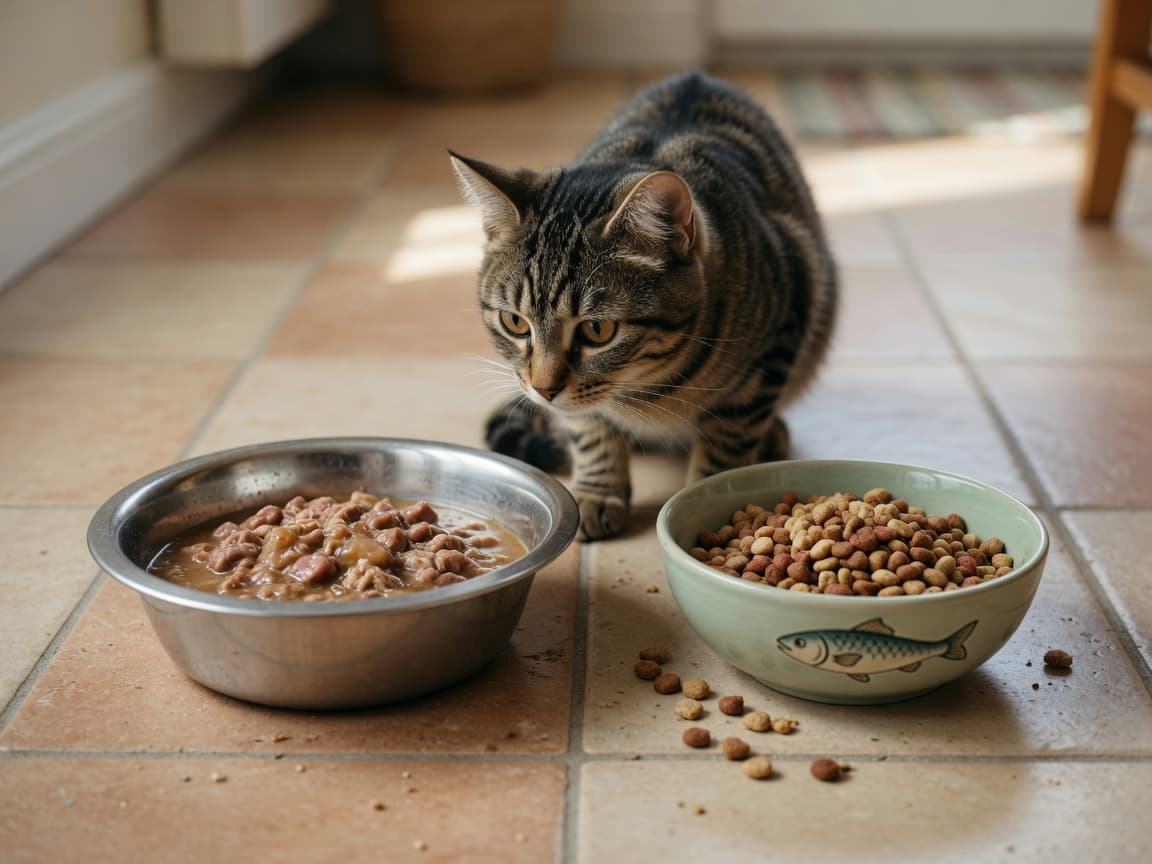
The Diet Question Every Cat Owner Faces
Walk into any veterinary clinic and ask about diet for a cat with urinary problems, and you will almost certainly be told to switch to wet food. But why? And is the evidence actually strong enough to justify that recommendation? The research on feline diet and urinary health has grown considerably over the past two decades, and the picture it paints is consistent enough to draw some clear conclusions.
The Hydration Gap Between Wet and Dry Food
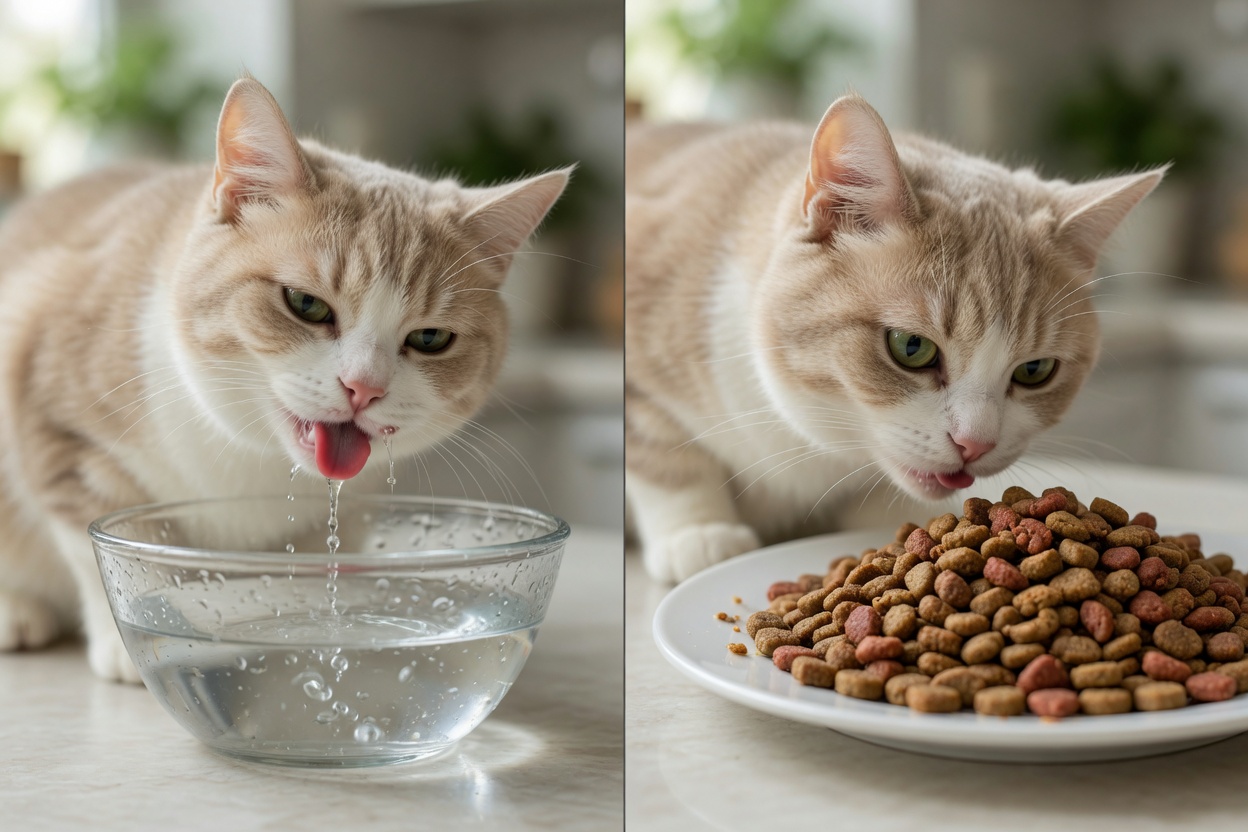
The most fundamental difference between wet and dry food in the context of urinary health is moisture content. Wet food typically contains 70 to 80 percent water. Dry kibble, by contrast, contains roughly 6 to 10 percent moisture. This is not a minor difference — it is a dramatic gap that has real consequences for how a cat's kidneys and bladder function.
Cats evolved as desert-dwelling animals with a naturally low thirst drive. Unlike dogs, cats do not compensate well for a dry diet by drinking significantly more water. Research published in the Journal of Feline Medicine and Surgery and elsewhere has demonstrated that cats fed exclusively dry food consistently produce more concentrated urine than those eating wet food, even when water is freely available. This concentrated urine contains higher levels of dissolved minerals and lower volumes of fluid, creating conditions more favourable for crystal formation and bladder irritation.
Urine Concentration: The Key Metric
Urine specific gravity (USG) is the standard measure of how concentrated urine is. In cats on dry food, USG is commonly measured above 1.050 — quite concentrated. Cats on wet food diets tend to produce urine with a USG in the range of 1.020 to 1.035. While neither extreme is necessarily pathological, the lower concentration achieved with wet food dilutes the minerals and substances that contribute to crystal formation and bladder wall irritation.
A study published in the American Journal of Veterinary Research compared cats fed wet versus dry diets and found that total daily urine output was significantly higher in the wet food group, despite similar caloric intake. Urine mineral concentration was correspondingly lower, suggesting reduced risk of urinary crystal formation.
Crystal Formation and pH
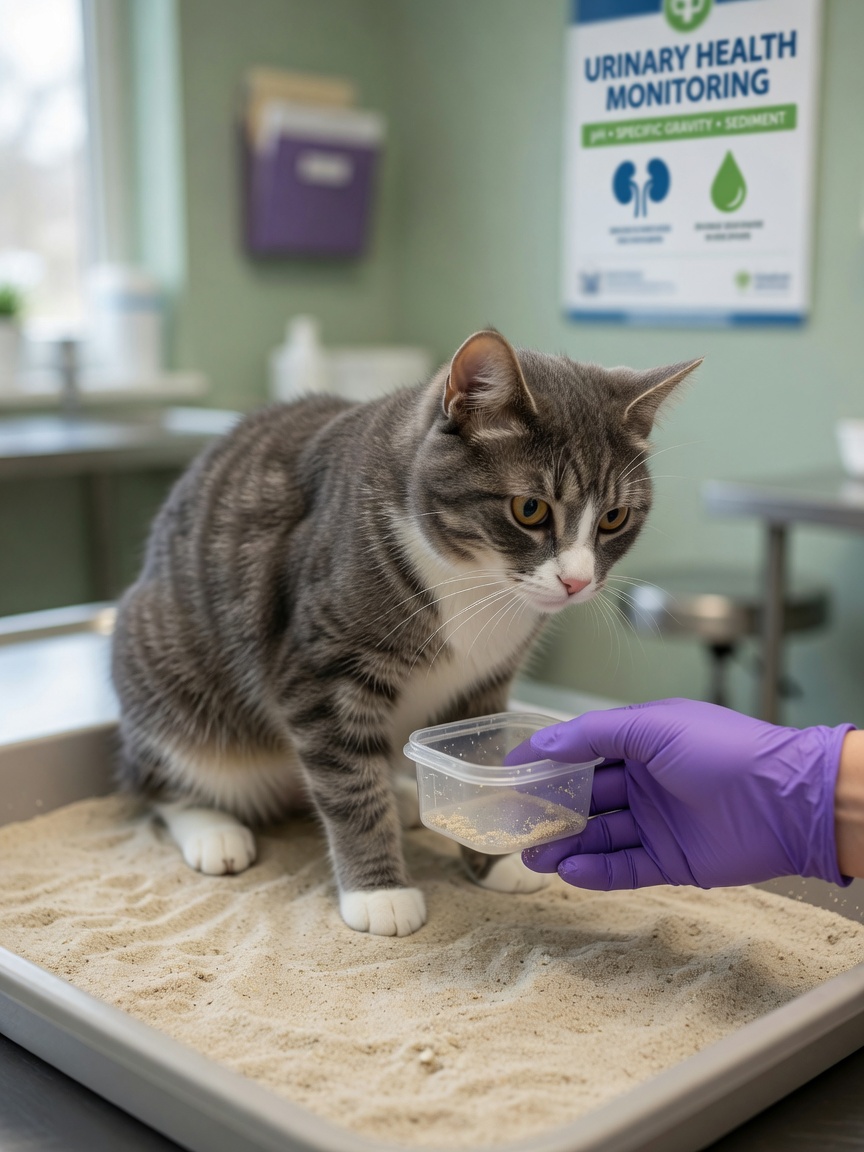
Two of the most common types of crystals found in feline urine are struvite (magnesium ammonium phosphate) and calcium oxalate. Their formation is influenced not only by mineral concentration but also by urinary pH. Struvite crystals form preferentially in alkaline urine (pH above 6.5), while calcium oxalate crystals are more common in acidic urine (pH below 6.3).
Dry food diets, particularly those high in plant-based proteins and carbohydrates, tend to produce more alkaline urine. Wet food diets, especially those higher in animal protein, generally result in a slightly more acidic urinary pH — closer to the range that minimises struvite formation without pushing into the oxalate-prone zone. This is one reason prescription urinary diets are often formulated as wet foods, or at minimum as dry diets with specific mineral and pH targets.
It is worth noting that carbohydrate content differs substantially between wet and dry cat food. Most dry kibble contains 30 to 50 percent carbohydrates by dry matter weight, while wet foods are typically much lower. Since cats are obligate carnivores with limited capacity to metabolise carbohydrates, high-carbohydrate dry diets may also contribute to other metabolic issues over time.
What About Dry Urinary Diets?
The pet food industry has developed dry kibble formulations specifically marketed for urinary health. These diets are typically modified to reduce magnesium, phosphorus, and sodium content, and to target a urinary pH in the mild acidic range. They represent an improvement over standard dry food for cats with urinary concerns, but they do not resolve the core hydration problem.
Cats eating these prescription dry diets still produce significantly more concentrated urine than cats eating wet food — whether standard or prescription. For this reason, many veterinary nutritionists regard prescription dry urinary diets as a compromise rather than an ideal solution, most useful in situations where a cat absolutely refuses wet food or where the owner cannot practically manage a wet diet.
The Evidence on FLUTD Recurrence
Several studies have looked at whether diet type influences the recurrence of feline lower urinary tract disease episodes, particularly feline idiopathic cystitis. The findings are not entirely uniform, partly because FIC is multifactorial and stress plays such a significant role. However, the general weight of evidence supports the conclusion that increased water intake — most easily achieved through wet food — reduces the frequency and severity of recurrent episodes.
A landmark study by Markwell et al., published in the Journal of Small Animal Practice, found that cats with a history of urinary problems had significantly fewer recurrences when fed a moist diet compared to dry food. The reduction in urine concentration and increased daily urine volume were identified as the likely mechanisms.
Practical Considerations for Owners
The research case for wet food in urinary health is persuasive, but the practical reality of cat ownership means that transitions need to be managed thoughtfully. Some cats are deeply habituated to dry food and will initially refuse wet alternatives. A slow transition over two to four weeks, gradually mixing increasing proportions of wet food into the dry, is usually more successful than an abrupt switch.
- Start with a small amount of wet food alongside the existing dry food
- Try different protein sources and textures — some cats prefer pate, others chunks in gravy
- Warm the wet food slightly to enhance aroma, which can encourage reluctant cats to try it
- If a full switch is not achievable, even a partial wet food diet offers some hydration benefit over an exclusively dry one
For cats with an established diagnosis of urinary disease, the dietary change should be discussed with a vet who can recommend appropriate formulations based on the specific underlying cause. Not all urinary diets are interchangeable — a food designed to dissolve struvite stones actively acidifies the urine and could be harmful in a cat with a tendency toward oxalate crystals.