
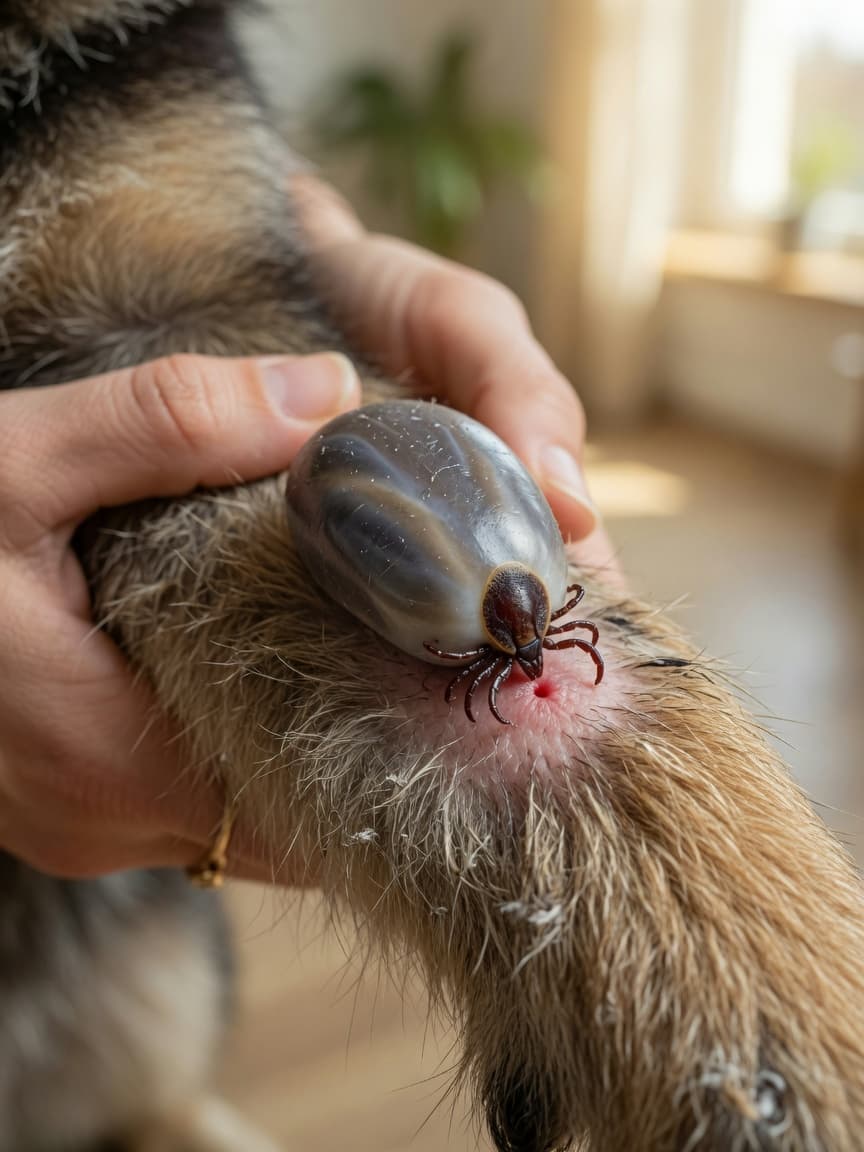
The UK Tick Landscape Has Changed
Tick-borne disease in the UK was once considered a relatively minor concern compared to mainland Europe. That situation has shifted considerably over the past two decades. A combination of factors — milder winters, increasing deer populations, changes in land use, and greater pet travel — has led to both an expansion of tick habitats and the emergence of pathogens that were not previously established on British soil.
For pet owners, understanding which diseases are now present in the UK, and which may be imported by travelling pets, is increasingly important for making informed decisions about tick prevention and knowing when to seek veterinary attention.
Lyme Disease: The Most Common Tick-Borne Threat

Lyme disease, caused by the bacterium Borrelia burgdorferi, is the most widespread tick-borne disease in the UK and is transmitted by the sheep tick, Ixodes ricinus. This species is found throughout the British Isles, with the highest density populations recorded in Scotland, the New Forest, the South Downs, Exmoor, and the Lake District — though ticks are present in woodland and grassland areas across the entire country.
Dogs can contract Lyme disease, though clinical illness is less common in dogs than the infection rate might suggest. When symptoms do develop, they typically include shifting lameness, joint swelling, lethargy, and fever. A more serious complication — Lyme nephritis, a protein-losing kidney condition — can occur in certain breeds, particularly Labrador Retrievers and Golden Retrievers, and carries a guarded prognosis.
Cats appear relatively resistant to clinical Lyme disease, though they can carry infected ticks into the home.
Anaplasma phagocytophilum: Increasingly Recognised
Anaplasma phagocytophilum, the causative agent of granulocytic anaplasmosis, is also transmitted by Ixodes ricinus and is now recognised as an emerging concern in the UK. It infects white blood cells and can cause fever, lethargy, loss of appetite, and thrombocytopaenia (low platelet counts) in dogs.
The condition responds well to doxycycline when diagnosed promptly, but it is frequently missed because its symptoms overlap with many other conditions. Interestingly, the same tick species — and often the same individual tick — can carry both Borrelia and Anaplasma simultaneously, meaning co-infections are possible.
Babesia canis: A New and Serious Arrival

Perhaps the most significant development in UK tick-borne disease in recent years has been the establishment of Babesia canis in Essex. Babesia is a protozoan parasite that infects and destroys red blood cells, causing haemolytic anaemia. In Europe, it is transmitted primarily by Dermacentor reticulatus, the marsh or ornate dog tick.
Prior to 2016, Babesia canis in the UK was seen only in dogs that had travelled abroad. The cases identified in Essex in 2016 — in dogs that had not left the country — confirmed that D. reticulatus had established a population on British soil, likely in the Tendring peninsula area. Subsequent surveys have confirmed ongoing presence.
- Symptoms include pale or yellow gums, dark-coloured urine, weakness, and collapse
- The disease can be rapidly fatal without prompt treatment
- Treatment involves specialist antiprotozoal drugs and often supportive care including blood transfusion
- There is currently no licensed vaccine available in the UK
Babesia canis is now a notifiable disease in dogs under the Animal Health Act in the UK, reflecting the seriousness with which authorities view its establishment.
Hepatozoon canis: Imported Risk
Hepatozoon canis is a tick-borne protozoan that, unusually, is transmitted not through the tick's bite but when a dog ingests an infected tick during grooming. It is endemic in southern Europe and is most commonly seen in the UK in dogs that have travelled abroad or in imported rescue dogs.
Clinical signs can range from asymptomatic to severe, including fever, muscle wasting, pain, and ocular discharge. The condition is difficult to treat and tends to be managed rather than cured, with periodic recrudescence common. Dogs imported from Spain, Portugal, and Eastern Europe are at particular risk.
Ehrlichia canis: A Travel-Related Concern
Ehrlichia canis causes canine monocytic ehrlichiosis and is widespread in southern Europe and the tropics. It is transmitted by the brown dog tick, Rhipicephalus sanguineus, which does not survive outdoors in the UK climate but can establish indoors in kennels and heated buildings.
This disease is not currently endemic in the UK but is seen in travelling or imported dogs. Acute signs include fever, lymphadenopathy, and bleeding disorders. Chronic infection can lead to bone marrow suppression. Like anaplasmosis, it responds to doxycycline, though chronic cases have a more guarded prognosis.
Tick Prevention: The Practical Approach
Given the range of pathogens now linked to UK ticks, consistent tick prevention is a rational choice for any dog that spends time outdoors — which is essentially all of them.
- Veterinary-licensed tick repellents and acaricides are available as spot-ons, collars, and oral treatments
- Check dogs thoroughly after walks in high-risk habitats, paying attention to the head, neck, ears, groin, and between the toes
- Remove attached ticks promptly using a tick hook or fine-tipped tweezers — never use heat or petroleum jelly
- Transmission of most pathogens requires the tick to be attached for at least 24 to 48 hours, so prompt removal genuinely reduces risk
- If your dog has travelled to southern or eastern Europe, inform your vet even if symptoms seem non-specific
When to See a Vet
Any dog that has been exposed to ticks and develops fever, lethargy, joint pain, pale gums, or unexplained bleeding should be assessed promptly. Many tick-borne diseases are treatable when caught early but can become life-threatening if diagnosis is delayed. Blood tests including a full blood count and specific serology for tick-borne pathogens are available through most veterinary practices and can often provide answers within a day or two.
The tick situation in the UK is not cause for panic, but it does warrant awareness. Knowing which parasites are present, what they can cause, and how to reduce exposure puts you in a much stronger position to protect your animals.