
Understanding Tapeworms in Pets
Tapeworms are flat, segmented intestinal parasites that can infect both dogs and cats. Unlike roundworms, tapeworms cannot spread directly from one pet to another — they all require an intermediate host to complete their lifecycle. This means that the type of tapeworm your pet is at risk from depends largely on their lifestyle, their environment, and whether they receive regular flea treatment.
Several species of tapeworm are relevant to UK pet owners, each with a different lifecycle and a different level of risk to human health. Knowing which species is which helps you understand why your vet may recommend different products at different times of year — or why they ask about your pet's hunting habits or travel history.
Dipylidium Caninum: The Flea Tapeworm
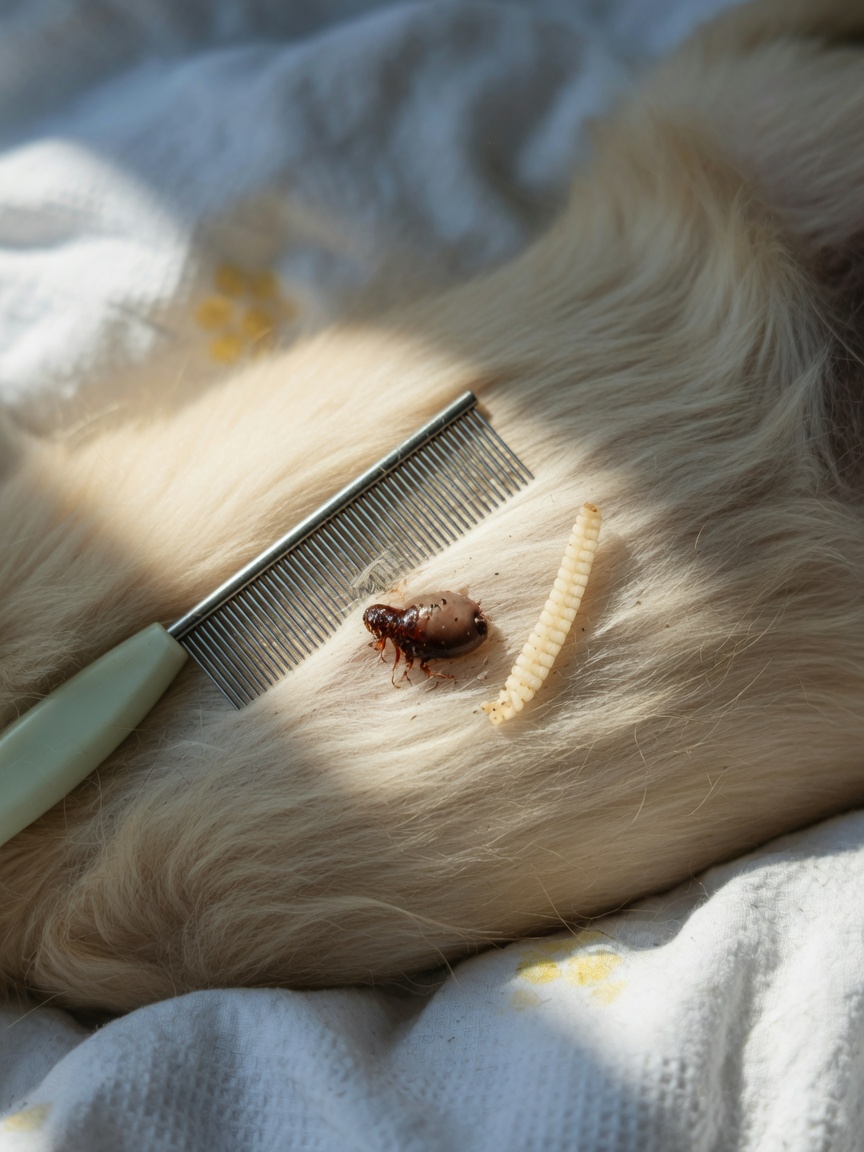
Dipylidium caninum is by far the most common tapeworm found in UK dogs and cats, and it has a lifecycle that is directly tied to fleas. Flea larvae ingest tapeworm eggs from the environment, and the tapeworm develops inside the flea as it matures. When a dog or cat grooms itself and swallows an infected flea, the tapeworm is released into the intestine and begins to grow.
This direct link between fleas and Dipylidium means that effective flea control is one of the most powerful tools you have against this tapeworm. Pets that receive regular, effective flea treatment are far less likely to acquire a Dipylidium infection. If you notice tapeworm segments around your pet's bottom or in their bedding, it is worth reviewing your flea treatment as well as treating for the tapeworm itself.
Humans, including children, can occasionally become infected with Dipylidium by accidentally swallowing an infected flea — typically through close contact with a pet. The infection is unpleasant but rarely serious, and it is easily treated.
Taenia Species: The Hunting Tapeworms

Taenia tapeworms use mammals such as rabbits, hares, and rodents as intermediate hosts. Dogs or cats that hunt and eat prey animals are at particular risk. These tapeworms are common in rural areas and in pets that spend time outdoors in areas where wildlife is present.
Taenia infections are generally not considered dangerous to humans in the UK, but they can cause discomfort in infected pets and contribute to poor condition if the worm burden is significant. Cats that regularly hunt should be wormed with a product that covers Taenia at least every three months, and more frequently if they are prolific hunters.
Echinococcus Granulosus: Hydatid Disease
Echinococcus granulosus is a small but potentially very dangerous tapeworm found predominantly in sheep-farming regions of the UK, including parts of Wales, Scotland, and northern England. Sheep are the primary intermediate host, and dogs — particularly working farm dogs — become infected by eating infected sheep offal.
The human health risk associated with this tapeworm is serious. If a person accidentally ingests Echinococcus eggs shed in dog faeces, larvae can develop into large fluid-filled cysts in the liver, lungs, or other organs — a condition called hydatid disease. Treatment in humans is difficult, often requiring surgery, and the disease can be life-threatening.
Pet owners in farming areas should ensure working dogs are never fed raw or undercooked sheep offal, and that these dogs are wormed regularly with a product containing praziquantel, which is effective against Echinococcus.
Echinococcus Multilocularis: An Emerging Concern
Echinococcus multilocularis causes alveolar echinococcosis, a condition even more serious than hydatid disease. This tapeworm is widespread in foxes across continental Europe and has been detected in foxes in certain areas of the UK. Dogs can become infected by hunting and eating infected rodents, and the human health consequences of accidental infection are severe — the larvae behave in a manner similar to a slow-growing tumour, invading liver tissue progressively over years.
While the risk from E. multilocularis in the UK is currently considered low compared to continental Europe, its presence in the fox population means that dogs with access to wildlife — particularly those that hunt rodents — should be considered at some degree of risk. This is one of the reasons why travellers returning to the UK from Europe are required to have their dogs treated for tapeworm before re-entry.
Symptoms of Tapeworm Infection
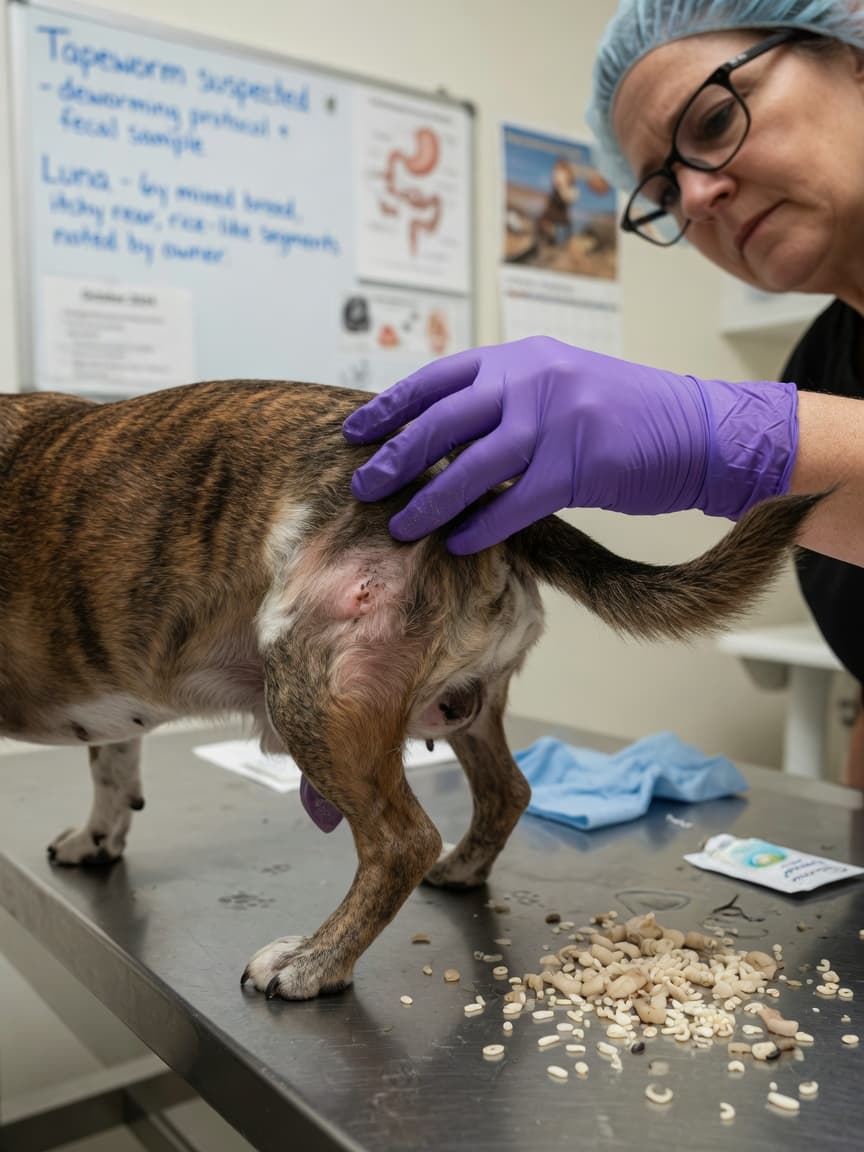
The most recognisable sign of tapeworm infection is the presence of segments around the animal's anus or in their bedding. These segments are shed from the end of the adult tapeworm in the gut and look like small grains of rice or sesame seeds when fresh, or more like dried, yellowed seeds when desiccated. You may notice your pet scooting or paying excessive attention to their bottom area, which can indicate irritation caused by passing segments.
Other signs can include weight loss despite a normal or increased appetite, a dull coat, and general lethargy. However, many pets with a modest tapeworm burden show no obvious signs at all, which is why routine worming remains important even in animals that appear healthy.
Treatment: Praziquantel
The treatment of choice for tapeworms in dogs and cats is praziquantel, which works by disrupting the tapeworm's ability to protect itself from the host's digestive enzymes. The worm is then broken down and digested, so you may not see any worms passed in the faeces after treatment — this is entirely normal.
Praziquantel is available in tablet form, as an injectable treatment from your vet, and as a spot-on formulation in some combination products. It is effective against all the main tapeworm species including Dipylidium, Taenia, and the Echinococcus species. Always check that your chosen worming product contains praziquantel if tapeworm coverage is your aim — many routine wormers do not contain it.
Integrated Flea and Worm Control
Because Dipylidium caninum depends on fleas to complete its lifecycle, flea control and tapeworm prevention are closely linked. If your pet has tapeworms, you should also check for and treat any flea infestation. Treat the pet, but also treat the home environment — flea eggs and larvae can survive in carpets, bedding, and soft furnishings for months.
- Use a vet-recommended flea treatment regularly, at the correct intervals for the product.
- Treat all pets in the household simultaneously, even if some appear unaffected.
- Wash pet bedding regularly at a high temperature.
- Vacuum frequently, paying attention to skirting boards and under furniture.
EU Pet Travel and the Tapeworm Treatment Requirement
If you travel to Europe with your dog, you must be aware of the UK's tapeworm treatment requirement for re-entry. Before returning to the UK from most European countries, your dog must receive a praziquantel treatment from a registered vet no less than 24 hours and no more than 120 hours (one to five days) before arriving at a UK port of entry. This rule is in place specifically to reduce the risk of Echinococcus multilocularis being imported into the UK.
This treatment must be recorded in your pet's official health documentation. Failure to comply can result in your dog being put into quarantine on arrival. Cats are exempt from this particular requirement, but all pets should be kept up to date with their routine worming before and after travel.
Keeping Your Pet Tapeworm-Free
A consistent approach to parasite control — combining regular praziquantel-containing wormers with effective flea treatment and sensible precautions around raw meat and wildlife — gives your pet the best protection against tapeworms. If your dog hunts, lives in a farming area, or travels to Europe, speak to your vet about a tailored prevention plan that accounts for these specific risk factors.