
Can All Dogs Swim?
There is a widespread belief that dogs are natural swimmers. While many take to water instinctively, the reality is far more nuanced. Some breeds are genuinely built for it — Labradors, Portuguese Water Dogs, and Irish Water Spaniels have webbed feet, water-resistant coats, and the body composition to sustain themselves afloat. Others, however, are at serious risk the moment they step off dry land.
Brachycephalic breeds such as Bulldogs, Pugs, and French Bulldogs have shortened airways and front-heavy bodies that make staying afloat almost impossible. Dachshunds, Basset Hounds, and other dogs with short legs and long torsos struggle similarly. Even among confident swimmers, fatigue sets in faster than most owners expect. A dog that swam brilliantly last summer may tire within minutes the following season, particularly if older or carrying a few extra kilos.
Drowning Risk: What Owners Underestimate
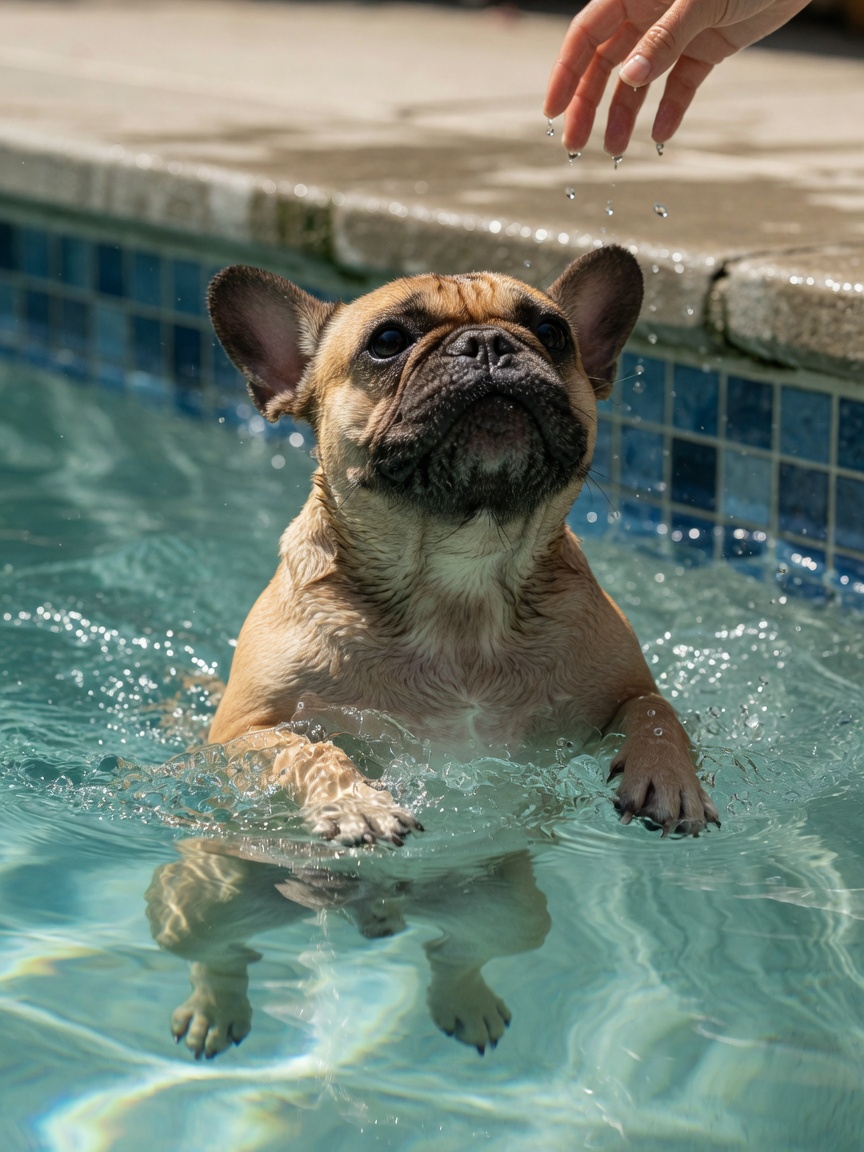
Drowning does not always look the way we imagine it. Dogs rarely thrash or cry out. Silent panic, rapid paddling without forward movement, and a low-lying body position in the water are the warning signs. A dog treading water vertically rather than horizontally is already in difficulty.
Pools present a particular hazard because dogs can enter easily but cannot locate the exit. Steep or tiled sides offer no grip, and a dog paddling in circles searching for a way out will exhaust itself within minutes. If you have a home pool, a fitted cover or a designated ramp that the dog has been trained to use is essential. Never assume your dog knows where the steps are.
In natural water, currents are the primary killer. What appears calm on the surface can carry a significant pull beneath it. Rivers after rainfall, coastal areas with tidal rips, and weir pools are all environments where even strong swimmers have come to grief. Keep your dog on a lead near fast-moving water and never allow them to retrieve objects thrown into a current.
Water Quality and Hidden Hazards
Not all water is safe to swim in, regardless of how appealing it looks. Leptospirosis is a bacterial infection spread through the urine of infected animals — particularly rats — contaminating rivers, canals, and still ponds. Dogs can contract it by swimming in or drinking from affected water. Vaccination offers protection against the most common serovars, but it is not fully comprehensive. After swimming in natural freshwater, rinsing your dog thoroughly and monitoring for symptoms including fever, lethargy, vomiting, and muscle pain is advisable.
Blue-green algae — more accurately cyanobacteria — blooms in warm, slow-moving freshwater during summer months. It can appear as a green or blue-green scum on the surface, but it is not always visible. Ingesting or even swimming through a bloom can cause liver failure and neurological damage within hours. Deaths in dogs have been reported across the UK following algae exposure. Check local authority water quality notices before any swim, and if in doubt, keep your dog out.
Saltwater presents its own concerns, which are addressed fully in the beach safety article, but freshwater should never be assumed clean simply because it looks clear.
Life Jackets: When They Are Non-Negotiable
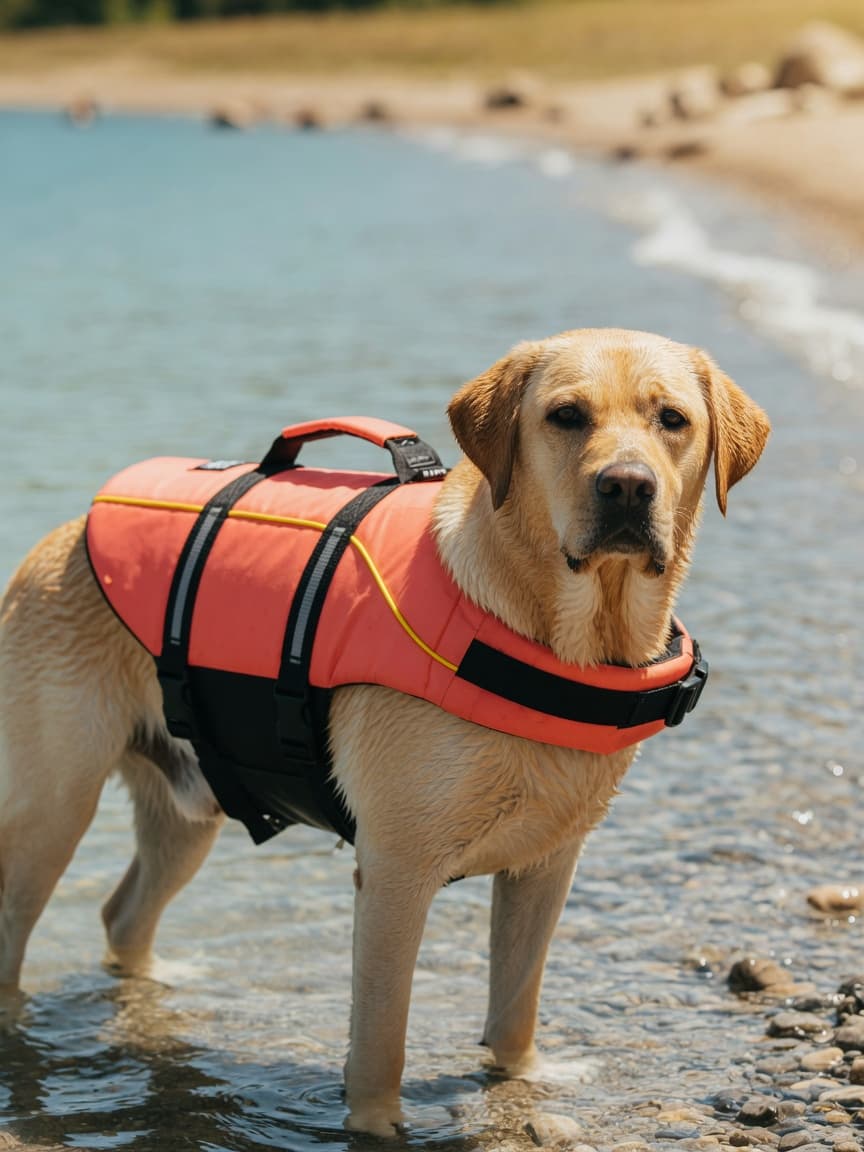
A canine life jacket is not an overprotective measure — it is a sensible piece of kit for any dog near open water. For dogs that cannot swim naturally, it is mandatory. For capable swimmers, it provides vital buoyancy during fatigue and makes the dog far easier to locate and retrieve in an emergency. Choose a jacket with a handle at the back, which allows you to pull the dog from the water quickly and safely. Ensure it fits snugly without restricting breathing or leg movement, and always introduce it on dry land before the first swim.
Understanding Swimmer's Tail

Swimmer's tail, also known as limber tail, cold tail, or acute caudal myopathy, is a condition that surprises many owners after a day in the water. The tail hangs limp from the base or drops flat and lifeless, often accompanied by pain when touched and lethargy in the dog. It tends to appear several hours after an intense swim and is caused by overexertion or exposure to cold water, leading to muscle damage in the tail's base.
Working breeds and highly active dogs — particularly Labradors and Setters — are most commonly affected, and it occurs more frequently after prolonged swimming in cold water. The condition is painful but generally resolves within a few days with rest and anti-inflammatory medication prescribed by a vet. It is not an emergency, but a dog in obvious discomfort should be seen promptly to rule out other causes such as spinal injury.
Preventing swimmer's tail is largely a matter of moderation. Limiting swim duration, particularly early in the season when the dog is not yet conditioned, and avoiding very cold water where possible both reduce the risk significantly.
Practical Safety Steps for Every Swim
- Never leave a dog unsupervised near any body of water, including home pools.
- Teach your dog where the pool exit is before they ever need to use it independently.
- Fit a life jacket for open-water swimming or for any dog not a confident natural swimmer.
- Check water quality notices before swimming in lakes, rivers, or coastal waters.
- Rinse your dog thoroughly after any freshwater swim to remove bacteria and potential algae residue.
- Limit session length, especially early in the season or for older dogs.
- Monitor for signs of cold-water shock, which can cause sudden muscle cramps and disorientation.
- Do not throw objects into fast-moving water or areas with submerged hazards.
Swimming can be one of the most rewarding activities a dog and owner share, offering low-impact exercise with high cardiovascular benefit. With sensible precautions in place, the risks are manageable. The key is knowing your dog's individual limits, understanding the environment you are swimming in, and never assuming that a confident dog is an invincible one.