
Why Recognising Stress in Dogs Matters
Dogs communicate stress constantly, but much of that communication is subtle, easy to miss, and frequently misinterpreted. A dog who freezes when approached by a child is not being stubborn. A dog who yawns during a training session is not being lazy. These are stress signals — a language that dogs use fluently and that most humans have never been taught to read.
Chronic, unrecognised stress has real consequences. It suppresses immune function, impairs learning, accelerates behavioural deterioration, and reduces quality of life. It is also a welfare concern. Understanding what your dog is telling you is not a luxury for enthusiastic owners — it is a fundamental part of responsible guardianship.
Understanding Calming Signals
Norwegian dog trainer and behaviourist Turid Rugaas introduced the concept of calming signals in the 1990s, describing a repertoire of behaviours dogs use to communicate discomfort and attempt to de-escalate social tension. Subsequent research has broadly supported the existence of these communicative behaviours, though debate continues about their precise function in every context.
Recognising them in your own dog, and in dogs your dog interacts with, can prevent conflict, reduce stress exposure, and build a more honest relationship between you and your animal.
Physical Signs of Stress

The body gives away what a dog may not express overtly through behaviour. Physical stress indicators can appear quickly and resolve quickly, or they can persist and indicate a chronic state of anxiety.
Acute Physical Stress Signals
- Yawning outside the context of tiredness or waking
- Excessive panting when the dog is not hot or recently exercised
- Lip licking or nose licking that is frequent and appears unprompted
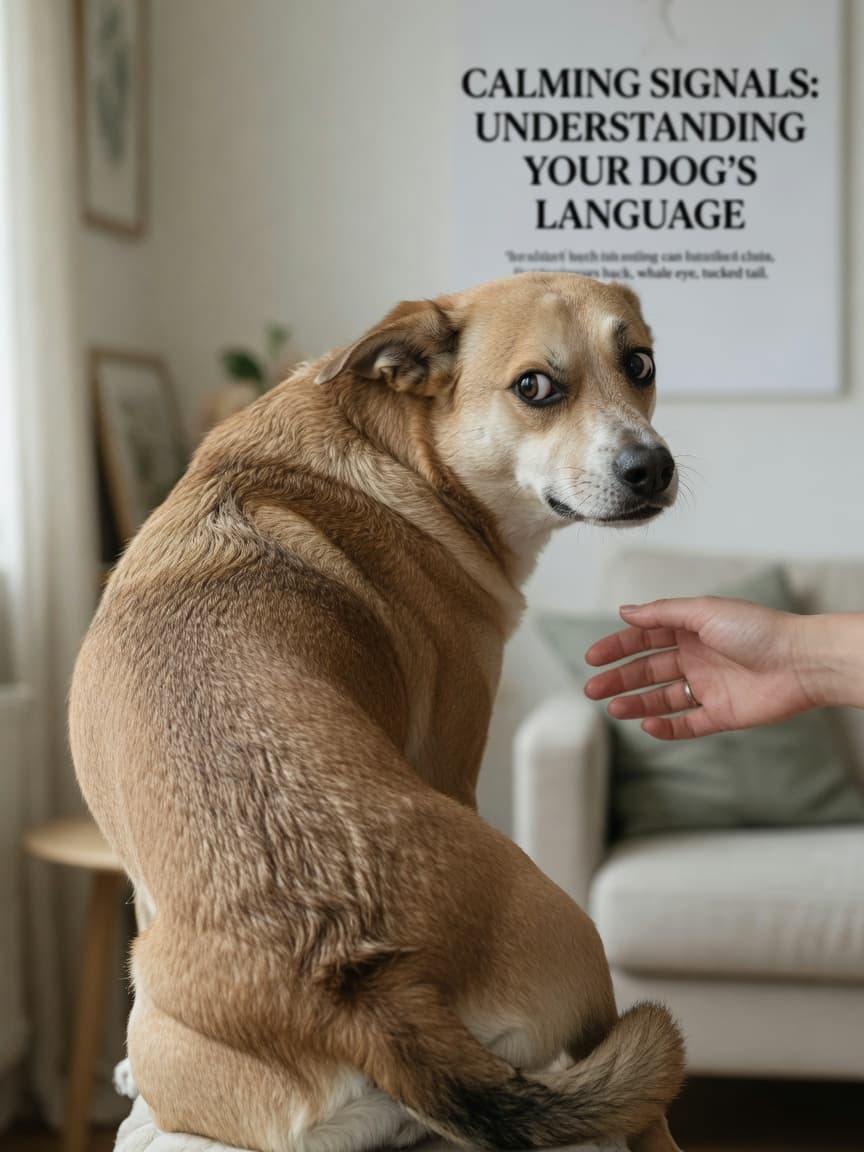
- Whale eye — the whites of the eyes becoming visible as the dog looks sideways while keeping their head still
- Ears pinned back or held low against the head
- Tail tucked beneath the body or held low and stiff
- Piloerection — the hackles rising along the back, sometimes extending from neck to tail
- Sudden shedding in large amounts (a stress response seen particularly in veterinary settings)
Chronic Physical Signs
- Gastrointestinal upset including loose stools, vomiting, or reduced appetite
- Recurring skin conditions or hot spots, often linked to stress-related scratching and licking
- Changes in coat quality, including dullness or increased shedding over time
- Reduced or absent interest in food in contexts the dog previously enjoyed
Behavioural Signs of Stress
Behaviour is often where stress first becomes visible to owners, though it is frequently labelled incorrectly as naughtiness, stubbornness, or regression.
Avoidance and Appeasement
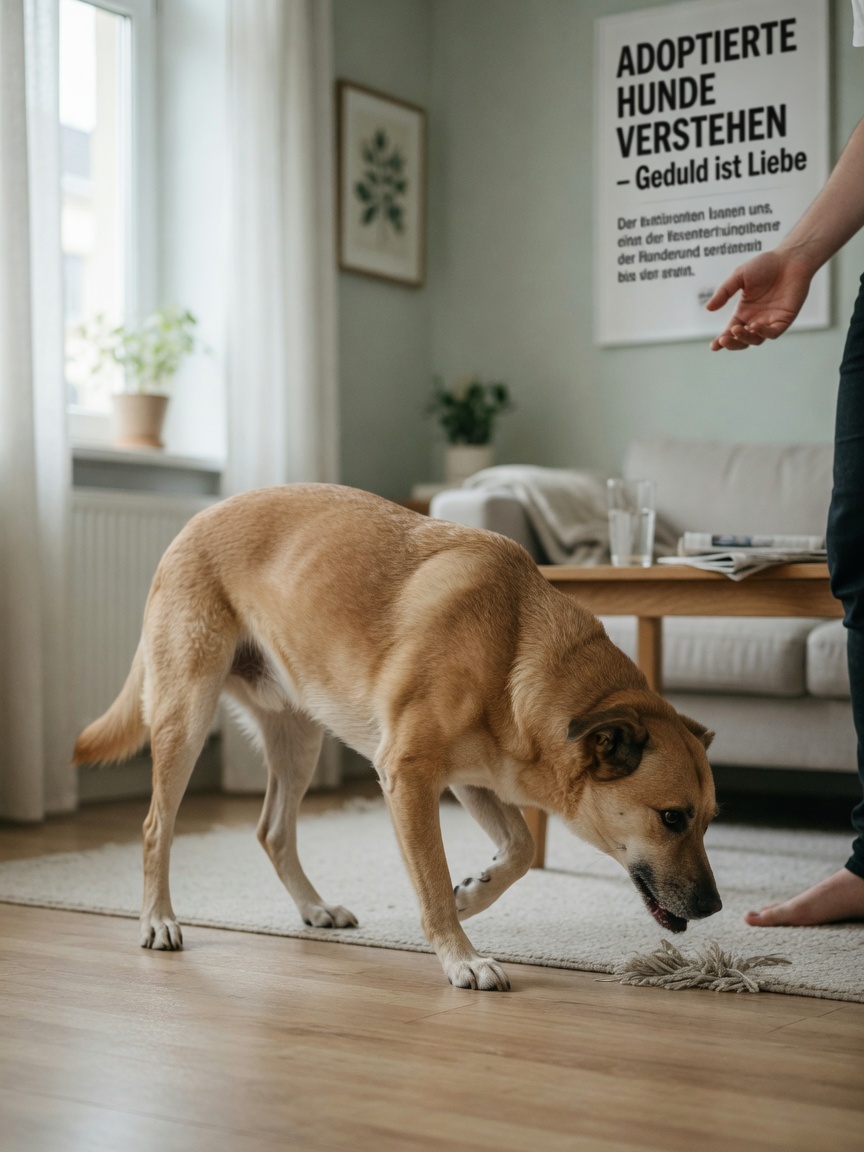
Stressed dogs often attempt to increase distance from a perceived threat or to communicate that they pose no threat themselves. Watch for turning the head or entire body away from a person or dog, sniffing the ground suddenly and intently when greeted, walking in a curved arc rather than approaching directly, and moving slowly or appearing to move in slow motion.
These behaviours are frequently punished by owners who interpret them as defiance. Punishing a dog for offering appeasement signals is counterproductive and erodes trust significantly.
Hypervigilance and Reactivity
A dog who scans the environment constantly, startles easily, cannot settle, or reacts explosively to stimuli that previously did not bother them may be operating in a chronic state of low-level stress. Reactivity on lead — barking, lunging, and growling at other dogs or people — is frequently a manifestation of anxiety rather than aggression.
Displacement Behaviours
These are normal behaviours that appear out of context, used to relieve tension. Common examples include sudden scratching or grooming during training, sniffing the floor when meeting a new dog, or spinning and shaking off as if wet when leaving a tense situation. Recognising these helps you understand when your dog is struggling.
Changes in Social Behaviour
- Withdrawal from family members they previously sought out
- Reduced play behaviour or loss of interest in toys
- Clinginess or following owners from room to room
- Increased or decreased vocalisation
- Growling or snapping that seems to come from nowhere
Context Is Everything
No single signal confirms stress in isolation. A dog who yawns once after a nap is tired. A dog who yawns repeatedly when a stranger crouches over them is communicating discomfort. Patterns and context are what matter.
Keep a simple log if you are trying to understand your dog's triggers. Note what happened before the behaviour, the behaviour itself, and what followed. Over time, patterns emerge that point to specific stressors — particular environments, types of people, other animals, sounds, or handling.
Common Stressors in Dogs
While every dog is an individual with a unique stress profile, certain triggers appear consistently across the literature and in clinical practice:
- Loud and unpredictable noises including fireworks, thunder, and construction
- Unfamiliar environments and loss of routine
- Social conflict with other animals in the household
- Aversive training methods including shouting, physical correction, or punishment-based tools
- Pain or undiagnosed medical conditions (a stressed dog should always receive a veterinary examination to rule out physical causes)
- Inadequate exercise and mental stimulation for the breed and individual
- Changes in the household such as new people, a new baby, or the loss of a companion
When to Seek Professional Help
If your dog's stress signals are frequent, intense, or interfering with daily life — yours or theirs — professional input is warranted. Your first stop should be your vet, who can rule out or address underlying medical conditions that contribute to anxiety. From there, a referral to a qualified clinical animal behaviourist is the most evidence-supported path.
Early intervention is consistently associated with better outcomes. A dog who has been anxious for six months is easier to help than one who has been anxious for six years. If something does not feel right about your dog's emotional state, trust that instinct and act on it.