
Why Cats Are Masters at Hiding Pain
Of all the companion animals commonly kept as pets, cats are arguably the most accomplished at concealing illness and pain. This is not stubbornness or stoicism in any human sense — it is a deeply rooted survival mechanism. In the wild, a cat in pain is a vulnerable cat. Predators target the weak, and a cat that broadcasts injury or distress is one that becomes a target. Domestic cats retain this instinct completely, continuing to groom, eat, greet their owners, and appear outwardly normal even when suffering significantly. This means that by the time obvious signs appear, a problem has often been present for some time. Learning the subtle early indicators can dramatically change how quickly your cat receives help.
The Feline Grimace Scale
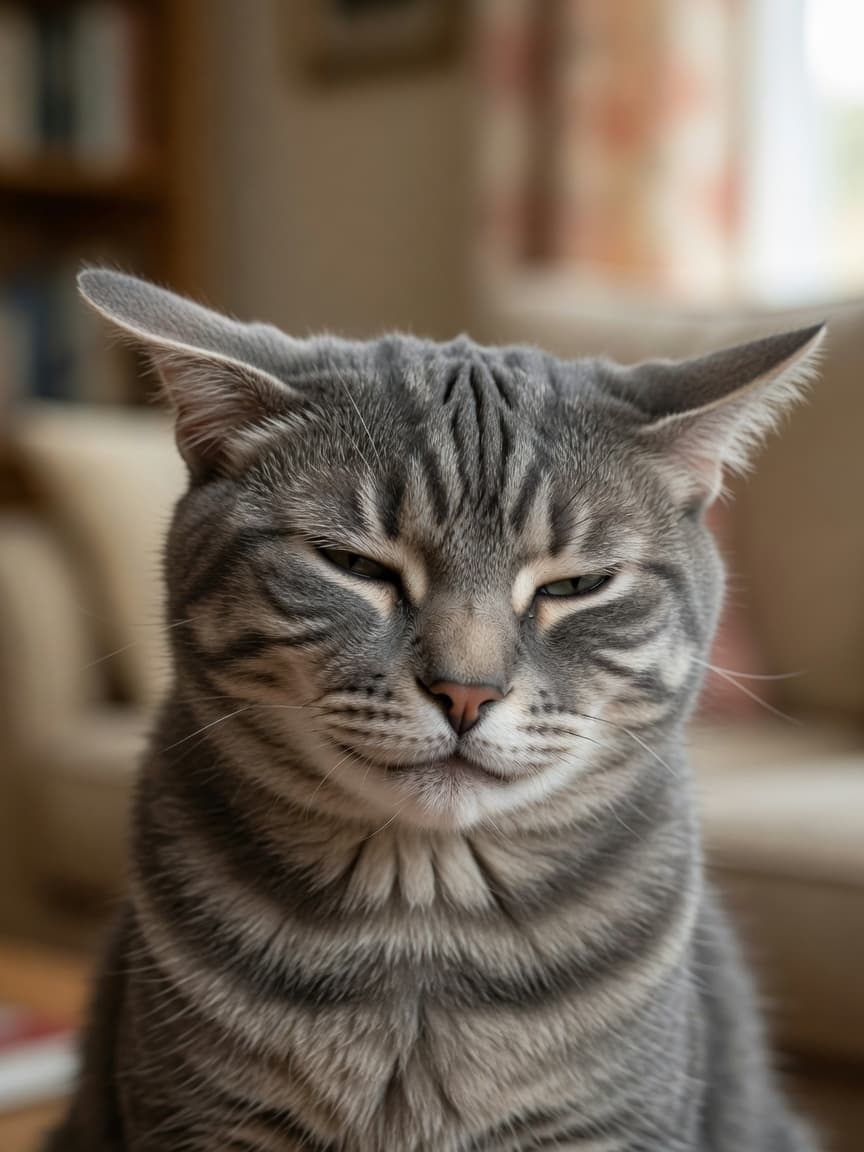
The Feline Grimace Scale (FGS) was developed by researchers at the Universite de Montreal and validated with support from organisations including the American Association of Feline Practitioners (AAFP). It is now used clinically by vets around the world as a reliable, validated tool for assessing acute pain in cats based on facial expression alone. The scale evaluates five specific facial action units, each scored from zero to two, giving a total score that guides pain management decisions. Understanding these facial indicators helps owners detect pain at home before it becomes severe.
The Five Facial Action Units of the Feline Grimace Scale
- Orbital tightening — the eyes become partially or fully closed, giving a squinting or hooded appearance. A pain-free cat has fully open, relaxed eyes. A cat in significant pain may have eyes that appear almost shut.
- Ear position — a comfortable cat holds its ears upright and forward. A cat in pain rotates the ears outward and downward, so that the ear openings face to the sides rather than forward. In severe pain, the ears may be flattened fully against the skull.
- Muzzle tension — in a relaxed cat, the muzzle is rounded and soft. Pain causes the muscles around the muzzle to tighten, giving the muzzle a more angular, flattened appearance.
- Whisker position — a pain-free cat's whiskers fan outward and slightly forward. In a cat in pain, the whiskers pull back and bunch forward, pointing downward in front of the face rather than fanning to the sides.
- Head position — a comfortable cat holds its head upright and level with the body. A cat in pain tends to lower the head below the level of the shoulders, often with the chin tilted down.
A freely available version of the Feline Grimace Scale with photographic examples is accessible at grimacescale.com and is a useful reference to look at before you need it.
Behavioural Changes Indicating Pain
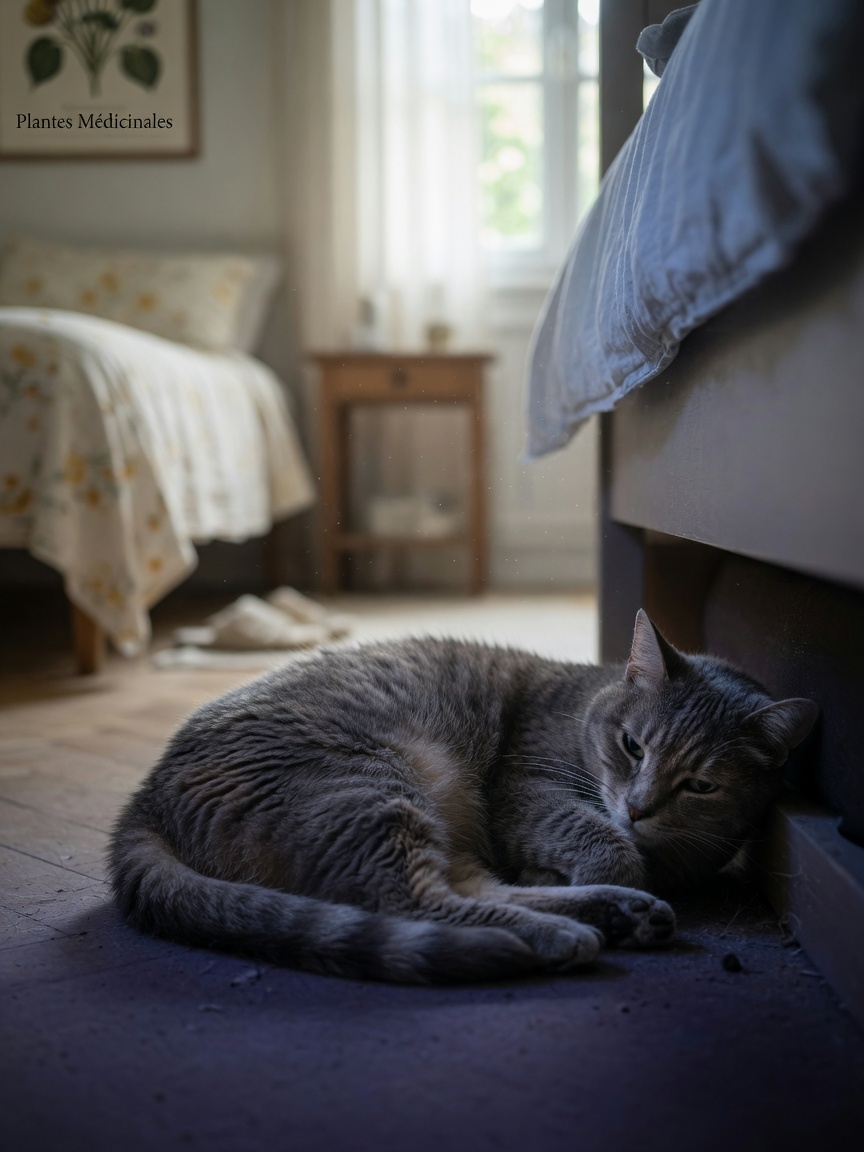
Beyond the face, pain in cats manifests in a wide range of behavioural changes. As with facial signs, these changes are often subtle and gradual, making them easy to miss or dismiss.
- Hiding or withdrawing — a cat in pain often retreats to a quiet, concealed spot and stays there, resisting attempts to interact. This is one of the most reliable indicators that something is wrong.
- Changes in grooming. A cat in pain may groom less than usual, particularly if it hurts to bend and reach different parts of the body, resulting in a dull, unkempt coat. Alternatively, a cat experiencing localised pain such as joint pain or a wound may over-groom one specific spot, sometimes to the point of causing bald patches or skin damage.
- Changes in litter box use — a cat with joint pain may stop using a litter box that requires stepping over a high rim, or may go outside the box if squatting or posturing is painful. Urinary or defecation problems can also indicate pain from a urinary or gastrointestinal cause.
- Reduced appetite or complete disinterest in food, particularly in cats with dental pain, mouth ulcers, nausea, or abdominal discomfort.
- No longer jumping onto surfaces they previously accessed routinely — the sofa, windowsill, bed, or cat tree. This is a common early indicator of joint pain, particularly in older cats.
- Uncharacteristic aggression or irritability — a cat who hisses, bites, or scratches when touched in an area they were previously comfortable having handled is almost certainly communicating pain in that area.
- Changes in vocalisation — some cats in pain become quieter than usual, while others vocalise more, particularly at night. A cat who is yowling or crying without obvious cause should be assessed by a vet promptly.
- Reduced interest in interaction, play, or social contact with familiar people or other animals.
Postural Signs of Pain
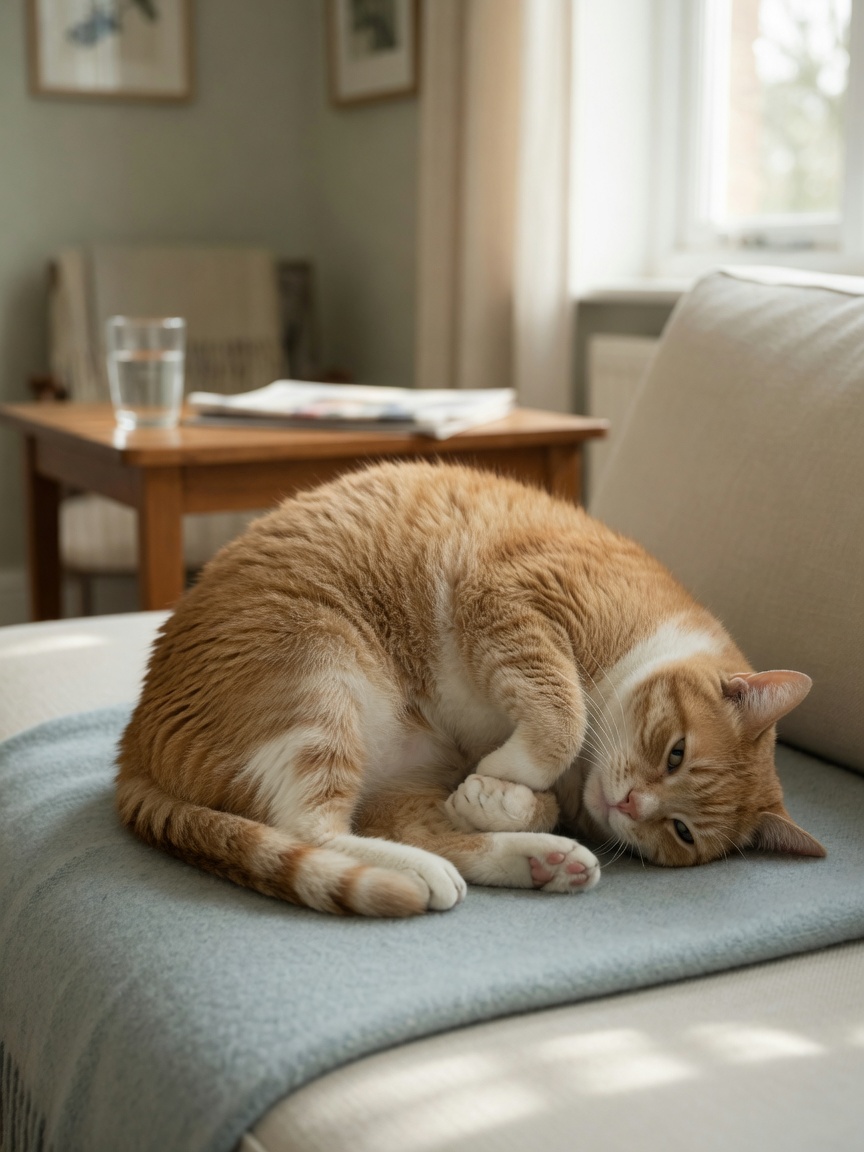
The body posture of a cat in pain is often characterised by tension and protective positioning:
- A hunched or rounded back, with the belly tucked upward and the body appearing drawn inward. This is particularly associated with abdominal, urinary, or spinal pain.
- Reluctance to move from one position, even when it would normally be natural to do so.
- Guarding — consistently turning away from touch in a particular area, tensing visibly when that area is approached, or positioning the body to protect a specific limb or body part.
Chronic Pain in Older Cats
Degenerative joint disease (arthritis) is extremely common in cats over the age of ten, and research suggests it affects the majority of cats over fifteen. Because it develops slowly and cats adapt their behaviour gradually, the signs are frequently attributed to normal ageing. Reduced jumping, hesitance on stairs, slightly messy coat, less social engagement, and changes in litter box use in an older cat are all worth discussing with your vet — many of them can be significantly improved with appropriate pain management.
Important: Never Give Cats Human Pain Medication
Paracetamol (acetaminophen) is fatal to cats. Cats lack the liver enzyme needed to metabolise it, and even a single standard tablet can cause red blood cell damage, liver failure, and death. Ibuprofen and aspirin are also toxic to cats. Under no circumstances should you give a cat any human pain medication. If your cat is in pain, contact your vet for safe, species-appropriate treatment.
Red Flags Requiring Emergency Care
The following signs require immediate emergency veterinary attention — do not wait for a routine appointment:
- Straining in the litter box without producing urine, or producing only tiny drops. This may indicate a urinary blockage, which is a life-threatening emergency, particularly in male cats.
- Open-mouth breathing or panting in a cat that is not overheated. Cats do not normally breathe through their mouths. Open-mouth breathing indicates severe respiratory distress or extreme pain and is always an emergency.
- Collapse, inability to stand, or sudden paralysis — particularly a dragging or non-weight-bearing hind limb, which may indicate an aortic thromboembolism (a blood clot), a very serious emergency condition in cats.
- Continuous, distressed vocalisation.
- Sudden or severe facial swelling.
If you are uncertain whether your cat's symptoms are an emergency, it is always better to call your vet and describe what you are seeing. They can help you assess the urgency and advise on the appropriate next step. Acting quickly when pain is present is one of the kindest and most important things you can do for your cat.