
Origins of the Siamese
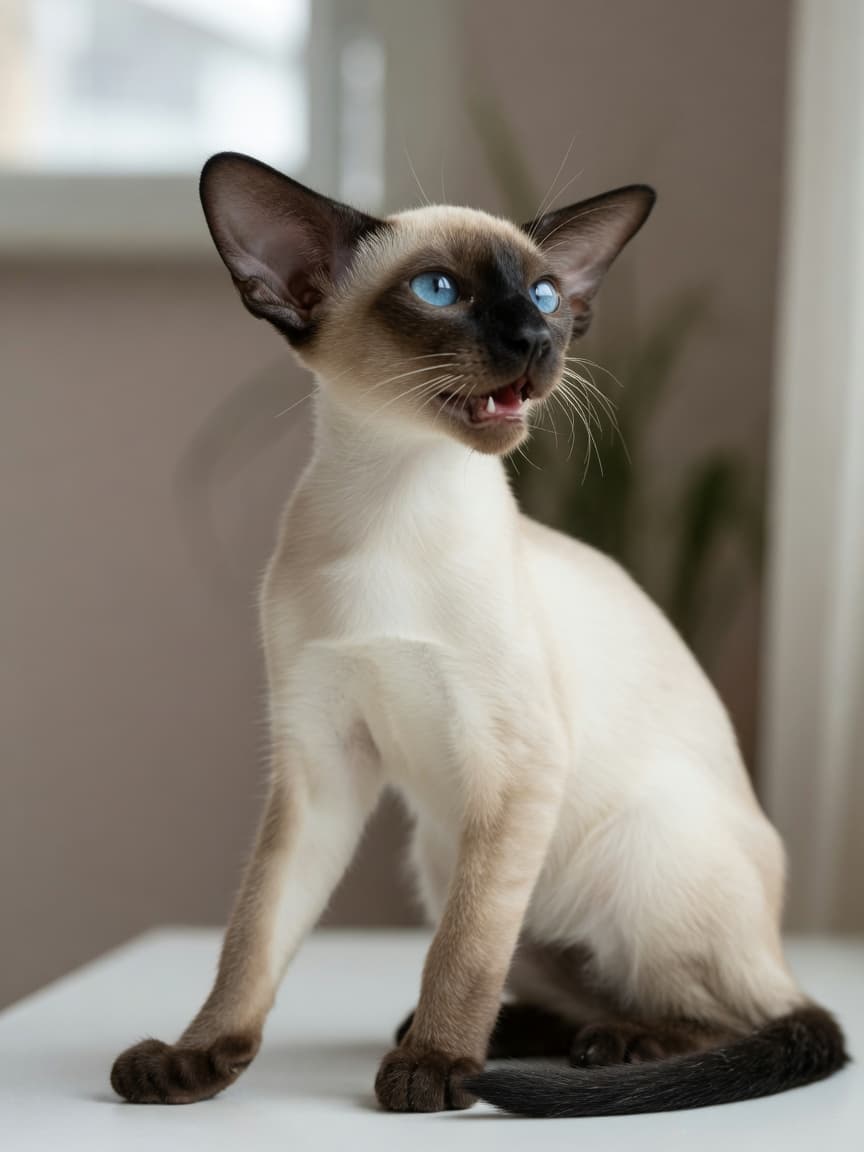
The Siamese is one of the oldest and most recognisable domesticated cat breeds in the world. Originating in Thailand — historically known as Siam — these cats were highly prized and appear in ancient manuscripts dating back to the 14th century. They were kept in royal palaces and Buddhist temples, regarded as sacred animals that housed the souls of the deceased.
Siamese cats arrived in Europe in the 1880s. The first documented examples were brought to Britain in 1884 when the British Consul-General in Bangkok brought a breeding pair back to England as a gift. They caused an immediate sensation when exhibited at Crystal Palace in 1885 and quickly became fashionable among cat enthusiasts. Since then, the breed has spread worldwide and remains one of the most popular pedigree breeds in both the UK and internationally.
Temperament and Personality
The Siamese is not a cat for those who prefer quiet. They are famously vocal — their loud, low-pitched voice is often described as resembling a human baby crying. They use this voice to communicate constantly, expressing opinions on everything from their food to the position of the furniture. Prospective owners must genuinely enjoy this level of communication, as it cannot be trained away.
Beyond their voice, Siamese are intensely social and affectionate. They tend to bond deeply with one person in particular and follow that person from room to room. This devotion is endearing but comes with risk — Siamese can develop separation anxiety if left alone for long periods. They do not do well as solitary cats in households where owners are absent for most of the day. A companion cat (ideally another Siamese or similarly social breed) is often recommended.
They are highly intelligent and curious, quick to learn routines and to manipulate situations to their advantage. Without sufficient stimulation, they can become destructive — pulling items off shelves, opening cupboards, or developing repetitive behaviours. Daily interactive play is not optional for this breed; it is a genuine welfare requirement.
Modern Versus Traditional Type
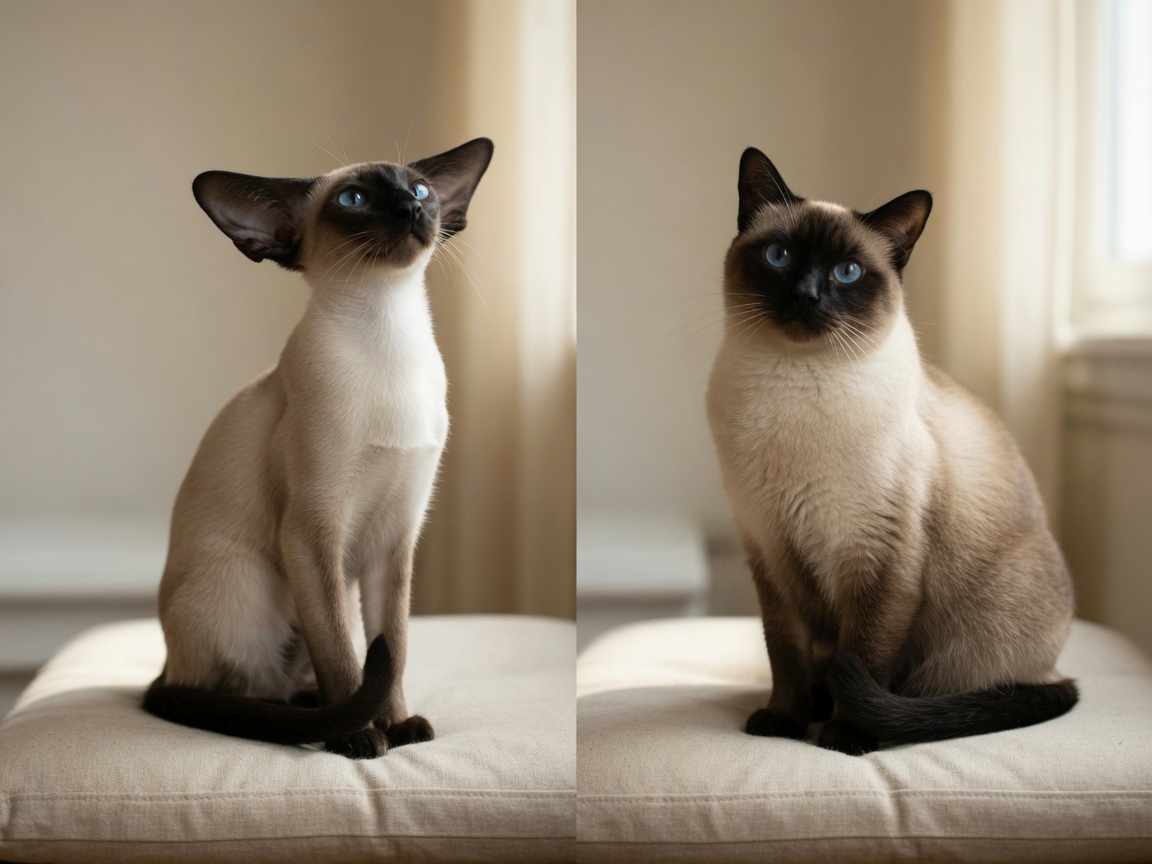
One important distinction within the breed concerns body type, which has changed significantly over the decades of selective breeding.
Wedge-Head (Modern Show Type)
The modern show Siamese — often called the wedge-head — has an extremely elongated, triangular head, large flared ears, a very slender body, and long legs. This type dominates at cat shows and is what most people picture when they think of a Siamese. Some owners find this type breathtaking; others consider the extreme conformation to have moved too far from the original.
Apple-Head (Traditional Type)
The traditional Siamese — sometimes called the apple-head or classic Siamese — has a rounder head, a more moderate build, and a less extreme overall appearance. This type more closely resembles the cats brought to Europe in the 19th century. Some breeders specialise in preserving this traditional type, and many owners prefer it for its slightly more robust constitution.
Both types share the same fundamental temperament traits and health considerations, though the modern type may be at slightly higher risk of respiratory issues due to head conformation.
Appearance
Siamese cats are always colour-pointed — meaning the face, ears, paws, and tail (the points) are a darker shade than the rest of the body. The body is typically cream or pale fawn, while the points come in four traditional colours: seal, blue, chocolate, and lilac. All Siamese have striking blue eyes; this is a defining breed characteristic and not a variation.
They are medium-sized cats: males typically weigh between 4 and 6 kg, females between 2.5 and 4 kg. Their coats are short and fine, lying close to the body.
Health Considerations
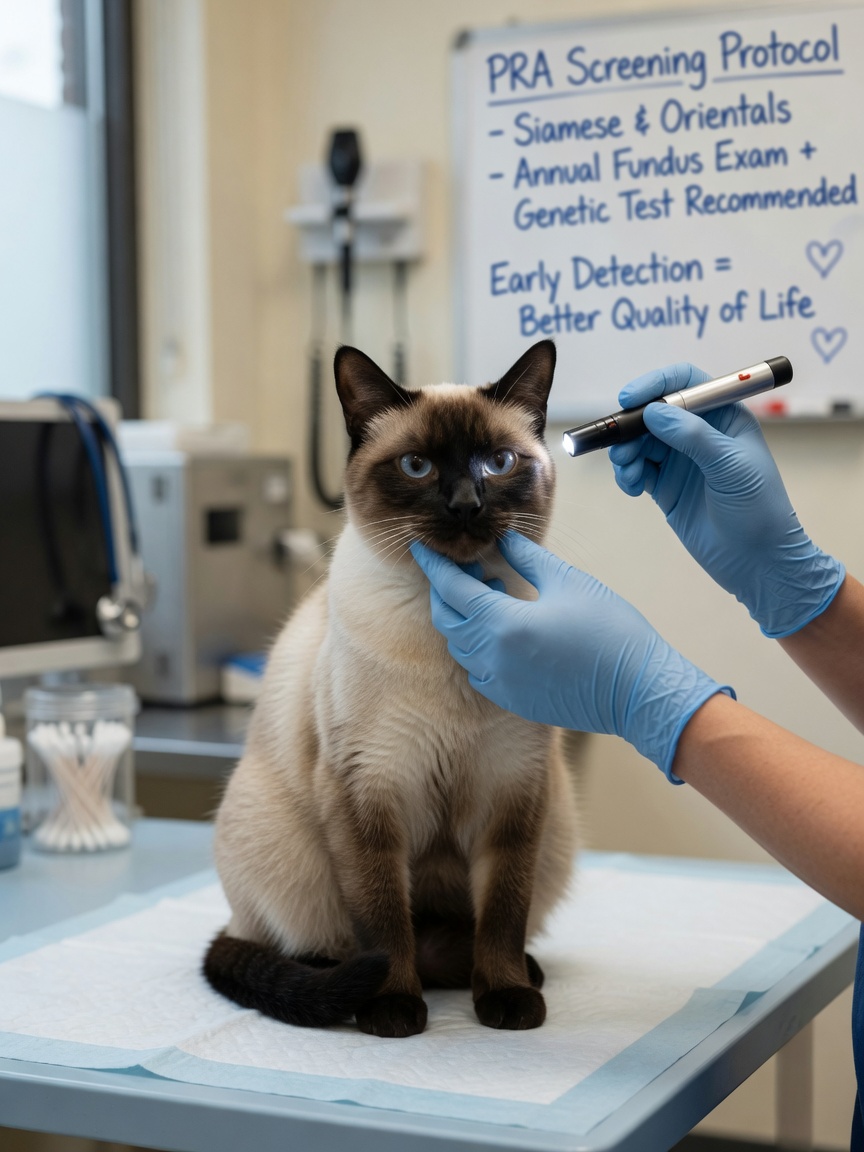
Progressive Retinal Atrophy (PRA)
Siamese cats carry a specific mutation known as rdAc (retinal degeneration, autosomal recessive, cat) that causes Progressive Retinal Atrophy. This condition leads to degeneration of the retina and progressive vision loss, eventually resulting in blindness. Importantly, a DNA test is available for the rdAc mutation, allowing breeders to identify carriers and affected cats. Responsible breeders test their breeding animals and can provide certificates showing the status of both parents. Ask for this documentation before purchasing a kitten.
Mediastinal Lymphoma
Siamese cats have a significantly higher risk of developing certain cancers, particularly mediastinal lymphoma — a cancer affecting the lymph nodes in the chest. This condition can cause breathing difficulties, lethargy, and weight loss. Early veterinary assessment of any respiratory changes is important in this breed.
Amyloidosis
Amyloidosis is a condition in which an abnormal protein called amyloid deposits in organs, particularly the liver. It can lead to liver failure and is seen with greater frequency in Siamese cats than in the general cat population. There is no DNA test available, so awareness and monitoring are the best tools currently available.
Dental Disease
Siamese cats are prone to dental disease, including gingivitis and periodontitis. Regular dental checks from kittenhood and, ideally, toothbrushing at home can help manage this risk. Discuss dental care with your vet at annual health checks.
Grooming
The Siamese is one of the lowest-maintenance breeds when it comes to coat care. Their short, fine coat requires minimal brushing — a weekly once-over with a soft brush or grooming mitt is sufficient to remove loose hair and keep the coat glossy. They are relatively low shedders compared to many other breeds. Regular nail trimming and ear checks should still be part of routine care.
Exercise and Mental Stimulation
Siamese cats are highly active and require significantly more daily exercise and mental stimulation than calmer breeds. Interactive play sessions using wand toys, feather teasers, or laser pointers should be provided at least once or twice daily. Puzzle feeders and food-dispensing toys can help occupy their intelligent minds between play sessions.
If left with insufficient stimulation, Siamese cats can become destructive, anxious, or develop compulsive behaviours. They are not suited to environments where they will be ignored for long stretches of time.
Suitability for First-Time Owners
Owning a Siamese is entirely possible for a first-time cat owner, but it requires realistic expectations. These are not low-maintenance, independent cats — they are demanding, vocal, and emotionally attached. Owners who embrace and enjoy these qualities find Siamese cats to be extraordinary companions. Those who expect a quiet, undemanding pet may find the experience overwhelming.
If you are a first-time owner considering a Siamese, speak to owners and breeders honestly about what daily life looks like. Ensure you have time to dedicate to play and companionship, and consider getting two Siamese so they can keep each other company.
For breed standards and registered breeders, contact the Governing Council of the Cat Fancy (GCCF) Siamese breed club.
Key Facts at a Glance
- Always colour-pointed with blue eyes
- Highly vocal — this cannot be trained away
- DNA test available for PRA (rdAc mutation) — request breeder certificates
- Higher risk of mediastinal lymphoma and amyloidosis than average cats
- Needs daily interactive play and ideally a companion cat
- Not recommended for long periods of solitude