
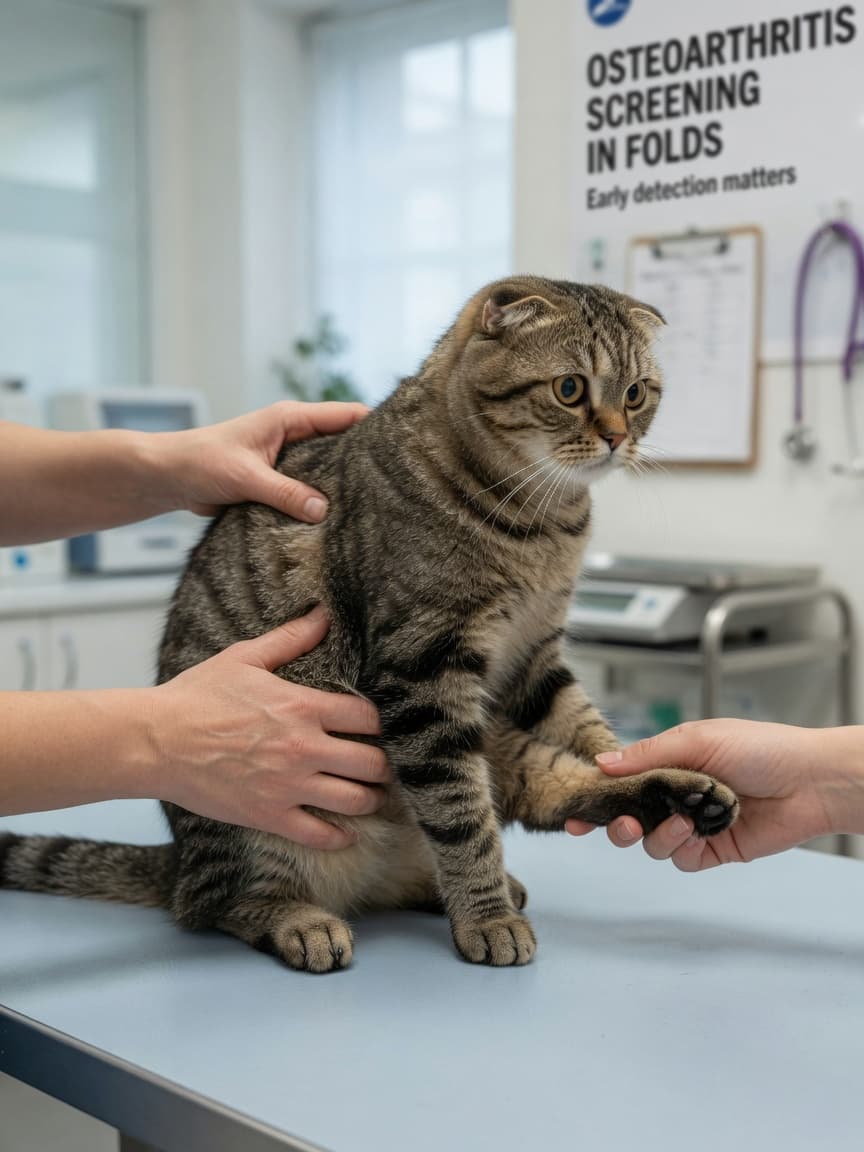
What Is a Scottish Fold?
The Scottish Fold is a domestic cat breed characterised by a natural dominant gene mutation that causes the ear cartilage to fold forward and downward, giving the cat an owl-like appearance. First discovered in Scotland in the 1960s, the breed has grown enormously popular worldwide — but that popularity has come at a significant cost to animal welfare.
The same genetic mutation responsible for the folded ears does not stop at the ear cartilage. It affects cartilage and bone formation throughout the entire body, causing a condition known as osteochondrodysplasia (OCD).
Understanding Osteochondrodysplasia (OCD)
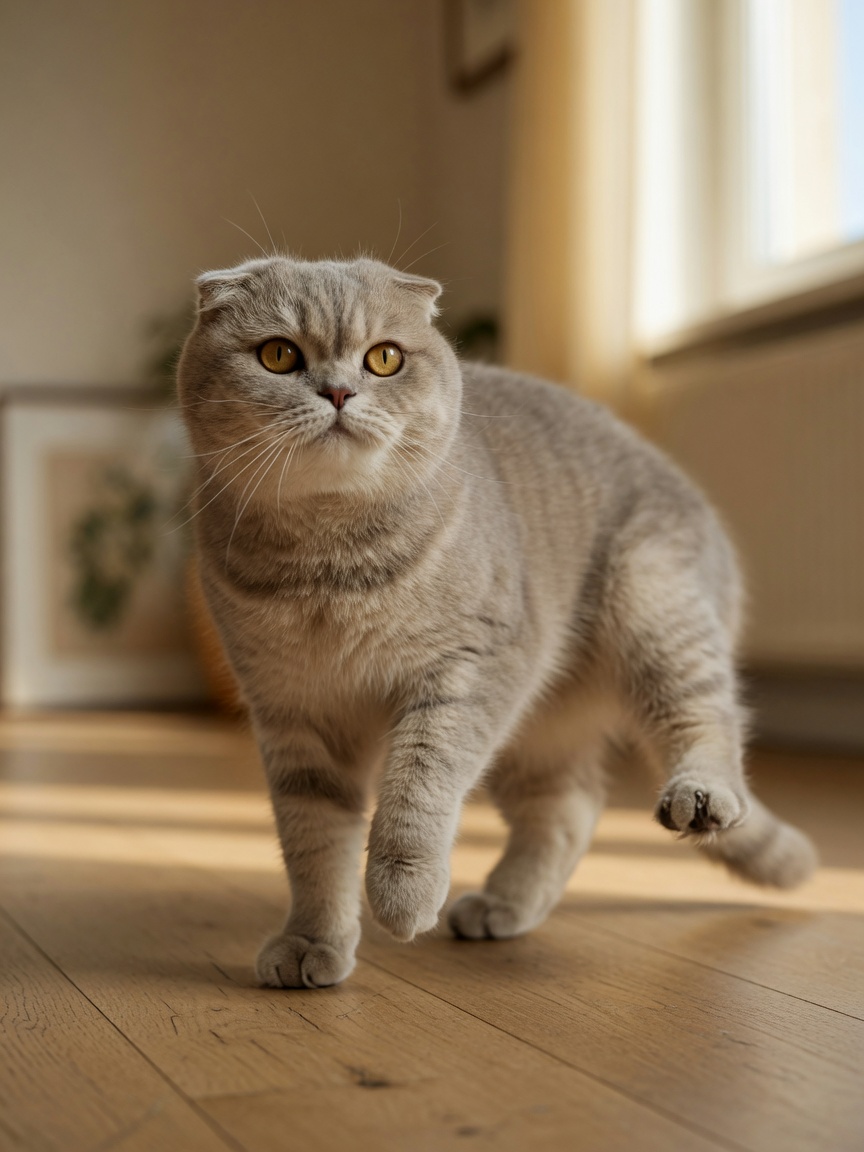
Osteochondrodysplasia is an abnormal development of bone and cartilage. In Scottish Folds, the condition is directly caused by the Fd gene (Fold gene), a dominant mutation that disrupts normal skeletal formation. It is not merely a cosmetic quirk — it is a systemic skeletal disease that affects the spine, tail, limbs, and feet, in addition to the ears.
The disease produces painful abnormalities including thickened, fused bones in the tail and feet, abnormal joint development, and progressive arthritis-like degeneration across multiple parts of the skeleton. Affected cats frequently develop stiffness and lameness that is often mistaken for ordinary old-age arthritis, which means many cases go under-treated for years.
Homozygous vs Heterozygous Cats
The Fd gene operates on a spectrum of severity based on how many copies a cat carries:
- Homozygous cats (Fd/Fd) carry two copies of the mutation and are invariably affected with severe OCD. All homozygous Scottish Folds will develop significant skeletal disease.
- Heterozygous cats (Fd/fd) carry one copy and are also at significant risk. Research has consistently shown that even one copy of the Fd gene causes measurable skeletal abnormalities in the majority of heterozygous cats, even when clinical signs are mild or delayed in onset.
There is no "safe" version of a folded-ear cat. Every Scottish Fold, regardless of how pronounced the ear fold appears, carries at least one copy of the Fd gene and therefore carries the risk of osteochondrodysplasia.
How OCD Differs from Normal Arthritis
It is important for owners to understand that OCD in Scottish Folds is not the same as the degenerative joint disease commonly seen in elderly cats of any breed. Normal feline arthritis is primarily a wear-and-tear condition that develops gradually over a lifetime. OCD in Scottish Folds is a developmental disease caused by abnormal bone and cartilage formation from birth. It can become clinically apparent in cats as young as two to three years old, affecting multiple joints simultaneously rather than isolated areas. The tail and hind feet are especially diagnostic — a cat that resists having its tail handled or shows unusual stiffness in the feet should be evaluated specifically for OCD rather than generalised arthritis.
Signs of OCD in Scottish Folds
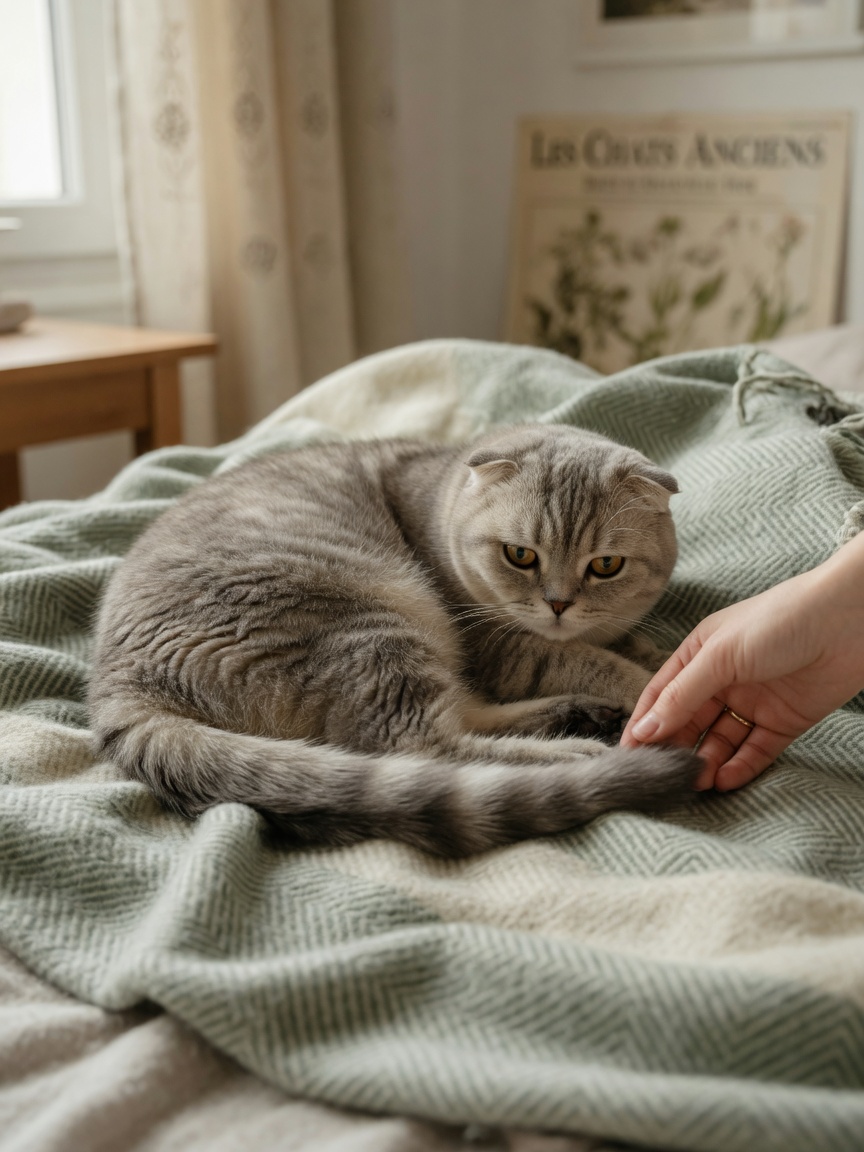
- Reluctance to jump up or down from furniture
- Stiff, stilted gait especially in the hind limbs
- Resistance to tail handling or a tail held low and rigid
- Swollen or painful feet and joints
- Reduced grooming due to difficulty reaching certain areas
- Changes in temperament due to chronic pain
The RCVS Position and Breed Welfare
In 2023, the Royal College of Veterinary Surgeons (RCVS) updated its position on brachycephalic and other conformation-related welfare issues, explicitly including Scottish Folds. The RCVS position states clearly that Scottish Folds should not be bred, on the grounds that the Fd gene mutation cannot be separated from the welfare harm it causes. Because the characteristic appearance of the breed is inseparable from the disease, there is no ethical breeding programme that can produce folded-ear cats without causing OCD.
This position aligns with the views of the British Veterinary Association (BVA) and several European veterinary bodies, which have called for an end to Scottish Fold breeding on welfare grounds.
The GCCF Ban on Registration
The Governing Council of the Cat Fancy (GCCF), which is the principal registry for pedigree cats in the UK, has prohibited the registration of Scottish Fold cats since 1971. This ban was one of the earliest formal responses to the welfare concerns associated with the breed and has remained in place. GCCF-registered breeders are not permitted to register Scottish Fold kittens, which means any Scottish Fold sold in the UK is not eligible for GCCF pedigree papers.
Despite this, Scottish Folds remain widely sold through unregistered breeders and online platforms, often at high prices, with many buyers unaware of the health implications.
The Genetics of the Folded Ear
The Fd gene is autosomal dominant, meaning only one copy is needed to produce the folded ear phenotype. When a Scottish Fold is bred to a straight-eared cat, approximately 50% of kittens will inherit the Fd gene and display folded ears. Breeding two folded-ear cats together produces a proportion of homozygous kittens, all of whom will be severely affected. Responsible breeders historically attempted to cross Scottish Folds with British Shorthairs to avoid homozygous kittens, but veterinary consensus now holds that even heterozygous offspring are at unacceptable risk.
What Owners of Scottish Folds Should Do
If you already own a Scottish Fold, the most important step is to establish care with a veterinarian experienced in feline musculoskeletal conditions. Early diagnosis of OCD allows for pain management strategies that can significantly improve quality of life. Treatment typically involves long-term analgesia, joint supplements, physiotherapy, and environmental modifications such as ramps and low-sided litter trays.
Owners should also be vigilant about not attributing signs of pain to normal ageing. A Scottish Fold showing stiffness, reduced mobility, or behavioural changes should be assessed promptly rather than managed at home without veterinary input.
The Broader Welfare Conversation
Scottish Folds sit within a wider conversation about extreme conformations in companion animals — a conversation that also includes flat-faced dogs and cats, and cats bred for extremely short legs. The central question is whether a breed's defining characteristic is compatible with a pain-free life. In the case of Scottish Folds, the evidence consistently indicates it is not. The fold that makes these cats appear endearing is the same mutation causing them pain throughout their lives.
Written by Sarah Bennett