
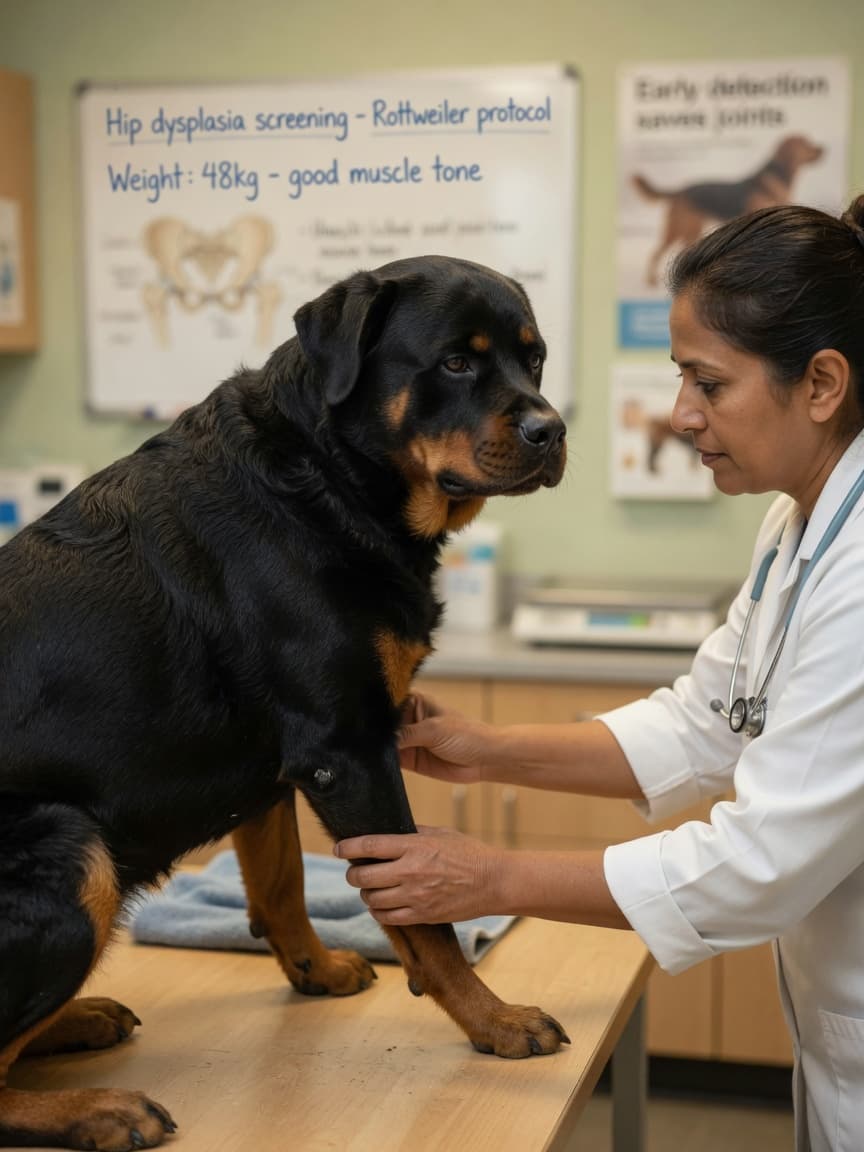
Rottweilers are among the breeds most commonly affected by hip dysplasia because of their heavy, fast-growing frames combined with a genetic predisposition inherited from their working-dog ancestry. The single most important thing an owner should know is that early recognition and careful management of growth, weight and exercise can make a dramatic difference to a dog's long-term comfort, even when the underlying joint structure isn't perfect. Joint health in this breed is very much a lifelong project, not a one-off vet visit.
Why Rottweilers Are Prone to Hip Dysplasia and Joint Problems
Rottweilers are a large, heavy-boned breed that grows quickly during puppyhood, often reaching much of their adult weight within the first year. This rapid growth places considerable strain on developing hip and elbow joints, and if the bones grow faster than the surrounding muscles and connective tissue can support, the ball and socket of the hip joint may not fit together as snugly as they should. This laxity is the root cause of hip dysplasia, a condition where the femoral head sits loosely in the acetabulum, leading over time to abnormal wear, inflammation and secondary osteoarthritis.
Genetics play a significant role. Hip dysplasia is a polygenic condition, meaning multiple genes contribute to susceptibility, and it is well documented as a common concern in Rottweilers by breed health schemes and veterinary orthopaedic literature. This is why reputable breeders screen breeding stock through hip scoring schemes before mating dogs. Beyond hip dysplasia, Rottweilers are also predisposed to elbow dysplasia (a group of developmental elbow conditions), osteochondritis dissecans (OCD), and, later in life, cranial cruciate ligament disease, all of which fall under the broader umbrella of orthopaedic and joint health concerns in this breed. Their heavy build simply means that any joint imperfection is put under more mechanical load than it would be in a lighter dog.
Owners considering or already living with this breed may find it useful to read the Rottweiler breed guide for a broader picture of the breed's health, temperament and care needs alongside this joint-specific information.
Early Signs and Symptoms to Watch For
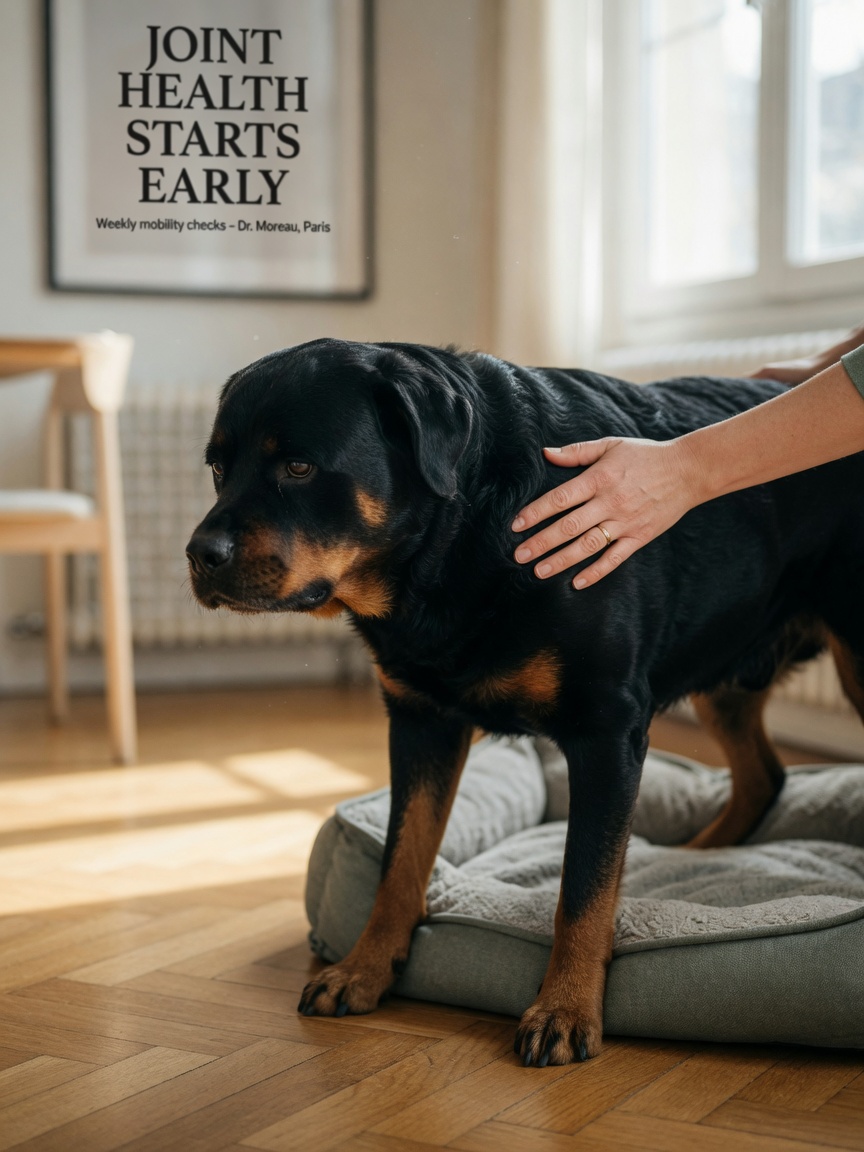
Hip dysplasia can appear in young, growing puppies or may not become obvious until middle age or later, once osteoarthritis has developed. Owners should watch for:
- Reluctance or hesitance to jump into the car, climb stairs, or get up after resting
- A "bunny hopping" gait, where both back legs move together rather than independently
- Stiffness that is worse first thing in the morning or after vigorous exercise, but improves once the dog warms up
- Reduced tolerance for long walks, or a noticeable change in exercise enthusiasm
- Muscle wastage over the hindquarters, sometimes making the shoulders look disproportionately more developed
- A swaying or "rolling" gait in the back end
- Audible clicking or grinding from the joint, though this isn't always present
Elbow dysplasia can present similarly but often shows as forelimb lameness, a shortened stride in the front legs, or a reluctance to bear weight fully on the front end. Because Rottweilers are a stoic breed, many will mask discomfort for longer than more demonstrative breeds, so subtle behavioural changes such as increased irritability, reduced play, or reluctance to be touched around the hips can be just as telling as obvious lameness.
When It's an Emergency
Most joint disease in Rottweilers develops gradually, but there are situations that warrant same-day veterinary attention rather than a routine appointment:
- Sudden, non-weight-bearing lameness, especially after exercise or a fall
- Visible swelling, heat, or severe pain on gentle manipulation of a limb
- A leg held at an abnormal angle, or a sudden inability to stand
- Signs of a ruptured cruciate ligament, such as a sudden hindlimb lameness with a "toe touching" gait
- Any suspected trauma, such as being hit by a car or a fall from height
These situations differ from the slow, progressive stiffness typical of chronic hip or elbow dysplasia and should not be left to "see how it goes" over several days.
Diagnosis
A vet will usually start with a full physical and orthopaedic examination, assessing range of motion, pain response, and specific manipulations such as the Ortolani test for hip laxity. Gait analysis, both at a walk and trot, helps identify which limb or limbs are affected.
Definitive diagnosis relies on X-rays, usually taken under sedation or general anaesthetic so the dog is fully relaxed and positioning is accurate. For dogs being assessed for breeding purposes, formal schemes such as the BVA/Kennel Club Hip Dysplasia Scheme in the UK score the hips against a standardised system, giving an objective measure of joint conformation. For pet dogs being investigated because of symptoms, X-rays help the vet see the degree of joint laxity, remodelling of the socket, and any secondary osteoarthritic changes. In more complex cases, particularly for elbow dysplasia or subtle cruciate injuries, CT scans or referral to a veterinary orthopaedic specialist may be recommended.
Management and Treatment Options
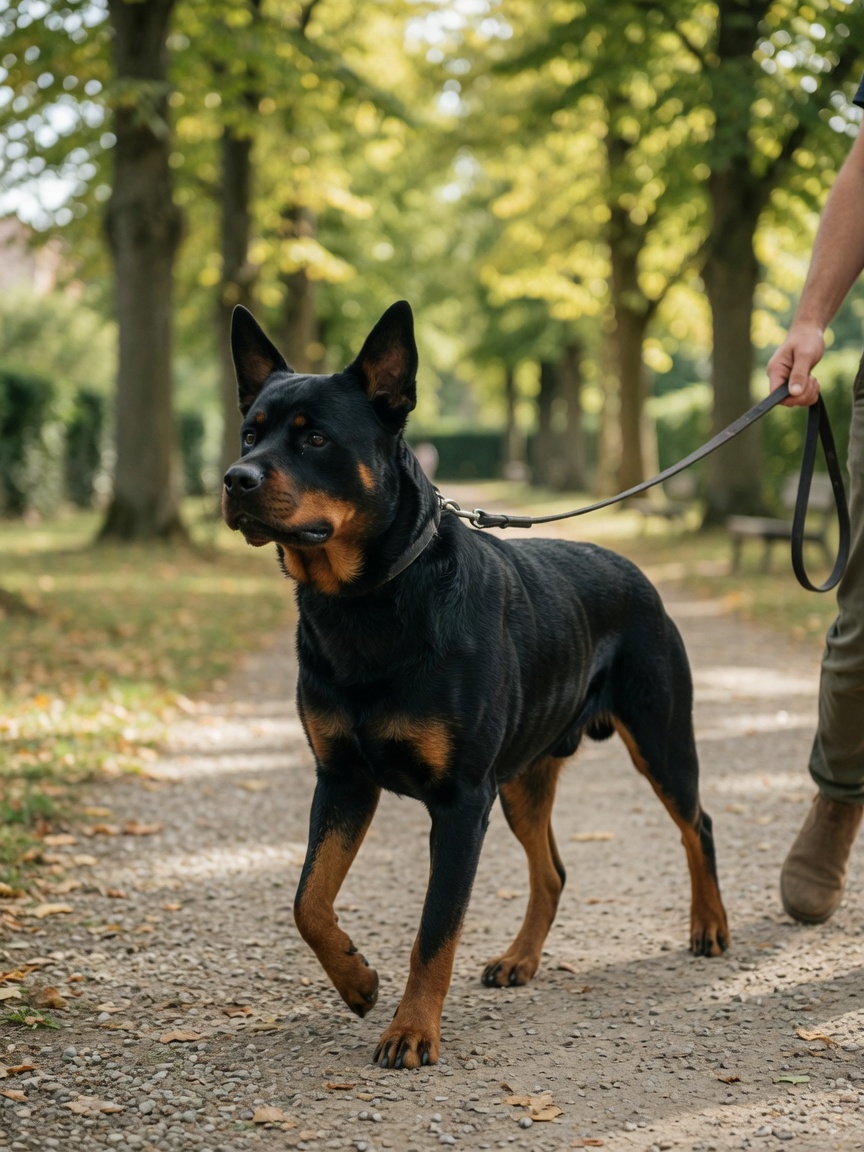
Treatment is tailored to the individual dog's age, severity of disease, and lifestyle, and often combines several approaches rather than relying on one alone.
- Weight management: Keeping a Rottweiler lean is one of the most powerful tools available; even modest excess weight significantly increases load on compromised joints
- Controlled exercise: Regular, low-impact activity such as steady lead walks and swimming helps maintain muscle mass and joint mobility without the jarring impact of jumping or hard play
- Physiotherapy and hydrotherapy: These can improve muscle strength and support around lax joints, often recommended both post-surgery and as ongoing conservative management
- Pain relief and anti-inflammatories: Non-steroidal anti-inflammatory drugs (NSAIDs) prescribed by a vet are commonly used to manage discomfort and improve quality of life
- Joint supplements: Products containing glucosamine, chondroitin, and omega-3 fatty acids are widely used, though owners should discuss evidence and expectations with their vet rather than relying on marketing claims
- Surgical options: For younger dogs, procedures such as a triple pelvic osteotomy may be considered before arthritis develops; for older or more severely affected dogs, total hip replacement or femoral head and neck excision may be recommended depending on severity and cost considerations
Your vet will help decide which combination suits your individual dog, and referral to a veterinary orthopaedic surgeon is common for surgical decision-making.
Prevention and Daily Care
While genetics cannot be changed once a puppy is born, several everyday choices can meaningfully reduce the risk or severity of joint problems:
- Choose a breeder who health-tests breeding stock for hip and elbow scores
- Feed a diet appropriate for large-breed puppies, which controls growth rate rather than maximising it
- Avoid excessive jumping, forced long-distance running, or repetitive stair use during the first 12–18 months while growth plates are still developing
- Maintain a healthy body condition throughout life, not just in puppyhood
- Provide good traction at home; slippery flooring can contribute to strain and injury, particularly for a dog with existing joint laxity
- Keep up with regular, moderate exercise rather than irregular bursts of intense activity
Cost and Prognosis: A Realistic Picture
Ongoing management of joint disease in a Rottweiler can be a genuine long-term financial and time commitment. Diagnostic imaging, orthopaedic specialist consultations, physiotherapy sessions, and long-term pain relief or supplements all add up, and surgical procedures such as total hip replacement represent a significant one-off cost. Pet insurance taken out early, before any signs of joint disease, can help considerably with this.
Prognosis varies widely. Many dogs with mild to moderate hip dysplasia live comfortable, active lives for years with conservative management alone. Dogs with more severe dysplasia or advanced osteoarthritis may need surgical intervention to maintain a good quality of life, but outcomes following surgery, particularly total hip replacement, are generally very good. The key message for owners is that a diagnosis of hip or elbow dysplasia is not a death sentence for an active life, but it does require realistic, ongoing commitment to management.
Frequently Asked Questions
Can I tell if my Rottweiler puppy will develop hip dysplasia before symptoms appear?
Not with certainty, but X-rays and formal hip scoring can identify laxity before obvious symptoms develop, which is why many owners choose to have their puppy assessed once they are old enough (usually from around a year old, depending on the scheme used).
Is it safe to let my Rottweiler puppy run and play normally?
Gentle, natural exercise such as free play in the garden is generally fine, but structured, repetitive high-impact activity, such as forced jogging or excessive jumping, is best avoided until your puppy has finished growing, as this places extra strain on developing joints.
Will my Rottweiler definitely need surgery if diagnosed with hip dysplasia?
No. Many dogs are managed successfully throughout life with weight control, exercise moderation, and pain relief when needed. Surgery is considered when conservative management isn't providing adequate comfort or when a vet identifies a specific benefit from intervention.
This article is for general informational purposes only and is not a substitute for professional veterinary advice. Always consult your vet for an accurate diagnosis and a treatment plan tailored to your dog.