

Understanding What Rottweilers Are Up Against
Rottweilers consistently rank among the most powerful and loyal of working breeds. They are also, statistically, one of the shorter-lived large breeds, with an average lifespan of eight to ten years. A significant proportion of that reduced longevity comes down to three major health challenges: musculoskeletal disease, inherited cardiac conditions, and an unusually high cancer burden. Knowing what to look for — and when to act — can make a meaningful difference to both quality and length of life.
Joint and Musculoskeletal Disease
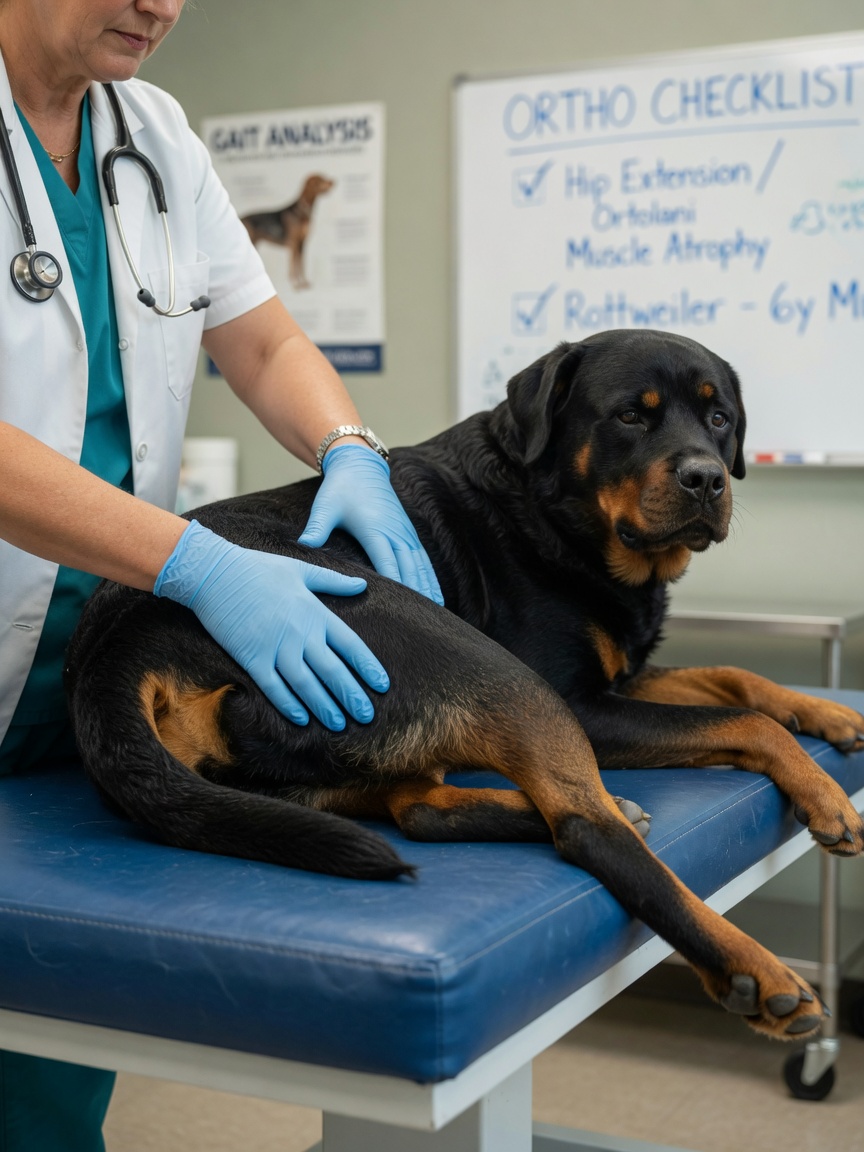
The Rottweiler's substantial frame places enormous demand on its joints from the very first months of life. Two conditions in particular are highly prevalent in the breed.
Hip and elbow dysplasia
Dysplasia — abnormal joint development — affects both the hips and elbows in Rottweilers at rates significantly above the canine average. Affected joints develop incongruencies that cause pain, cartilage erosion, and eventually osteoarthritis. Signs often emerge in young dogs between six and eighteen months, though some individuals compensate well until middle age when arthritis becomes advanced.
Symptoms include stiffness after rest, reluctance to exercise, a characteristic swaying gait, and visible muscle wastage around affected limbs. Diagnosis requires radiographic assessment, ideally including official hip and elbow scoring through recognised schemes. Owners purchasing Rottweiler puppies should request health certificates for both parents.
Osteochondrosis dissecans
OCD is another developmental condition disproportionately common in Rottweilers, affecting cartilage in the shoulder, elbow, or hock. Rapid growth combined with genetic susceptibility and dietary imbalance during puppyhood appears to contribute. Strict management of growth rate through appropriate large-breed puppy nutrition is one of the most effective preventive strategies available to owners.
Cardiac Conditions in Rottweilers
Heart disease in Rottweilers tends to take the form of subaortic stenosis, a narrowing below the aortic valve that restricts blood flow from the heart. Severity ranges from mild and asymptomatic to severe cases causing exercise intolerance, collapse, or sudden cardiac death.
Auscultation by a vet can detect a heart murmur suggestive of the condition, but formal diagnosis requires echocardiography. Because subaortic stenosis is inherited in Rottweilers, breeding dogs should be assessed by a veterinary cardiologist prior to mating. Dogs with moderate to severe stenosis should not be bred.
Dilated cardiomyopathy, while less prevalent in Rottweilers than in some other large breeds, does occur and warrants monitoring in older individuals. Annual cardiac assessment from five years of age onwards is a reasonable precaution for this breed.
Cancer: The Leading Cause of Death
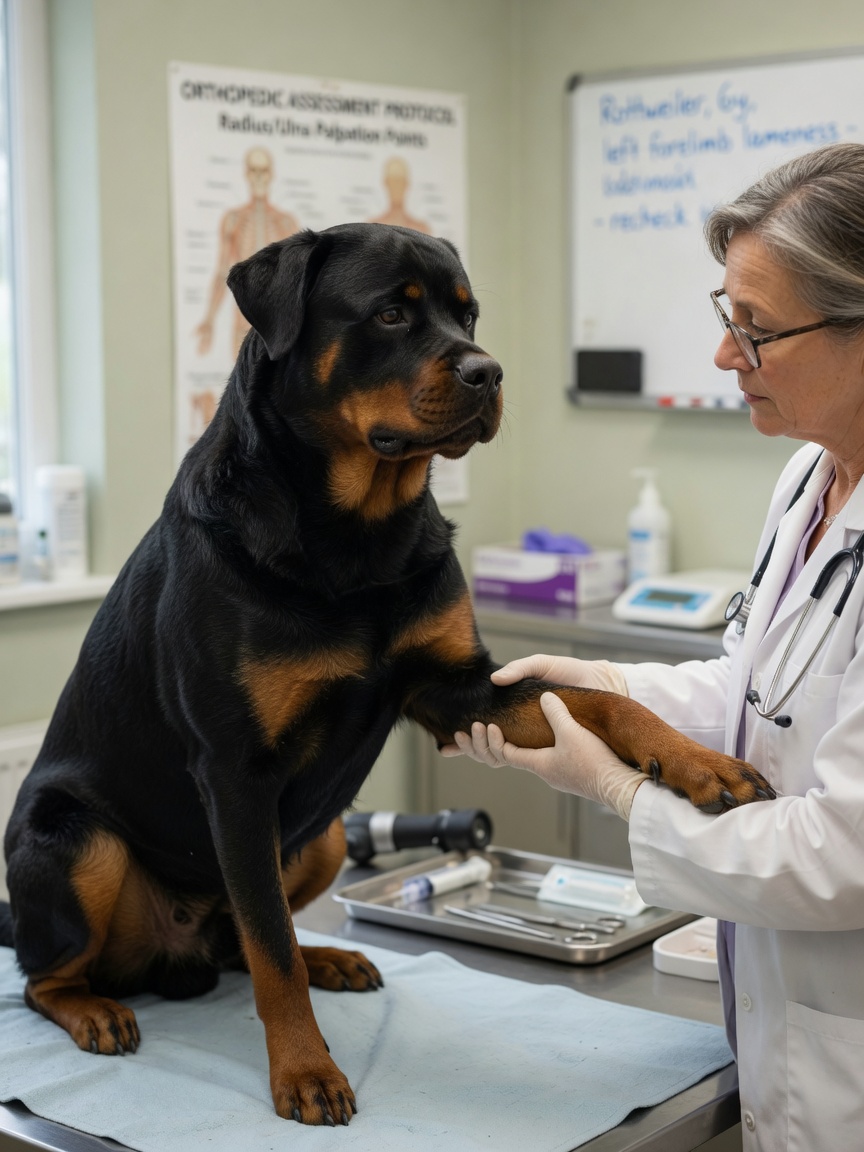
Cancer kills more Rottweilers than any other single condition. The breed is particularly susceptible to osteosarcoma — bone cancer — which most commonly affects the long bones of the limbs. Rottweilers develop osteosarcoma at a rate far exceeding most other breeds, and prognosis without aggressive treatment is unfortunately poor.
Recognising bone cancer early
- Persistent lameness in a single limb, especially if unresponsive to standard pain relief
- Visible swelling over a bone, commonly around the knee or wrist
- Pain on palpation of a specific bony area
- Reduced appetite or lethargy in conjunction with limb problems
Osteosarcoma is aggressive and spreads rapidly to the lungs. Early diagnosis via radiography and biopsy, followed by amputation combined with chemotherapy, currently offers the best survival outcomes — with median survival extending to around one year in treated cases compared to weeks in untreated ones.
Other cancers
Lymphoma, splenic tumours (haemangiosarcoma), and mast cell tumours also occur at elevated rates in the breed. Routine veterinary examinations are important for picking up early signs, including abnormal lymph node enlargement, abdominal masses, or suspicious skin lesions.
Preventive Care and Monitoring
Given the range and seriousness of conditions affecting Rottweilers, a structured preventive care plan is not optional — it is essential.
- Feed a high-quality large-breed puppy diet during the first 18 months to support controlled growth
- Avoid high-impact exercise during skeletal development — no forced running until at least 18 months
- Schedule biannual veterinary examinations from five years of age onwards
- Request cardiac auscultation at every annual check-up
- Investigate any persistent lameness promptly — never assume it is merely a sprain
- Maintain a lean body weight throughout life; obesity dramatically worsens joint disease
- Know your dog's baseline — changes in energy, appetite, or gait are often the first signals something is wrong
Rottweilers are deeply devoted companions that thrive with informed, attentive ownership. The health challenges they face are serious, but many are manageable when caught early. Work closely with a vet who has experience with the breed, and do not delay seeking specialist advice when something does not seem right.