
Health Challenges Behind the Ridge
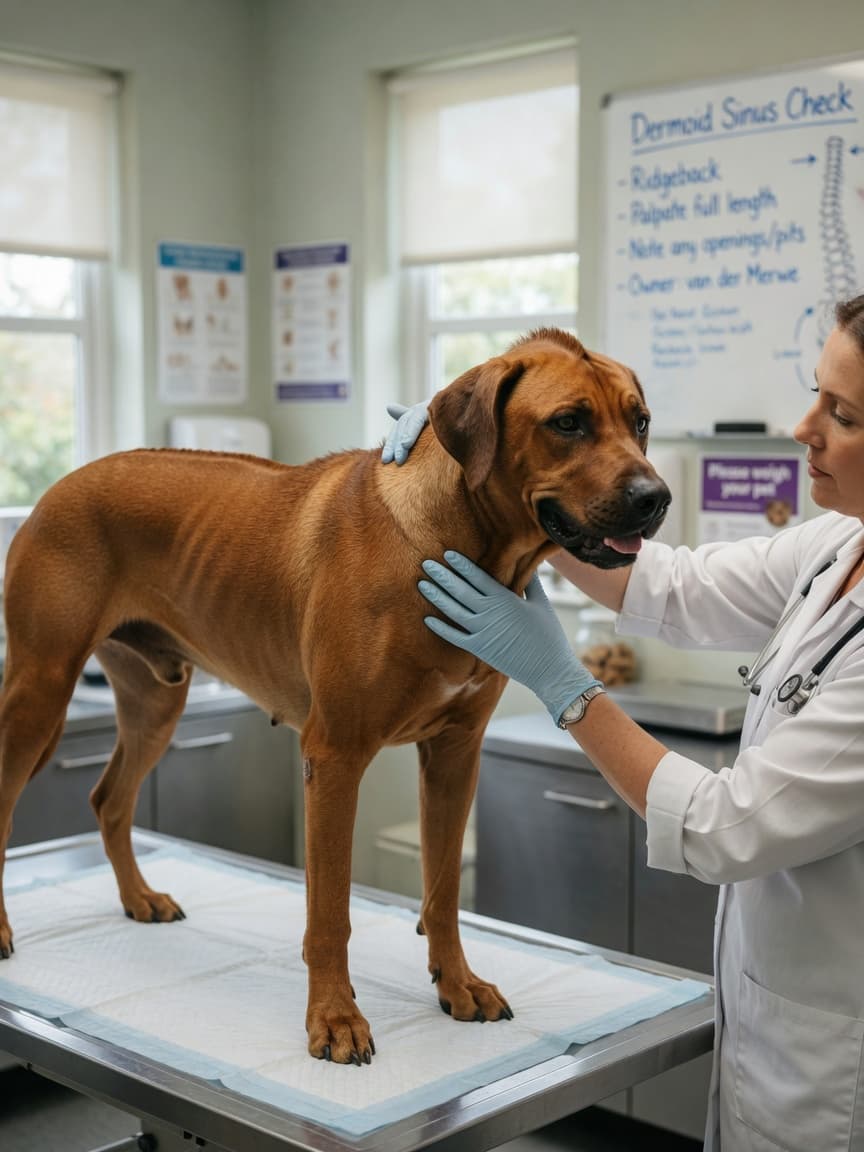
The Rhodesian Ridgeback is a breed of remarkable athleticism and quiet dignity, originally developed in southern Africa to track and hold lions at bay. Robust and adaptable, Ridgebacks are generally healthy dogs — but the breed carries several significant health concerns that owners and prospective buyers must understand. Dermoid sinus is unique to the breed. Hip dysplasia and hypothyroidism round out the major health priorities that define responsible Ridgeback ownership.
Dermoid Sinus: A Breed-Defining Defect
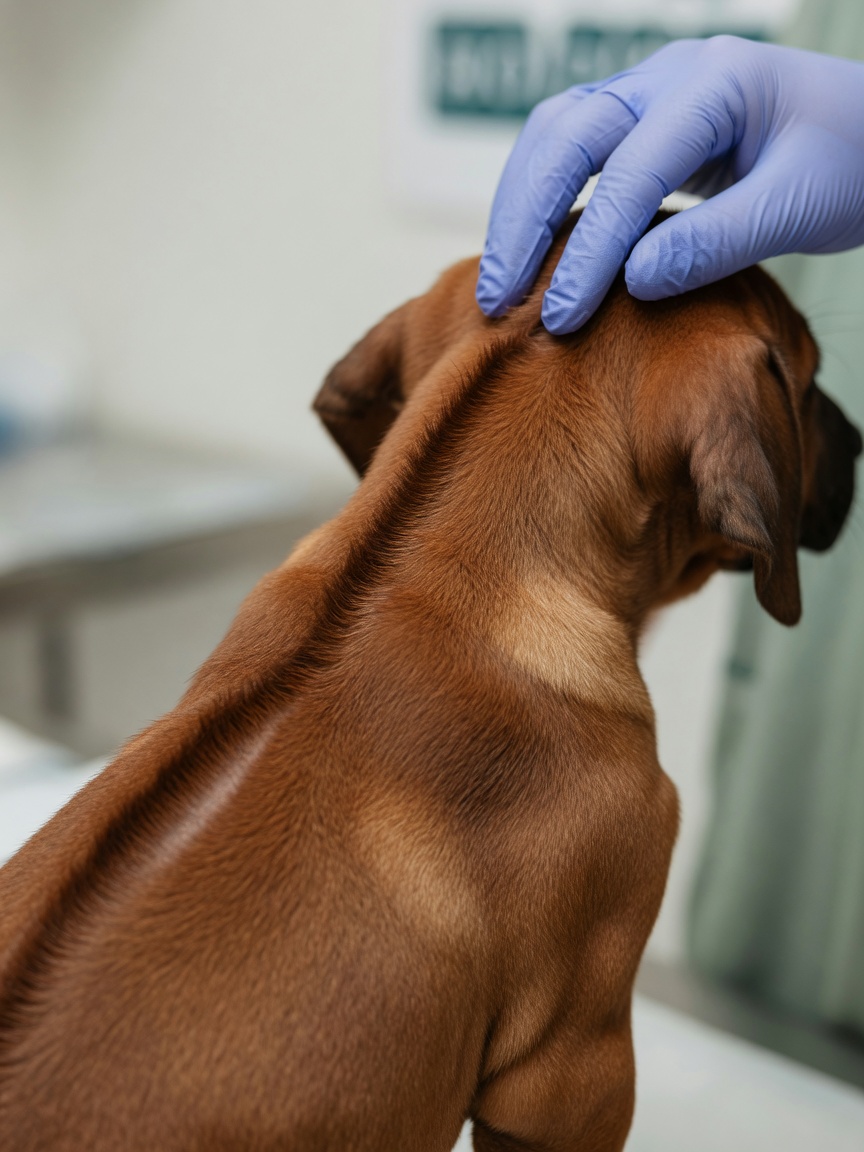
Dermoid sinus is a congenital neural tube defect found almost exclusively in Rhodesian Ridgebacks — and, to a lesser extent, in Thai Ridgebacks. It consists of a tubular tract of skin tissue that extends from the surface of the back inward toward the spine, sometimes reaching the spinal cord itself. The defect arises during embryonic development and is directly linked to the genetic mutation responsible for the breed's characteristic dorsal ridge.
Types and locations
Dermoid sinuses are classified by depth — from superficial tracts that do not connect to underlying structures, to those that penetrate the dura mater surrounding the spinal cord. They most commonly appear along the midline of the neck and back, often near the ridge itself. Affected puppies may show a small pore or tuft of hair at the skin surface, or the tract may be detectable only by careful palpation.
Why it is serious
A dormant dermoid sinus can remain asymptomatic for months or years, gradually accumulating keratin and sebaceous material until it becomes infected. Once infected, an abscess can form that tracks inward, causing meningitis or myelitis — inflammation of the brain and spinal cord coverings or spinal cord itself. These complications can be rapidly fatal or leave permanent neurological deficits.
Detection and treatment
All Ridgeback puppies should be examined for dermoid sinus by an experienced veterinarian or breeder shortly after birth and again before sale. The examination involves careful palpation along the dorsal midline. Ultrasound or MRI may be required to determine tract depth. Surgical excision before infection occurs is the treatment of choice; the prognosis with early removal is excellent. Dogs with dermoid sinus should never be bred, as the condition has a hereditary basis.
Hip Dysplasia in Rhodesian Ridgebacks
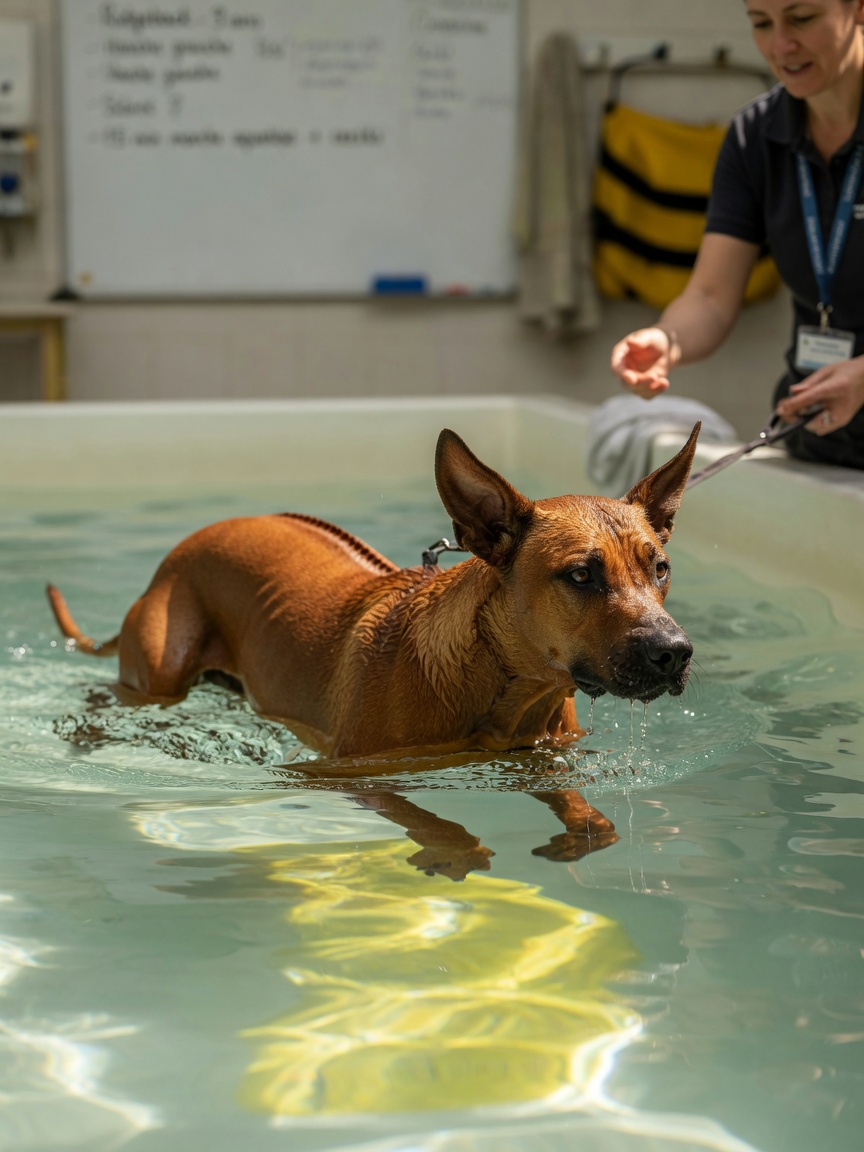
As a large, muscular breed, the Rhodesian Ridgeback is susceptible to canine hip dysplasia — a condition in which abnormal development of the hip joint leads to instability, painful cartilage degradation, and progressive osteoarthritis. The Orthopedic Foundation for Animals consistently records moderate to significant prevalence of hip dysplasia within the breed population.
Recognising the signs
- Reluctance to rise from lying down, particularly in the morning
- A swaying or rolling gait, especially at the trot
- Bunny-hopping when running on both hindlimbs together
- Reduced enthusiasm for exercise compared to the dog's normal baseline
- Visible muscle wasting over the hindquarters in chronic cases
Management strategies
Mild to moderate hip dysplasia is typically managed conservatively through weight optimisation, controlled low-impact exercise such as swimming and lead walking, physiotherapy, and appropriate pain management including non-steroidal anti-inflammatory drugs. Joint supplementation with omega-3 fatty acids and glucosamine is widely used, though evidence for the latter remains mixed. Severe cases may benefit from surgical options including femoral head and neck excision or total hip replacement. Purchasing from breeders who health test and score both parents' hips substantially reduces the risk of buying an affected puppy.
Hypothyroidism
Hypothyroidism — underactivity of the thyroid gland — is among the most common endocrine disorders in dogs, and Rhodesian Ridgebacks appear to be over-represented. The condition most frequently results from lymphocytic thyroiditis, an immune-mediated destruction of thyroid tissue, though idiopathic follicular atrophy also occurs.
Signs of hypothyroidism
- Weight gain without increased food intake
- Lethargy and reduced exercise tolerance
- Bilateral symmetrical hair loss, particularly over the flanks and tail base
- Thickened, dry, or flaky skin
- Cold intolerance — seeking warmth more than usual
- Slowed heart rate
- In some cases, peripheral neuropathy causing weakness or dragging of limbs
Diagnosis involves measurement of total and free thyroxine alongside thyroid stimulating hormone levels. Treatment with synthetic levothyroxine is effective, affordable, and given orally once or twice daily. Most dogs show marked improvement within four to eight weeks of starting treatment. Therapy is lifelong, and regular blood monitoring ensures dosing remains appropriate as the dog ages.
Other Conditions Worth Monitoring
Ridgebacks are also at some risk for degenerative myelopathy — a progressive neurological disease of the spinal cord — elbow dysplasia, and certain ocular conditions. As a deep-chested breed, they carry moderate GDV risk, and the same precautionary feeding practices recommended for other large breeds apply here. Some lines show a predisposition to certain cancers, particularly as the breed ages past eight years.
Priorities for Ridgeback Owners
- Insist on a veterinary dermoid sinus examination before purchasing or rehoming a Ridgeback puppy
- Ensure any puppy comes from parents with certified hip scores from a recognised scheme
- Monitor body weight carefully throughout life — obesity accelerates joint disease and worsens thyroid-related metabolic dysfunction
- Have thyroid function assessed if unexplained weight gain, coat changes, or lethargy appear
- Feed two smaller meals rather than one large meal to reduce bloat risk
- Schedule annual veterinary health checks, increasing to biannual from seven years of age
- Report any neurological signs — stumbling, dragging of feet, weakness — promptly to your vet
Rhodesian Ridgebacks are affectionate, self-assured dogs that form powerful bonds with their families. Their health challenges are real but manageable with informed, proactive ownership. Work with a vet who understands the breed, and never hesitate to seek specialist opinion when something does not seem right. Early intervention consistently leads to better outcomes across all of the conditions covered in this guide.