
When Tissue Protrudes Where It Should Not: A Distressing but Treatable Emergency
Discovering a pink or red cylindrical mass protruding from your pet's anus is alarming — and it should prompt immediate veterinary attention. Rectal prolapse occurs when one or more layers of the rectum protrude through the anal opening, and whilst it looks dramatic, prompt and appropriate treatment gives most animals an excellent chance of full recovery.
What Is Rectal Prolapse?
Rectal prolapse is the displacement of the rectal mucosa — or in more severe cases, all layers of the rectal wall — to the outside of the body through the anal opening. It is classified as partial (involving only the innermost mucosal layer) or complete (involving the full thickness of the rectal wall).
A partial prolapse may appear as a small, doughnut-shaped rim of red tissue around the anus and can be easily confused with other perianal swellings. A complete prolapse presents as a distinct cylindrical structure protruding several centimetres beyond the anus. Distinguishing rectal prolapse from a prolapsed intussusception — where telescoped bowel protrudes — has important treatment implications and requires veterinary examination.
Common Causes in Dogs and Cats
Causes in Dogs
In dogs, rectal prolapse most commonly occurs secondary to conditions that cause severe or prolonged tenesmus — straining. Intestinal parasitism, particularly heavy roundworm or whipworm burdens in young puppies, is a frequent trigger. Severe diarrhoea from any cause, perineal hernias, prostatic disease in intact males, rectal foreign bodies, and rectal or colonic masses are all recognised precipitating factors.
Causes in Cats
Cats most commonly develop rectal prolapse as a consequence of urinary obstruction — the intense straining associated with a blocked bladder or urethral obstruction can generate sufficient pressure to prolapse the rectum. Severe colitis, intestinal parasites, and perineal urethrostomy complications are other recognised causes. Young cats and kittens with heavy parasite burdens are particularly vulnerable.
First Aid: What to Do Before Reaching the Vet
Time is critical. Prolapsed tissue is exposed to air and physical trauma, rapidly becoming dried, swollen, and damaged. The longer tissue remains prolapsed, the greater the risk of irreversible injury and the more complex the repair.
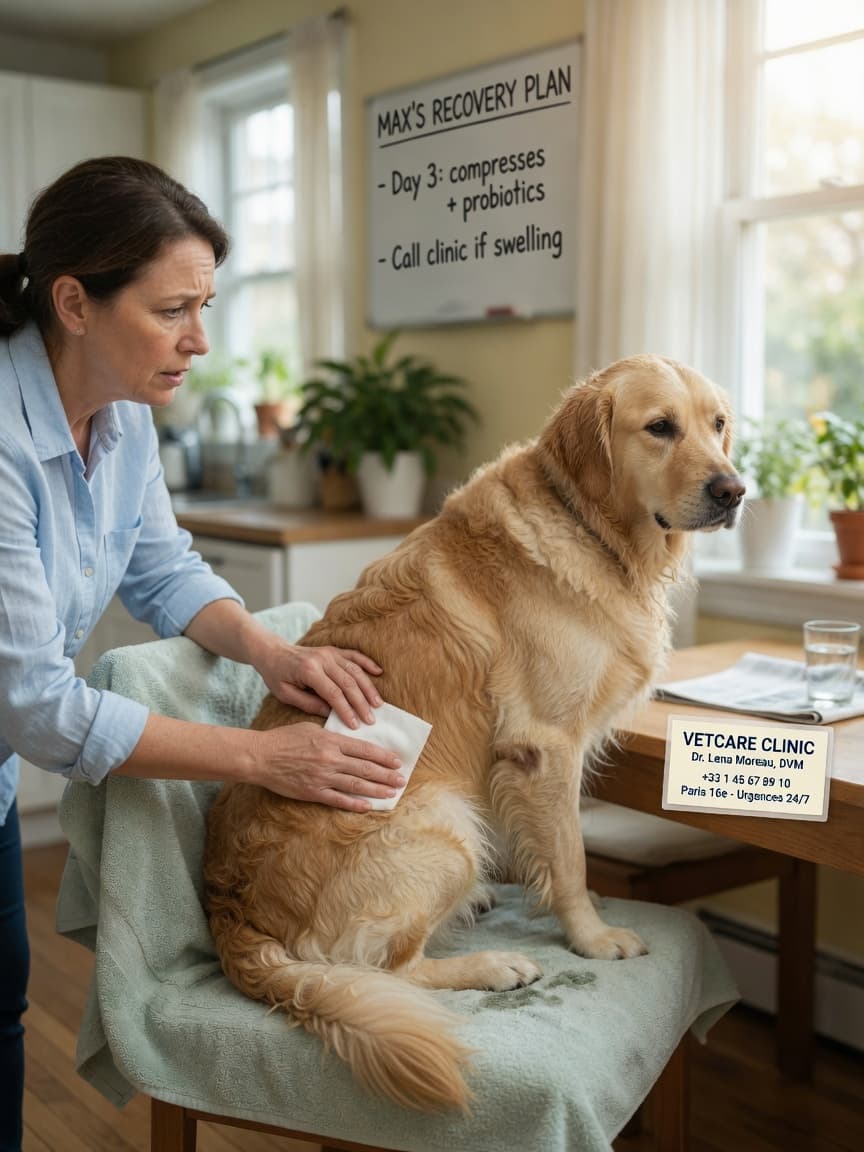
If you discover a prolapse, keep the protruding tissue moist using a clean cloth or gauze dampened with clean water or a dilute saline solution (one teaspoon of salt per 500ml of cooled boiled water). Do not attempt to push the tissue back yourself — this risks causing further damage or introducing infection. Do not allow the animal to lick or chew at the area; an improvised collar using a bucket or even a large plastic cup can provide temporary protection during transport.
Contact your veterinary clinic immediately and describe what you are seeing. Keep your pet calm and warm during transport.
Veterinary Treatment
Manual Reduction
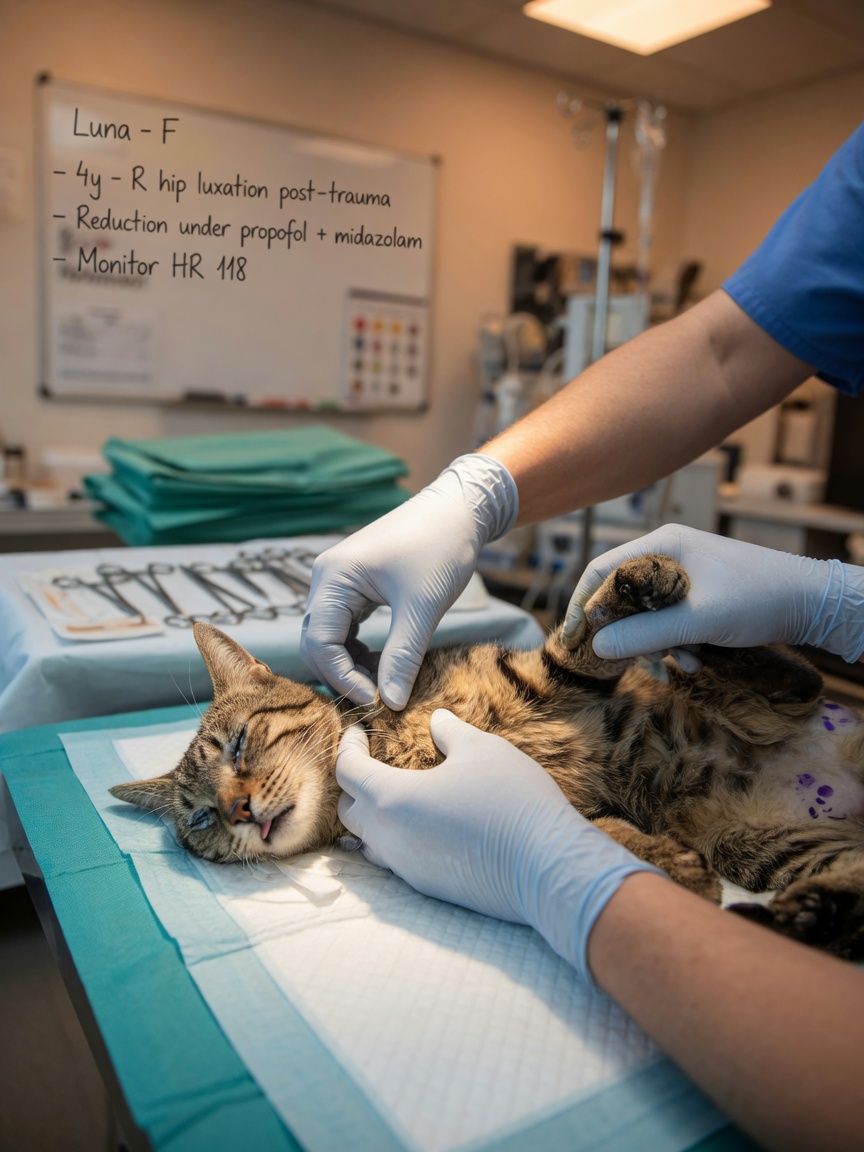
If tissue is viable — pink, moist, and not excessively swollen — manual reduction under sedation or general anaesthesia is attempted first. The prolapsed tissue is gently cleaned, lubricated, and replaced back through the anal opening. A temporary purse-string suture is placed around the anus to maintain reduction and prevent immediate re-prolapse. This suture is typically removed after three to five days once the underlying cause is being treated and swelling has resolved.
Surgical Options
When tissue is devitalised — darkened, dry, or gangrenous — surgical resection is unavoidable. The affected section of rectum is removed and the remaining healthy ends are rejoined, a procedure called colopexy may also be performed to anchor the rectum to the abdominal wall and prevent recurrence. Colopexy is increasingly performed even in successfully reduced cases in animals with a high risk of re-prolapse.
Treating the Underlying Cause
No prolapse treatment is complete without addressing the cause of straining. Parasite treatment, dietary modification, management of urinary obstruction, or investigation of colonic disease must accompany local repair to prevent recurrence.
Recovery and Prevention
- Post-operative stool softeners reduce straining during healing and should be used as directed by your vet.
- A low-residue, easily digestible diet minimises faecal bulk and the urge to strain in the days following repair.
- Routine faecal parasite screening and appropriate worming protocols — particularly in young animals — represent the most effective prevention in high-risk populations.
- Intact male dogs with recurrent prolapse associated with prostatic disease should be evaluated for castration.
- Cats prone to urinary obstruction require long-term urinary tract management to prevent recurrence.
- Any return of straining or tissue protrusion following treatment must be assessed by a vet without delay.
Rectal prolapse can recur, particularly if the predisposing cause is not fully resolved. Work closely with your veterinary team to identify and address root causes, and do not hesitate to seek emergency care if signs return.