
Two Words That Sound Similar but Work Very Differently
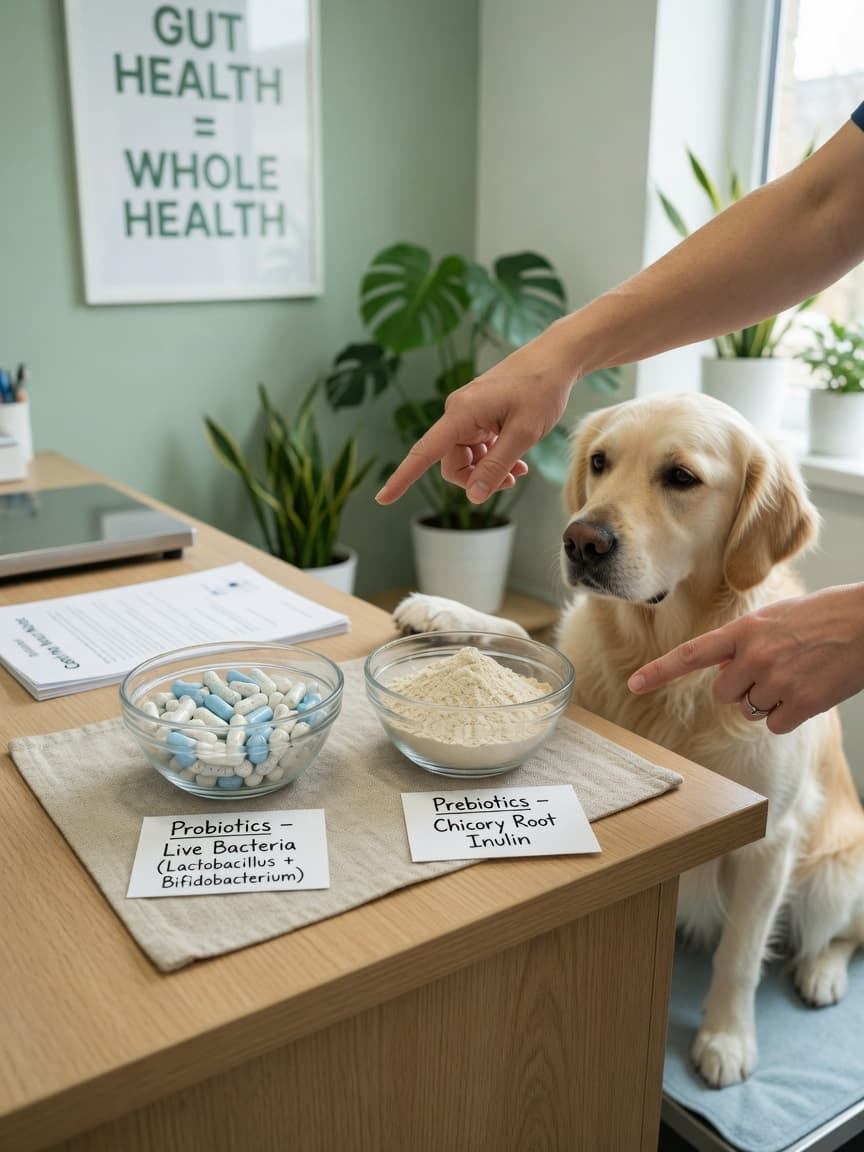
Walk into any pet shop or browse any supplement website and you will see both terms — prebiotic and probiotic — often marketed interchangeably or bundled together in the same product. The confusion is understandable, but the difference matters. Knowing what each one does, and when your pet might benefit from one or both, helps you make decisions that are actually grounded in how the gut works.
The simplest way to frame it: probiotics are the bacteria themselves. Prebiotics are what those bacteria eat. One introduces beneficial microorganisms; the other feeds the beneficial microorganisms already present. They work through entirely different mechanisms and are suited to different situations.
What Probiotics Actually Are
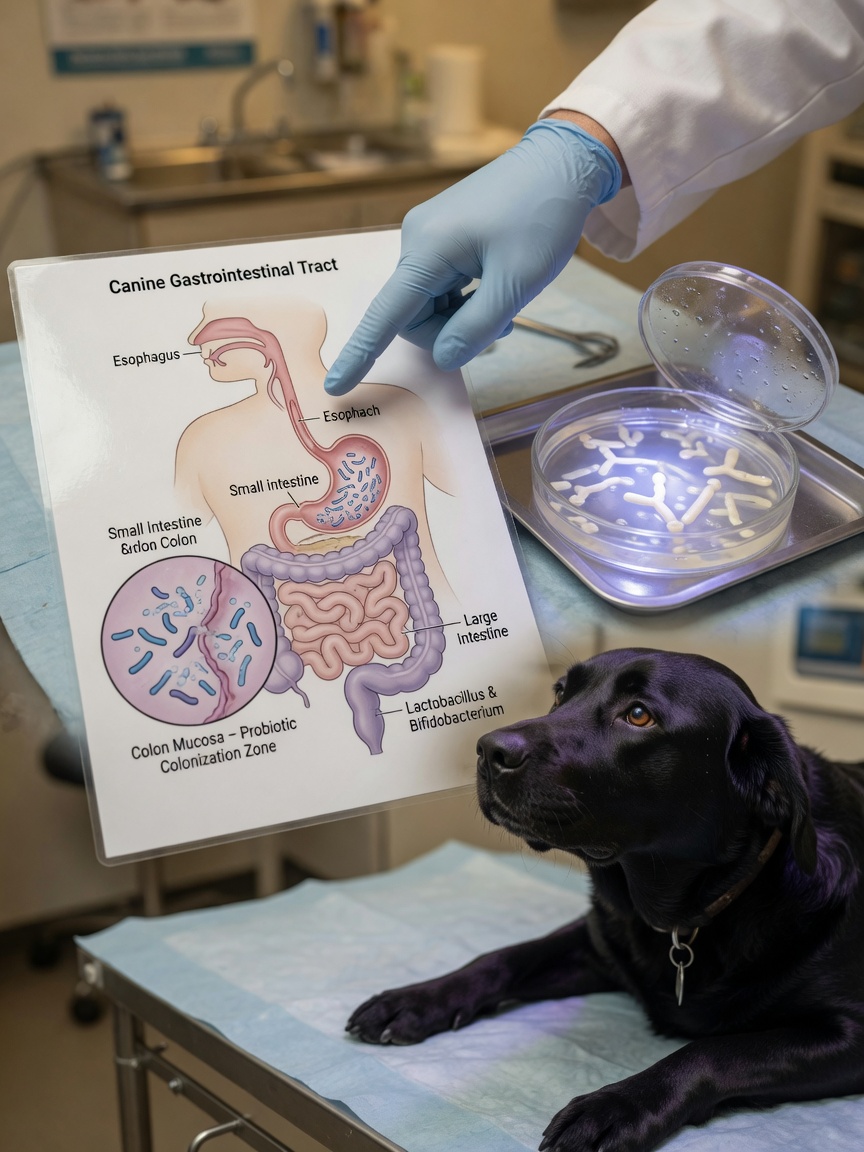
Probiotics are live microorganisms that, when administered in adequate amounts, confer a health benefit on the host. This definition, from the World Health Organisation, applies equally to human and veterinary use. The organisms most commonly found in pet probiotic products include strains of Lactobacillus, Bifidobacterium, Enterococcus, and the beneficial yeast Saccharomyces boulardii.
When your pet swallows a probiotic, the microorganisms travel through the stomach and small intestine. Stomach acid and bile are hostile environments, and not all strains survive transit. The ones that do reach the colon and can temporarily colonise it, producing beneficial metabolites, competing with harmful bacteria for space and nutrients, and modulating immune responses in the gut lining.
The critical word here is "temporarily." Most probiotic strains do not permanently colonise the gut. They provide benefits while they are present and then pass through. This means that for ongoing gut support, probiotics typically need to be given regularly rather than as a one-off intervention. The exception is following significant disruption — such as after an antibiotic course — where even a time-limited boost can meaningfully support recovery.
What Prebiotics Actually Are
Prebiotics are a category of dietary fibre and other compounds that are selectively used by beneficial gut microorganisms. They are not digested by the pet's own enzymes and reach the colon intact, where they serve as food for bacteria such as Bifidobacterium and Lactobacillus.
Common prebiotics used in pet supplements and functional pet foods include:
- Inulin — derived from chicory root, one of the most studied prebiotics in both human and veterinary contexts
- Fructooligosaccharides (FOS) — short-chain carbohydrates that selectively feed Bifidobacterium
- Mannan-oligosaccharides (MOS) — derived from yeast cell walls, thought to bind pathogens and prevent them from adhering to the gut wall
- Galactooligosaccharides (GOS) — found naturally in some legumes, support Bifidobacterium growth
- Beta-glucans — found in oats and certain mushrooms, with both prebiotic and immune-modulating properties
Prebiotics work by shifting the microbial ecosystem in favour of beneficial species. If a dog's gut already contains healthy populations of good bacteria, prebiotics help those populations thrive. However, if the beneficial bacteria have been significantly depleted — as often happens after antibiotic treatment — there is little to feed. In that context, adding probiotic organisms first, then supporting them with prebiotics, makes more logical sense.
When to Use Each One
Choosing between prebiotics and probiotics depends on what your pet's gut needs at a given time.
Situations Where Probiotics Are Most Useful
- During and after a course of antibiotics, to replenish depleted beneficial species
- During periods of stress such as boarding, travel, or changes in environment
- After illness involving vomiting or diarrhoea, where the gut flora has been disrupted
- In young animals whose microbiomes are still developing
- For pets with diagnosed dysbiosis or inflammatory bowel disease, under veterinary guidance
Situations Where Prebiotics Are Most Useful
- For ongoing maintenance of gut health in a pet whose microbiome is already reasonably balanced
- To support stool consistency in dogs with mild, intermittent digestive variability
- As a dietary addition when feeding a highly processed or low-fibre diet
- For senior pets whose microbial diversity is naturally declining
The Case for Synbiotics
A synbiotic is a product that combines both probiotics and prebiotics, and there is a reasonable scientific case for this approach. In theory, including the prebiotic substrate alongside the live organisms gives the introduced bacteria a better chance of surviving and establishing in the gut. Some research in humans and companion animals supports this, showing that synbiotic combinations outperform probiotics alone in certain contexts.
Many commercial veterinary products now take this approach. When evaluating a synbiotic product, check that the probiotic strains are identified to species and strain level, that colony-forming unit counts are stated per dose rather than per container, and that the product has been stored and transported appropriately, as live organisms are sensitive to heat and humidity.
A Note on Fermented Foods
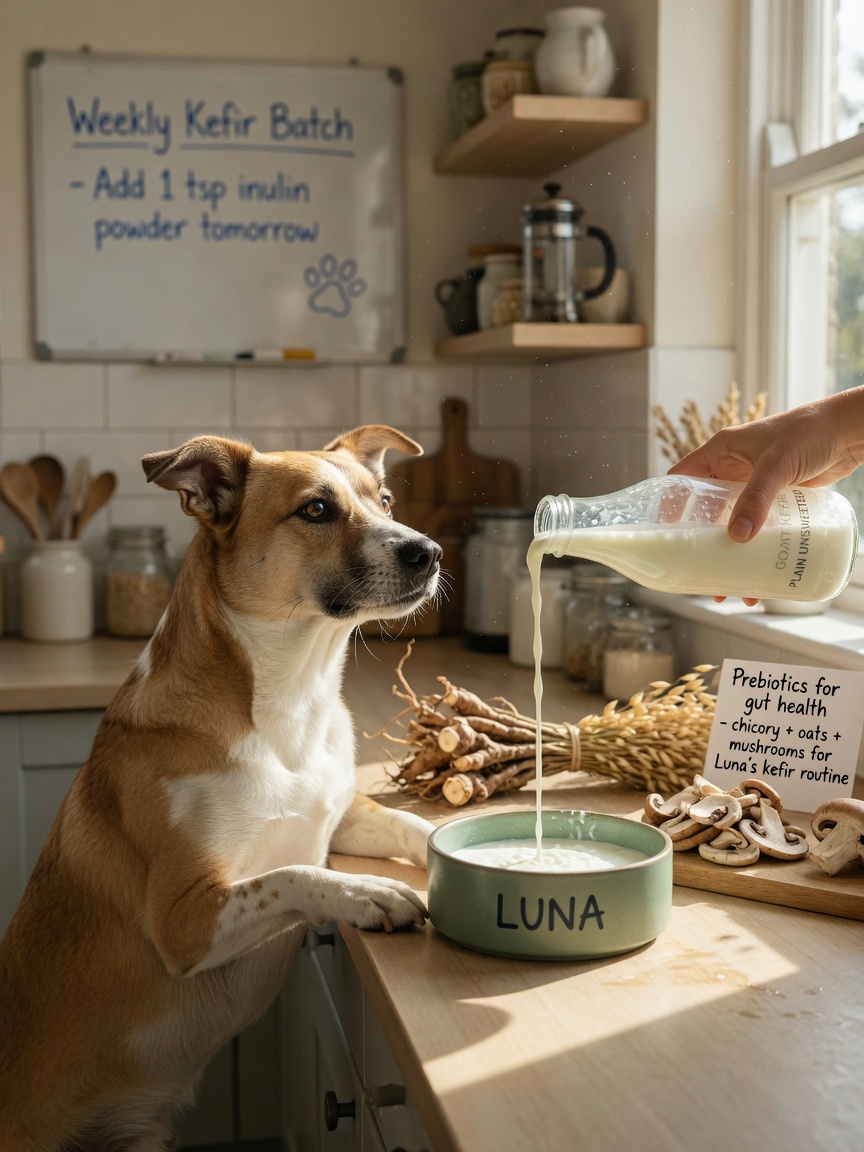
Some owners choose to add fermented foods to their pet's diet rather than using supplements. Plain, unsweetened kefir made from goat's or cow's milk is the most popular option for dogs. It contains live Lactobacillus cultures and is generally well tolerated by dogs in small amounts, even those with mild lactose sensitivity, because the fermentation process reduces lactose content significantly.
Fermented foods are not a substitute for a calibrated probiotic supplement in clinical situations, but as a dietary addition for general gut maintenance they can be a reasonable, whole-food option. For cats, the evidence for fermented foods is less robust, and given their more restrictive dietary requirements, supplementation is usually the safer route.
Quality Varies Enormously
The pet supplement market is largely unregulated in most countries. Third-party testing is not mandatory, and label claims about probiotic potency are not always verified. Studies examining commercial probiotic products for pets have found significant discrepancies between labelled and actual colony-forming unit counts, and some products have contained species not listed on the label.
This makes sourcing matter. Look for brands that publish third-party certificates of analysis, have species and strain information clearly listed, and ideally have published research supporting their specific formulations. Your vet or a veterinary nutritionist can often point you towards products with stronger evidence behind them.