
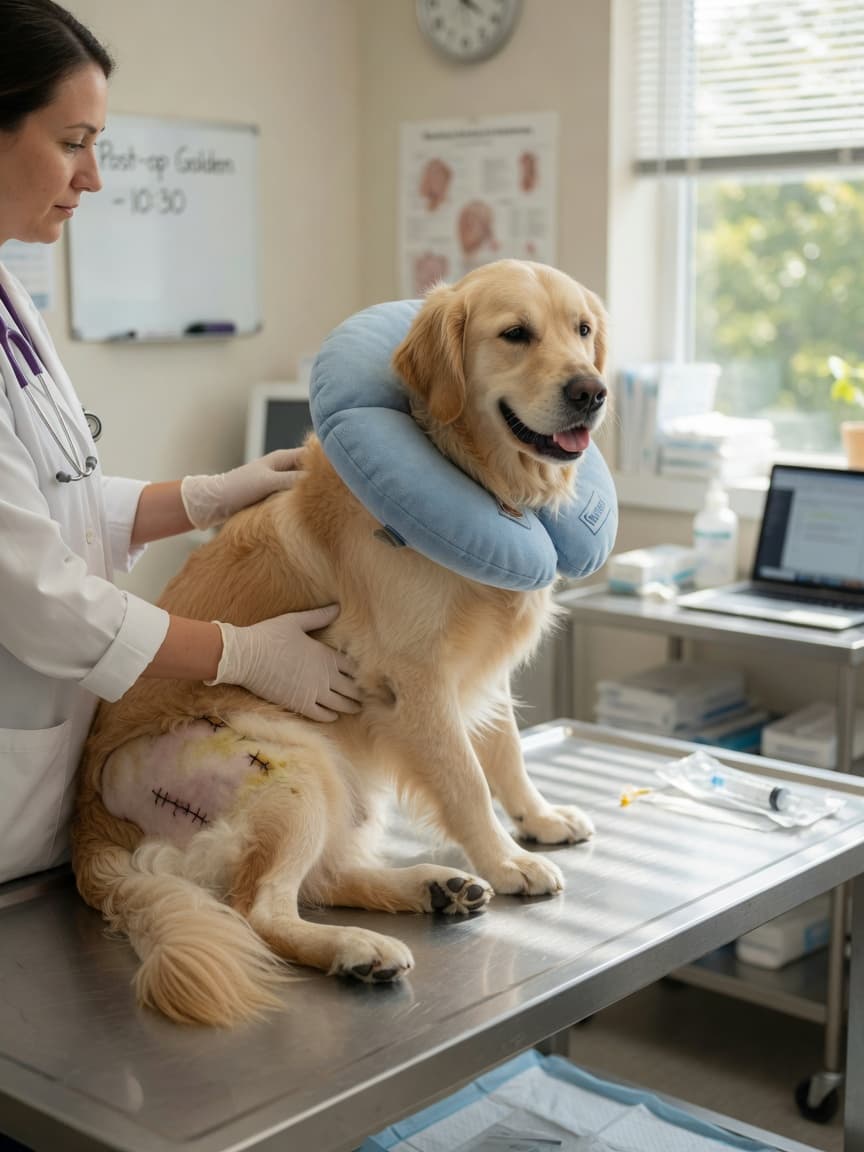
A Healing Wound Is Only as Good as the Care Around It
Surgical incisions in pets are closed with precision — but the moment your animal returns home, the healing environment is entirely in your hands. Wound interference and missed infection signs account for a disproportionate share of post-operative complications across both dogs and cats. The good news is that attentive, consistent care at home makes the difference in the vast majority of cases.
Why Licking Is More Dangerous Than It Looks
The idea that an animal's saliva has healing properties is a persistent myth. In practice, the mouth harbours a complex bacterial ecosystem, and repeated licking of a surgical wound introduces pathogens directly to healing tissue. Beyond infection risk, the mechanical action of the tongue breaks down suture material, disrupts forming granulation tissue, and can open wound edges that were neatly closed in theatre.
Cats are particularly persistent and dexterous wound lickers. A cat that appears to have been distracted or settled may return to the wound the moment you leave the room. Dogs tend to be more obvious about it but equally determined. Neither species should ever be left unsupervised with access to their wound during the healing period.
E-Collars: Types, Fit and Common Mistakes
The Elizabethan collar — universally known as the e-collar or cone — remains the most reliable wound protection device available, despite being widely disliked by pets and owners alike. Understanding the options and how to use them correctly reduces frustration without compromising protection.
Types of e-collar
- Standard rigid plastic cone: Most effective; ensures the animal cannot reach any part of the body from the neck back
- Soft fabric cone: More comfortable but less reliable; some animals can bend them sufficiently to access wounds
- Inflatable collar: Comfortable for sleep but provides no protection for abdominal or thoracic wounds in flexible animals
- Recovery suit or bodysuit: A useful supplement or alternative for trunk wounds, provided fit is snug and the animal cannot remove it
Correct fit
The collar should extend past the tip of the nose by at least two to three centimetres. You should be able to fit two fingers between the collar and the neck — snug enough to prevent removal, not tight enough to restrict swallowing or breathing. Check this fit each time you refit after meals or toilet breaks.
When owners go wrong
- Removing the collar during meals and forgetting to refit it promptly
- Assuming the animal is resting and removing the collar overnight
- Switching to a less restrictive option without vet approval
- Removing the collar before the wound has fully closed because the animal appears distressed
Daily Wound Checks: What You Are Looking For
Once daily, in good natural light, examine the incision site without touching it unless your vet has instructed otherwise. Clean wounds should be left alone — unnecessary handling introduces bacteria and disrupts healing.
Normal healing appearance
- Wound edges closely apposed with no gaps
- Mild pinkness or bruising in the first 48 to 72 hours
- Slight crust formation along the wound line from dried serum
- Progressive reduction in swelling after the first three days
Signs of infection requiring prompt veterinary contact
- Redness that spreads outward from the wound margins
- Warmth or heat concentrated at the incision site
- Swelling that increases rather than decreases after day three
- Discharge that is opaque, coloured (yellow, green, grey), or malodorous
- Wound edges separating or a visible gap appearing
- Systemic signs: fever, lethargy, reduced appetite, vomiting
Keeping the Wound Dry and Clean
Unless your vet has prescribed a specific topical treatment and given you instructions for application, the correct wound care protocol for most routine surgical sites is to leave them completely alone. Do not apply antiseptic sprays, hydrogen peroxide, iodine solutions, or any topical cream unless directed — many of these products damage the new cells forming at the wound surface and slow healing.
Keep the wound dry for the full recovery period. No bathing, no swimming, and take care during toilet walks in wet weather to prevent soaking. If the wound becomes contaminated with mud or faeces, contact your vet for guidance rather than attempting home cleaning.
When to Call Your Vet Without Waiting
Some situations do not warrant a watch-and-see approach. Contact your veterinary clinic same-day if you observe any of the following:
- A visible gap or opening in the wound, even a small one
- Bright red bleeding that does not stop within a few minutes of gentle pressure
- Your pet has removed or destroyed the e-collar and accessed the wound
- Tissue that appears to be protruding from the incision site
- Your pet's overall condition deteriorates suddenly at any point during recovery
Wound care after surgery is not complex, but it requires consistency. The e-collar stays on, the wound stays dry, and daily checks catch problems early. Your vet is available for questions throughout recovery — that is what post-operative support exists for, and no concern is too minor to raise.