ForPetsHealthcare
Dogs

Portosystemic Shunt Dogs Liver Bypass Stunted Growth

By Julia WrenfieldUpdated August 4, 20264 min read
Evidence-based · Sources checked
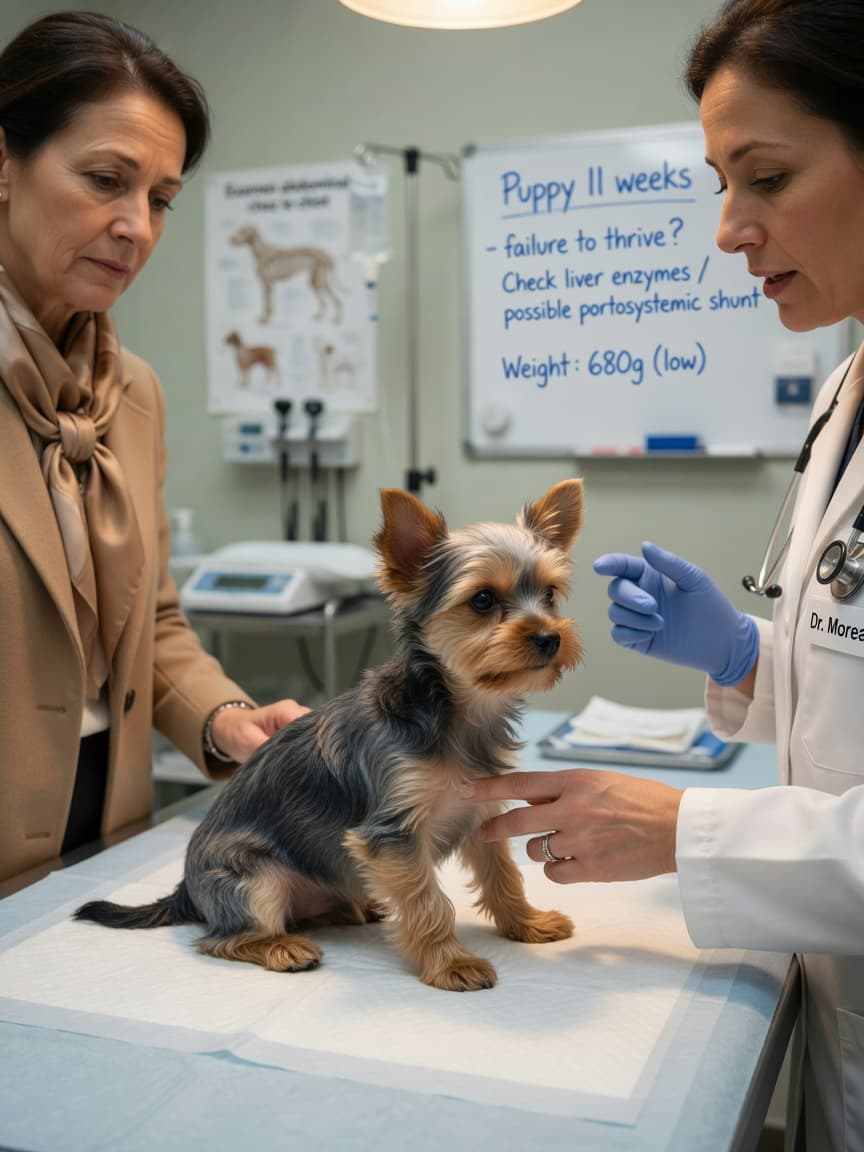
{"en": "Yorkshire Terrier puppy significantly smaller than littermates at eight weeks old, showing stunted growth from portosystemic shunt", "es": "Cachorro de Yorkshire Terrier notablemente m\u00e1s peque\u00f1o que sus hermanos a ocho semanas, mostrando retraso en crecimiento por shunt portosist\u00e9mico", "fr": "Chiot Yorkshire Terrier nettement plus petit que ses fr\u00e8res et s\u0153urs \u00e0 huit semaines, pr\u00e9sentant un retard de croissance d\u00fb \u00e0 un shunt portosyst\u00e9mique", "de": "Yorkshire-Terrier-Welpe deutlich kleiner als seine Wurfgeschwister in acht Wochen, zeigt Wachstumsverz\u00f6gerung durch portosystemischen Shunt", "nl": "Yorkshire Terrier puppy duidelijk kleiner dan nestgenoten op acht weken oud, vertoont groeivertraging door portosystemische shunt", "pt": "Filhote de Yorkshire Terrier notavelmente menor que seus irm\u00e3os com oito semanas, mostrando retardo de crescimento por shunt portossist\u00eamico", "it": "Cucciolo di Yorkshire Terrier notevolmente pi\u00f9 piccolo dei fratelli a otto settimane, che mostra arresto della crescita da shunt portosistemico"}

The Puppy That Never Quite Thrives

A litter of Yorkshire Terrier puppies is eight weeks old. Most are bouncing, gaining weight, and meeting milestones. One is noticeably smaller, sometimes wobbly after eating, and occasionally stares blankly at nothing. This pattern — the runt who seems neurologically "off" — is a classic presentation of a portosystemic shunt (PSS), a structural defect that allows blood to bypass the liver entirely.

What Is a Portosystemic Shunt?

In a healthy dog, blood from the gastrointestinal tract travels through the portal vein to the liver, where toxins are filtered, nutrients are processed, and waste products are transformed before the blood enters general circulation. In a dog with a portosystemic shunt, an abnormal blood vessel diverts portal blood directly into systemic circulation, sidestepping the liver completely.

Congenital vs Acquired Shunts

Congenital shunts are present from birth and represent the vast majority of cases. They may be extrahepatic (the abnormal vessel sits outside the liver — most common in small breeds) or intrahepatic (within the liver — more common in large breeds such as Irish Wolfhounds and Labradors). Acquired shunts develop secondary to chronic liver disease and portal hypertension; they are less common and typically present in older animals.

Breeds at Elevated Risk

While any dog can be affected, certain breeds carry a significantly higher predisposition due to inherited factors:

  • Yorkshire Terriers — the most commonly affected breed
  • Maltese
  • Pugs
  • Miniature Schnauzers
  • Irish Wolfhounds (intrahepatic)
  • Golden Retrievers
  • Labrador Retrievers

Clinical Signs: More Than Just Small Size
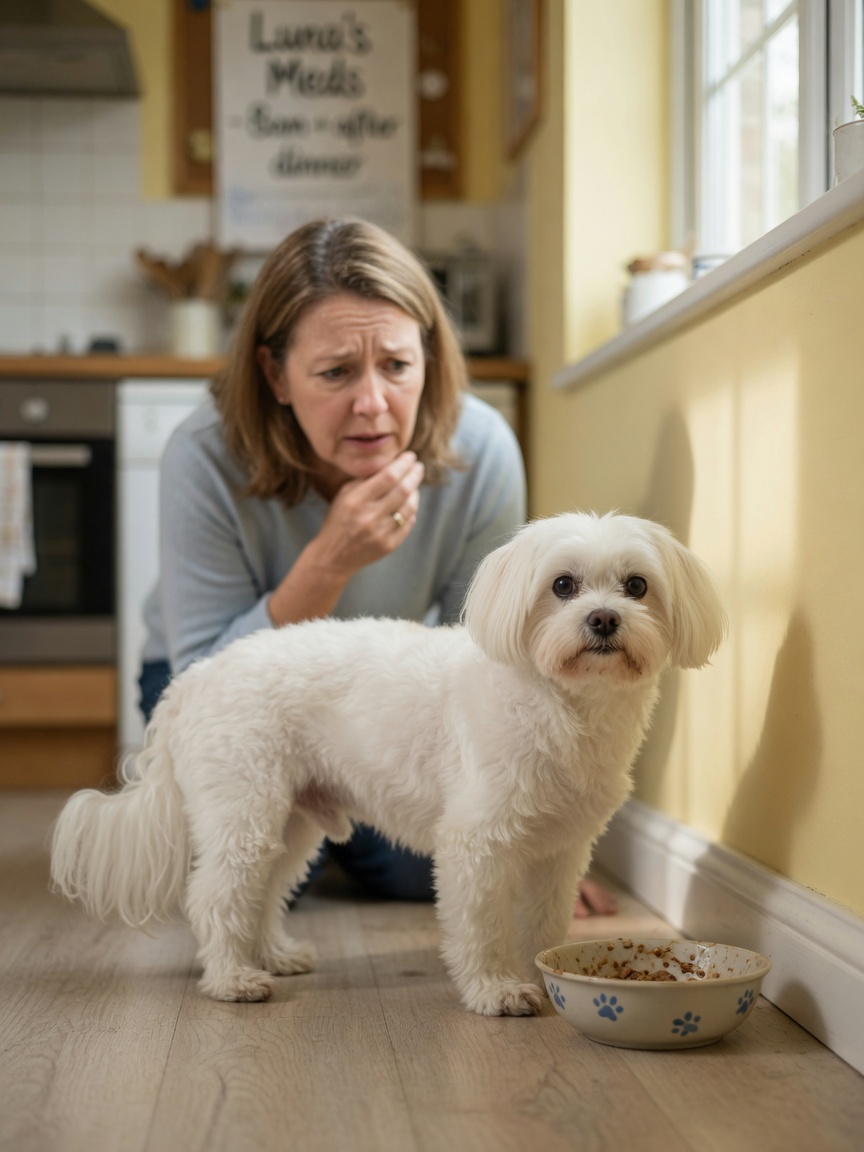
Small dog showing disorientation and vacant staring after meal, demonstrating hepatic encephalopathy symptoms

Because the liver is responsible for detoxifying ammonia and other metabolic byproducts, dogs with PSS develop hepatic encephalopathy — neurological dysfunction caused by toxin accumulation in the brain. Signs can be episodic and are often triggered by a high-protein meal.

Common Presentations

  • Stunted growth and low body weight
  • Disorientation, head pressing, or vacant staring
  • Excessive salivation and drooling
  • Urinating or drinking excessively
  • Recurrent urinary tract infections or ammonium biurate bladder stones
  • Seizures in severe cases

Many owners report that their dog seems "drunk" or confused, particularly in the hours following feeding. Symptoms often improve temporarily with fasting or low-protein meals, which is a telling clinical clue.

Diagnosis and Staging

Routine blood work may reveal low albumin, low glucose, mildly elevated liver enzymes, and a small liver (microhepatica) on imaging. Bile acids — measured fasting and two hours post-meal — are the standard screening test and are often markedly elevated. Definitive identification of the shunting vessel requires advanced imaging: Doppler ultrasound, CT angiography, or nuclear scintigraphy. CT angiography is increasingly the preferred method as it precisely maps the anatomy to guide surgical planning.

Treatment: Surgery Versus Medical Management
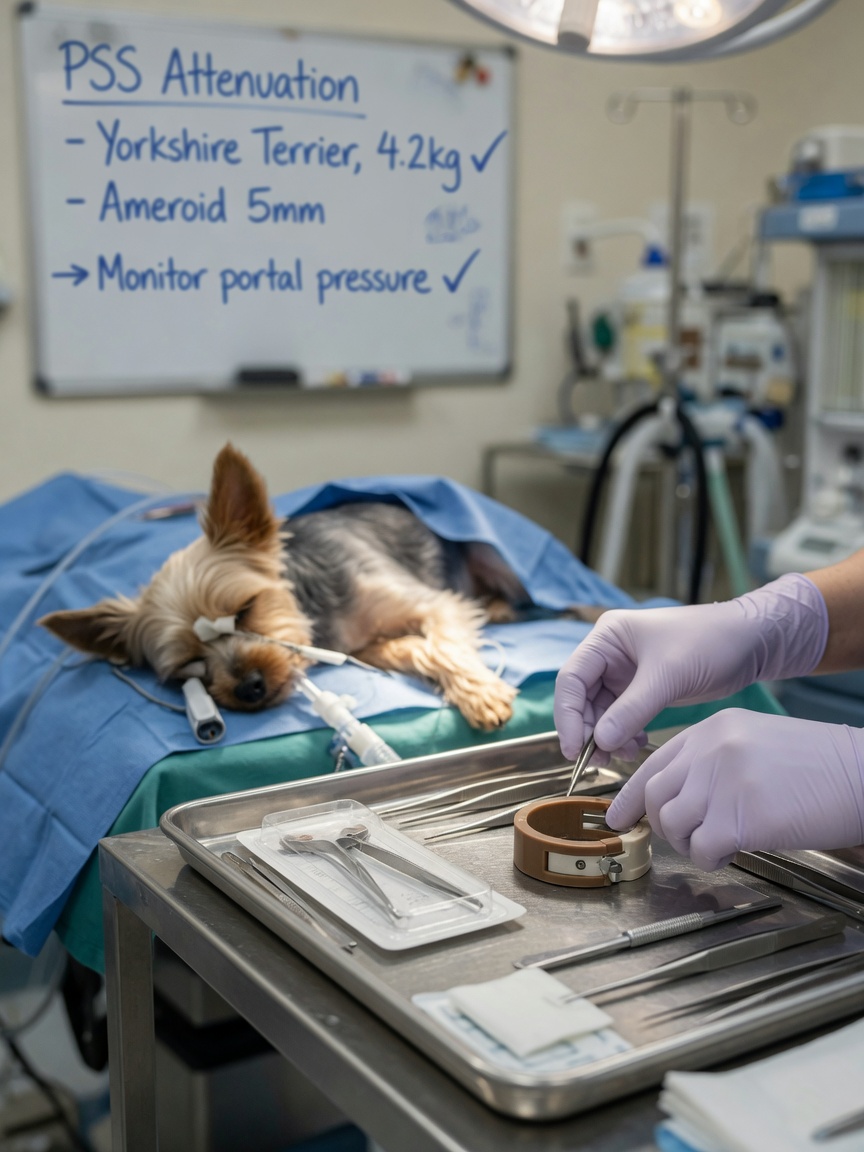
Surgical preparation for portosystemic shunt attenuation with ameroid constrictor device

Surgical attenuation of the shunt is the definitive treatment and offers the best long-term prognosis, particularly for extrahepatic congenital shunts. Gradual occlusion using an ameroid constrictor or cellophane band allows portal circulation to adapt over weeks rather than causing sudden hypertension. Studies report good to excellent outcomes in approximately 85 per cent of dogs undergoing surgery for single extrahepatic shunts.

Medical management is used in dogs who are poor surgical candidates or when owners elect not to pursue surgery. It centres on a protein-modified diet (adequate but not excessive protein, emphasising plant and dairy sources over red meat), lactulose to reduce ammonia production in the gut, and antibiotics such as metronidazole to alter intestinal bacteria. Medical management controls signs but does not address the underlying shunt, and liver function typically continues to decline over time.

Any dog suspected of having a portosystemic shunt should be assessed by a veterinary internist or surgeon with experience in hepatic conditions. The earlier the diagnosis, the better the surgical outcome. If you have a small-breed puppy that is not keeping pace with its littermates and shows neurological episodes, do not wait — discuss bile acid testing with your vet promptly.

#portosystemic shunt dogs liver bypass stunted growth#dog health#dog nutrition#forpetshealthcare

Sources & further reading

This article is based on peer-reviewed veterinary research and reputable animal-health sources. Explore the underlying science in our Research Library.

Related articles

The 19 Best Animal Shelters in the Netherlands (2026)

the Netherlands's animal shelters, rescue associations and refuges save thousands of dogs, cats and other animals every year, almost always on tiny budgets and volunteer power. To build the most objective ranking possible, we analysed public Google reviews across more than 56 registered animal-prote…

Read more →

The 25 Best Animal Shelters in Italy (2026)

Italy's animal shelters, rescue associations and refuges save thousands of dogs, cats and other animals every year, almost always on tiny budgets and volunteer power. To build the most objective ranking possible, we analysed public Google reviews across more than 121 registered animal-protection org…

Read more →

The 48 Best Animal Shelters in Germany (2026)

Germany's animal shelters, rescue associations and refuges save thousands of dogs, cats and other animals every year, almost always on tiny budgets and volunteer power. To build the most objective ranking possible, we analysed public Google reviews across more than 152 registered animal-protection o…

Read more →

The 32 Best Animal Shelters in France (2026)

France's animal shelters, rescue associations and refuges save thousands of dogs, cats and other animals every year, almost always on tiny budgets and volunteer power. To build the most objective ranking possible, we analysed public Google reviews across more than 89 registered animal-protection org…

Read more →

The 8 Best Animal Shelters in Portugal (2026)

Portugal's animal shelters, rescue associations and municipal centros de recolha save thousands of dogs, cats and other animals every year, almost always on tiny budgets and volunteer power. To build the most objective ranking possible, we analysed public Google reviews across more than 86 registere…

Read more →

Sphynx Cat Skin care and hygiene: Causes, Signs & Care

Sphynx cats have little to no coat, which means the skin itself takes on jobs that fur normally does — insulation, oil dispersal, and barrier protection — leaving it prone to greasiness, blocked pores, fungal infections, and sunburn. The single most important thing to know is that a Sphynx's skin ne…

Read more →
Disclaimer:This article is for informational purposes only and does not constitute veterinary advice. Always consult a qualified veterinarian for your pet's health concerns.

Free newsletter

Pet health tips, straight to your inbox

Weekly science-backed advice for dog & cat owners. No spam, unsubscribe anytime.