
The Pomeranian: Big Personality, Specific Health Needs
Few dogs pack as much confidence into such a compact frame as the Pomeranian. Descended from large Nordic sled dogs, the modern Pom has been miniaturised to a toy breed weighing between 1.8 and 3.5 kilograms — and that transformation, along with breed-specific genetics, has introduced a distinct set of health vulnerabilities. Three conditions in particular require every Pomeranian owner's attention: alopecia X, tracheal collapse, and luxating patella.
Alopecia X: The Coat Condition With a Confusing Name
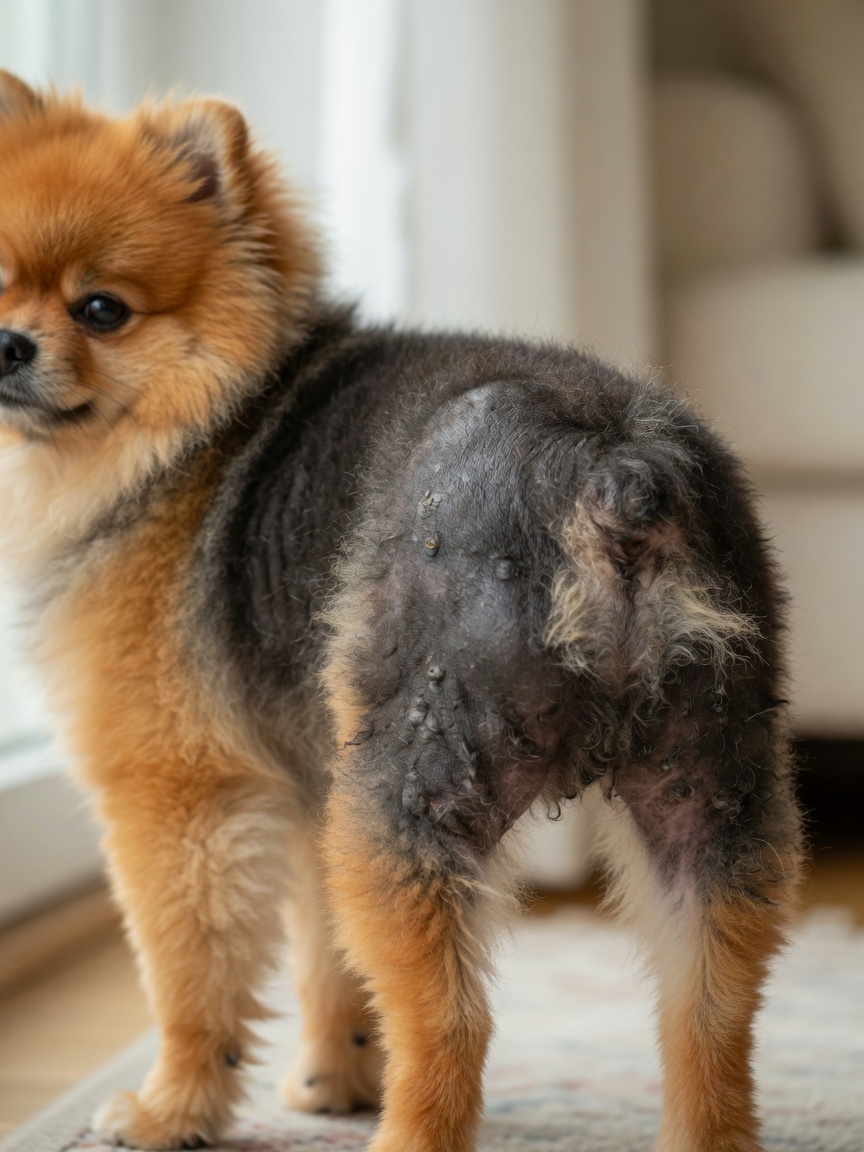
Alopecia X goes by several names — black skin disease, coat funk, growth hormone-responsive alopecia, adrenal sex hormone imbalance — and the multiplicity of terms reflects the fact that its precise cause remains incompletely understood. What is consistent is the clinical presentation: progressive, symmetrical hair loss typically beginning at the rump and thighs, spreading forward across the body, while the head and limbs are usually spared. The skin beneath becomes hyperpigmented, turning dark and thickened over time.
Who Is Affected
Alopecia X is seen predominantly in intact or recently neutered male Pomeranians, though females are not immune. It tends to emerge between one and ten years of age, with young adults most commonly affected. The condition is cosmetic — affected dogs are not in pain and do not appear systemically unwell — but the dramatic change in appearance can be distressing for owners unfamiliar with it.
Diagnosis
Before labelling a case as alopecia X, your vet will need to rule out other causes of hair loss: hypothyroidism, Cushing's disease (hyperadrenocorticism), sex hormone imbalances, and skin infections. Blood panels, urine cortisol testing, and skin biopsy may all form part of the workup. Alopecia X is a diagnosis of exclusion — it is confirmed once other treatable causes have been eliminated.
Management
There is no universally effective treatment, but several approaches have shown partial success in some dogs. Neutering (in intact males) leads to regrowth in a proportion of cases. Melatonin supplementation is a low-risk option that improves coat in some individuals. Mitotane and trilostane — drugs used for Cushing's disease — have been used off-label with variable results but carry greater risk and require careful monitoring. Many owners, once reassured the condition is not harmful, opt to manage it conservatively. Regular moisturising of the skin can prevent dryness and cracking in heavily pigmented areas.
Tracheal Collapse: The Honking Cough Explained
The trachea — the cartilaginous tube carrying air from the throat to the lungs — can lose structural integrity in small breeds, causing it to flatten during breathing. This is tracheal collapse, and the Pomeranian is among the breeds at highest risk. The characteristic sound is unmistakable: a harsh, goose-like honking cough, often triggered by excitement, pulling on the lead, drinking, or eating.
Why It Happens
The cartilage rings reinforcing the tracheal wall weaken over time, allowing the tube to compress — most commonly on the dorsal (top) surface during inhalation. The condition may be congenital (present from birth) or develop gradually in middle-aged and older dogs. Heat, humidity, obesity, and respiratory infections can all exacerbate symptoms. Secondary inflammation from repeated coughing worsens the condition progressively.
Grading and Treatment
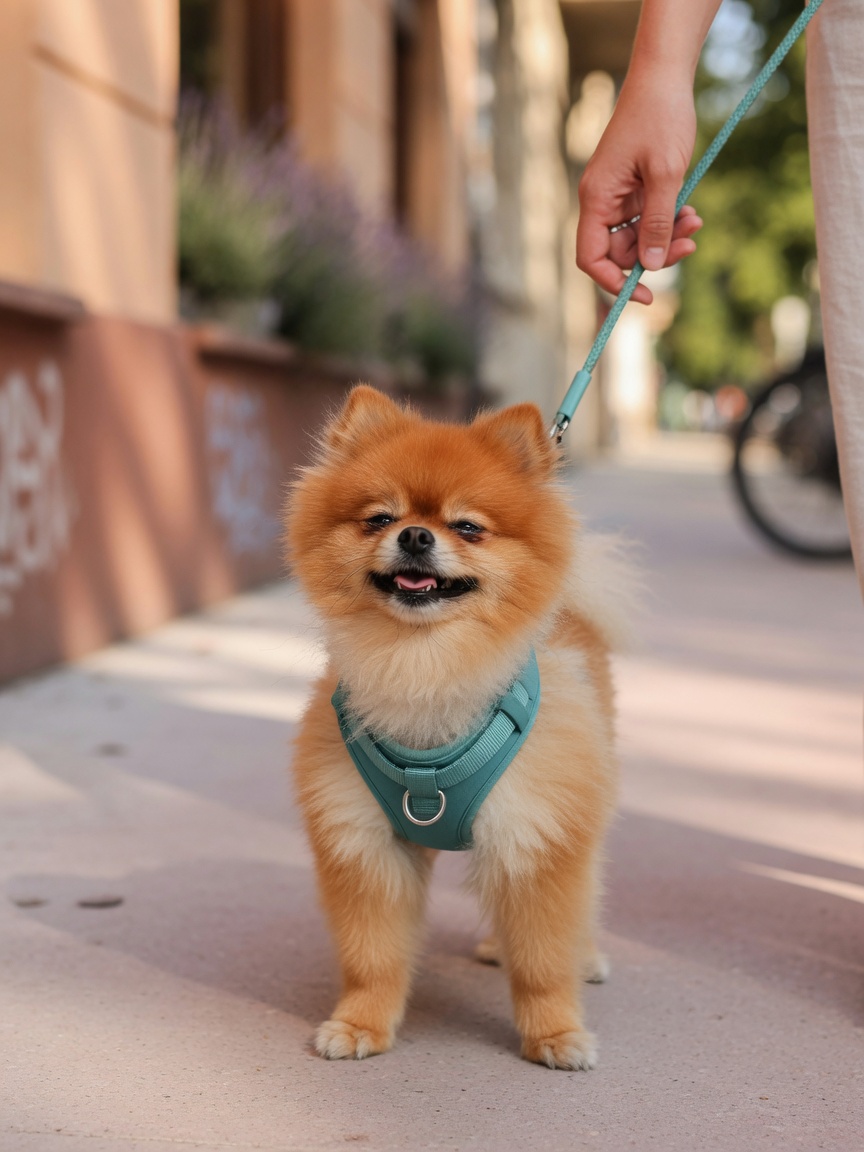
Tracheal collapse is graded from I (mild flattening) to IV (complete collapse). Mild to moderate cases are managed medically using cough suppressants, anti-inflammatory medications, bronchodilators, and weight management. Harnesses — rather than neck collars — should always be used in affected dogs to avoid any direct tracheal pressure. Severe or medically unresponsive cases may be candidates for intraluminal stenting, a procedure that places a wire scaffold inside the trachea to hold it open. Outcomes with stenting have improved considerably, though the procedure carries risks and is best performed at a specialist centre.
Keeping a Pomeranian with tracheal collapse calm during warm weather, avoiding smoke and other airborne irritants, and maintaining a lean body weight are among the most impactful things an owner can do at home. Any episode of significant respiratory distress — cyanosis (blue-tinged gums), extreme laboured breathing, or loss of consciousness — is a veterinary emergency.
Luxating Patella: Familiar Problem, Important Management
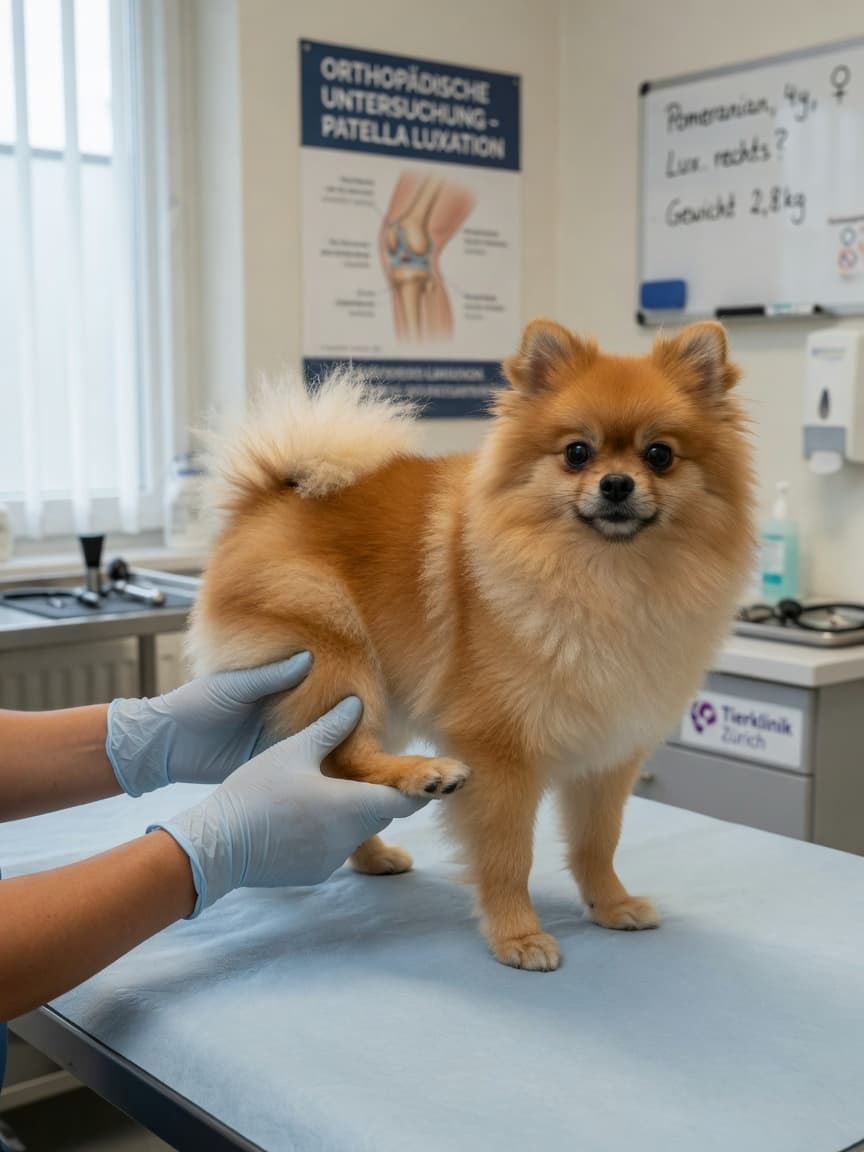
Patellar luxation ranks among the most prevalent orthopaedic conditions in the Pomeranian. The kneecap normally slides within a groove at the base of the femur; in dogs with shallow grooves or conformational anomalies, it slips medially (inward) under load. The dog may suddenly skip, carry a hind leg briefly, then resume walking normally — the kneecap has popped back into place spontaneously.
How Severity Is Classified
Grade I: the patella can be manually luxated but returns to position immediately. Grade II: the patella luxates spontaneously but self-reduces. Grade III: the patella remains luxated most of the time but can be manually replaced. Grade IV: permanent luxation that cannot be manually corrected. The grade broadly guides management decisions, though clinical signs and quality of life are equally important considerations.
Conservative vs Surgical Management
Grades I and II with minimal clinical signs are often managed conservatively. This includes controlled exercise, physiotherapy to strengthen the muscles supporting the joint, and weight management to reduce mechanical load. Non-steroidal anti-inflammatory medications may be used during painful episodes. Grades III and IV, or any grade causing significant lameness or pain, warrant surgical consultation. The primary procedure — trochlear groove deepening combined with soft tissue correction — is well established and carries an excellent long-term prognosis in most cases. Operating before secondary damage to the cruciate ligaments occurs leads to better outcomes.
Additional Health Concerns in the Pomeranian
Hypoglycaemia is a risk in teacup-sized Pomeranians and young puppies; small frequent meals and access to food during stress reduces this risk significantly. Dental overcrowding, as in most toy breeds, predisposes the Pomeranian to early periodontal disease — daily brushing is as important here as in any small breed. Heart disease, particularly patent ductus arteriosus in puppies and mitral valve disease in older dogs, should be monitored through routine cardiac auscultation at wellness visits.
Practical Health Priorities for Pomeranian Owners
- Switch from a collar to a harness immediately if your Pomeranian shows any sign of coughing or respiratory noise, and maintain this permanently to protect the trachea.
- Keep your Pomeranian at a healthy lean weight — excess weight worsens both tracheal collapse and patellar luxation significantly.
- If symmetrical hair loss develops on your Pom's body, consult your vet for a full workup before assuming it is alopecia X — several treatable conditions present similarly.
- Ask your vet to assess kneecap alignment at each routine check-up, and report any skipping or intermittent hind leg lifting promptly.
- Begin daily tooth brushing from puppyhood and schedule professional dental assessment annually.
- Avoid exposing a Pomeranian with tracheal collapse to heat, smoke, or situations likely to cause prolonged excitement or barking, which can trigger coughing episodes.
- Consult your vet for any sudden change in breathing, coat, mobility, or energy — in a small breed, early intervention consistently produces better outcomes than delayed management.
The Pomeranian is a vivacious, intelligent dog that thrives with attentive care. Understanding the breed's specific health landscape allows owners to act early, work effectively with their veterinary team, and give their dog the long, comfortable life it deserves.