
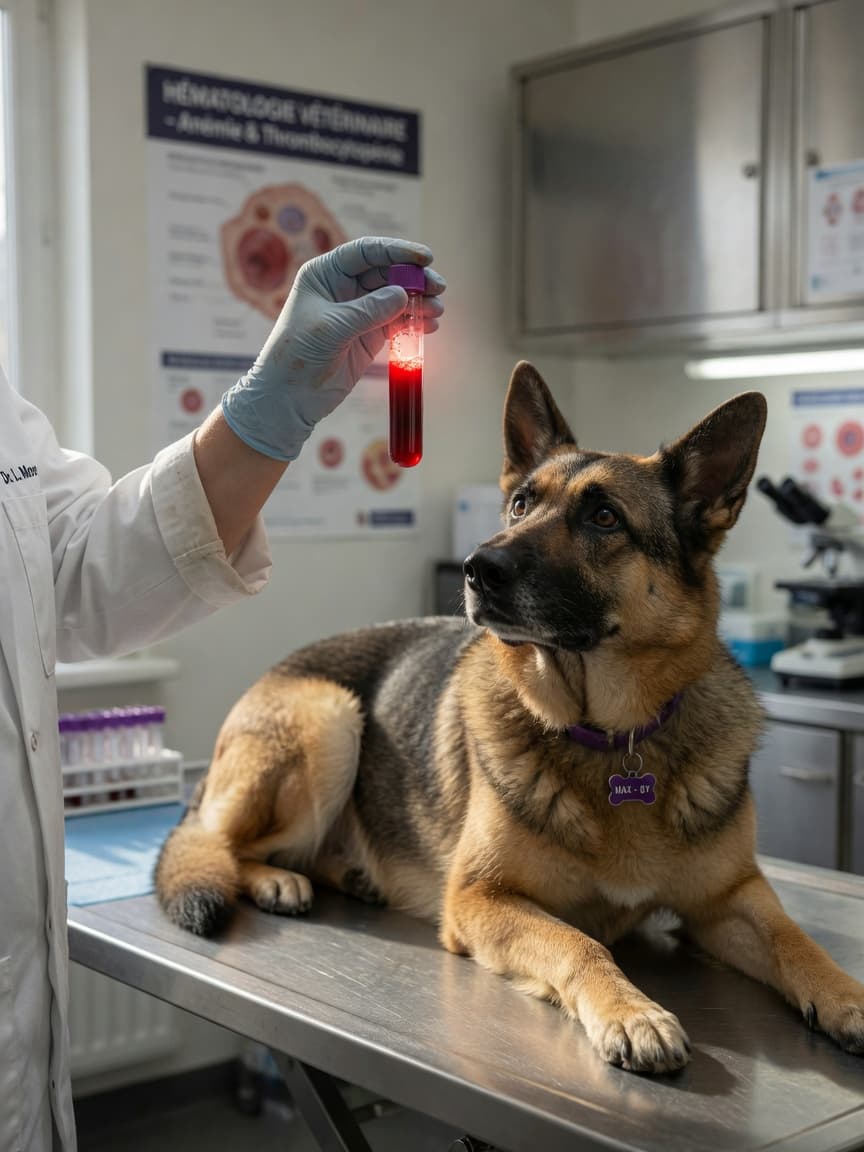
When More Is Definitely Not Better
We tend to associate anaemia — too few red blood cells — with danger, and rightly so. But the opposite condition, polycythaemia, is equally serious and considerably less understood by most pet owners. When a dog's blood becomes overloaded with red blood cells, it thickens to the point where circulation slows, organs struggle to receive adequate blood flow, and the risk of clotting rises sharply. Polycythaemia is rare, but when it occurs, it demands prompt investigation.
What Polycythaemia Means and How It Is Measured
Polycythaemia refers to an abnormal increase in the number of circulating red blood cells, reflected by an elevated packed cell volume (PCV) or haematocrit. In dogs, a PCV above 65% is generally considered elevated; values above 70% are clinically significant. The condition increases blood viscosity — essentially making the blood thicker and more difficult to pump through narrow vessels.
Absolute versus Relative Polycythaemia
This distinction matters because the treatment is entirely different. Relative polycythaemia is not a true increase in red blood cells — it occurs when plasma volume decreases due to dehydration or splenic contraction, making existing red cells appear more concentrated. Correct the underlying cause and the PCV normalises. Absolute polycythaemia is a genuine overproduction or accumulation of red blood cells and requires specific diagnosis and treatment.
Causes of Absolute Polycythaemia
Secondary Polycythaemia
This is the most common form. The body produces excess red blood cells in response to a perceived need for more oxygen-carrying capacity. This is mediated by erythropoietin (EPO), a hormone produced primarily by the kidneys.
- Appropriate secondary polycythaemia: A physiological response to genuine low oxygen — seen in dogs with chronic heart or lung disease, or those living at high altitude. The increased red cell production is the body's attempt to compensate.
- Inappropriate secondary polycythaemia: EPO is produced in excess by a tumour or by diseased kidney tissue, even when oxygen levels are normal. Renal tumours and renal cysts are the most common culprits in dogs.
Primary Polycythaemia (Polycythaemia Vera)
This is a myeloproliferative disorder — a bone marrow disease in which red cell precursors multiply autonomously, independent of EPO stimulation. It is the rarest form and is essentially a chronic bone marrow neoplasm. There is no secondary trigger; the bone marrow simply produces too many red blood cells unchecked.
Clinical Signs: What Owners Observe

Signs arise from increased blood viscosity, reduced blood flow, and the tendency toward thrombosis. They develop gradually and may be mistaken for ageing or other conditions.
- Red or brick-coloured gums and conjunctiva (the mucous membranes become engorged)
- Nosebleeds or other spontaneous haemorrhage (paradoxically, thick blood can also cause bleeding by disrupting normal flow)
- Neurological signs: disorientation, head tilting, circling, or seizures due to reduced cerebral blood flow
- Lethargy and exercise intolerance
- Increased thirst and urination if the kidneys are involved
- Distended, visible vessels in the eye (a classic finding on ophthalmic examination)
Diagnosis: Ruling Out the Relative and Finding the Cause
The diagnostic process begins with ruling out dehydration as a cause of the elevated PCV. Once absolute polycythaemia is confirmed, the workup focuses on identifying the type.
Key diagnostic steps include: full blood count and biochemistry, urinalysis, measurement of serum EPO levels, abdominal ultrasound to assess the kidneys and spleen, thoracic X-rays to evaluate heart and lung status, and arterial blood gas analysis to measure oxygen levels. Bone marrow aspiration is required to confirm polycythaemia vera, where EPO levels will be low or normal despite an elevated PCV.
Treatment Approaches
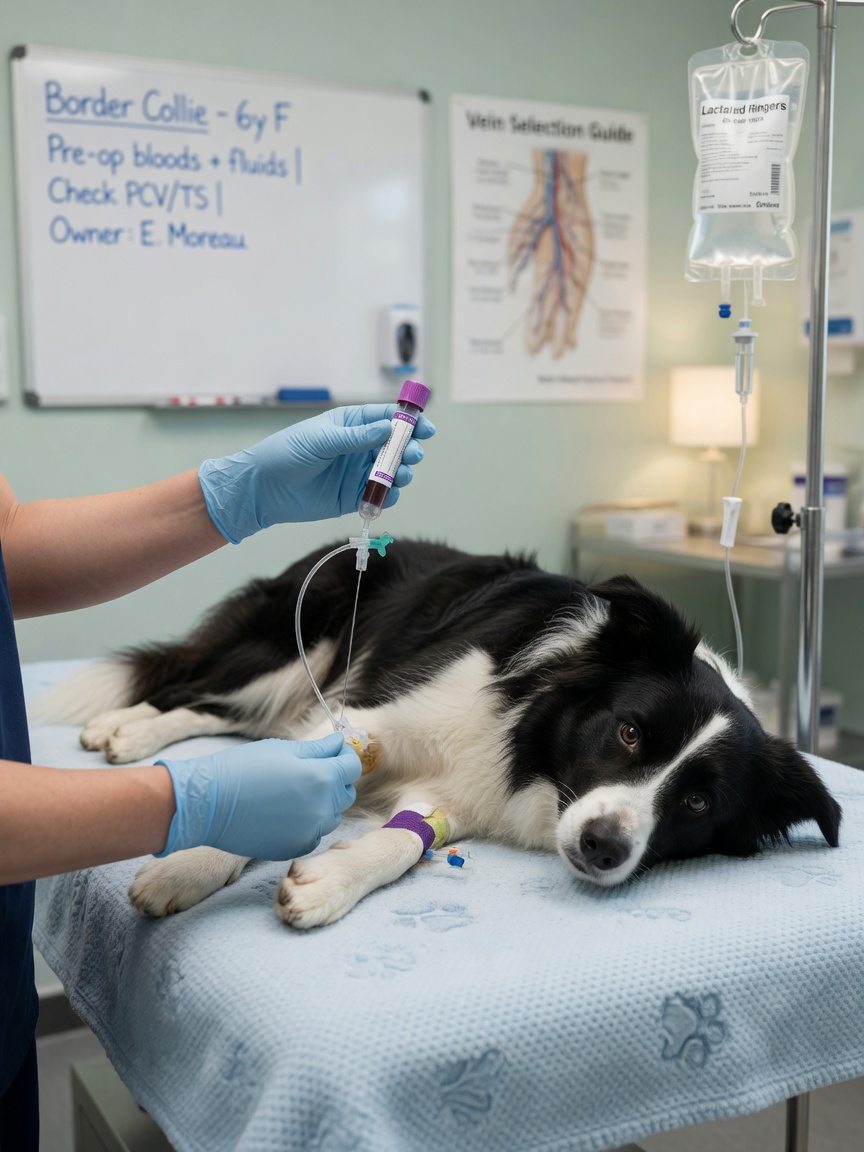
Phlebotomy
Regardless of the underlying cause, reducing blood viscosity quickly is the first priority. Blood is removed (phlebotomy) and replaced with intravenous fluids to bring the PCV into a safer range. This provides immediate symptomatic relief while diagnostics are completed or while long-term treatments take effect.
Treating the Underlying Cause
- Secondary polycythaemia from a renal tumour: surgical removal if feasible; this can be curative
- Secondary polycythaemia from cardiac or pulmonary disease: management of the primary condition, alongside repeated phlebotomy as needed
- Polycythaemia vera: hydroxyurea, a chemotherapy agent given orally, suppresses bone marrow red cell production; dogs often respond well and can achieve long-term control
Summary: Key Points for Dog Owners
- Polycythaemia means too many red blood cells — a condition that thickens blood and impairs circulation
- Always rule out dehydration before investigating absolute polycythaemia
- Bright red gums combined with neurological signs are a red flag requiring same-day assessment
- A full diagnostic workup is needed to distinguish primary from secondary causes, as treatment differs significantly
- Phlebotomy provides rapid relief and is a cornerstone of management across all types
- Consult your veterinarian promptly if you notice engorged-looking gums or unexplained neurological changes in your dog