

Why Spring and Summer Bring Misery for Some Dogs
Seasonal allergic reactions in dogs — clinically termed canine atopic dermatitis when skin is the primary site of involvement — are more prevalent than many owners realise. Estimates from veterinary dermatology suggest that between 10 and 15 percent of the domestic dog population is affected by environmentally triggered allergic disease to some degree. Pollen from grasses, trees, and weeds is among the most common triggers, with symptoms typically peaking between March and October in the UK depending on which pollens are present in the environment.
Unlike humans, who predominantly respond to pollen with respiratory symptoms such as sneezing and watery eyes, dogs express allergic reactions primarily through the skin. This difference in presentation is the reason so many cases go unrecognised — owners are not looking for itching when they think of hay fever, and dogs cannot explain what is wrong with them.
What Pollen Allergy Looks Like in Dogs
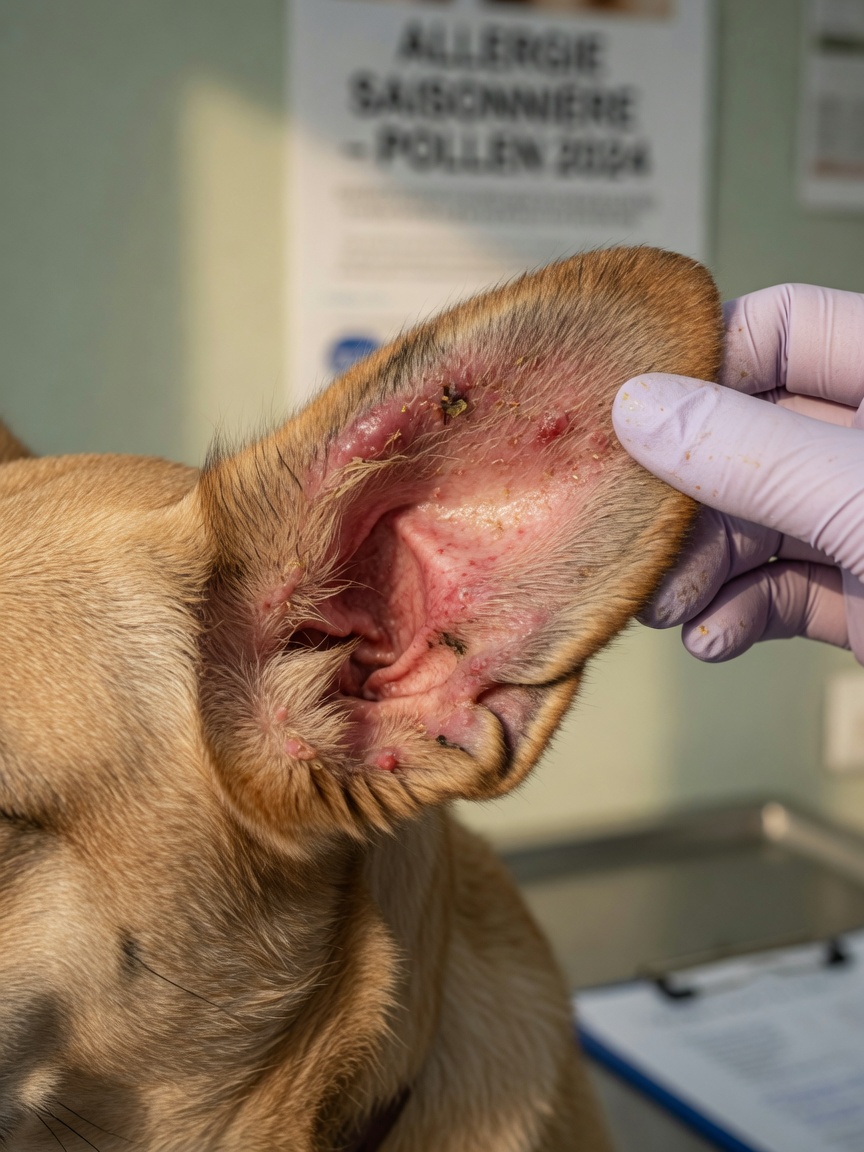
The hallmark of pollen-triggered atopy is seasonal pruritus — itching that worsens during pollen season and improves in autumn and winter. The distribution of the itch follows a characteristic pattern in most affected dogs, targeting the paws, face, groin, armpits, and ears. These are the areas where skin is thinnest and most exposed to environmental contact.
Commonly observed signs include:
- Repeated licking and chewing of the paws, often leading to rust-coloured staining from saliva
- Rubbing the face along furniture or carpets
- Scratching at the ears, accompanied by head shaking
- Recurring ear infections that worsen in summer
- Red, inflamed skin in the groin, armpit, or between the toes
- Hot spots — areas of acute moist dermatitis triggered by self-trauma
Secondary bacterial and yeast infections are extremely common in atopic dogs because constant self-trauma disrupts the skin barrier and creates an environment conducive to microbial overgrowth. A dog with recurring skin infections who has otherwise been ruled clear of parasites and dietary triggers should always be assessed for environmental allergy.
Diagnosis: Why It Takes Time
There is no single quick test that definitively diagnoses pollen allergy in dogs. Intradermal skin testing — where small amounts of common allergens are injected under the skin and reactions observed — is considered the gold standard but must be performed by a veterinary dermatologist. Blood tests measuring allergen-specific IgE antibodies are more widely available through general practice but are considered less precise.
The diagnostic process also involves ruling out other causes of seasonal itching: flea allergy dermatitis, food hypersensitivity, contact reactions, and sarcoptic mange can all produce overlapping presentations. A methodical elimination approach, supported by a detailed seasonal history, is the most reliable path to an accurate diagnosis.
Reducing Pollen Exposure

Management of pollen allergy begins with reducing the total allergen load entering the dog's body — a concept sometimes called the "allergy threshold." No single measure eliminates exposure entirely, but combining several significantly lowers the cumulative burden.
Practical exposure reduction strategies include:
- Walking in the early morning or evening when pollen counts are lower — midday and early afternoon carry the highest concentrations on warm, dry days
- Wiping down the coat, face, and paws with a damp cloth or pet-specific cleansing wipe after every outdoor session during peak season
- Bathing weekly with a gentle, hypoallergenic shampoo — this removes surface pollen and reduces skin inflammation
- Keeping dogs out of long grass and avoiding fields during the grass pollen season (June to August in the UK)
- Vacuuming and washing bedding frequently to reduce indoor pollen accumulation
Medical Management Options
When environmental control alone is insufficient, which it frequently is in moderate to severe cases, veterinary intervention becomes necessary. The range of options has expanded considerably over the past decade, and the current toolkit is substantially more targeted than older antihistamine-only approaches.
Apoquel (oclacitinib) is a JAK inhibitor that targets itch pathways directly and provides rapid relief within hours for most dogs. Cytopoint (lokivetmab) is a monoclonal antibody injection administered monthly that neutralises the key itch signal interleukin-31. Both are considered significantly more effective than antihistamines in dogs, which have long been recognised by veterinary dermatologists as having limited efficacy in canine allergic disease despite their widespread use.
For dogs with confirmed allergen profiles, allergen-specific immunotherapy — a course of injections or sublingual drops calibrated to the individual dog's sensitisations — offers the possibility of long-term tolerance development rather than symptom suppression alone. It requires commitment over twelve to twenty-four months but is the only current approach that addresses the underlying immune dysregulation.
Skin Barrier Support
A body of evidence has accumulated showing that atopic dogs have a structurally compromised skin barrier — specifically, reduced levels of ceramides and altered lipid composition in the stratum corneum — that allows allergens to penetrate more easily. Supporting the skin barrier therefore has both symptomatic and mechanistic benefits.
Omega-3 fatty acid supplementation, particularly from marine sources rich in EPA and DHA, has demonstrated consistent benefit in reducing inflammatory skin scores in atopic dogs. Topical products containing ceramides, phytosphingosine, or colloidal oatmeal help reinforce barrier function when used regularly. These are adjunctive rather than curative, but they meaningfully reduce the need for pharmaceutical intervention in mild cases and improve quality of life across the season.
Pollen allergy in dogs is a manageable condition with the right combination of exposure reduction, barrier support, and targeted treatment. The key is recognising it early in the seasonal pattern rather than waiting until chronic self-trauma has established a secondary infection cycle that is considerably harder to resolve.