
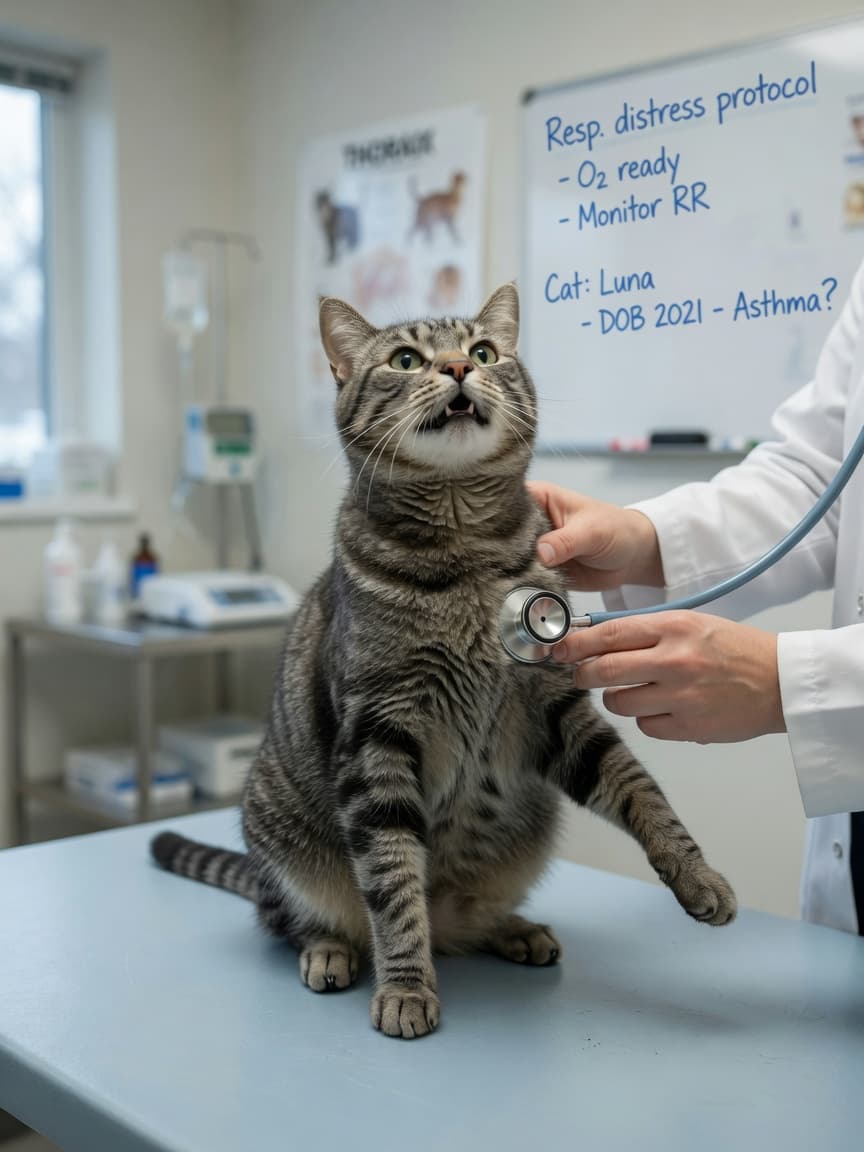
What Is Pleural Effusion?
Pleural effusion refers to an abnormal accumulation of fluid in the pleural space — the narrow cavity that sits between the lungs and the chest wall. Under normal circumstances, a very small amount of fluid exists in this space to allow the lungs to move smoothly during breathing. When disease causes fluid to build up beyond this minimal amount, it physically compresses the lungs and prevents them from expanding fully with each breath.
The result is progressive and potentially life-threatening respiratory compromise. Pleural effusion is not a diagnosis in itself — it is a consequence of an underlying condition that must be identified and treated. And in cats, those underlying conditions are often serious.
Why Fluid Accumulates Around the Lungs
The pleural space fills with fluid when the normal balance between fluid production and absorption is disrupted. Different diseases produce different types of fluid, and analysing that fluid is one of the key steps in identifying the underlying cause.
Heart Disease
Hypertrophic cardiomyopathy is the most common heart condition in cats, and when it leads to congestive heart failure, fluid can accumulate in or around the lungs. In cats, pleural effusion is actually more common than pulmonary oedema (fluid within the lungs) as a manifestation of cardiac failure — which is different from what we typically see in dogs. The fluid produced in cardiac cases tends to be a transudative fluid, meaning it is relatively low in protein and cells.
Pyothorax
When bacteria infect the pleural space, the result is pyothorax — a condition where the pleural cavity fills with pus. This is a septic, inflammatory effusion and represents one of the most urgent causes of pleural effusion in cats. Left untreated, it carries a high mortality rate.
Chylothorax
Chyle is the milky fluid that travels through the lymphatic system, rich in fat absorbed from the intestines. When lymphatic vessels in the chest are damaged or obstructed, chyle leaks into the pleural space. Chylothorax produces a characteristic milky white or pink fluid and can be caused by trauma, heart disease, lymphoma, or may have no identifiable cause (idiopathic chylothorax).
Cancer
Thoracic tumours — most commonly lymphoma in cats — can cause pleural effusion either by directly irritating the pleural surfaces or by obstructing lymphatic drainage. The fluid associated with malignancy may contain cancerous cells that can be identified on cytological examination.
Feline Infectious Peritonitis
FIP, caused by a mutated form of feline coronavirus, commonly causes effusions in body cavities. The wet form of FIP frequently produces pleural effusion alongside abdominal fluid accumulation, and the fluid it produces has a characteristic viscous, straw-yellow appearance with high protein content.
Recognising the Signs
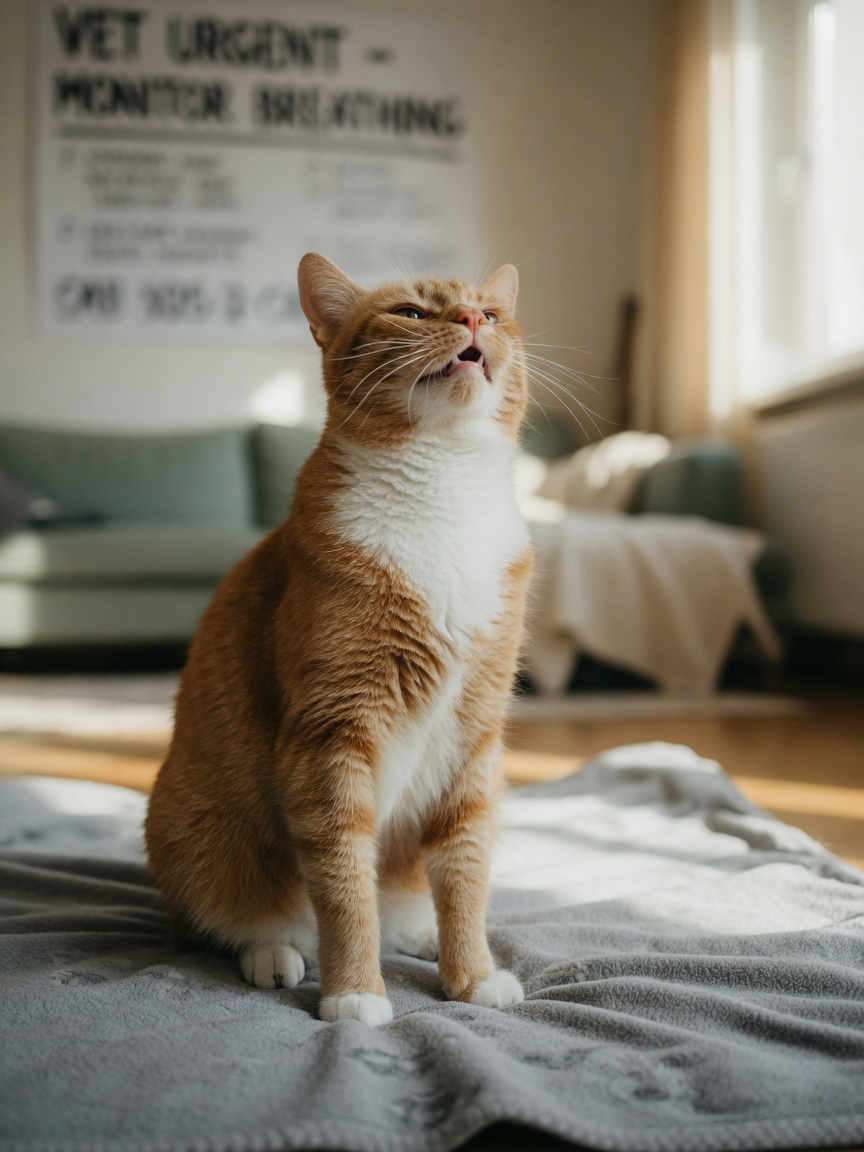
Because fluid in the pleural space restricts lung expansion, the primary signs of pleural effusion all relate to breathing. The severity of signs correlates roughly with how much fluid is present, though individual cats vary in their tolerance.
- Rapid, shallow breathing — the cat takes more frequent but smaller breaths because deeper breaths are physically restricted
- Open-mouth breathing, particularly as the condition worsens
- Preference for sitting upright or sternal recumbency rather than lying on their side — gravity slightly shifts fluid away from the lungs in this position
- Elbows pushed away from the body and neck extended forward (orthopnoeic posture)
- Blue or grey gums indicating oxygen deficiency
- Reduced appetite, lethargy, and weight loss in more gradually developing cases
- Muffled heart sounds, which your vet may detect on auscultation
Cats with slowly developing pleural effusion — such as in cases of chylothorax or cancer — may initially show only subtle signs: a gradual reduction in activity, mild weight loss, or a vague reluctance to play. Owners often attribute these changes to ageing. By the time obvious breathing difficulty is apparent, significant fluid has often accumulated.
Diagnosis and Stabilisation
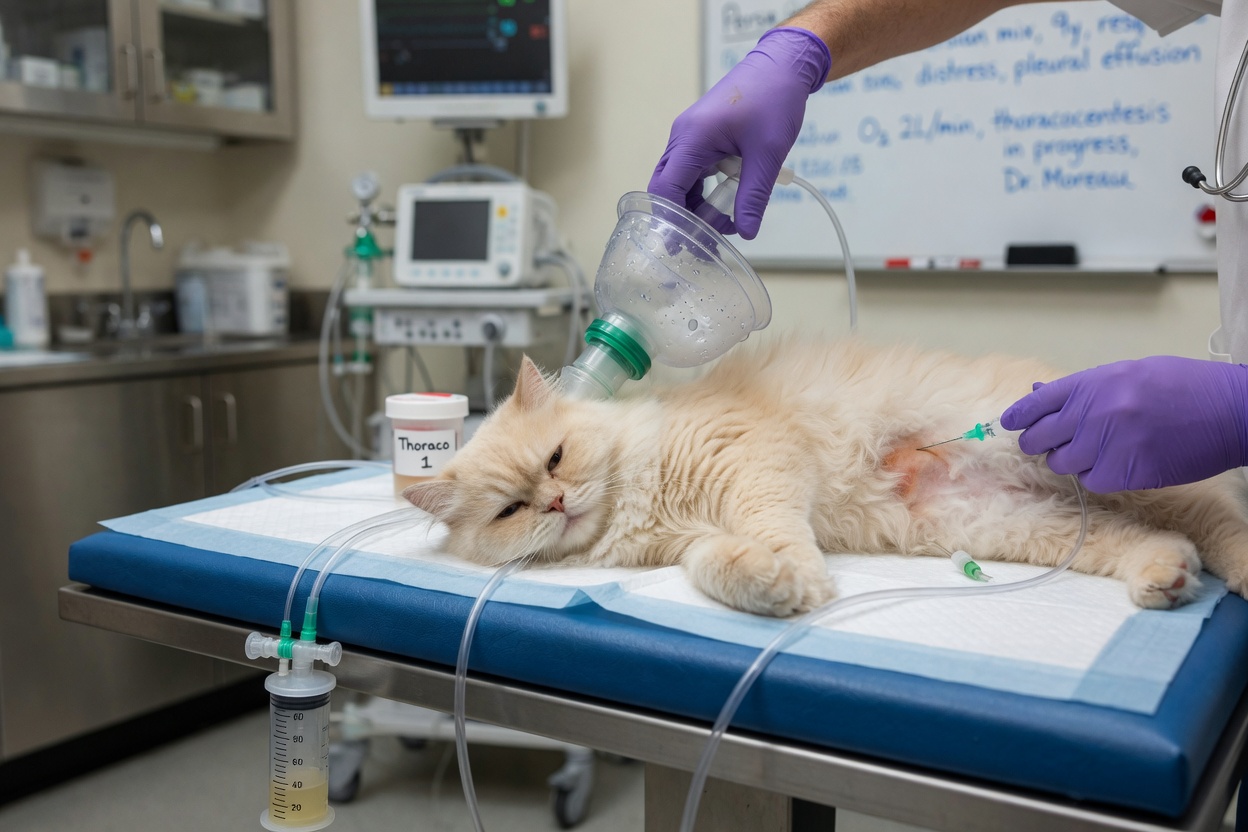
A cat presenting with suspected pleural effusion requires stabilisation before any extensive diagnostics can safely occur. Handling a cat in respiratory distress can push it into crisis, so experienced vets will typically provide oxygen supplementation first and minimise contact while the cat's breathing stabilises.
Chest X-rays are the primary diagnostic tool. Pleural effusion has a distinctive appearance on radiographs — fluid appears as a dense white area in the chest, and the lung lobes may appear pushed toward the centre of the chest, away from the chest wall. Ultrasound is increasingly used alongside or instead of X-rays, as it can confirm the presence of fluid, guide drainage, and assess the heart.
Thoracocentesis — the procedure of inserting a needle into the pleural space to drain the fluid — is both diagnostic and therapeutic. It provides rapid relief of breathing difficulty and yields fluid that can be sent for analysis. The colour, consistency, cell types, protein content, and bacterial culture results from the fluid all provide critical information about the underlying cause.
Treatment Depends on the Underlying Cause
Draining the fluid addresses the immediate respiratory compromise, but without treating the underlying disease, fluid will reaccumulate. The treatment pathway depends entirely on the cause.
- Heart disease is managed with diuretics such as furosemide to reduce fluid production, along with cardiac medications tailored to the specific type of cardiomyopathy
- Pyothorax requires aggressive antibiotic therapy, often with ongoing chest drainage through an indwelling drain for several days, and occasionally surgical exploration
- Chylothorax may respond to dietary management using ultra-low-fat food, rutin supplementation, or surgical intervention such as thoracic duct ligation
- FIP-related effusion is now increasingly managed with antiviral medications, particularly GS-441524, which has shown remarkable efficacy in treating this previously near-fatal disease
- Cancer-related effusion requires oncological management, which may include chemotherapy, particularly in cases of lymphoma
Prognosis and Long-Term Outlook
The prognosis for a cat with pleural effusion depends almost entirely on the underlying cause and how quickly it is identified and treated. Cats whose effusion results from treatable or manageable conditions — such as cardiac disease or idiopathic chylothorax — can do well for months to years with appropriate ongoing care. Cats with pyothorax that receive prompt and aggressive treatment have a survival rate that may exceed seventy per cent in some studies.
The single most important factor in outcome is how quickly the cat receives veterinary attention. Pleural effusion is never a condition to adopt a wait-and-see approach with. The earlier the intervention, the better the chances of a positive outcome.