
What Is Pimobendan?
Pimobendan is a prescription cardiac medication used extensively in veterinary medicine to manage heart disease in dogs. Sold most commonly under the brand name Vetmedin, it has become one of the most important drugs in small animal cardiology over the past two decades, backed by robust clinical trial evidence and recommended in international consensus guidelines for dogs with mitral valve disease and dilated cardiomyopathy.
Understanding what pimobendan does, how it is used, and what owners can expect from it helps to make sense of what is often a long-term commitment to daily medication. It is not a cure — no medication currently available can reverse the underlying structural changes of cardiac disease — but it is one of the most effective tools available for extending good-quality life.
How Pimobendan Works
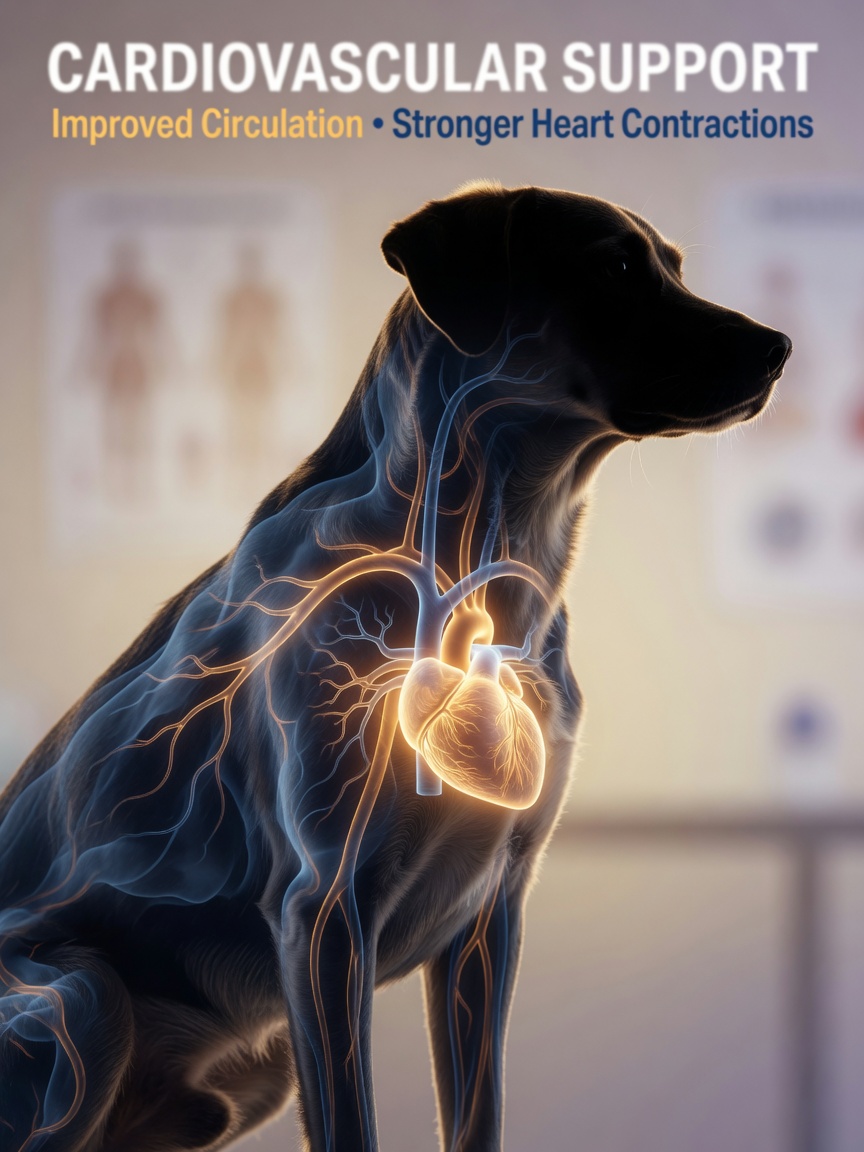
Pimobendan has two distinct and complementary mechanisms of action, which is part of what makes it so effective for heart failure management.
Positive Inotropy
The first mechanism is positive inotropy — pimobendan increases the strength of the heart muscle's contractions. It does this by sensitising the contractile proteins in heart muscle cells to calcium, which is the key trigger for muscle contraction. Rather than flooding the cell with more calcium (which can be damaging and arrhythmogenic), pimobendan makes the existing calcium more effective. The result is stronger, more efficient contractions from a heart muscle that has been weakened by disease.
Vasodilation
The second mechanism is vasodilation — pimobendan relaxes and widens the blood vessels, both the arteries (arterial dilation) and the veins (venodilation). By dilating arteries, it reduces the resistance against which the left ventricle must pump, effectively lightening the heart's workload. By dilating veins, it reduces the volume of blood returning to the heart at any one time, reducing the pressure that builds up and contributes to fluid accumulation in the lungs.
This combination — a stronger pump facing less resistance and receiving a more manageable volume — is why pimobendan is described as an inodilator and why it has proven so effective clinically.
Clinical Evidence Supporting Its Use
Pimobendan's use in dogs is supported by two landmark clinical trials that have directly shaped current treatment guidelines.
The QUEST trial, published in 2008, compared pimobendan to the ACE inhibitor benazepril in dogs with mitral valve disease in heart failure (Stage C). Dogs treated with pimobendan had significantly longer survival times and a longer time to a cardiac-related clinical endpoint. This established pimobendan as a superior choice to ACE inhibitor monotherapy at this disease stage.
The EPIC trial, published in 2016, was perhaps even more significant. It evaluated pimobendan in dogs with MVD who had not yet developed heart failure but had documented cardiac enlargement (Stage B2). Dogs treated with pimobendan had a median delay of 15.3 months before developing heart failure compared to placebo — a clinically meaningful extension of the symptom-free period. This trial changed guidelines internationally and is why dogs meeting B2 criteria are now typically started on pimobendan before any clinical signs appear.
More recently, the PROTECT study evaluated pimobendan in Dobermann Pinschers with occult (preclinical) dilated cardiomyopathy, demonstrating a significant delay in onset of heart failure or sudden death, supporting pimobendan's use in this breed at the preclinical stage as well.
How It Is Given
Pimobendan is available as chewable tablets in various strengths (1.25mg, 2.5mg, 5mg, and 10mg) and as an oral solution. The standard dosing regimen is 0.2–0.3mg per kilogram of body weight twice daily, with the two doses spaced approximately twelve hours apart.
An important practical consideration is that pimobendan should ideally be given on an empty stomach, approximately one hour before feeding, as food can significantly reduce its absorption. This timing can be tricky to manage in practice, particularly for dogs with reduced appetite who need to be coaxed to eat, but consistency matters for maintaining stable blood levels.
The chewable tablets are palatable and most dogs accept them readily. For dogs that do not, the tablets can be hidden in a small amount of low-sodium food or a pill pocket, though the goal of giving it before a meal should still be kept in mind.
Side Effects and Monitoring
Pimobendan is generally very well tolerated, and serious adverse effects are uncommon at therapeutic doses. The most notable potential concerns are:
- Increased heart rate — as a positive inotrope and vasodilator, pimobendan can cause a mild increase in resting heart rate, which is monitored at veterinary rechecks
- Arrhythmia promotion — in theory, any positive inotrope carries some risk of promoting arrhythmias, though this has not been a significant clinical concern at standard doses in dogs with structural heart disease
- Gastrointestinal signs including vomiting or reduced appetite, which are usually mild and transient
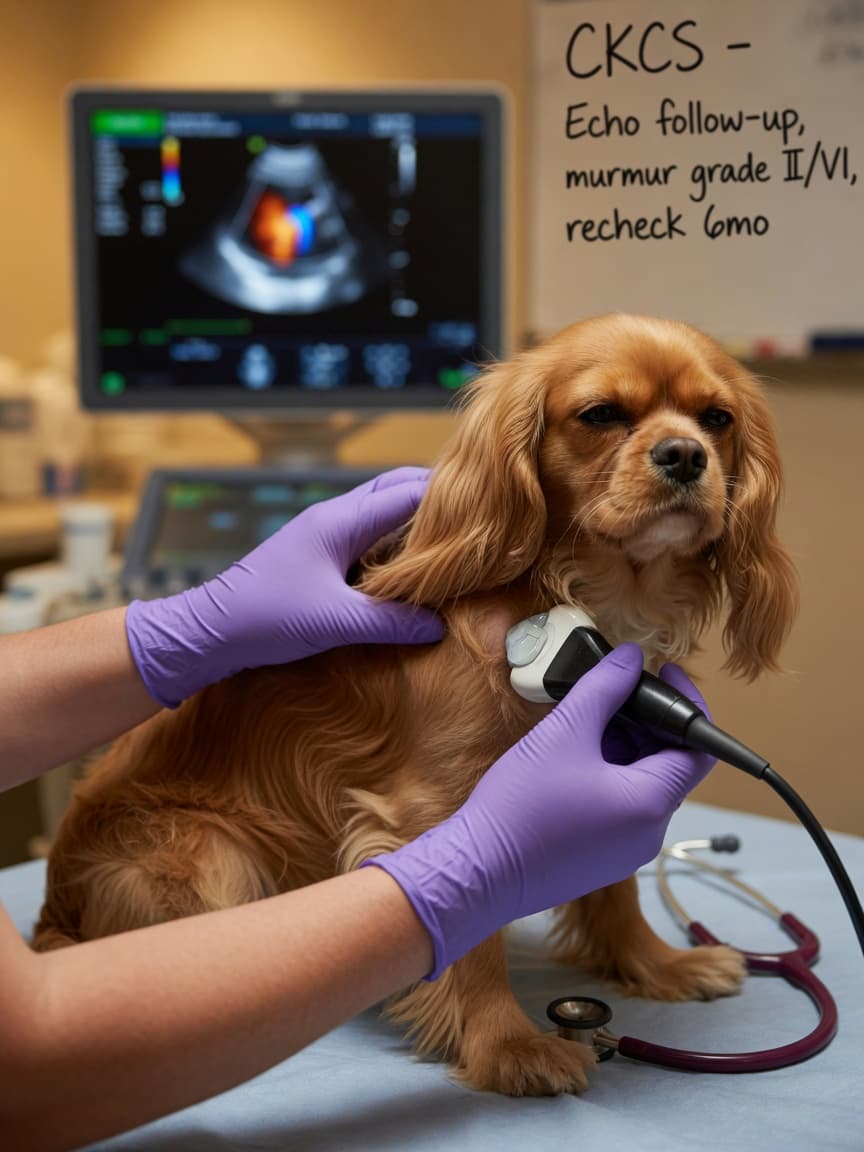
Dogs on pimobendan require regular veterinary monitoring including physical examination, blood pressure assessment, and periodic blood work to evaluate kidney function and electrolytes, particularly when pimobendan is used alongside diuretics such as furosemide. Echocardiographic rechecks are typically recommended every six to twelve months or more frequently as disease progresses.
Pimobendan Across Disease Stages
The role of pimobendan differs depending on where a dog sits on the cardiac disease spectrum. In Stage B2 MVD — a murmur with documented cardiac enlargement but no symptoms — it is used to delay the onset of heart failure. In Stage C — active or previous heart failure — it forms part of a multi-drug regimen alongside diuretics and ACE inhibitors. In Stage D — refractory heart failure — dose adjustments or additional medications may be needed, and specialist input becomes particularly valuable.
For owners managing a dog on pimobendan long term, consistency is the most important practical factor. Giving the medication reliably, at the right times, monitoring resting respiratory rate at home, and maintaining regular veterinary contact provides the best possible platform for extending both the length and quality of life that cardiac disease allows.