
What Is Animal Physiotherapy?
Animal physiotherapy applies the principles and techniques of human physiotherapy to dogs, cats, horses, and other species. It aims to restore normal function, reduce pain, rebuild strength, and improve quality of life following injury, surgery, or the onset of a long-term condition. In the UK, animal physiotherapy has grown from a niche discipline into a recognised profession with its own training pathways, accreditation bodies, and clinical guidelines.
The Legal Framework: Veterinary Surgeons Act and Vet Referral
A critical point for pet owners to understand is that animal physiotherapy in the UK operates under strict legal constraints governed by the Veterinary Surgeons Act 1966. Under this legislation, acts of veterinary surgery may only be carried out by a registered veterinary surgeon. Physiotherapy on animals falls under this definition, which means that a qualified animal physiotherapist — no matter how experienced — cannot legally treat your pet without a referral from a veterinary surgeon.
This is not a bureaucratic formality. The referral requirement ensures that a vet has examined the animal, established a diagnosis, and determined that physiotherapy is appropriate. It also protects the animal from treatment that might mask symptoms of an undiagnosed condition, and protects the physiotherapist legally. If you approach an animal physiotherapist without a vet referral, a responsible practitioner will ask you to obtain one before commencing treatment.
ACPAT: The Professional Body for Animal Physiotherapists
The Association of Chartered Physiotherapists in Animal Therapy (ACPAT) is the primary professional body for animal physiotherapists in the UK. ACPAT members are Chartered Physiotherapists (qualified in human physiotherapy) who have completed additional postgraduate training in animal therapy. The organisation sets educational standards, maintains a register of qualified practitioners, and provides a code of professional conduct.
When searching for an animal physiotherapist, looking for ACPAT membership provides assurance of the therapist's training level and professional accountability. The ACPAT website maintains a searchable directory of members by region and species treated.
Core Physiotherapy Techniques
Massage
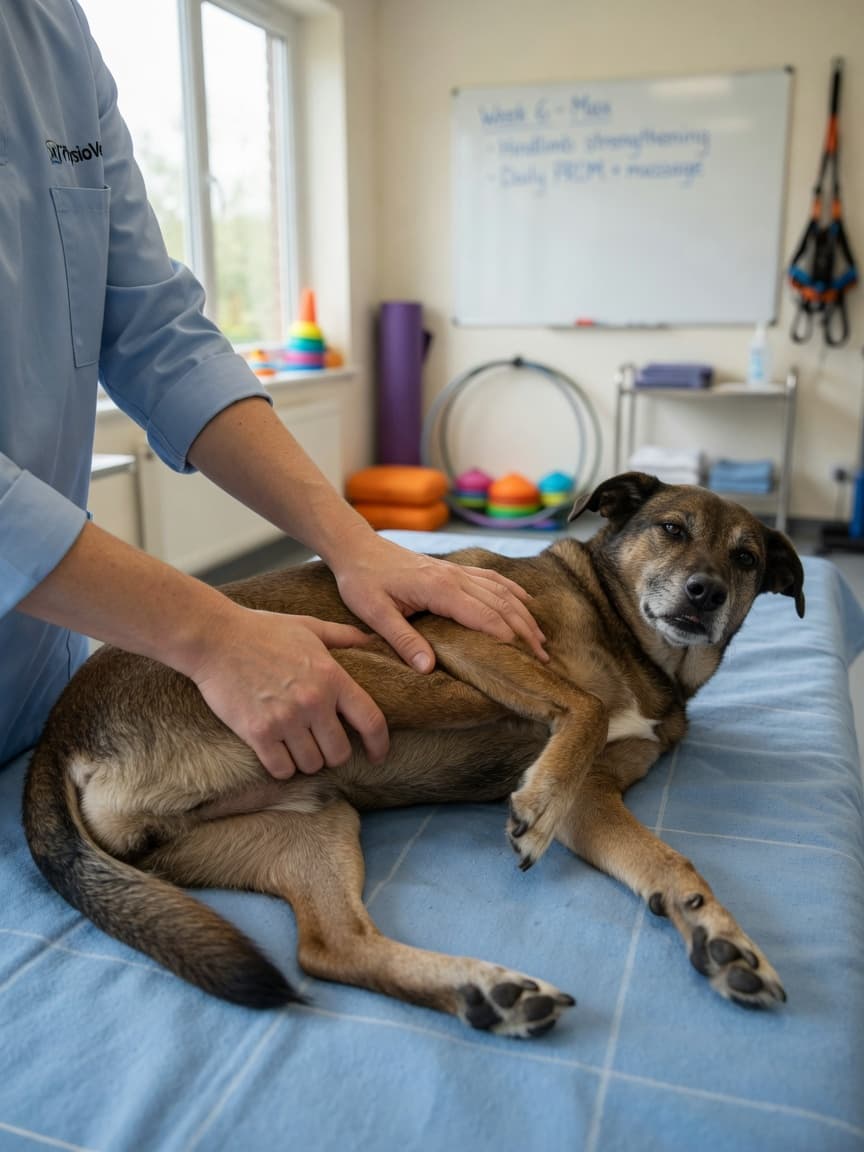
Therapeutic massage involves the manual manipulation of soft tissues including muscles, tendons, ligaments, and fascia. Techniques range from gentle effleurage (stroking) to deeper myofascial release and trigger point work. Massage reduces muscle tension and spasm, improves local circulation, promotes drainage of inflammatory products, and can reduce pain perception. It is frequently used at the start of a physiotherapy session to prepare the tissues for more demanding interventions.
Passive Range of Motion (PROM)
PROM exercises involve the therapist moving the patient's joints through their range of movement without the animal actively contracting its muscles. This is particularly important in the early stages of post-surgical rehabilitation, when active movement may be too painful or risky, and in neurological cases where the animal cannot voluntarily move the affected limbs. PROM helps to maintain joint health, prevent contractures, and preserve sensory-motor pathways in neurological patients.
Therapeutic Ultrasound
Therapeutic ultrasound uses high-frequency sound waves delivered via a handheld transducer to treat deep tissue injuries. It has both thermal effects (gently heating deep tissue) and non-thermal effects (mechanical stimulation of tissue repair at the cellular level). Therapeutic ultrasound is used to accelerate healing of soft tissue injuries, treat scar tissue, and address chronic tendon and ligament problems. It is distinct from diagnostic ultrasound and operates at different frequencies and intensities.
Laser Therapy (LLLT)
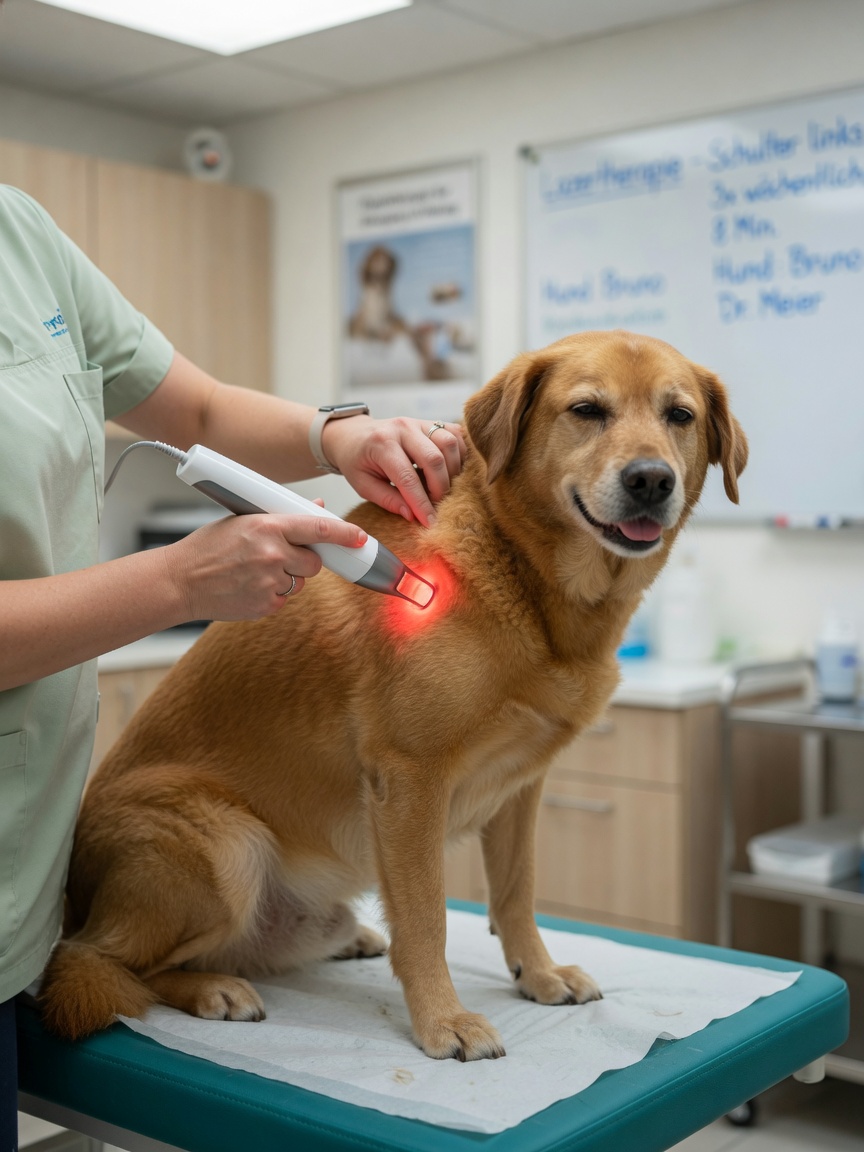
Low-level laser therapy (LLLT), also called photobiomodulation, uses specific wavelengths of light to stimulate cellular repair and reduce inflammation. It is non-invasive, painless, and well-tolerated by most patients. Evidence supports its use for wound healing, reduction of post-surgical swelling, management of arthritis pain, and treatment of soft tissue injuries. Sessions are short — typically five to fifteen minutes — and treatment protocols vary depending on the condition being treated and the power of the device used.
Electrotherapy: NMES and TENS
Two forms of electrotherapy are commonly used in animal physiotherapy:
- Neuromuscular electrical stimulation (NMES) delivers electrical impulses to stimulate muscle contraction in animals that cannot actively contract their muscles voluntarily. It is particularly valuable in neurological rehabilitation, where it helps maintain muscle bulk and trains the neuromuscular system during recovery.
- Transcutaneous electrical nerve stimulation (TENS) delivers lower-level electrical stimulation targeted at sensory nerves to interrupt pain signalling. It is primarily used as an adjunct for pain management in chronic conditions such as arthritis.
Exercise Prescription and Active Rehabilitation
As the patient progresses, the physiotherapist introduces active exercises tailored to the individual animal and its specific deficits. These may include balance and proprioception exercises on unstable surfaces, targeted strengthening exercises using body weight or resistance bands, cavaletti pole work, and controlled leash exercises. A home exercise programme is typically provided so that the owner can continue rehabilitation between clinic sessions.
Hydrotherapy as a Component
Many animal physiotherapists incorporate hydrotherapy — either underwater treadmill work or pool swimming — into their rehabilitation programmes. Whilst some physiotherapists operate their own hydrotherapy facilities, others work in collaboration with accredited hydrotherapy centres. Hydrotherapy complements land-based physiotherapy by allowing exercise with reduced weight-bearing and is particularly valuable in orthopaedic and neurological rehabilitation.
Conditions Treated by Animal Physiotherapy
- Post-surgical orthopaedic rehabilitation (cruciate repair, fracture fixation, hip replacement)
- Degenerative joint disease and osteoarthritis
- Intervertebral disc disease (IVDD) — post-surgical and conservative management
- Degenerative myelopathy and other neurological conditions
- Muscle injuries, strains, and tears
- Tendon and ligament injuries
- Chronic pain syndromes
- Obesity and fitness conditioning
- Palliative care to maintain quality of life in terminally ill pets
What to Expect at a First Appointment
The initial appointment is typically longer than follow-up sessions and involves a thorough clinical assessment. The physiotherapist will review the veterinary referral and any relevant records, take a detailed history from the owner, and carry out a hands-on assessment of the animal's posture, gait, muscle condition, joint range of motion, and pain responses. From this, an individual treatment plan is developed with clear goals and a proposed schedule of sessions.
Treatment frequency depends on the condition. Acute post-surgical cases may be seen two to three times per week initially, with frequency reducing as recovery progresses. Chronic conditions may be managed on a monthly or as-needed basis once stable.
Written by Sarah Bennett