

One in Five Pet Insurance Claims Is Rejected — Here Is How to Avoid Being a Statistic
Pet insurance exists precisely for those moments when your dog swallows something they should not have, or your cat presents with a sudden illness at ten o'clock on a Friday night. Yet a significant proportion of claims are either partially paid or rejected outright — not because the treatment was unnecessary, but because the paperwork was handled incorrectly. Understanding the process before disaster strikes can save you hundreds, sometimes thousands, of pounds.
Know Your Policy Before You Need It
The single most effective way to avoid claim rejection is to read your policy document thoroughly while your pet is healthy. Insurance policies vary enormously in what they cover, how they define a condition, and what exclusions apply. Pay particular attention to:
- Waiting periods — most policies exclude conditions arising within the first 14 to 30 days of cover
- Excess amounts and co-payment percentages
- Annual or per-condition limits
- Exclusions for hereditary or congenital conditions
- Whether complementary therapies such as hydrotherapy or physiotherapy are included
If anything is unclear, call your insurer before your pet needs treatment. Getting clarification in writing is always preferable.
What to Do at the Vets
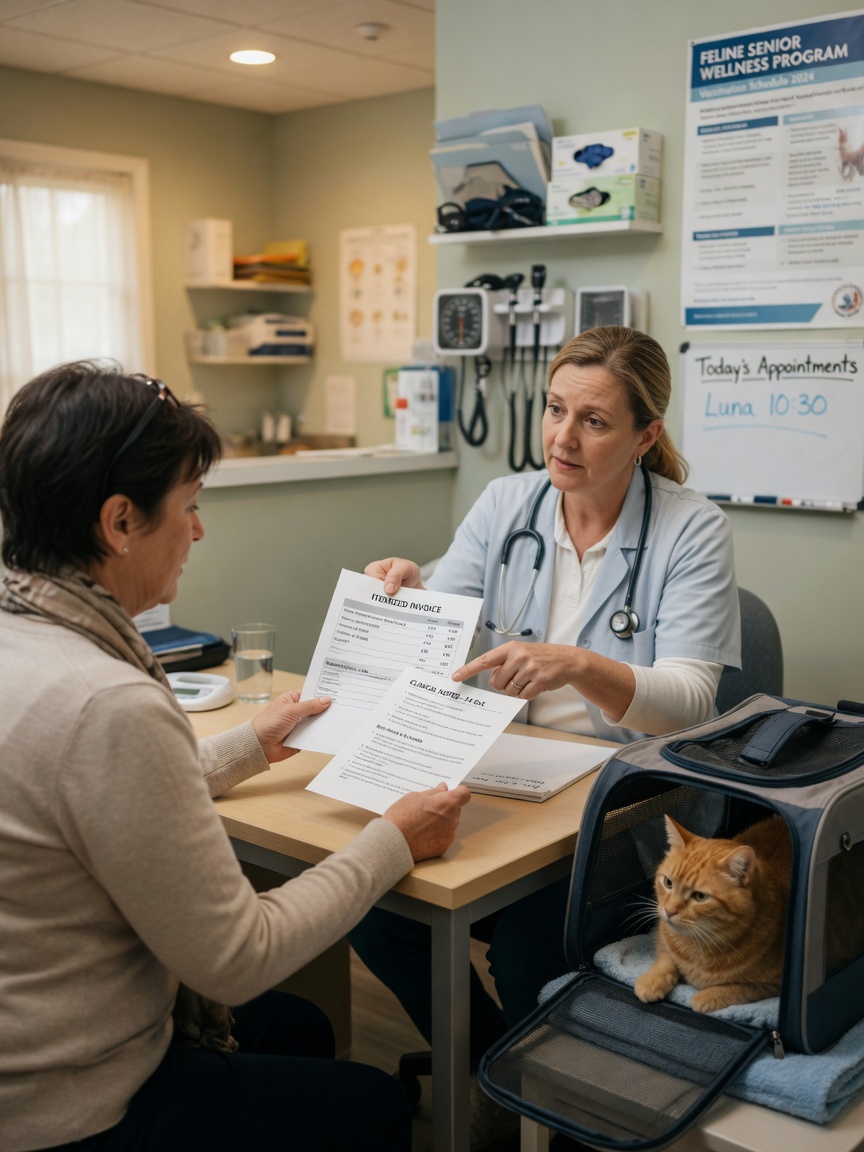
Tell Your Vet You Are Insured
Inform the veterinary practice at the start of every consultation that your pet is insured. Many practices have a dedicated insurance administrator who can guide the claims process and flag any documentation requirements. Some clinics will submit the claim directly on your behalf, which reduces the risk of administrative errors.
Request Detailed Medical Records
Insurers want to see itemised invoices and full clinical notes — not just a final bill. Ask your vet to provide a detailed breakdown of every service, medication, and procedure. If a referral to a specialist is required, ensure that records from both the referring vet and the specialist are included in your claim pack.
Get Diagnosis in Writing
A specific written diagnosis is essential. Vague terms such as "gastrointestinal upset" may prompt an insurer to request further information, delaying payment. Encourage your vet to use precise clinical terminology and, where possible, to note that the condition is new and unrelated to any previous history.
How to Complete the Claim Form Correctly
Errors on claim forms are among the most common causes of rejection and delay. Whether you are submitting on paper or online, follow these steps:
- Use your pet's full registered name and the policy number exactly as they appear on your documents
- Describe the condition and symptoms accurately and in chronological order
- Attach all invoices, receipts, and clinical notes — originals or certified copies depending on insurer requirements
- Sign and date every section that requires it
- Keep photocopies of everything before you post or upload
If your insurer provides a checklist, treat it as mandatory rather than advisory.
Common Reasons Claims Are Rejected
Pre-Existing Conditions
This is the single biggest reason for rejection. If the condition being claimed for is recorded anywhere in your pet's previous veterinary notes — even as a passing mention — the insurer may decline. This is why obtaining pet insurance while your animal is young and healthy is so important.
Lapsed or Incorrect Cover
Claims submitted after a policy lapse or during a period when premiums were unpaid will be rejected. Set up a direct debit to avoid missed payments, and check renewal documents each year to confirm cover is continuous.
Non-Covered Treatments
Routine care — vaccinations, neutering, dental descaling, and preventive treatments — is excluded from most standard policies. Claiming for these without a specific wellness add-on is a common mistake.
If Your Claim Is Rejected
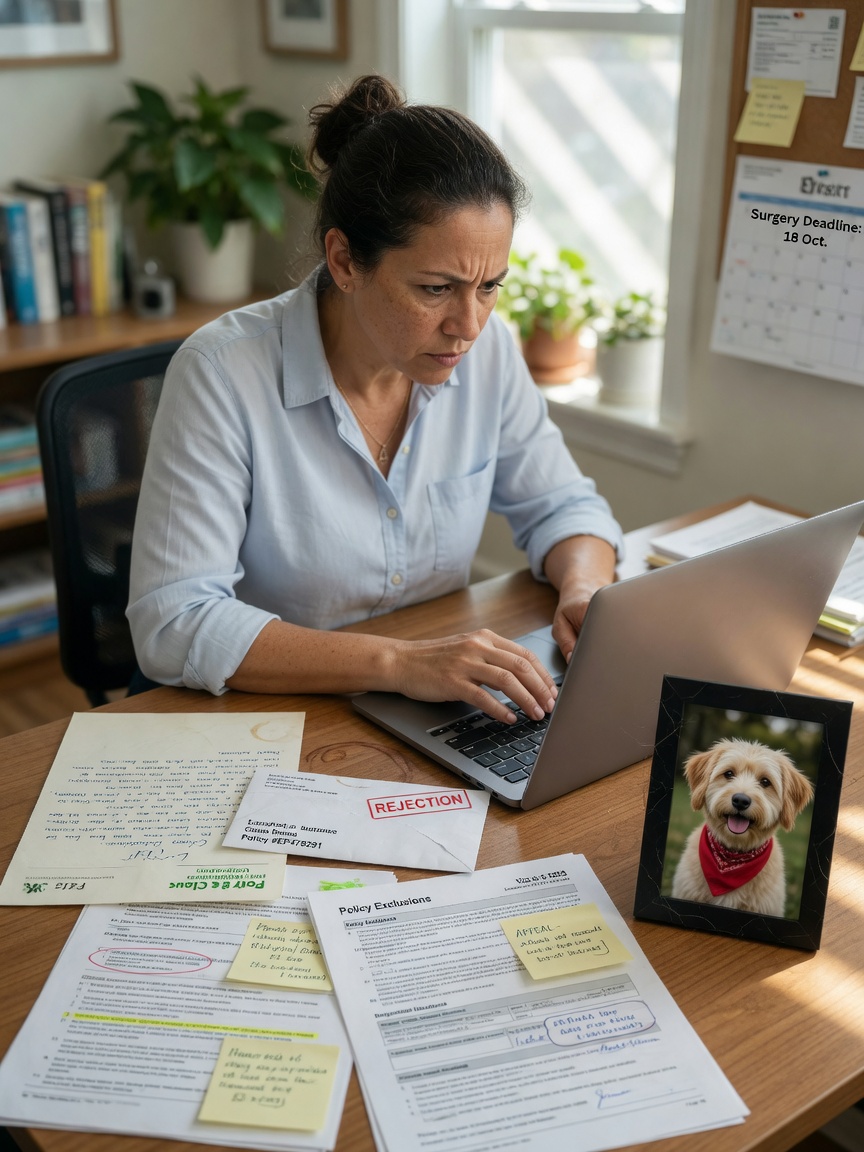
A rejection is not always final. Most insurers have a formal appeals process. Start by requesting a written explanation of the decision and cross-reference it against your policy wording. If you believe the rejection is incorrect:
- Write a formal appeal letter citing specific clauses in your policy
- Ask your vet to provide a supporting letter explaining the clinical background
- If the dispute is not resolved, escalate to the Financial Ombudsman Service in the UK, which handles complaints about insurance companies free of charge
Document all communications with your insurer, including the names of any representatives you speak to.
Practical Summary
- Read your policy thoroughly when you take it out, not when you need to claim
- Inform your vet you are insured at every visit
- Request itemised invoices and full clinical notes, not just a summary bill
- Complete claim forms carefully and keep copies of everything submitted
- Appeal any rejection in writing with supporting documentation
- Consult your vet if you are uncertain whether a condition or treatment is likely to be covered before proceeding
Pet insurance is a financial safety net, but it functions properly only when you understand its terms and use the claims process correctly. A few minutes of preparation can be the difference between a stress-free claim and a frustrating dispute.