

Pet-Friendly Hotels: What to Ask Before You Book
The phrase "pet-friendly" on a hotel listing covers an enormous range of realities. At one end of the spectrum it means a welcome pack, a dog bed, and a bowl of water on arrival. At the other, it means your pet is technically permitted but must be left in the car during meals and cannot access any common areas. Knowing the right questions to ask before you confirm a booking saves significant frustration and, more importantly, ensures your animal is genuinely comfortable rather than merely tolerated.
The Questions Worth Asking Every Hotel
What Does Pet-Friendly Actually Mean Here?
Start with this direct question, because the gap between expectation and reality is often considerable. Ask specifically which areas of the hotel are accessible to pets, whether your animal can accompany you to breakfast or the bar, and whether there are dedicated pet-friendly rooms or whether all rooms are equally open. Some hotels have tiered systems where dogs are welcome in garden-facing rooms but not in the main building.
Are There Size or Breed Restrictions?
Many hotels that permit pets impose weight limits, typically around ten to fifteen kilograms, which excludes larger dogs entirely. Breed restrictions are also common, particularly for breeds listed under the Dangerous Dogs Act in the UK — Pit Bull Terrier types, Japanese Tosa, Dogo Argentino, and Fila Brasileiro — but some hotels extend their exclusion list further to include broader categories of large or muscular breeds without legal basis. Confirm this before booking regardless of your dog's temperament.
What Is the Maximum Number of Pets Per Room?
If you are travelling with more than one animal, check whether the hotel places a limit. A single dog may be welcome; two dogs may require a specific room or may not be permitted at all. Multi-pet households should clarify this at the first point of contact rather than discovering a problem at check-in.
Fees and Deposits
Pet surcharges are standard practice and range from a nominal cleaning fee of ten or fifteen pounds per stay to nightly additions that can rival the cost of a budget room. Ask explicitly:
- Is there a per-night fee or a one-off charge for the stay?
- Is a refundable damage deposit required, and what is the amount?
- What constitutes damage for deposit-deduction purposes, and how is this assessed at checkout?
Some hotels charge fees that are not disclosed clearly on booking platforms and only emerge during the confirmation call or at check-in. Get the total cost confirmed in writing before committing.
Sleeping Arrangements
This is an area where assumptions can cause real problems. Find out whether your pet is permitted on the furniture and on the bed. Many hotels that welcome dogs still prohibit them from the beds — a house rule that matters considerably if your dog sleeps on your bed at home and will spend the night distressed or disruptive on the floor. If your pet is crate-trained, ask whether there is space in the room for a crate and whether the hotel can provide one.
Equally important: can your pet be left alone in the room? Some hotels require that a pet owner is present whenever an animal is in the room, making solo dinners out of the question. Others permit animals to be left for limited periods, often with a specific notice placed on the door to alert housekeeping. Clarify the policy and check whether it aligns with your plans for the trip.
Outdoor Access and Exercise
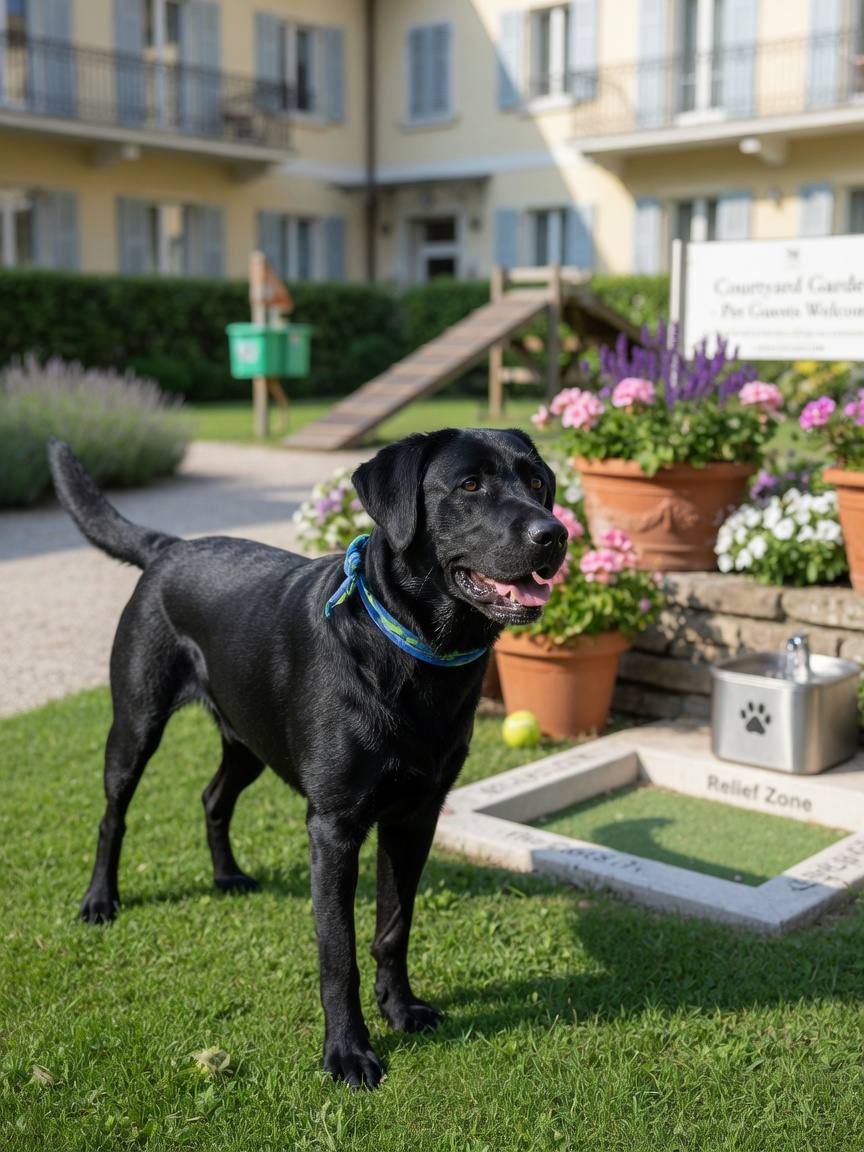
A hotel that welcomes dogs but has no outdoor space — or which is surrounded by busy roads with no green area within walking distance — is inconvenient at best and stressful for your animal at worst. Questions worth asking:
- Is there a garden, courtyard, or direct outdoor access from the property?
- Are dogs permitted in outdoor dining areas?
- Is there a secure area where dogs can be off-lead?
- Can the hotel recommend nearby walking routes or parks?
City-centre hotels in particular vary enormously in how practical they are for dogs with high exercise needs. A boutique hotel with a small courtyard may suit a calm older dog perfectly but be thoroughly inadequate for a young Labrador or working breed who needs an hour's vigorous exercise twice daily.
Housekeeping and Practical Considerations
Ask how housekeeping operates in pet-friendly rooms. Many hotels will not send staff into a room where a pet is present without the owner there, which means coordinating room servicing with your schedule. If you are staying more than one night, understanding the protocol avoids accumulated dishes and unmade beds.
Check whether the hotel has access to emergency veterinary services or can recommend a local practice. This is rarely the deciding factor in a booking decision, but knowing a vet's location before an emergency arises is sensible preparation, particularly in an unfamiliar area.
Reading Reviews Selectively
Online reviews from other pet owners are a genuinely useful resource, but read them critically. A reviewer who praises a hotel as "wonderfully dog-friendly" because their small terrier was welcomed may be describing a very different experience from what awaits a family with a large dog or two cats. Look for reviews that specifically describe circumstances similar to your own, and note how recently they were written — pet policies change, particularly following ownership or management transitions.
The most consistent indicator of a genuinely pet-welcoming hotel — as opposed to one that merely accepts animals reluctantly — is whether staff ask about your pet, whether facilities are thoughtfully provided rather than grudgingly available, and whether the overall atmosphere makes you and your animal feel expected rather than merely accommodated.