
Deciding What Happens After Your Pet Dies
Choosing what to do with your pet's remains is one of those decisions that many owners never think about until they are sitting in the middle of their grief, completely unprepared. Making this choice in advance — or at least understanding your options clearly — removes one significant burden from an already painful time. Both cremation and burial are legitimate, meaningful choices, and neither is inherently more respectful than the other.
Pet Cremation: The Options Explained
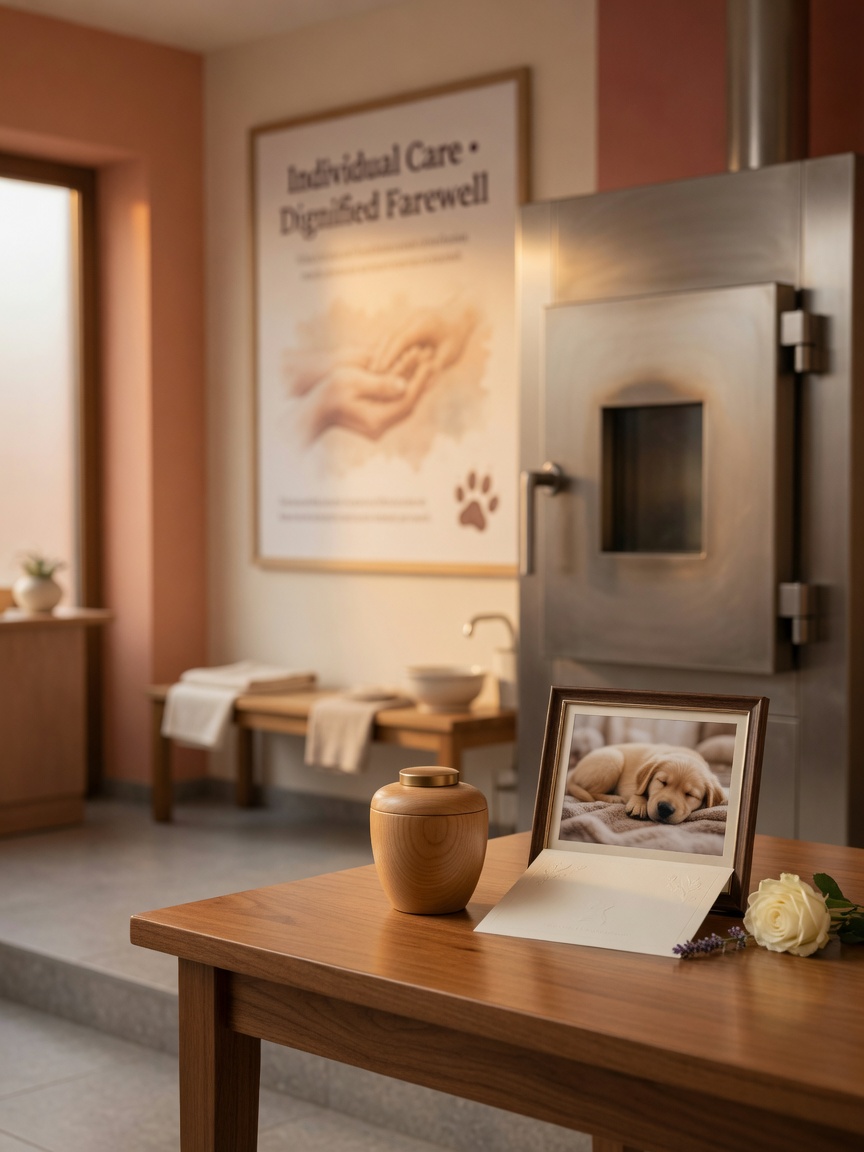
Cremation is the most common aftercare choice in the UK, particularly for those living in urban or suburban areas where home burial is less practical. There are two main types of pet cremation, and understanding the difference matters.
Individual cremation, sometimes called private cremation, means your pet is cremated alone. The ashes returned to you are entirely those of your pet. This is the option to choose if having your pet's ashes returned is important to you. It is more expensive than the alternative, but the peace of mind it provides is often worth it. Ask any cremation service directly whether their individual cremation is truly individual — a small number of providers have faced scrutiny on this point, so it is reasonable to ask how they distinguish remains.
Communal cremation means multiple animals are cremated together. You do not receive ashes back. This is a lower-cost option and is entirely appropriate if keeping remains is not something that holds significance for you. There is nothing lesser about this choice — it is simply a different relationship with what a body represents after death.
What to Do With Ashes
If you opt for individual cremation, you will receive your pet's ashes in an urn or a simple container, depending on the service. From there, you have considerable flexibility:
- Keep the ashes at home in a chosen urn or memorial box
- Scatter them in a meaningful location — a favourite walk, a garden, or a beach (check local guidelines, as scattering in certain public places may require permission)
- Have them incorporated into a piece of memorial jewellery, glass, or artwork
- Plant them beneath a tree or in a memorial garden
There is no timeline for this decision. Some owners scatter ashes within days; others keep them at home for years. Both are completely normal.
Home Burial in the UK
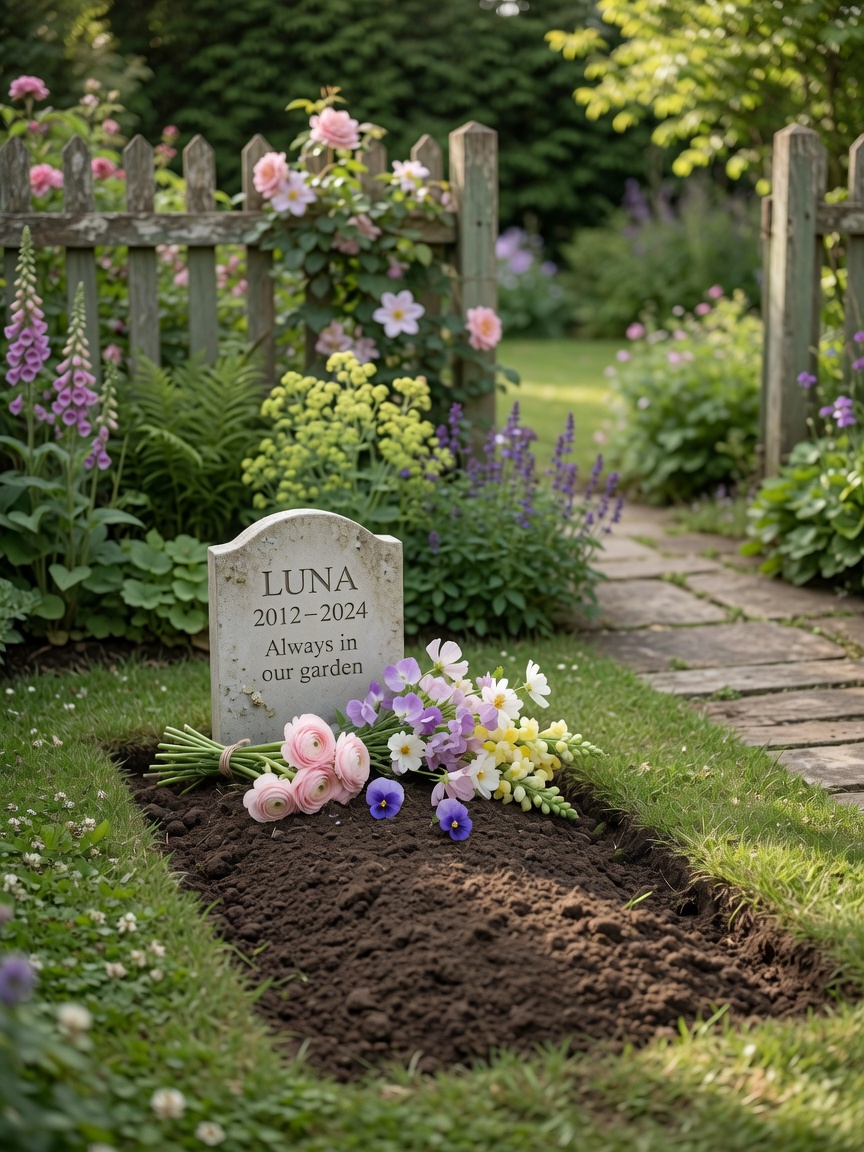
Burying a pet in your own garden is legal in the UK, provided certain conditions are met. The animal must not have died from a notifiable disease. The burial must be on land you own, not rented. The grave should be deep enough to prevent disturbance by other animals — a minimum of one metre is generally recommended. The pet must not have been treated with certain veterinary medications that could pose an environmental risk; ask your vet if you are unsure.
Home burial offers immediacy and permanence. The grave becomes a fixed point of memory in a place you know. Many owners find enormous comfort in the physical act of burial, and in having somewhere to sit quietly with their grief. The obvious limitation is that if you move house, you leave that place behind.
Pet Cemeteries and Memorial Parks
A third option that is often overlooked is burial or interment in a dedicated pet cemetery. These exist across the UK, and quality varies considerably, so research is important. Look for a member of the Association of Private Pet Cemeteries and Crematoria (APPCC), which operates a code of conduct and provides some degree of consumer protection.
Pet cemeteries offer a permanent resting place that is not tied to a property you might one day sell. Many owners find value in having a dedicated space for grief — somewhere they can visit, leave flowers, and mark anniversaries. The cost varies significantly, but plot purchase and burial fees can range from a few hundred to over a thousand pounds.
Cost Comparisons
As a rough guide for UK owners:
- Communal cremation: £50 to £150 depending on pet size
- Individual cremation: £150 to £400 depending on pet size and provider
- Home burial: minimal cost beyond any marker or memorial you choose to purchase
- Pet cemetery burial: £300 to £1,500 or more depending on location and services
These are estimates only — regional variation is significant, and additional services such as collection, viewings, and memorial items will affect the total.
Making the Decision That Is Right for You
The right choice is the one that gives you peace, not the one that looks most impressive or costs the most. Some people need a physical memorial. Others find ashes uncomfortable to have in the home. Some want their pet returned to the earth quickly and simply. None of these preferences are wrong.
If possible, decide before you are grieving. Have a quiet conversation with yourself or your family about what feels meaningful. Write it down somewhere. Your future self, navigating loss, will be grateful for the clarity.