

What People Are Actually Allergic To
It is a persistent myth that pet allergy is caused by fur. Fur itself is not an allergen. What triggers the immune system response is a group of proteins produced by the animal — proteins that happen to attach themselves to fur, dander (tiny flakes of shed skin), and saliva, and then spread throughout the home.
Fel d 1 — The Main Cat Allergen
The primary culprit in cat allergy is a protein called Fel d 1, produced mainly in the cat's sebaceous glands and salivary glands. When a cat grooms itself, Fel d 1-laden saliva coats the fur. As the saliva dries, microscopic particles become airborne and settle on every surface in the home — carpets, soft furnishings, walls, and clothing.
Fel d 1 is exceptionally persistent. Studies have found detectable levels in homes months after a cat has been removed, and even in buildings where no cat has ever lived — carried in on clothing. Male cats that are not neutered typically produce more Fel d 1 than females or neutered males, though individual variation is significant.
Can f 1 — The Main Dog Allergen
Dogs produce several allergens, but Can f 1 — found in saliva and shed skin cells — accounts for the largest proportion of reactions. Like Fel d 1, it spreads widely through a home and is easily transferred on clothing and hands.
Dog allergen levels in the home correlate with how much time the dog spends indoors and how frequently the dog is washed. Allergen levels drop measurably if dogs are bathed weekly, though the reduction is temporary.
The Truth About Hypoallergenic Breeds
You will see breeds marketed confidently as hypoallergenic — Poodles, Labradoodles, Siberian cats, Balinese cats, and many others. The claim deserves scrutiny.
No breed of cat or dog is truly hypoallergenic. All cats produce Fel d 1 and all dogs produce Can f 1. What varies is how much of the allergen an individual animal produces, and how much becomes airborne — influenced by coat type, grooming habits, neutering status, and individual biology.
Research has repeatedly failed to find consistent, significant differences in airborne allergen levels between breeds marketed as hypoallergenic and those that are not. A 2011 study published in the American Journal of Rhinology and Allergy found no meaningful difference in Can f 1 levels in homes with supposedly hypoallergenic versus non-hypoallergenic breeds.
This does not mean a particular individual animal cannot cause fewer symptoms for a particular allergic person — it does happen, and individual variation between animals of the same breed is real. But the variation within breeds is as large as the variation between them. If you are considering a specific animal, spend time with that individual animal before committing, rather than relying on breed reputation.
Managing Pet Allergy at Home
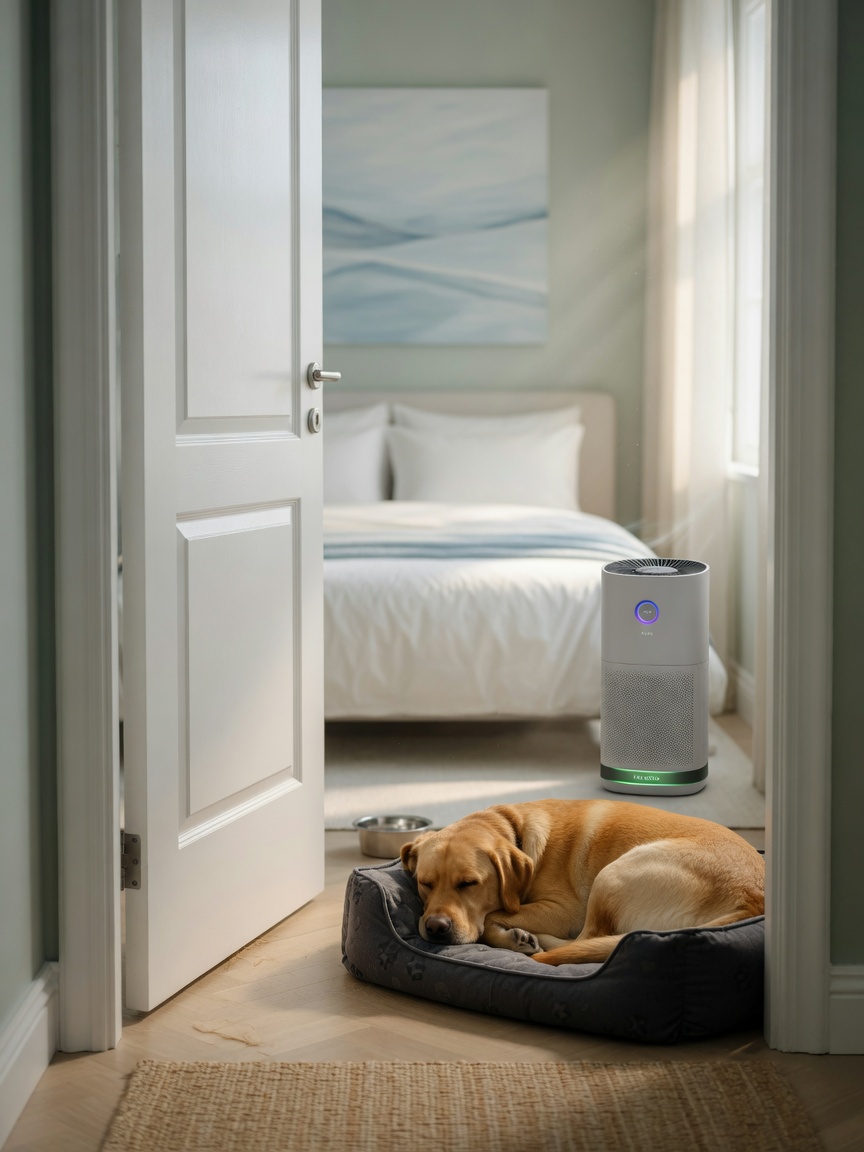
If you are committed to living with a pet despite an allergy, there is a great deal you can do to reduce the allergen burden in your home. No single measure is sufficient on its own — the most effective approach combines several strategies.
HEPA Air Filtration
High-efficiency particulate air (HEPA) filters capture particles as small as 0.3 microns, which includes dried allergen-carrying dander particles. Running a HEPA air purifier in rooms where you spend the most time — particularly the bedroom — can meaningfully reduce airborne allergen levels. Look for units with a Clean Air Delivery Rate (CADR) appropriate for the room size.
Frequent, Thorough Hoovering
Allergens settle onto carpets, rugs, and soft furnishings and become re-airborne with movement. Hoovering frequently — at least twice a week — with a vacuum fitted with a HEPA filter helps keep surface levels in check. Be aware that hoovering stirs up particles temporarily, so allergic individuals may want to leave the room during and for twenty minutes after vacuuming.
Hard flooring is significantly easier to keep allergen-low than carpet. If you are renovating or redecoratingg, this is worth factoring in.
Keep Pets Out of the Bedroom
You spend roughly a third of your life in your bedroom. If you can keep it a pet-free zone, you give your immune system an extended daily rest from allergen exposure. This single measure is consistently highlighted by allergy specialists as one of the most impactful. Wash bedding on a hot cycle weekly.
Washing Hands After Contact
After stroking or handling your pet, wash your hands before touching your face, eyes, or nose. This reduces the transfer of allergen to mucous membranes, where the immune response is most easily triggered.
Bathing Your Pet
Regular bathing of dogs, and — more ambitiously — cats, temporarily reduces the amount of allergen on the coat and skin. Weekly bathing has been shown to reduce Can f 1 levels, though the effect diminishes within a few days. Most cats do not tolerate bathing well, so this strategy is more practical for dogs.
Immunotherapy — The Most Effective Long-Term Option
Antihistamines, nasal corticosteroid sprays, and eye drops manage symptoms but do not change the underlying sensitivity. Allergen immunotherapy — commonly called desensitisation — does.
Immunotherapy involves introducing gradually increasing doses of the specific allergen to the immune system over time, with the aim of training it to stop overreacting. It is available as subcutaneous injections (given at a clinic over three to five years) or, increasingly, as sublingual drops or tablets (taken at home). Both routes have good evidence for reducing symptoms in cat and dog allergy.
Immunotherapy is not a quick fix — significant improvement typically takes twelve to eighteen months — but it offers the prospect of lasting change rather than indefinite symptom suppression. It is available through NHS allergy clinics and private allergy specialists. If you are finding that antihistamines are no longer sufficient, or you are relying on them daily, ask your GP for a referral.
When to See a Doctor
Mild sneezing and itchy eyes around pets can often be managed with over-the-counter antihistamines. You should see a GP or allergy specialist if your symptoms are affecting your quality of life significantly, if you are using antihistamines every day, if you experience chest tightness or wheezing around animals, or if you want to discuss immunotherapy. Allergy testing — skin prick or specific IgE blood tests — can confirm exactly which proteins you are reacting to, which is useful if you are reacting to both cats and dogs, or if the picture is unclear.