
Osteosarcoma in Dogs: Bone Cancer Signs, Breeds at Risk and Palliative Care
Osteosarcoma is the most common primary bone tumour in dogs, and it is an aggressive one. Around 10,000 dogs are diagnosed with it each year in the United States alone, and while it can affect dogs of any size or breed, it has a pronounced predisposition for large and giant breeds. Understanding the signs, the affected breeds, and what palliative care looks like can make a significant difference to how this diagnosis is handled.
What Is Osteosarcoma?
Osteosarcoma is a malignant tumour arising from bone-forming cells called osteoblasts. It most commonly affects the long bones of the limbs — particularly the areas around the wrist (distal radius), shoulder (proximal humerus), knee (distal femur and proximal tibia), and ankle (distal tibia). The skull, ribs, spine, and pelvis are affected less frequently but are not immune.
The tumour is locally destructive, breaking down bone architecture from within, and it metastasises early — often before a diagnosis is even made. At the time of diagnosis, studies suggest that around 90% of dogs with appendicular osteosarcoma already have micrometastatic disease, most commonly in the lungs.
Breeds Most at Risk
Body size is the strongest risk factor for osteosarcoma. The heavier a dog is, the greater the mechanical stress on bones, and the higher the risk appears to be. The following breeds are significantly over-represented:
- Great Danes
- Irish Wolfhounds
- Saint Bernards
- Greyhounds
- Rottweilers
- Golden Retrievers
- Labrador Retrievers
- German Shepherd Dogs
Neutered dogs appear to have a moderately higher risk than intact dogs, and male dogs are slightly over-represented in studies. Dogs are typically middle-aged to older at diagnosis, though giant breeds may develop osteosarcoma at a younger age due to their accelerated skeletal development.
Recognising the Signs
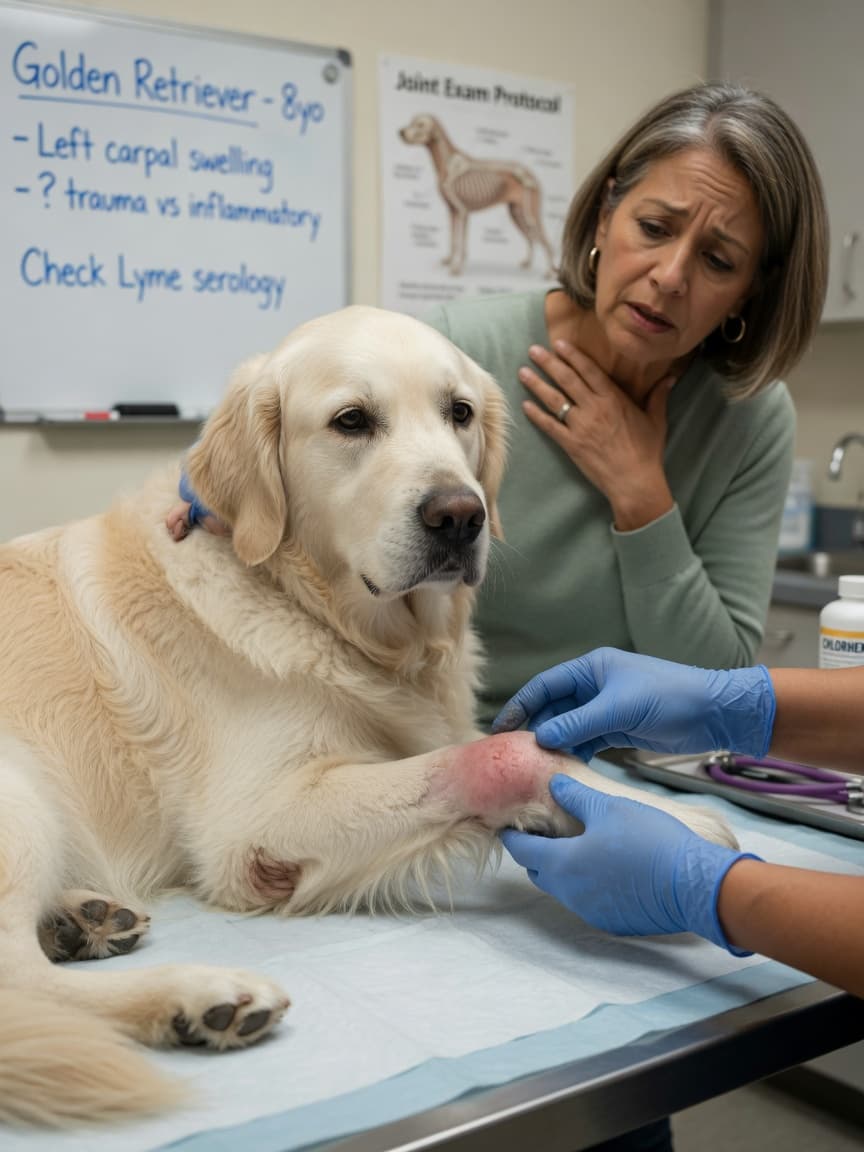
The cardinal sign of osteosarcoma is progressive lameness, often appearing suddenly or worsening rapidly over days to weeks. The affected limb may be painful to touch, and swelling around the tumour site is common as the disease advances and the bone becomes structurally compromised.
Because dogs are extraordinarily stoic animals, many owners describe their dog simply as "slowing down" or "not putting weight on one leg" before the severity becomes apparent. By the time visible swelling is present, the tumour is typically well established.
Pathological fractures — fractures occurring through diseased bone without significant trauma — are a serious complication of advanced osteosarcoma and often signal the end stage of manageable disease in the limb.
Diagnosis
Radiographs of the affected bone show characteristic changes including a "sunburst" pattern of new bone formation and a Codman's triangle where the periosteum is lifted at the tumour margins. These radiographic changes are often highly suggestive of osteosarcoma, though definitive diagnosis requires bone biopsy.
Staging involves chest radiographs or CT to assess for pulmonary metastases, and sometimes nuclear scintigraphy (bone scan) to identify additional skeletal lesions. Bloodwork including alkaline phosphatase levels is also prognostically relevant — elevated alkaline phosphatase is associated with shorter survival times.
Curative-Intent Treatment
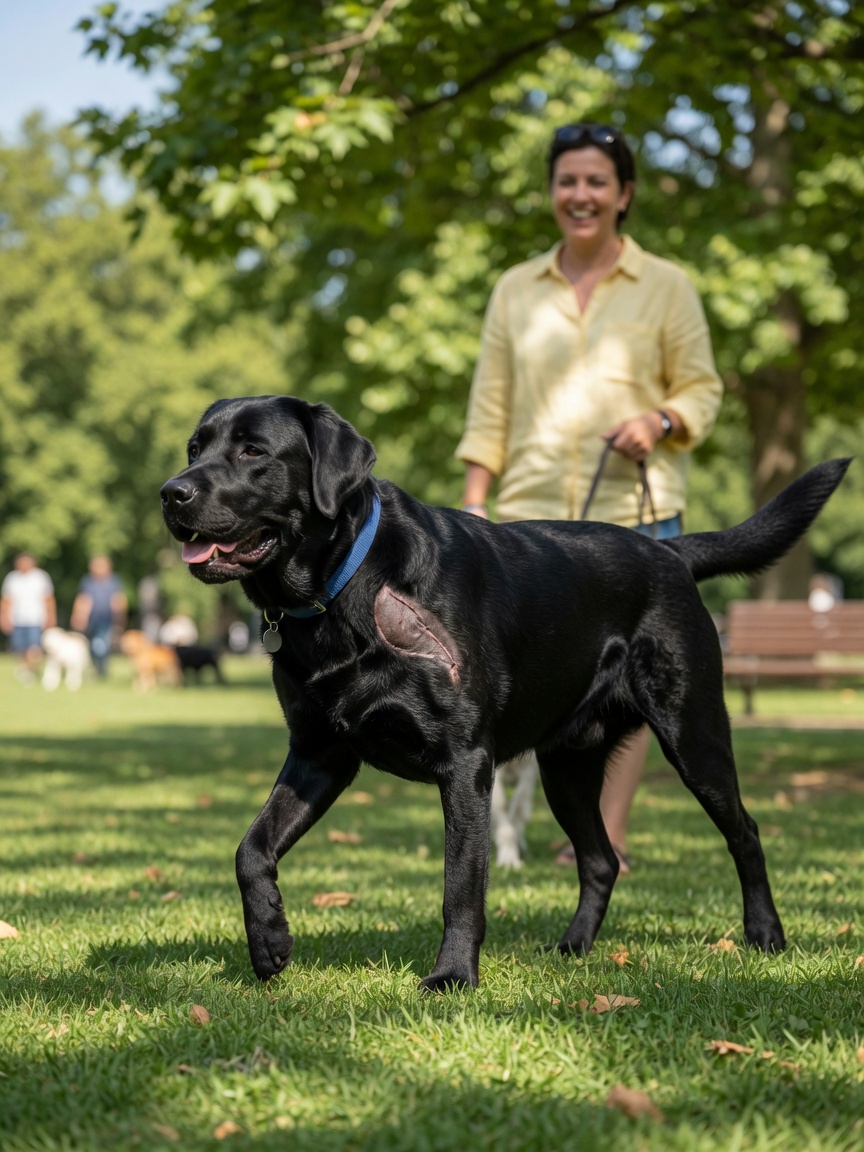
The standard curative-intent approach combines surgery with chemotherapy. Limb amputation removes the primary tumour and, crucially, eliminates the source of severe local pain. Most dogs adapt remarkably well to life on three legs, particularly when surgery is performed before they are severely debilitated.
Limb-sparing surgery is possible in select cases — particularly those involving the distal radius — and involves removing the affected bone segment and replacing it with a bone graft or metal implant. It is technically demanding and carries a higher complication rate than amputation, but may be appropriate for certain dogs where amputation is not feasible.
Adjuvant chemotherapy with carboplatin or doxorubicin follows surgery to address micrometastatic disease. Median survival times with amputation and chemotherapy are typically around 10 to 12 months, with around 20% of dogs surviving to two years. Without chemotherapy, median survival after amputation alone is around four to five months.
Palliative Care: When Surgery Is Not the Path
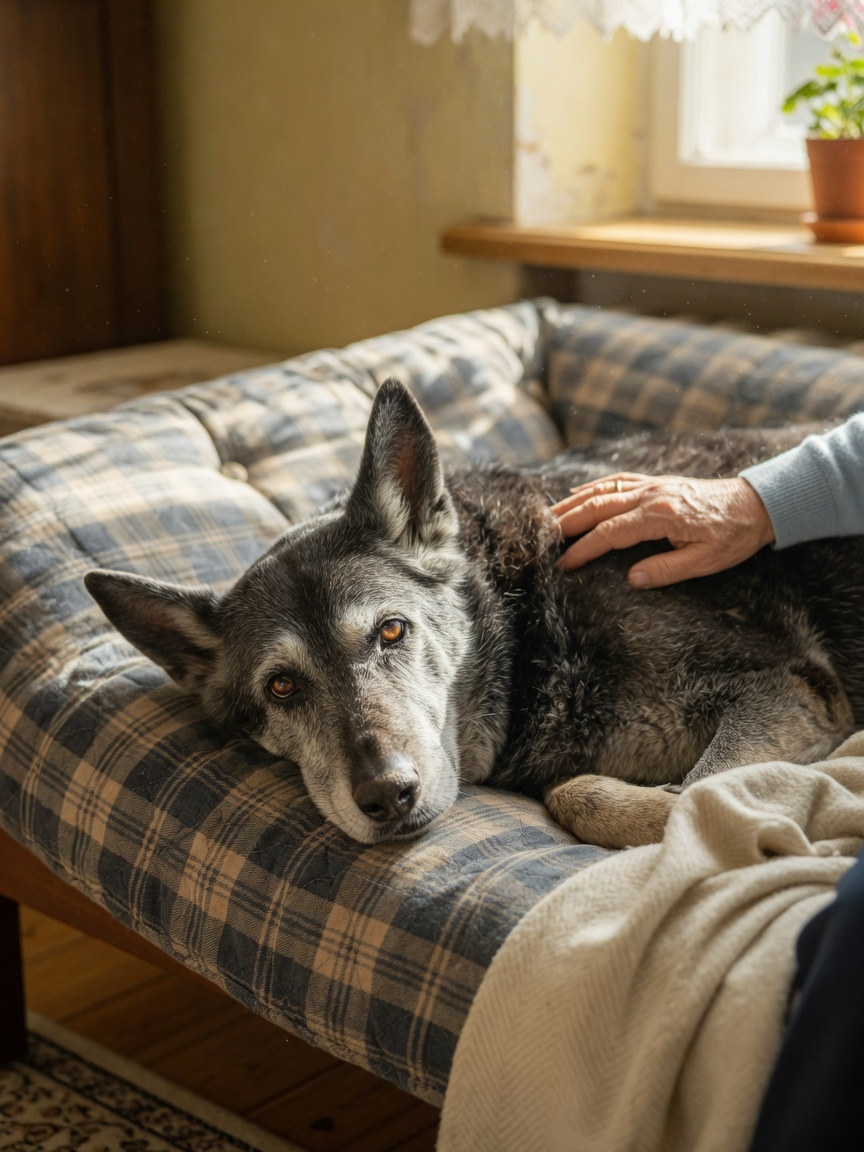
Not every dog is a surgical candidate, and not every owner wishes to pursue amputation. For these cases, palliative care becomes the focus — managing pain and maintaining quality of life for as long as possible.
Palliative Radiation Therapy
Palliative radiation is one of the most effective tools for controlling bone pain in osteosarcoma. Coarse-fraction protocols — delivering a small number of larger radiation doses over several weeks — can provide meaningful pain relief in around 70 to 90% of dogs, with effects lasting weeks to months. It does not slow tumour progression but can significantly improve comfort.
Pain Management
A multimodal approach to analgesia is essential. Non-steroidal anti-inflammatory drugs (NSAIDs) form the foundation of most palliative pain protocols and should be used alongside gastric protectants. Opioid medications, gabapentin for neuropathic pain, and bisphosphonates such as pamidronate (which can also slow bone destruction) are all tools that may be added depending on the individual dog's needs.
The goal is to keep the dog comfortable enough to enjoy daily life — eating well, interacting with family, moving around without severe distress. Pain assessment in dogs requires careful owner observation and regular veterinary review.
Supportive Nutrition and Mobility Aids
Maintaining a healthy body weight reduces mechanical load on affected limbs. Orthopaedic beds, ramps to avoid jumping, non-slip flooring, and supportive harnesses all contribute to comfort and safety. Short, frequent walks on soft ground are preferable to extended exercise.
Making the Decision
Osteosarcoma confronts owners with some of the hardest decisions in pet ownership. Whether to pursue amputation, palliative care, or to make an end-of-life decision depends on the individual dog's health, temperament, and quality of life — and on what feels right for the family.
There is no universally correct answer. What matters is that pain is never left unmanaged and that decisions are made with full information and compassionate veterinary support.