
The Forest Cat's Robust Reputation Hides Genetic Vulnerabilities
The Norwegian Forest Cat — or Norsk Skogkatt — cuts an impressive figure: large, athletic, with a dense double coat built for Scandinavian winters. Breed enthusiasts rightly celebrate the Wegie's hardiness and intelligence. Yet two hereditary conditions threaten this breed specifically: glycogen storage disease type IV, a rare but invariably fatal metabolic disorder, and hypertrophic cardiomyopathy, the silent cardiac killer found across multiple cat breeds. Understanding both is essential for anyone who loves this breed.
Glycogen Storage Disease Type IV
Glycogen storage disease type IV (GSD IV) — also called glucose-6-phosphate isomerase deficiency or, in Norwegian Forest Cats, simply GSD IV — results from a mutation in the GBE1 gene, which encodes the glycogen branching enzyme. Without functional enzyme, glycogen accumulates in an abnormal form in muscle, nerve, liver, and heart tissue, causing progressive, irreversible damage.
How the disease presents
GSD IV in Norwegian Forest Cats follows two patterns. Some kittens are stillborn or die within hours of birth. Others appear healthy initially but develop progressive neuromuscular disease from around five months of age, presenting as muscle weakness, tremors, difficulty walking, and eventually complete motor collapse. There is no treatment; affected kittens invariably die or are euthanised on welfare grounds, usually before eight months of age.
Inheritance and DNA testing
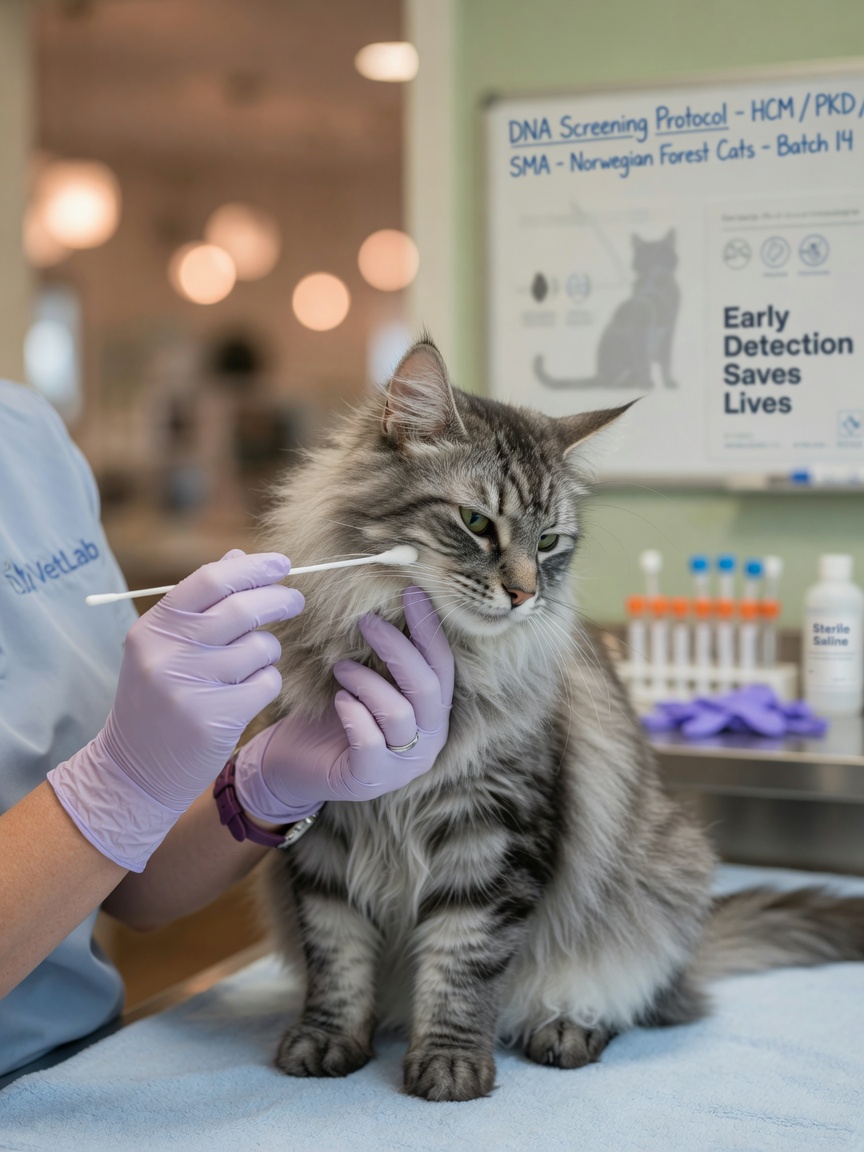
GSD IV is autosomal recessive. A cat must inherit two copies of the mutant allele to be affected. Carriers (one copy) are clinically healthy but can pass the gene to offspring. A reliable DNA test identifies normal, carrier, and affected status. Responsible breeders test all breeding stock; carrier-to-carrier matings must be avoided, as they carry a 25% chance of producing affected kittens. If a carrier is otherwise exceptional, it may be bred with a clear cat, with all offspring tested before further breeding. Ask your breeder for GSD IV test certificates as a non-negotiable condition of purchase.
Hypertrophic Cardiomyopathy in the Norwegian Forest Cat
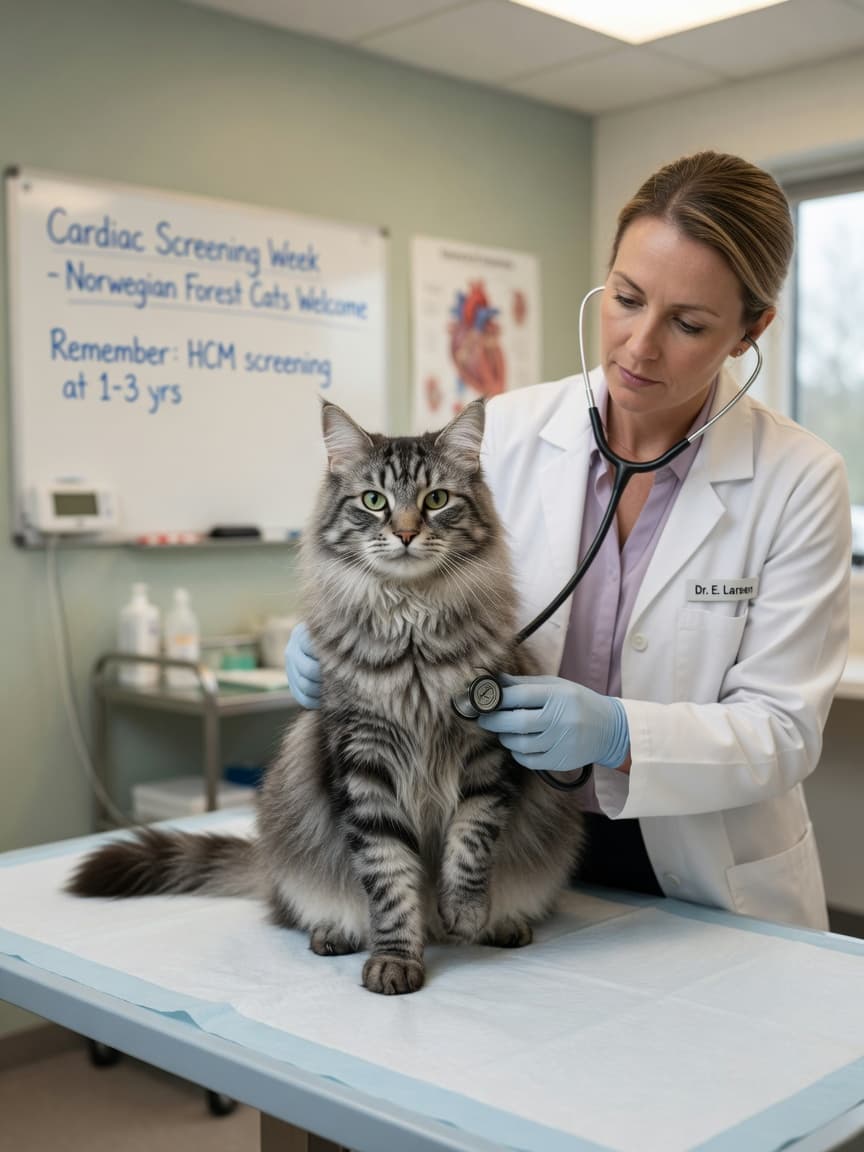
HCM causes pathological thickening of the left ventricular wall. In Norwegian Forest Cats, the genetic basis differs from the MYBPC3 mutations found in Maine Coons and Ragdolls — the precise variants responsible have not been fully characterised, making echocardiographic screening the primary tool rather than DNA testing alone.
Clinical signs and progression
Many cats with HCM live for years without obvious symptoms. When signs do appear, they typically include exercise intolerance, increased respiratory rate, open-mouth breathing, and, in acute cases, sudden collapse from aortic thromboembolism. Regular cardiac auscultation by a vet can detect murmurs, though HCM can be present without a murmur and vice versa. Echocardiography remains the definitive diagnostic tool.
Screening recommendations
Breeding Norwegian Forest Cats should undergo echocardiographic screening from around eighteen months, repeated annually or biennially. This does not guarantee offspring will be clear, but it reduces the likelihood of breeding from actively affected cats. Some breed clubs maintain cardiac screening registers — consult your national breed association for current guidance. As a pet owner, discuss cardiac monitoring with your vet, particularly as your cat ages.
Other Health Considerations
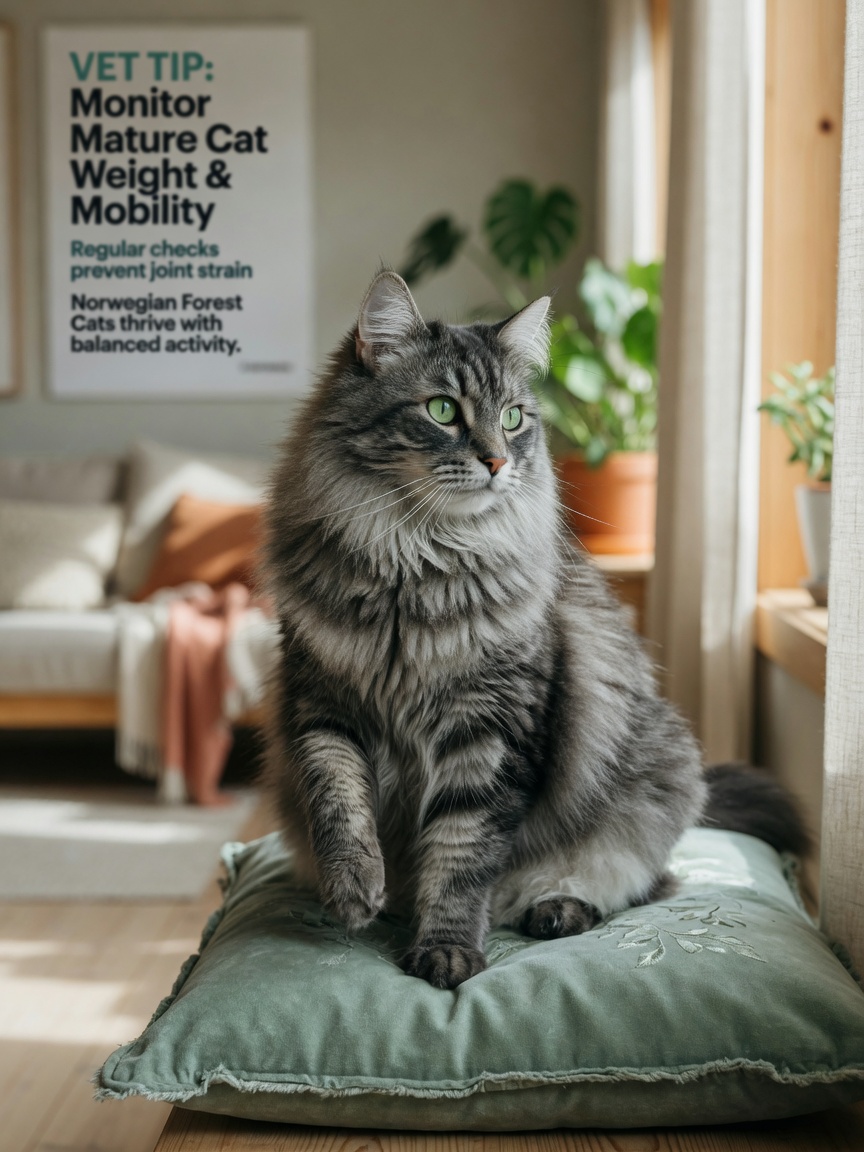
Norwegian Forest Cats are also noted for a predisposition to hip dysplasia, a degenerative joint condition more commonly associated with dogs. Whilst not all cats will be symptomatic, large, heavy individuals may develop hind-limb lameness or reduced mobility. Weight management is important; obesity exacerbates joint stress and cardiac workload simultaneously. Regular veterinary assessments should include gait evaluation in older cats.
Nutrition and Weight Management
The Norwegian Forest Cat is naturally muscular and large-framed, but this can mask the accumulation of excess fat. Weigh your cat every one to two months and adjust portions accordingly. A high-protein, moderate-fat diet suits the breed's active metabolism. Cats with confirmed cardiac disease may have specific dietary requirements; consult your vet before adjusting the diet of any cat with a known health condition.
Practical Checklist for Norwegian Forest Cat Owners
- Obtain GSD IV DNA test results for both parents before acquiring a kitten.
- Confirm that breeding cats have undergone echocardiographic HCM screening.
- Register your cat with a vet and establish annual health examinations.
- Request cardiac auscultation at every routine check-up.
- Monitor body condition score regularly — these cats can gain weight imperceptibly.
- Watch for early signs of joint stiffness or reluctance to jump, particularly in cats over six years of age.
- Seek immediate veterinary attention for any breathing difficulty or sudden hind-limb weakness.
- Work with a vet experienced in feline cardiology if HCM is suspected or diagnosed.
The Norwegian Forest Cat is a magnificent companion, and the genetic threats it faces are manageable with the right information. Proactive screening, honest breeders, and attentive ownership are the cornerstones of keeping these cats healthy for the long term.