
A Database Entry That Could Save Your Pet's Life
Every year, hundreds of thousands of pets are handed into rescues and veterinary practices across the United Kingdom without any means of identification. A significant proportion are never reunited with their owners — not because their owners did not want them back, but because there was no way to trace them. Microchipping takes under thirty seconds to administer and lasts the animal's lifetime. It is also, in the case of dogs in England, Scotland, and Wales, a legal requirement.
How Microchipping Works
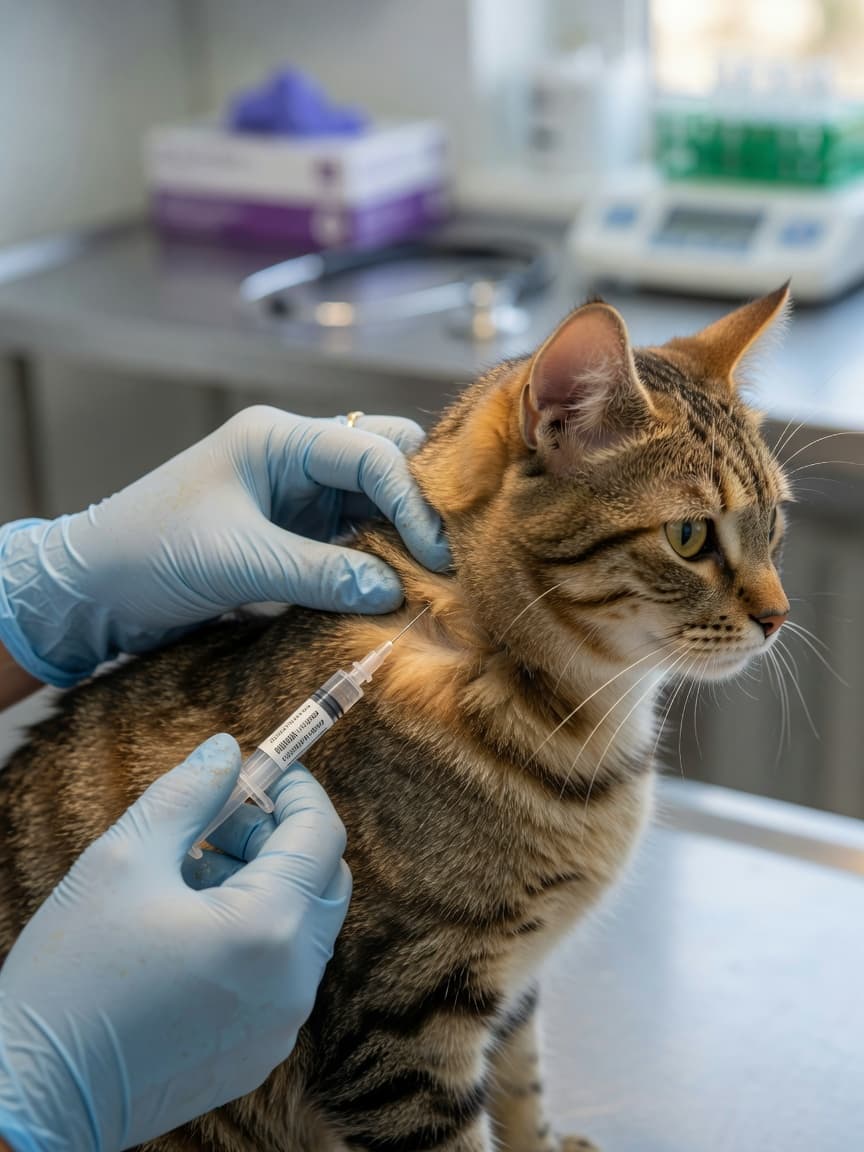
A microchip is a passive radio-frequency identification device — no battery, no GPS, no moving parts — roughly the size of a grain of rice. It is injected under the loose skin at the back of the neck using a needle slightly larger than that used for routine vaccinations. The chip emits a unique fifteen-digit ISO code when scanned with a compatible reader. That code links to a database entry containing your contact details.
The procedure requires no anaesthetic and is typically performed in a standard veterinary or nurse appointment. Some owners report their pet barely reacts; others find their animal briefly objects to the needle. Either way, it is over in moments.
Legal Requirements in the UK
In England, Scotland, and Wales, all dogs must be microchipped and registered to a compliant database by the age of eight weeks. Owners found with an unchipped dog can be served a notice requiring compliance within twenty-one days, and failure to comply can result in a fine. Puppies must be chipped before they are sold or rehomed.
Cats — New Legislation
From June 2024, microchipping became compulsory for cats in England, with similar legislation expected to follow in other devolved nations. Cats must be chipped by the age of twenty weeks. Given that cats are the most commonly handed-in stray animal in the UK, this change has been widely welcomed by rescue organisations.
Other Animals
Horses and ponies in the UK must be microchipped and registered in a passport. Rabbits, ferrets, and other small animals are not currently subject to legal requirements but can be chipped voluntarily — an option worth considering for any free-roaming pet.
Database Registration: The Step Most People Miss
A microchip without up-to-date database registration is nearly useless. The chip itself contains only a number. The contact details live in the database. Yet surveys consistently find that a substantial proportion of microchipped dogs in the UK are either registered to an outdated address or not registered at all.
- Register on a database compliant with the UK's compulsory microchipping regulations
- Update your details every time you move house or change your phone number
- Transfer registration if you rehome your pet — do not assume the new owner will do this
- Check your pet's chip is still readable at annual vaccination appointments — chips can, rarely, migrate or fail
Registration fees vary between databases but are typically modest. Some offer lifetime registration for a one-off fee.
What to Do If Your Pet Goes Missing
Speed matters. The first twenty-four hours after a pet goes missing are the most critical for recovery.
- Report the microchip number as lost on your registered database immediately
- Notify all local veterinary practices — scan any handed-in animal immediately
- Contact your nearest rescue centres and RSPCA branch
- Register the loss on free services such as Animal Search UK and Doglost or Catlost
- Post on local community social media groups with a clear recent photograph
- Put out worn clothing or bedding near your home — familiar scent can draw a lost pet back
If someone finds your pet and has it scanned, the scanning vet or rescue will contact the database holder. This is why current contact details are non-negotiable.
Common Questions
Can a microchip track my pet's location?
No. Standard microchips are passive devices with no GPS capability. GPS pet trackers exist as separate collar-mounted devices, but they are distinct from microchipping and do not fulfil the legal requirement.
Is microchipping safe?
Decades of use across millions of animals indicate that microchipping is extremely safe. Adverse reactions — infection, chip migration, tumour formation at the injection site — occur but are rare. The benefits of identification in the event of loss or theft substantially outweigh the small procedural risk. Your vet can address any specific concerns at the appointment.