
What Is Laser Therapy for Pets?
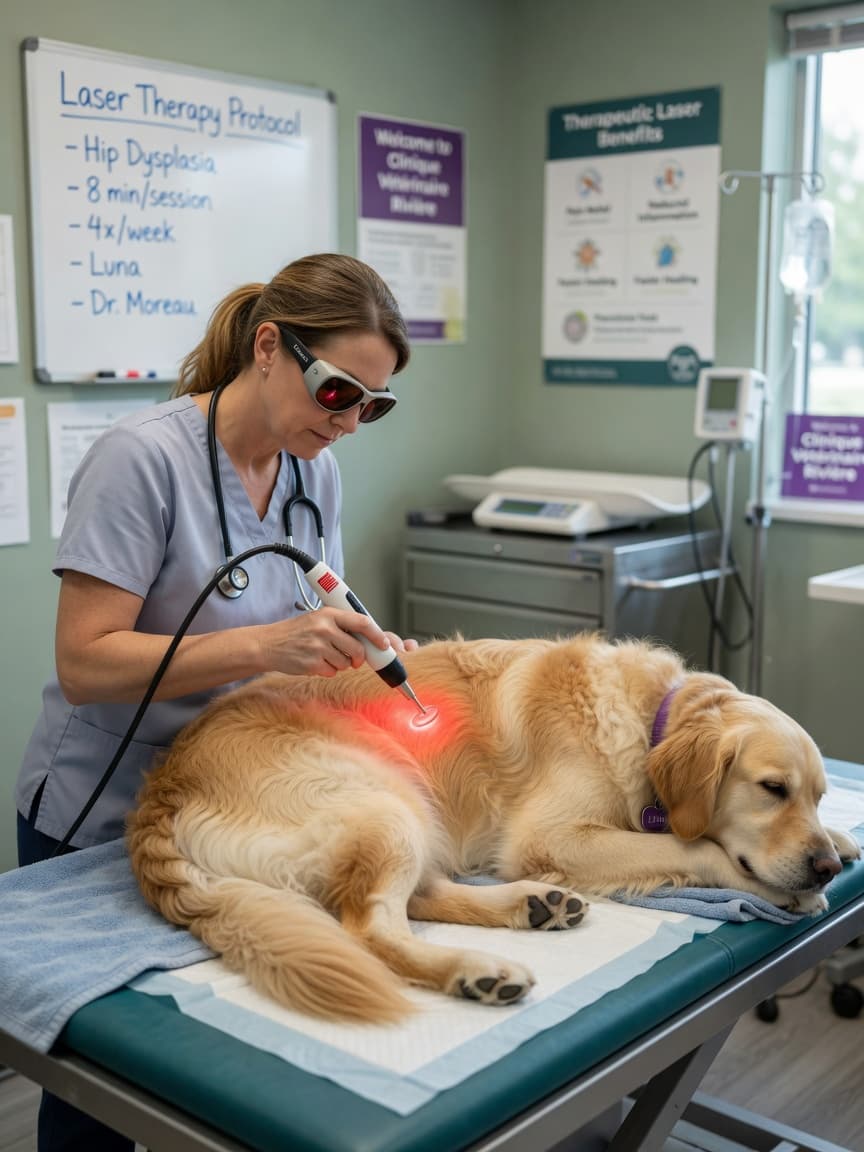
Laser therapy — also known as low-level laser therapy (LLLT) or photobiomodulation (PBM) — uses specific wavelengths of light to stimulate healing at the cellular level. It is a non-invasive, drug-free treatment that has become a standard offering in many progressive veterinary practices across the UK and beyond. The therapy does not cut or burn tissue; it works by delivering energy into cells to trigger a series of biological responses that reduce pain and accelerate repair.
The treatment was first used in human physiotherapy decades ago and has since been adapted for veterinary use, with a growing body of research supporting its application in dogs, cats, horses, and small mammals. Understanding how it works and what it can — and cannot — do will help you make informed decisions for your pet.
The Science: How Photobiomodulation Works
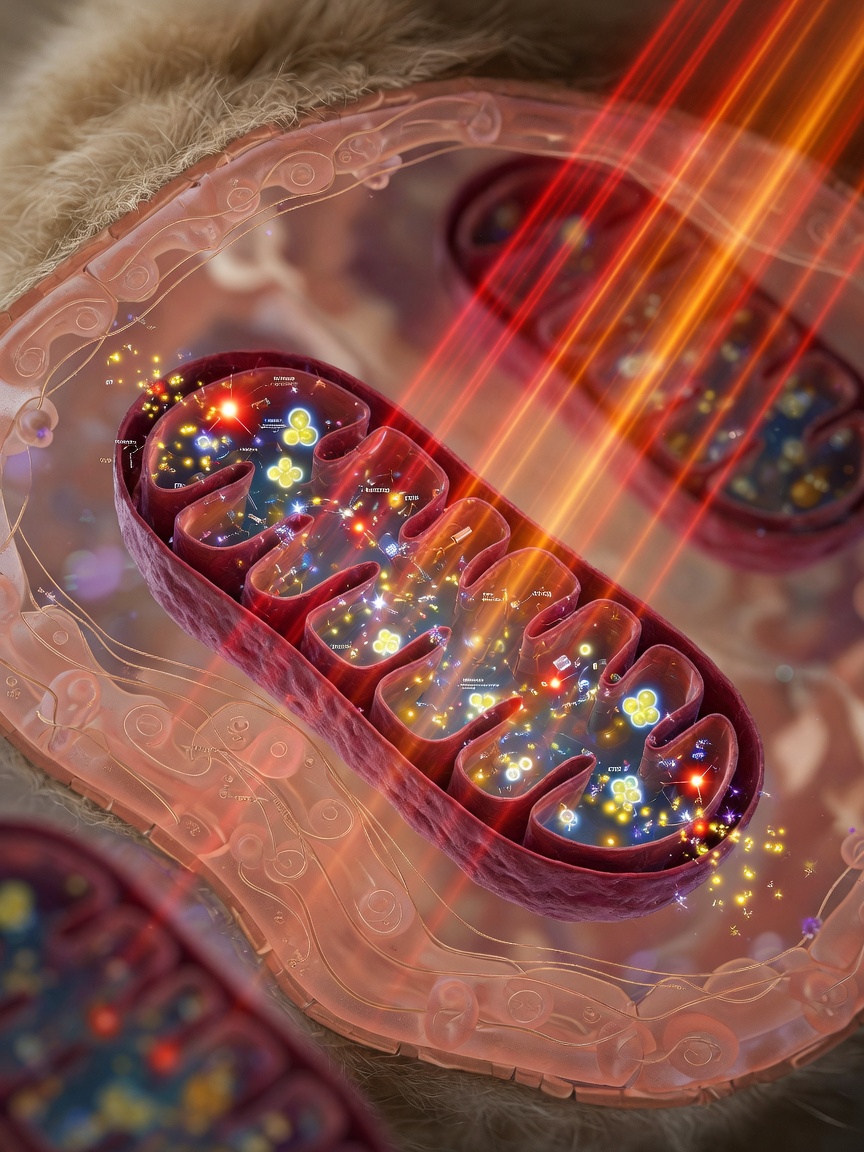
At the heart of LLLT is the activation of an enzyme called cytochrome c oxidase, a key component of the mitochondrial electron transport chain. When photons of the correct wavelength — typically in the red and near-infrared spectrum between 600 and 1000 nanometres — penetrate tissue and are absorbed by this enzyme, the result is an increase in adenosine triphosphate (ATP) production. ATP is the primary energy currency of the cell, and more of it means cells can carry out repair processes more efficiently.
Beyond ATP production, photobiomodulation triggers several other beneficial effects:
- Reduction in inflammatory mediators such as prostaglandins and cytokines
- Promotion of angiogenesis, which is the formation of new blood vessels to support healing tissue
- Stimulation of collagen synthesis, important for wound and connective tissue repair
- Modulation of nerve conduction, which contributes to pain relief
- Reduction of oedema through improved lymphatic drainage
These effects are dose-dependent. Too little light energy achieves nothing; too much can paradoxically inhibit cellular activity. This is why correct calibration and application by a trained practitioner matters considerably.
Class 3B versus Class 4 Lasers: Understanding the Difference
Veterinary laser devices fall into two main categories, and the distinction is clinically significant.
Class 3B Lasers
Class 3B lasers have an output power of up to 500 milliwatts. They are capable of delivering therapeutic photobiomodulation but work at lower power densities. Treatment sessions with Class 3B devices may take longer to deliver the same dose of energy to deeper tissue, but they offer a wide margin of safety and are suitable for superficial wounds, acupuncture point stimulation, and sensitive areas such as near the eyes.
Class 4 Lasers
Class 4 devices operate above 500 milliwatts, with many veterinary units delivering between 5 and 15 watts. This higher power allows energy to penetrate more deeply into tissue — reaching joints, muscle, and intervertebral discs that a Class 3B laser might not adequately treat. Sessions are shorter, which is practical for anxious animals. However, the increased power also increases the risk of thermal injury if the handpiece is held stationary, which is why trained operators keep it moving continuously during treatment.
Neither class is inherently superior; the appropriate device depends on the condition being treated and the skill of the operator.
Conditions with the Best Evidence
The research base for veterinary photobiomodulation has grown considerably in recent years, though it remains less extensive than in human medicine. The strongest evidence currently supports its use in:
- Wound healing — accelerating closure of surgical incisions, lacerations, and chronic wounds
- Musculoskeletal pain — osteoarthritis in dogs and cats, hip dysplasia, elbow dysplasia, and postoperative orthopaedic pain
- Intervertebral disc disease — as an adjunct to conservative or surgical management
- Soft tissue injuries — strains, sprains, and tendon damage
- Post-operative recovery — reducing swelling and pain following surgery
Evidence for other applications — such as neurological conditions, ear infections, and dermatological problems — is promising but less conclusive, and the therapy should be viewed as a complement to, rather than a replacement for, conventional treatment in those areas.
What to Expect at a Laser Therapy Session
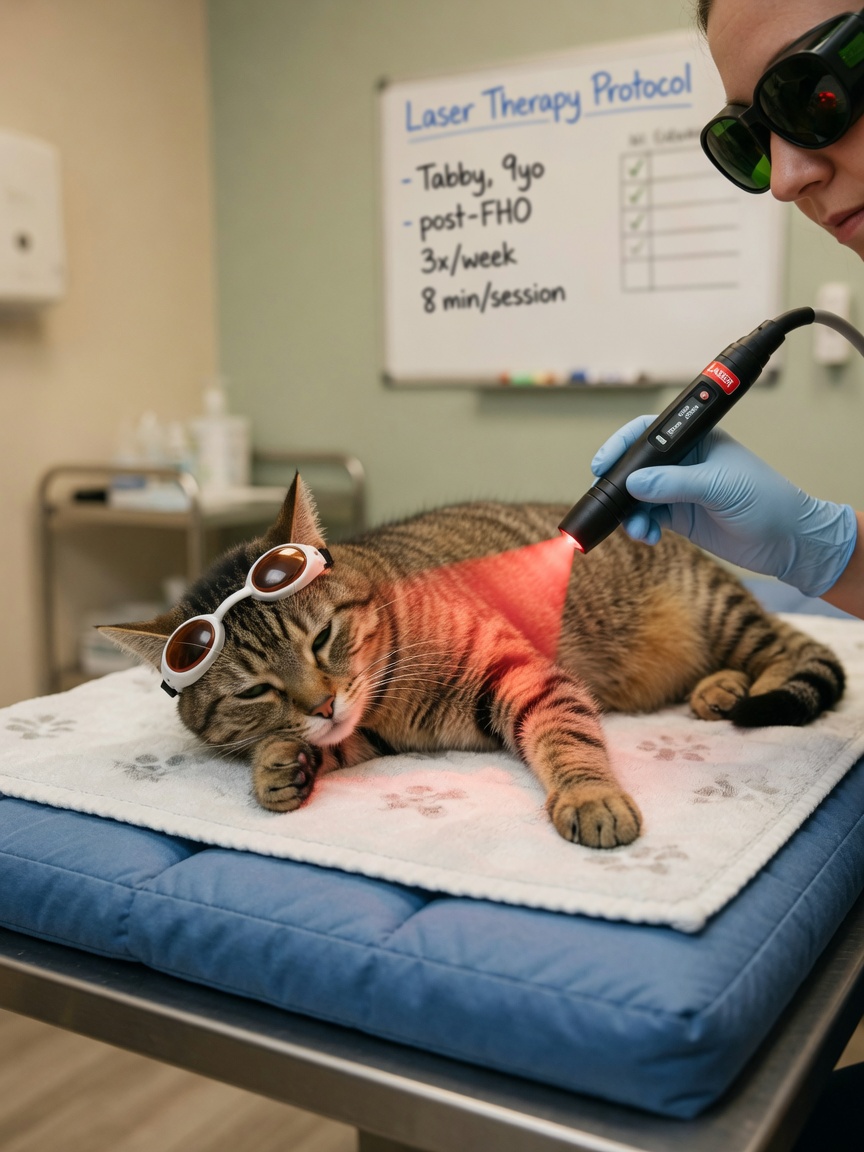
A typical session lasts between five and twenty minutes depending on the area being treated and the device being used. Most animals find the experience relaxing; the laser produces a gentle warmth that many pets seem to enjoy. Some may become drowsy during treatment, likely due to the release of endorphins and the calming effect of reduced pain.
Both your pet and everyone present in the room must wear appropriate protective goggles or eyewear during treatment. The laser handpiece is moved slowly over the treatment area in a circular or scanning motion, ensuring even energy delivery without overheating any single spot. The treatment area is usually clipped of fur for skin and wound conditions, as hair absorbs and scatters laser energy before it reaches the target tissue.
A typical course for musculoskeletal conditions involves multiple sessions — often three to six over two to three weeks initially, followed by maintenance treatments every few weeks or months depending on response. Chronic conditions such as arthritis generally require ongoing maintenance to sustain benefits.
NAALT Accreditation and Practitioner Standards
The North American Association for Light Therapy (NAALT) provides accreditation and training standards for practitioners of photobiomodulation. In the UK, the British Veterinary Laser Association promotes evidence-based use of veterinary lasers and offers training pathways. When seeking laser therapy for your pet, asking about the practitioner's training and the class of device being used is entirely reasonable. Proper training makes a meaningful difference to treatment outcomes and safety.
Important Contraindications
Laser therapy is not appropriate in all circumstances. The most critical contraindication is direct application over known or suspected tumours. Photobiomodulation stimulates cellular activity and could theoretically promote tumour cell proliferation. Practitioners should always be informed of any cancer diagnosis before treatment commences. Additional contraindications include application over the eyes without appropriate shielding, over active haemorrhage, over the gravid uterus, and over growth plates in young animals. Laser therapy is a powerful therapeutic tool when used appropriately, but it is not a cancer treatment and should never be presented as one.
Written by Sarah Bennett