
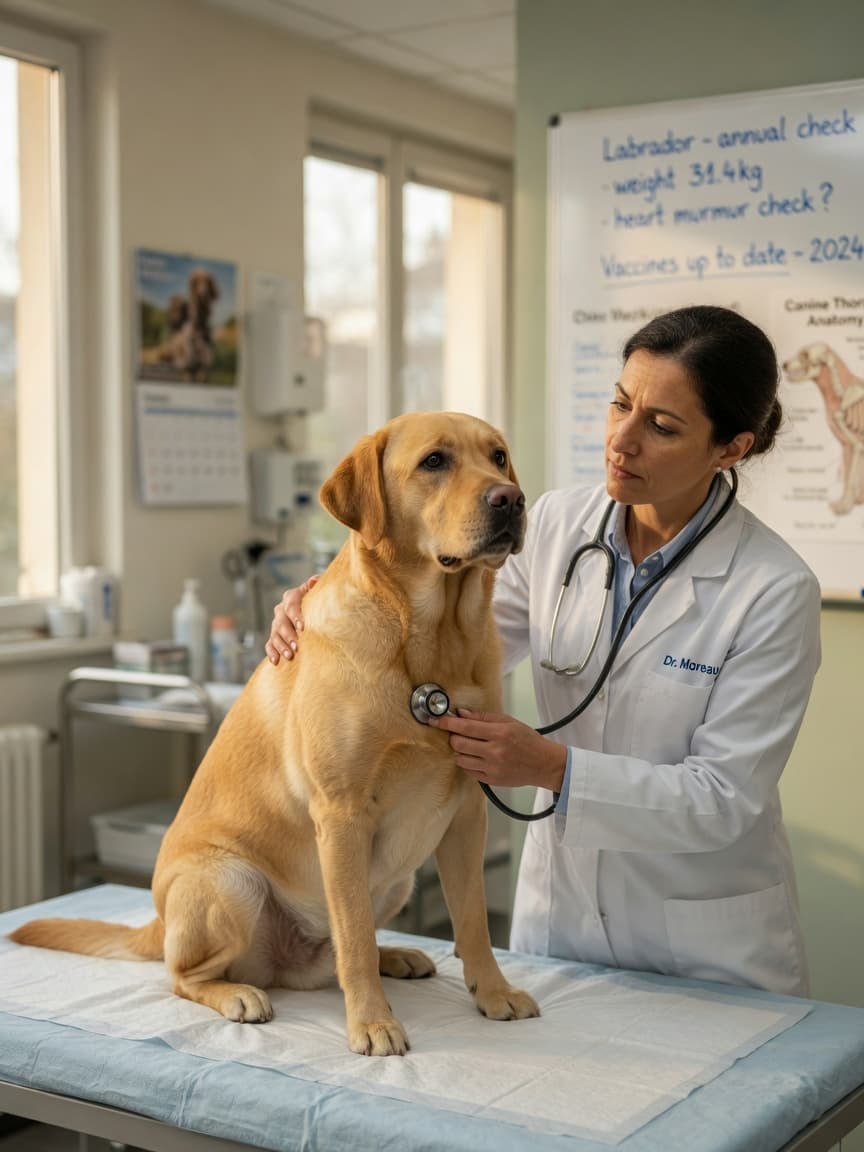
Labrador Retriever Health: A Complete Owner's Guide
The Labrador Retriever has held the top spot in UK breed registration statistics for decades, and for good reason. These dogs are famously good-natured, highly trainable, and adaptable to life as working dogs, assistance animals, or family pets. Labradors are generally considered a healthy breed with a reasonable lifespan of ten to twelve years. However, like all pedigree breeds, they are predisposed to a number of specific inherited health conditions — and some of these, such as hip dysplasia and exercise-induced collapse, are common enough to be a genuine concern for most owners. Knowing what to look for and what screening tests responsible breeders should perform will help you make an informed decision and manage your dog's health proactively.
Hip and Elbow Dysplasia

Hip dysplasia is one of the most prevalent orthopaedic conditions in Labradors. It occurs when the ball and socket of the hip joint do not fit together correctly, leading to abnormal wear, inflammation, and eventually osteoarthritis. Affected dogs may show signs ranging from subtle stiffness after rest in mild cases to severe lameness and reluctance to exercise in more severely affected individuals. The British Veterinary Association (BVA) runs a mandatory hip scoring scheme for Kennel Club registered Labrador breeders under the Breed Watch programme. Each hip is scored from 0 (best) to 53, giving a maximum combined score of 106. The breed median score for Labradors is approximately 10 to 12, and conscientious breeders aim to use only dogs that score below this figure.
Elbow dysplasia encompasses a group of developmental abnormalities of the elbow joint, including fragmented coronoid process, osteochondrosis dissecans, and ununited anconeal process. It is similarly common in Labradors and is graded 0 to 3 under the BVA scheme. Both conditions can cause significant pain and reduce quality of life, but early diagnosis and appropriate management — including weight control, physiotherapy, and in some cases surgery — can make a meaningful difference.
Exercise-Induced Collapse (EIC)
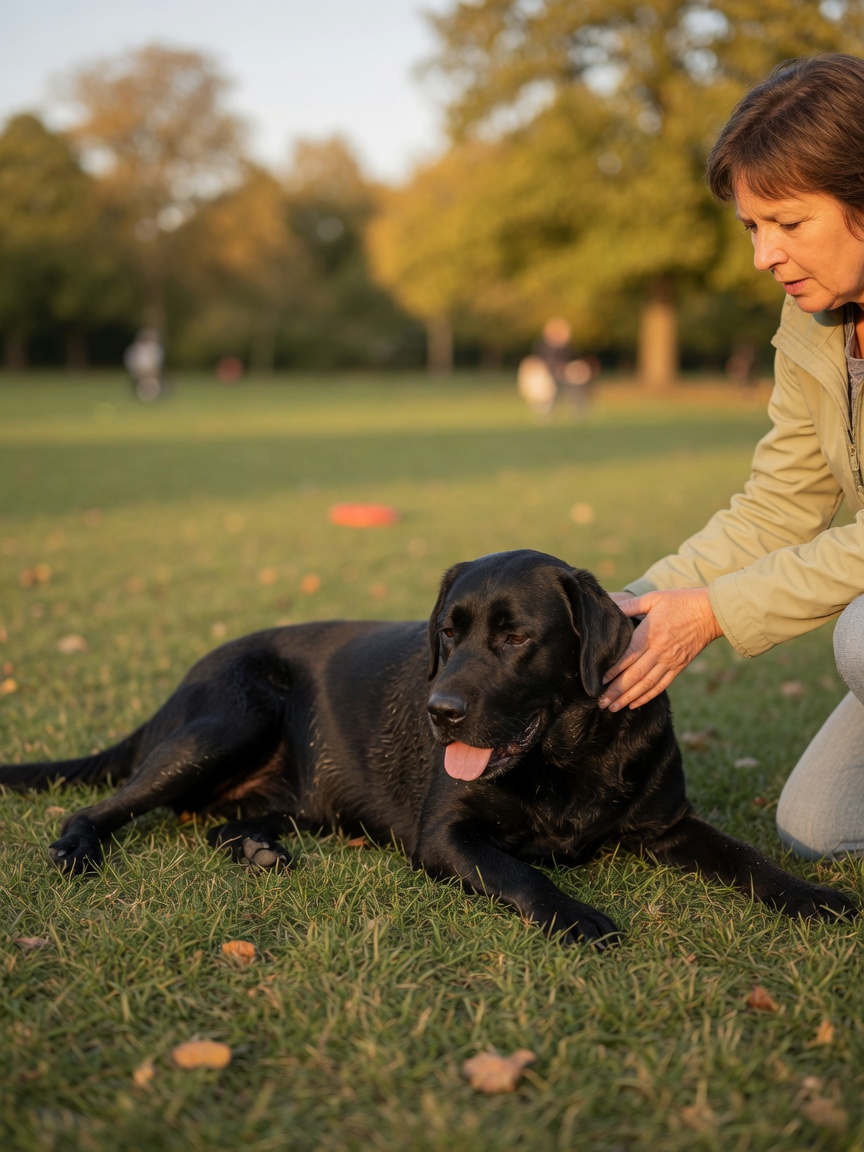
Exercise-induced collapse is a condition caused by a mutation in the dynamin 1 (DNM1) gene that was first described in Labrador Retrievers. Affected dogs appear normal at rest and during moderate exercise, but intense or prolonged exertion triggers a loss of muscle coordination, weakness, and eventual collapse. Typically the hindlimbs are affected first, with the dog appearing to swing them outward or stagger. Most dogs recover fully with rest within five to twenty minutes, though in rare cases collapse can be fatal. EIC is an autosomal recessive condition, meaning a dog must inherit two copies of the mutant gene to be affected. A DNA test is available and widely used in breeding programmes. Dogs that are homozygous affected (ee genotype) should not be used for strenuous working activity and need exercise managed carefully. Carriers (Ee) are clinically normal. Breeders should test all working dogs and avoid producing affected offspring by testing before mating.
Progressive Retinal Atrophy (PRA)
Progressive retinal atrophy causes the gradual degeneration of photoreceptor cells in the retina, leading initially to loss of night vision and eventually to complete blindness. In Labradors, the most clinically significant form is prcd-PRA (progressive rod-cone degeneration), for which a highly reliable DNA test is available. The condition is autosomal recessive: carriers are unaffected but can pass the mutation to their offspring. When two carrier dogs are mated, there is a 25 per cent chance each puppy will be affected. Responsible breeders test breeding animals and pair dogs such that no affected puppies are produced. Early signs of PRA include hesitancy in dim lighting, bumping into objects in the dark, and dilated pupils. There is no treatment, but the condition is painless and affected dogs adapt remarkably well to their home environment.
Centronuclear Myopathy (CNM)
Centronuclear myopathy is a rare but serious muscle disease caused by a mutation in the PTPLA gene. Affected Labradors develop progressive muscle weakness beginning in puppyhood, typically between two and five months of age. Signs include a bunny-hopping gait, an abnormal head carriage, exercise intolerance, and difficulty eating or swallowing. The condition is autosomal recessive and does not progress in the same way as some other myopathies — affected dogs can survive with management, though their exercise capacity is permanently limited. A DNA test is available, and responsible breeders should test before mating to avoid producing affected offspring. The condition is uncommon in the UK but not negligible given the size of the Labrador population.
Obesity and the MC4R Gene Mutation
Labradors are famously food-motivated, and many owners struggle to keep them at a healthy weight. The scientific basis for this has been at least partly explained by research from the University of Cambridge, which identified a mutation in the melanocortin 4 receptor (MC4R) gene that is present in approximately 25 per cent of Labradors. Dogs carrying this mutation have altered signalling in the part of the brain that regulates satiety — in essence, they genuinely feel less full after eating than dogs without the mutation. This is not a training or willpower issue: it is a physiological difference that makes weight management more difficult.
Obesity in Labradors exacerbates joint problems, increases the risk of diabetes mellitus, puts additional strain on the cardiovascular system, and has been linked to a shortened lifespan. Owners of Labradors should measure food portions carefully, avoid excessive treats, provide appropriate daily exercise, and weigh their dog regularly. If weight is difficult to control despite a sensible diet, discuss the possibility of the MC4R mutation with your vet — commercial DNA tests are available.
Hereditary Nasal Parakeratosis (HNPK)
Hereditary nasal parakeratosis is a skin condition specific to Labrador Retrievers in which the surface of the nose produces an excess of abnormal keratin, resulting in a dry, rough, crusted nasal planum. The condition typically becomes apparent between six and twelve months of age and is lifelong. Affected dogs are not in significant pain, but the nose is more vulnerable to cracking and secondary bacterial infection. Management involves regular application of emollient creams to soften and remove excess keratin. A DNA test is available, and the condition is autosomal recessive. Breeders should test before mating to avoid producing affected puppies.
Myopathy
Beyond centronuclear myopathy, Labradors can occasionally be affected by other forms of muscle disease, including exercise-induced myopathy and inflammatory myopathy. Signs of muscle disease generally include weakness, abnormal gait, muscle wasting, elevated muscle enzymes on blood testing, and in some cases pain. Diagnosis typically involves blood tests, electromyography, and muscle biopsy. Any Labrador showing unexplained weakness or an abnormal gait should receive a full neurological and orthopaedic evaluation.
Buying a Labrador: What Health Tests to Request
When purchasing a Labrador puppy, ask the breeder for the following as a minimum: BVA hip and elbow scores for both parents, DNA test results for prcd-PRA, EIC, CNM, and HNPK. A breeder who cannot provide this documentation should be treated with caution. Registered breeders under the Kennel Club's Assured Breeder Scheme are required to meet health testing standards, providing additional reassurance. The Labrador Retriever Club also provides guidance on responsible breeding practices.
Written by Sarah Bennett for ForPetsHealthcare.com