
Keeping Your Dog Cool in Summer — Complete Guide
Every summer, thousands of dogs across the UK and Europe suffer from heatstroke, and many do not survive. The tragedy is that it is almost entirely preventable. Understanding how dogs handle heat — and how quickly they can deteriorate — is the most important thing you can do as a dog owner during the warmer months.
How Dogs Cool Down (and Why It Fails)
Unlike humans, dogs do not sweat through their skin to any significant degree. Their primary cooling mechanism is panting — they breathe rapidly to evaporate moisture from the tongue and respiratory tract. In moderate temperatures, this works reasonably well. In extreme heat, high humidity, or any situation that restricts breathing, it fails quickly. A dog's normal body temperature sits between 38°C and 39°C. A rectal temperature above 41°C constitutes a heatstroke emergency. At 43°C, organ damage and death can occur within minutes.
Which Dogs Are Most at Risk
All dogs are vulnerable to heat, but some are in serious danger at temperatures that barely register for healthier individuals:
- Brachycephalic breeds: Bulldogs, Pugs, French Bulldogs, Boxers, Shih Tzus, and Cavalier King Charles Spaniels have shortened airways that make panting far less efficient. These dogs are at extreme risk in any warm weather and require careful management year-round.
- Elderly dogs and puppies: Both have less efficient thermoregulation than adult dogs in their prime.
- Overweight dogs: Excess body fat insulates against heat dissipation and puts additional strain on the cardiovascular system.
- Double-coated breeds: Huskies, Malamutes, and similar breeds may cope better in cold weather, but are not immune to heatstroke and should never be assumed to be comfortable in summer heat.
- Dogs with heart or respiratory conditions: Any pre-existing condition that affects breathing or circulation increases the risk significantly.
Prevention: Daily Habits in Summer
Walk at the Right Times
In the UK, avoid walking your dog between 11am and 3pm during heatwaves. In Spain and Portugal, where summer temperatures regularly reach 35°C to 40°C, this extends to avoiding outdoor exercise from around 10am to 6pm during the hottest months. Early morning and late evening walks — when pavements and air temperatures have cooled — are the right approach. A dog that misses its lunchtime walk will be perfectly fine. A dog that collapses from heat exhaustion at midday will not.
The Hot Pavement Test
Tarmac and paving stones absorb and retain heat far more than grass. The test is straightforward: press the back of your hand flat on the pavement and hold it there for five seconds. If you cannot keep it there comfortably, the surface is hot enough to burn your dog's paw pads. Paw burns are painful, slow to heal, and entirely avoidable by simply choosing grass routes or adjusting your walk times.
Never Leave Your Dog in a Car
This bears repeating every year because dogs continue to die in hot cars every summer. On a 22°C day, a car interior reaches 47°C within an hour. On a 30°C day, it takes under 20 minutes to become dangerous. Cracking the windows open reduces the temperature by almost nothing. There is no such thing as "just a few minutes" — leave your dog at home, or have someone stay with them in the car with the engine and air conditioning running.
Cooling at Home
Indoors, keep curtains or blinds closed on south-facing windows during the hottest part of the day to reduce heat build-up. Ensure your dog has access to a cool, well-ventilated room. Options that genuinely help include:
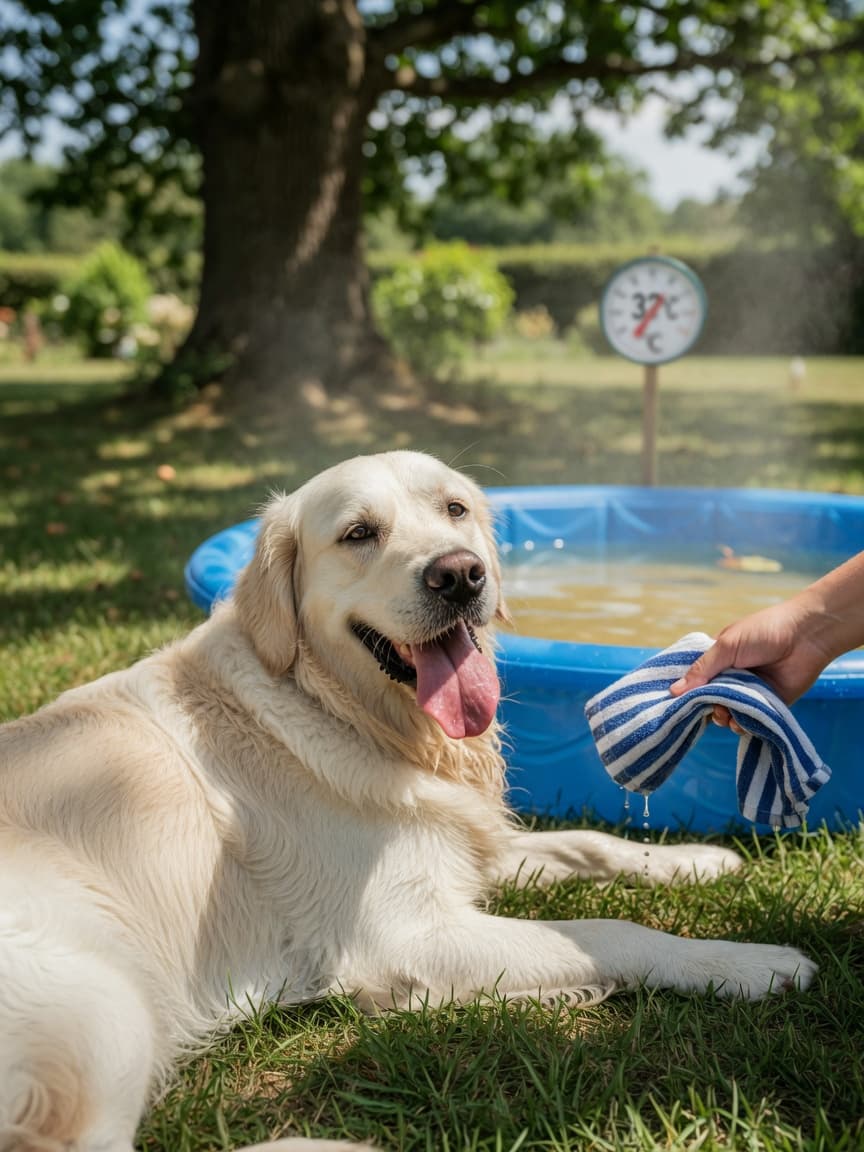
- Paddling pools: A shallow paddling pool in the shade gives dogs the option to cool their paws and belly on their own terms.
- Cooling mats: These use pressure-activated gel or water to stay cool without refrigeration. Most dogs will use them readily.
- Frozen treats: Plain, unsweetened yoghurt frozen in a kong or ice cube tray, frozen watermelon pieces (remove the seeds and rind), or low-sodium chicken broth ice cubes are all safe and effective at keeping dogs interested and cool.
- Wet towels: A damp towel for your dog to lie on is simple and effective.
Recognising Heatstroke
Know these signs and act immediately if you see them:
- Heavy, frantic panting that does not settle with rest
- Excessive drooling, often thicker than normal
- Bright red or very pale gums
- Vomiting or diarrhoea
- Glazed eyes, confusion, or stumbling
- Collapse or loss of consciousness
Heatstroke First Aid
If you suspect heatstroke, act immediately — do not wait to see if it passes. Move your dog to shade or an air-conditioned space. Apply cool (not ice cold) water to the paws, groin, neck, and armpits — areas where blood vessels run close to the surface. Avoid ice or ice water, as this causes peripheral vasoconstriction (the blood vessels near the skin narrow), which actually traps heat in the body core. Fan your dog to encourage evaporation. Offer small sips of cool water if they are conscious and can swallow. Get to a vet immediately — heatstroke is a veterinary emergency and even a dog that appears to be recovering can suffer delayed organ failure.
The EU Summer Context
Iberian summers have become increasingly extreme. Major Spanish and Portuguese cities regularly record temperatures above 40°C in July and August, and urban heat islands — where concrete and tarmac absorb and radiate heat throughout the night — mean that temperatures do not drop significantly even after sunset. Dogs living in or visiting Barcelona, Madrid, Seville, or Lisbon during summer need very careful management. Even breeds that would cope reasonably at 25°C are at risk in sustained urban heat above 35°C. If you are relocating to or visiting southern Europe with your dog, take the heat seriously from the first day.
With some simple adjustments to routine and environment, your dog can enjoy summer safely. Time your walks well, keep cool options available, know the warning signs, and never underestimate how quickly the heat can overwhelm a dog.