
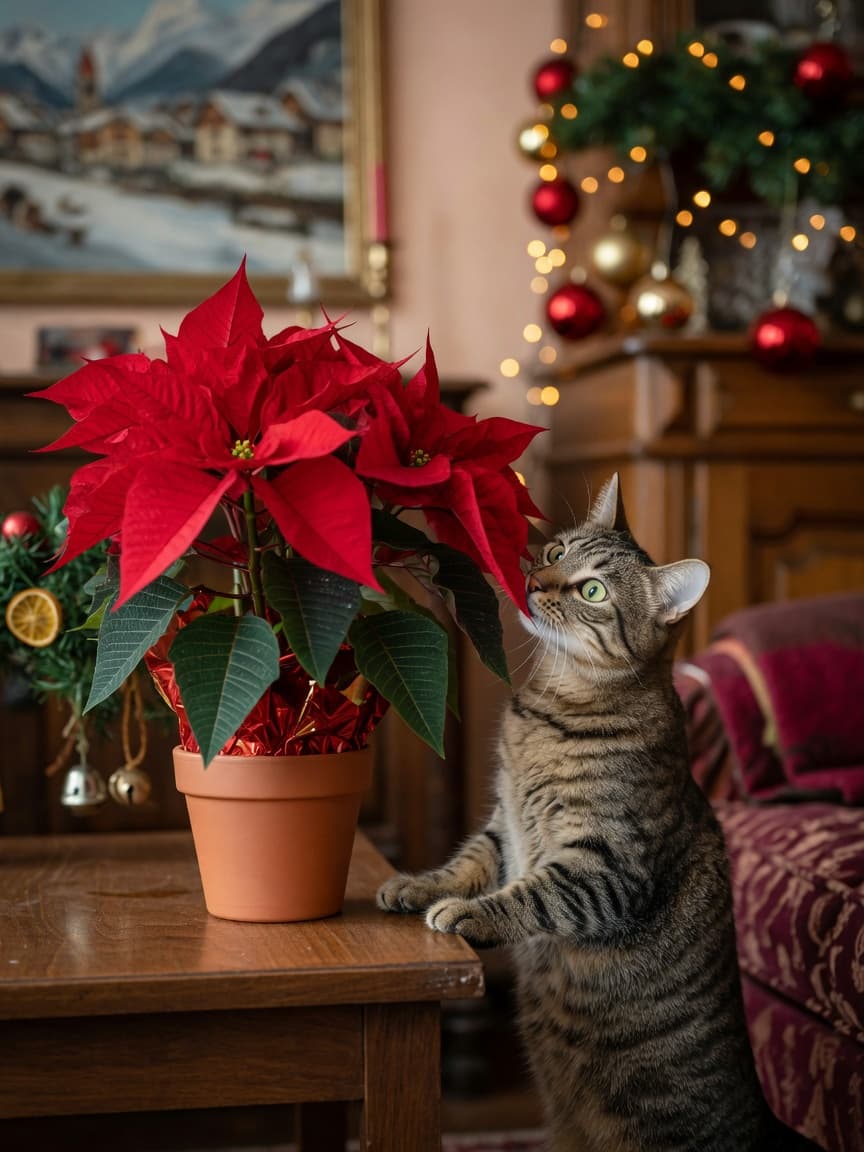
As the festive season approaches and homes across Europe fill with festive décor, poinsettias have become a popular choice for adding colour and cheer to our living spaces. However, if you share your home with a feline companion, you may have heard concerns about whether these striking plants pose a risk to your cat. The good news? Poinsettias are far less dangerous than many pet owners believe, but there are still important precautions worth understanding to keep your cat safe and healthy throughout the holidays.
The Truth About Poinsettia Toxicity
Poinsettias (Euphorbia pulcherrima) have long been labelled as toxic to cats, largely due to their classification within the Euphorbia family, which contains some genuinely harmful plants. However, veterinary research has consistently shown that poinsettias are only mildly toxic to cats at worst. In fact, the American Society for the Prevention of Cruelty to Animals (ASPCA) and most veterinary organisations classify them as having low toxicity levels.
The coloured parts of the poinsettia that we admire—the red, pink, or white "petals"—aren't actually flowers at all, but modified leaves called bracts. These bracts contain minimal toxic compounds. The true flowers are the small yellow structures in the centre, which are the most problematic parts of the plant.
Symptoms of Poinsettia Ingestion in Cats
If your cat does consume part of a poinsettia, the likelihood of serious illness is low. However, some cats may experience mild gastrointestinal upset. Watch for the following symptoms:
- Mild vomiting or diarrhoea
- Drooling or excessive salivation
- Loss of appetite
- Lethargy or reduced activity
- Irritation around the mouth or paws
These symptoms are typically mild and resolve without treatment within 24 hours. Severe poisoning requiring veterinary intervention is extremely rare with poinsettia exposure alone.
Why Cats Investigate Poinsettias
Understanding why your cat might be interested in your poinsettia can help you prevent problems. Cats are naturally curious creatures, and houseplants often appeal to them because of:
- The texture of the leaves, which mimic grass
- The movement of leaves in air currents
- The interesting odour or taste
- Boredom or lack of environmental enrichment
Rather than assuming the plant will harm your cat, it's better to focus on making your poinsettia less attractive and providing appropriate alternatives.
Practical Safety Measures for the Festive Season
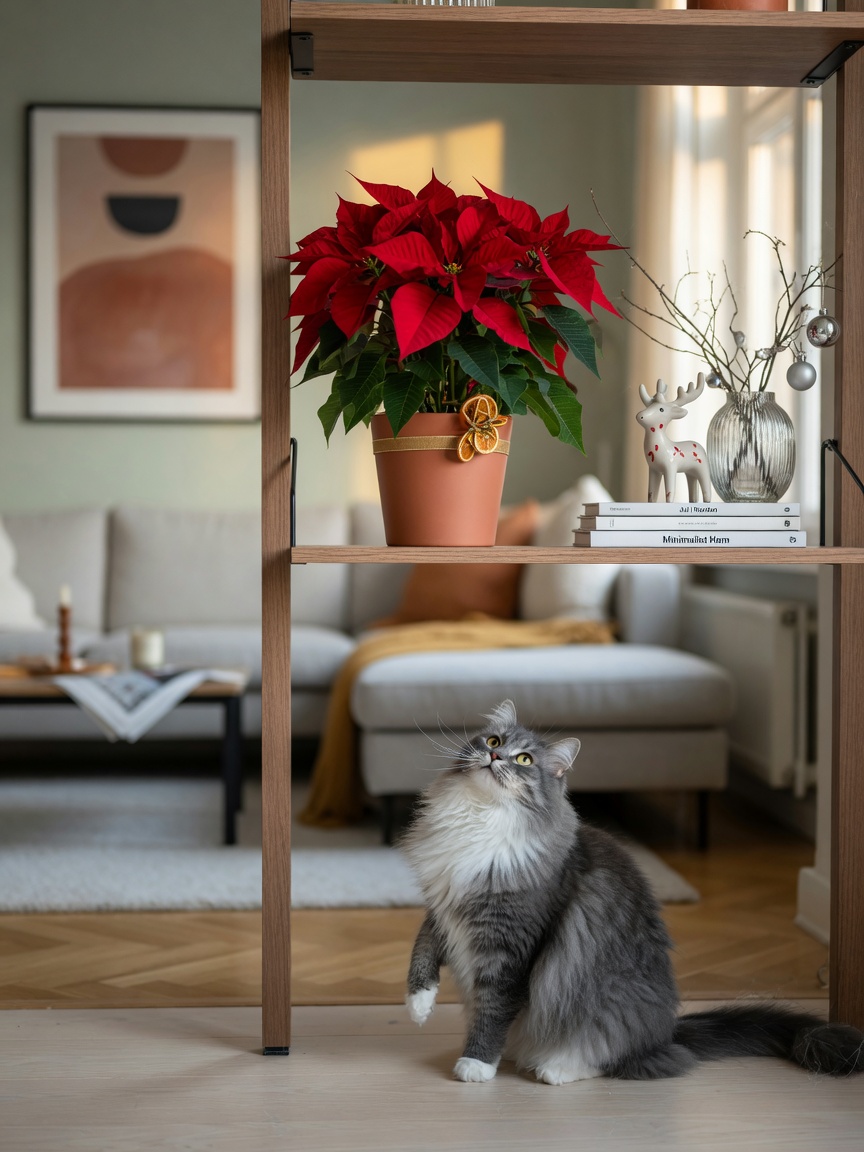
To keep your cat safe and your festive décor intact, consider these straightforward precautions:
- Position strategically: Place poinsettias on high shelves or in rooms where your cat spends less time
- Create barriers: Use decorative plant stands or shelving units that are difficult for your cat to access
- Provide alternatives: Offer cat-safe plants like cat grass or spider plants to satisfy your cat's natural grazing instinct
- Increase enrichment: Ensure your cat has plenty of toys, climbing structures, and interactive play to reduce boredom
- Supervise closely: During festive gatherings, keep a closer eye on your cat's activities
- Wash your hands: After handling poinsettias, wash your hands before petting your cat to avoid transferring sap
When to Contact Your Veterinarian
If your cat ingests a significant portion of a poinsettia—particularly the sap or flowers—or shows concerning symptoms lasting more than a few hours, contact your veterinarian. While unlikely to be serious, professional guidance provides peace of mind and ensures your cat receives appropriate care if needed.
Key Takeaways
Poinsettias present minimal risk to cats and needn't be avoided entirely during the festive season. Focus instead on sensible placement, environmental enrichment, and supervision. By taking these practical steps, you can enjoy the beauty of poinsettias whilst maintaining a safe and happy home for your feline friend throughout the holidays and beyond.