
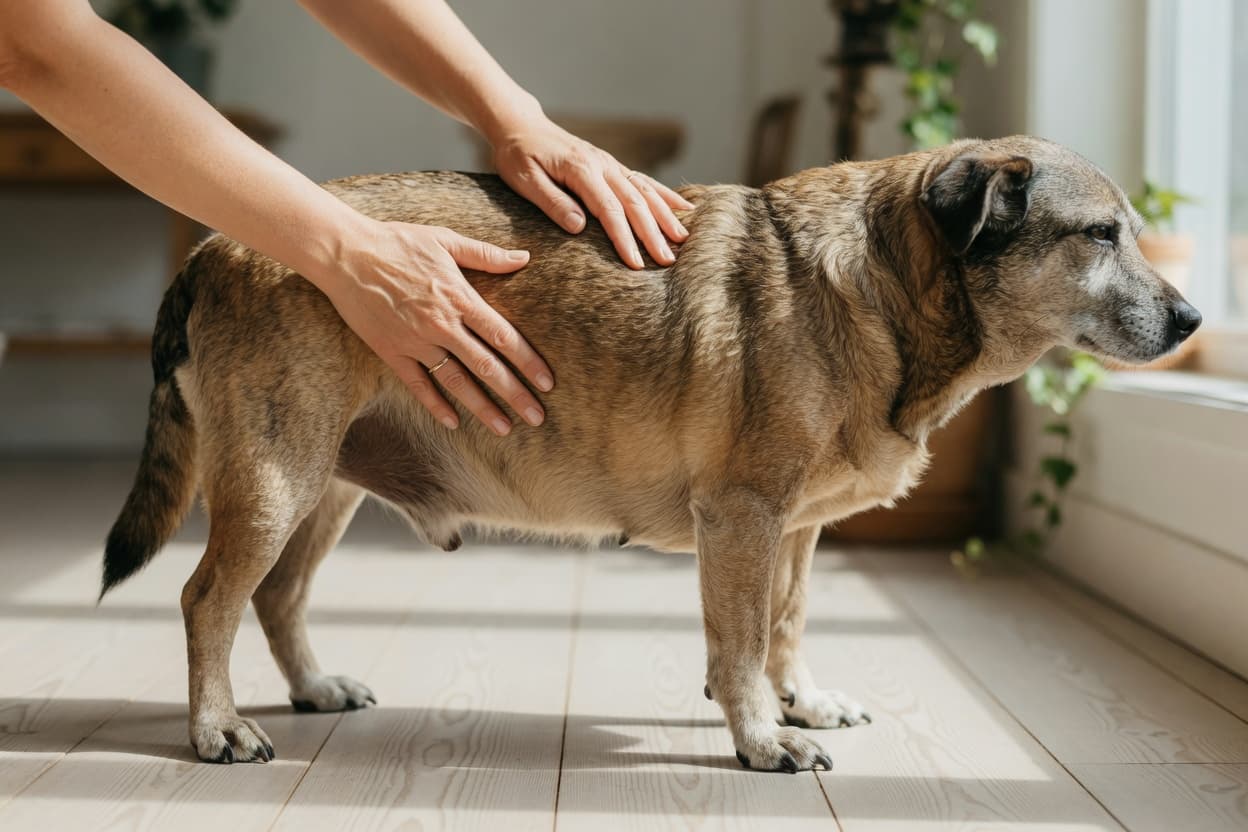
More Than Half of UK Dogs Are Carrying Extra Weight
According to the PDSA Animal Wellbeing Report, over half of dogs in the UK are overweight or obese. Yet most owners describe their dog's weight as "about right." That gap between perception and reality has real consequences — excess weight in dogs is directly linked to joint disease, diabetes, heart conditions, and shortened lifespan. The good news is that you do not need a vet visit to get a first read on whether your dog has a problem. A simple hands-on assessment called Body Condition Scoring can be done at home in under two minutes.
What Is Body Condition Scoring?
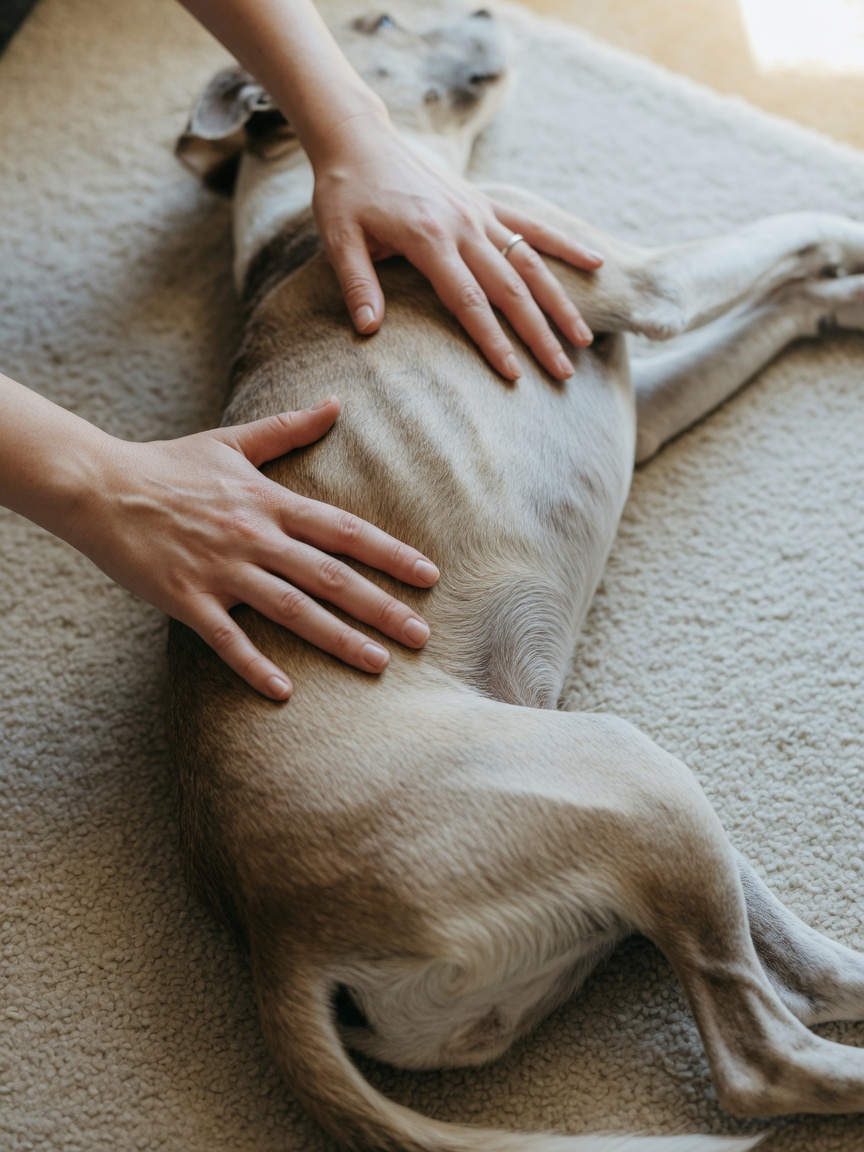
Body Condition Scoring, or BCS, is a standardised method used by vets and animal nutritionists to assess a dog's fat coverage relative to their frame. The most widely used system runs from 1 to 9, where 1 is severely emaciated, 5 is ideal, and 9 is grossly obese. Unlike weight alone, BCS accounts for the fact that a healthy Greyhound and a healthy Labrador of the same weight look completely different.
The Three-Point Home Assessment
You will need your hands, good lighting, and about ninety seconds. Work through these three areas:
- Ribs: Place both thumbs along your dog's spine and spread your fingers across the ribcage. You should be able to feel each rib distinctly with light pressure, as you would feel the back of your hand. If you need to press firmly to find them, your dog is likely overweight. If they jut out without touching, underweight is a concern.
- Waist: Look down at your dog from above. There should be a visible narrowing behind the ribcage, forming an hourglass shape. A dog that is rectangular or oval-shaped from above is carrying excess weight.
- Abdomen: View your dog from the side. The belly should tuck upward from the bottom of the ribcage toward the hind legs. A belly that hangs level or sags downward indicates excess fat.
Matching Your Findings to the BCS Scale
- BCS 4–5: Ribs easily felt, visible waist, abdominal tuck present. This is the target range.
- BCS 6–7: Ribs felt only with firm pressure, waist barely visible, tuck reduced or absent. Mildly to moderately overweight.
- BCS 8–9: Ribs not palpable, no waist, abdomen rounded or pendulous. Obese — veterinary guidance is strongly recommended.
Breed and Age Considerations
Sighthounds such as Whippets and Greyhounds naturally sit at the lower end of BCS and showing visible ribs on these breeds is not a red flag. Conversely, heavily muscled breeds like Staffordshire Bull Terriers may feel firm without being fat, so visual assessment alone is less reliable. Senior dogs often redistribute fat while losing muscle, which can make them appear lean while still carrying excess adipose tissue. If your dog is older than seven, the tactile rib check carries more weight than the visual profile.
Why Weight Matters Beyond Aesthetics
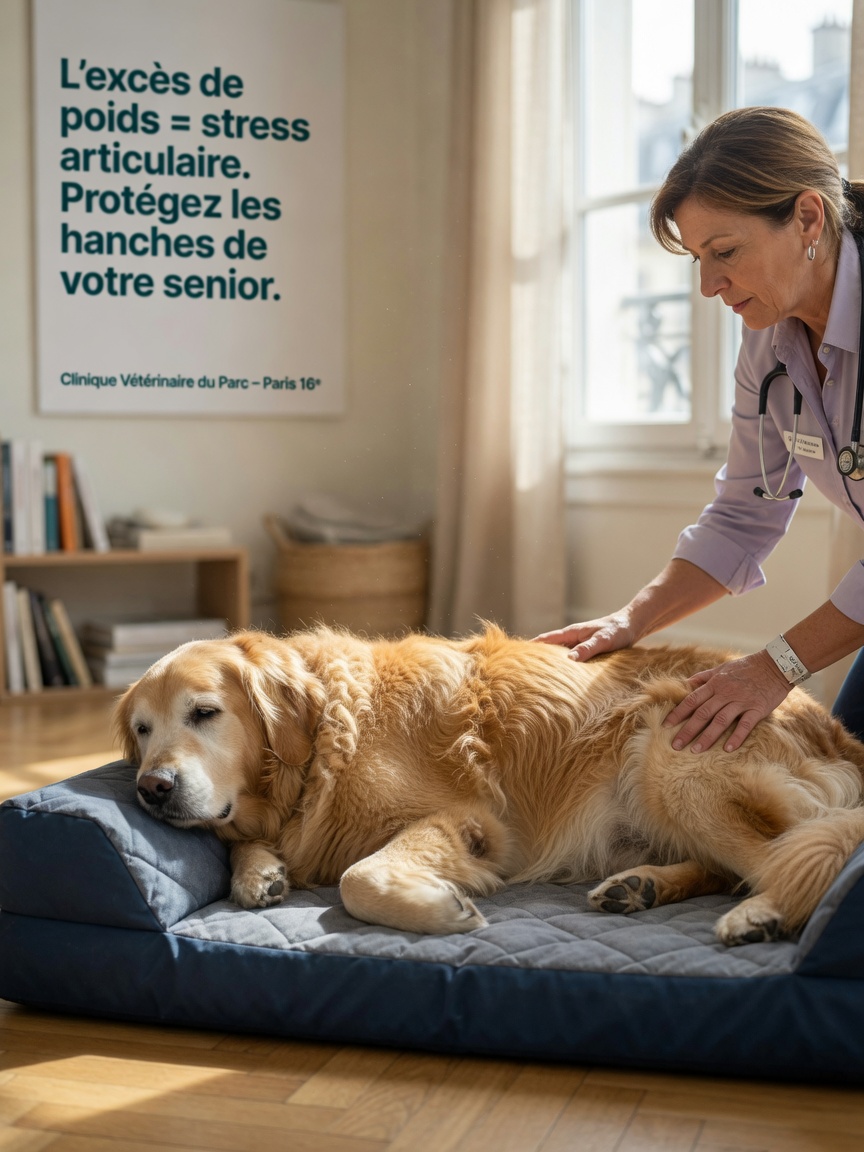
Excess body fat is biologically active tissue. It releases inflammatory compounds that accelerate joint degeneration, impair insulin signalling, and put additional load on the heart and respiratory system. Studies published in veterinary journals have consistently shown that lean dogs live an average of 1.8 years longer than their overweight counterparts. For a medium-sized dog with a twelve-year life expectancy, that is roughly 15 percent more time. Orthopaedic conditions such as hip dysplasia and cruciate ligament disease are both more likely to occur and more severe in dogs carrying extra weight.
Common Reasons Dogs Gain Weight
- Overfeeding dry kibble: Feeding guidelines on packaging are often generous estimates calibrated for active, intact dogs. Neutered or sedentary dogs frequently need 20–30 percent less than the label suggests.
- Treat accumulation: A single dental chew for a small dog can represent 10 percent of their daily calorie allowance. Multiple family members giving treats independently is one of the most underestimated contributors to weight gain.
- Reduced activity: Dogs adapt their appetite poorly to reduced exercise. A dog that was previously walked ninety minutes per day and is now getting thirty will not automatically eat less.
- Medical causes: Hypothyroidism and hyperadrenocorticism (Cushing's disease) both cause weight gain and are more common than many owners realise, particularly in middle-aged and older dogs.
What to Do If Your Dog Scores Above 5
Start by recording your dog's current weight on your bathroom scales — pick up your dog, weigh yourself holding them, then subtract your own weight. Do this monthly. Next, calculate exactly how much food your dog is receiving across all sources: meals, treats, scraps, and food used in training. This single step often reveals the problem immediately.
If your dog scores 6 or 7, a controlled reduction in daily calories combined with consistent exercise is usually sufficient to restore healthy condition over several months. If your dog scores 8 or 9, or if weight has increased rapidly without an obvious dietary explanation, book an appointment with your vet before beginning any weight management programme. Rapid or unexplained weight gain should always be investigated for an underlying medical cause before assuming it is purely dietary.
Key Takeaways
- Use the three-point BCS check — ribs, waist from above, abdominal tuck from the side — monthly.
- Target a BCS of 4 to 5, where ribs are easily felt and a waist is clearly visible.
- Account for breed differences: sighthounds and muscular breeds do not conform to typical visual benchmarks.
- Audit total calorie intake including all treats before making dietary changes.
- Consult a vet if your dog scores 8 or above, or if weight gain has been unexplained or rapid.