
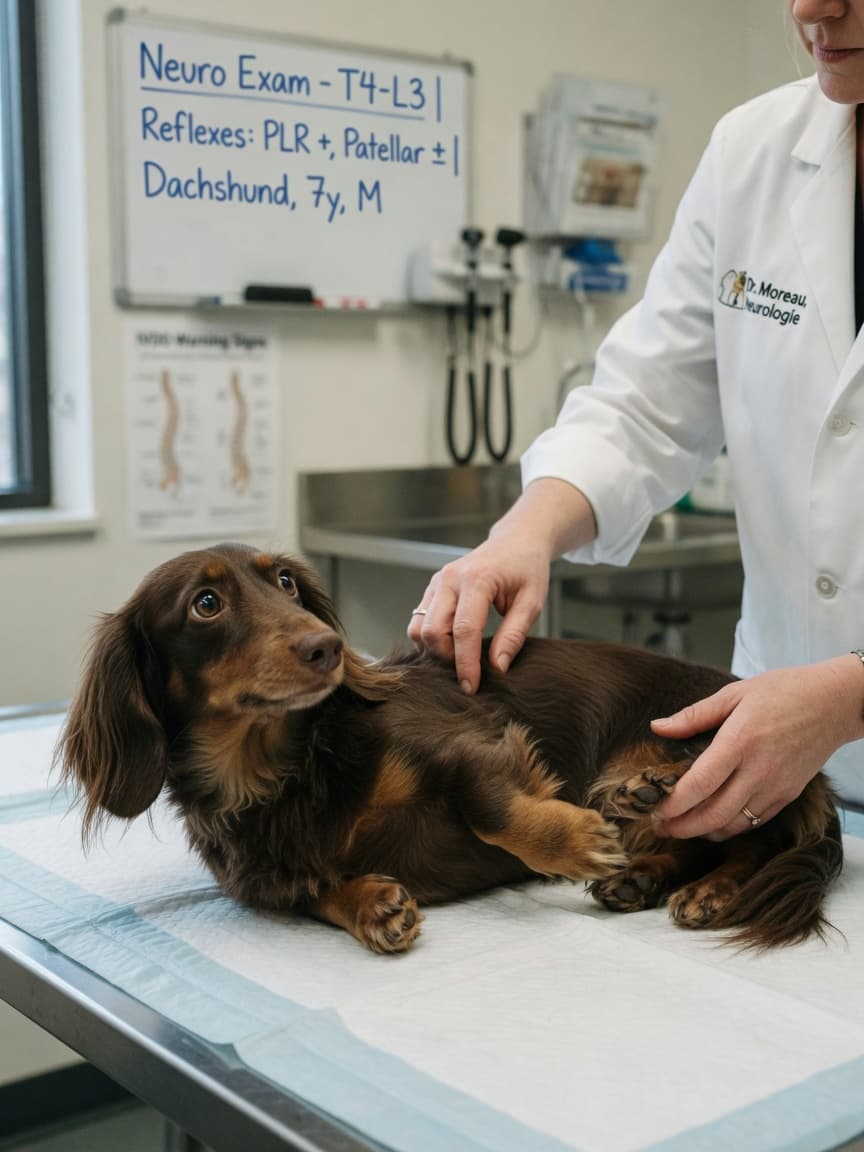
When a Dog's Back Gives Out: Understanding IVDD
Intervertebral disc disease is the most common neurological condition seen in dogs, and for owners of Dachshunds, French Bulldogs, Beagles, Shih Tzus, and Cocker Spaniels, it represents a genuine and significant health risk. Studies suggest that up to one quarter of Dachshunds will experience a clinically significant IVDD episode in their lifetime. The condition can range from mild back pain to sudden, complete paralysis — and the decisions made in the hours after an acute episode can determine whether a dog walks again.
How Intervertebral Discs Fail
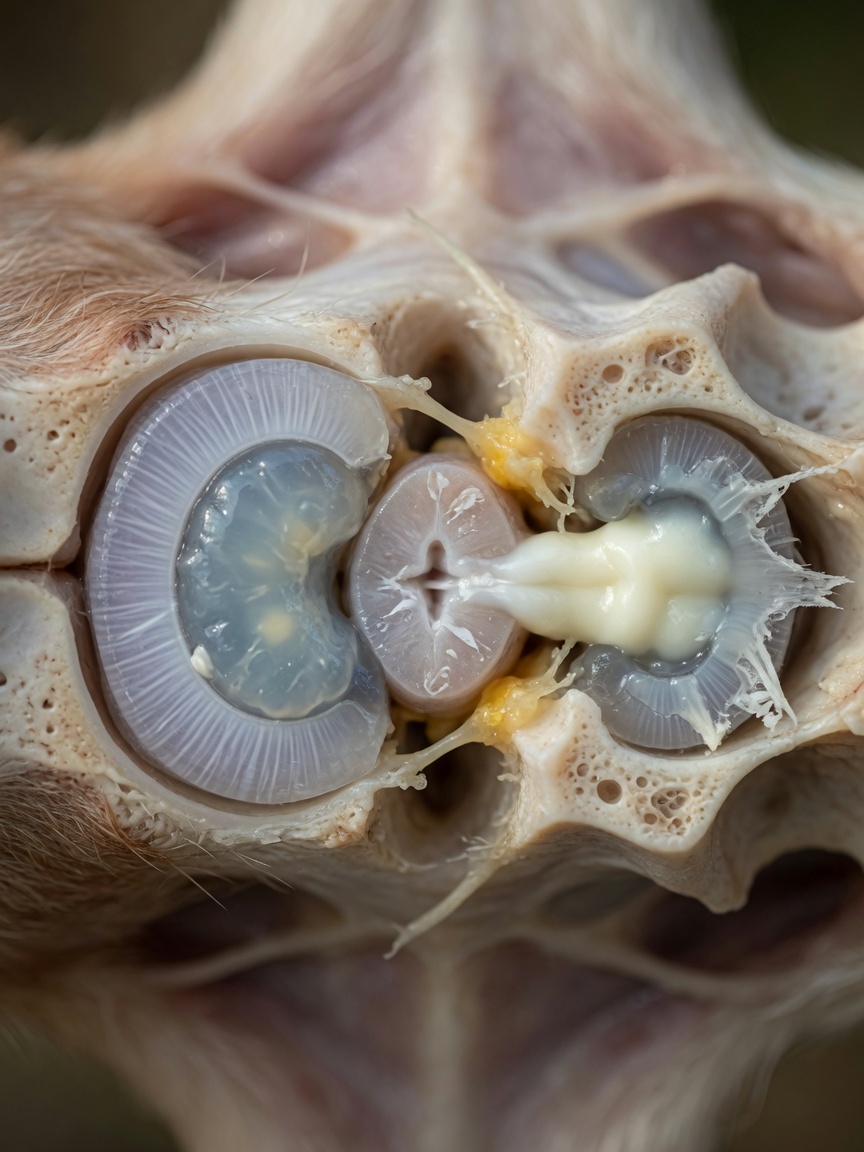
Between each pair of vertebrae in the spine sits an intervertebral disc, a structure composed of a tough outer ring — the annulus fibrosus — surrounding a gel-like centre called the nucleus pulposus. These discs act as shock absorbers and allow spinal flexibility. When a disc degenerates or ruptures, it can compress the spinal cord or the nerve roots that branch from it, causing pain, neurological deficit, or both.
There are two primary disease types. Type one IVDD, seen predominantly in chondrodystrophic breeds with characteristically shortened legs and altered cartilage development, involves mineralisation and subsequent explosive extrusion of disc material into the spinal canal. This tends to cause sudden, often dramatic neurological signs. Type two IVDD, more common in large non-chondrodystrophic breeds such as German Shepherds and Labradors, involves gradual protrusion of the disc without mineralisation, causing a slower onset of signs more typical of middle-aged to older dogs.
Recognising the Signs
Early and mild presentations
Not all IVDD episodes are dramatic. Early signs can include reluctance to jump on furniture, a hunched posture, unwillingness to climb stairs, crying when picked up, and a subtle change in gait. Some dogs become quiet and withdrawn. These signs reflect spinal pain without significant neurological compromise and can be mistaken for generalised stiffness or muscular soreness.
Moderate to severe neurological signs
As compression worsens, neurological signs emerge. Ataxia — a wobbly, uncoordinated gait particularly in the hindlimbs — is often the first observable deficit. This may progress to weakness, knuckling of the paws, and difficulty rising. In severe cases, the dog loses the ability to support weight on the hindlimbs, then loses voluntary limb movement, and ultimately may lose deep pain perception — the ability to feel a strong pinch to the toe. Loss of deep pain perception is the most serious neurological sign and demands immediate veterinary attention.
Cervical IVDD, affecting the neck, presents somewhat differently — severe neck pain, muscle spasms, and reluctance to move the head, sometimes with forelimb involvement or a broad-based stance.
Assessment and the Importance of Timing
Neurological assessment in IVDD uses a grading system from one to five: grade one reflects pain without neurological deficit; grades two and three represent ambulatory and non-ambulatory weakness respectively; grade four describes paralysis with intact deep pain; grade five is paralysis with loss of deep pain perception. This grading strongly influences both treatment decisions and prognosis discussion.
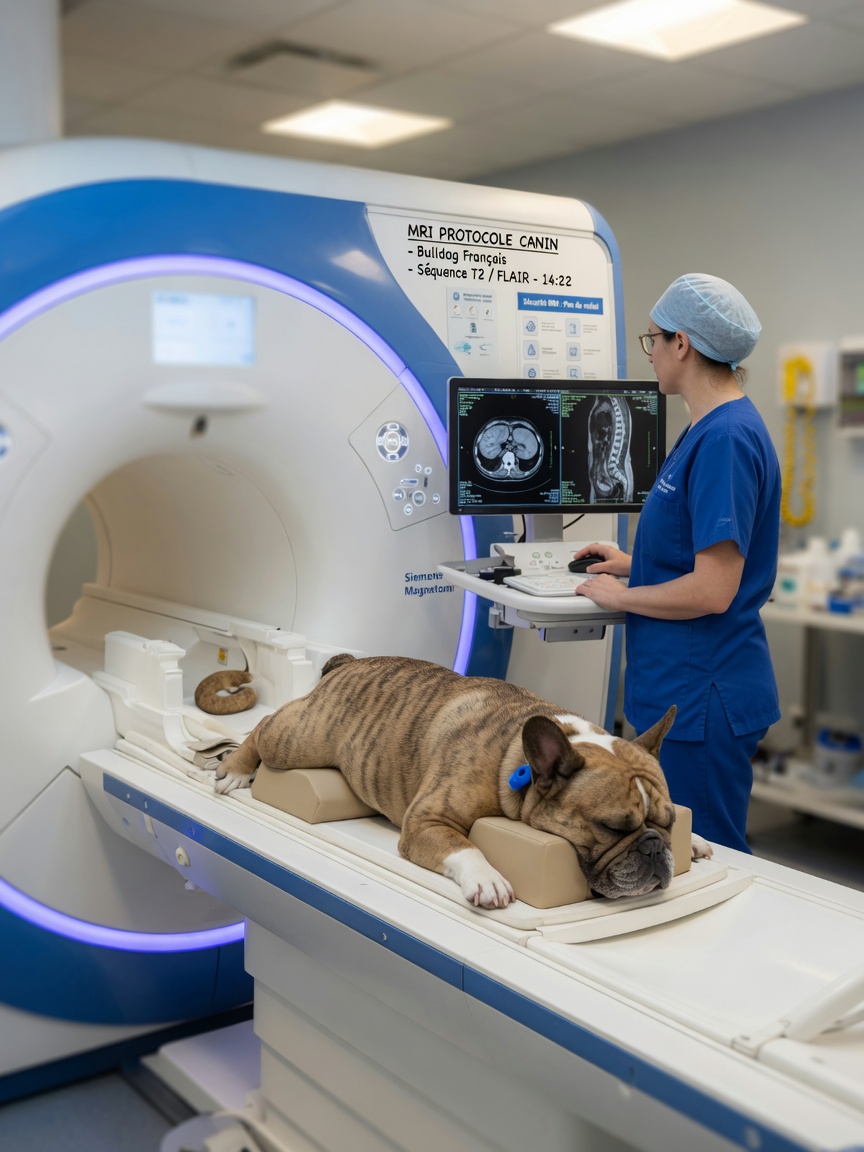
MRI has become the gold-standard imaging modality for IVDD, providing precise localisation of disc herniation, assessment of spinal cord compression severity, and identification of any concurrent lesions. CT myelography remains a viable alternative in centres without MRI access. Accurate imaging is essential before any surgical decision — treating the wrong spinal level is a preventable error with serious consequences.
Conservative Versus Surgical Management
When conservative management is appropriate
Dogs with grade one or two IVDD — pain with minimal or no neurological deficit — may be managed conservatively with strict rest, analgesia, and anti-inflammatory medication under veterinary supervision. Strict rest means genuine confinement: a crate or pen, no stairs, no jumping, no free running, for a minimum of four to six weeks. This is not a suggestion but a structural requirement for disc healing.
Conservative management has reasonable success rates in mild cases, but recurrence rates are significant — studies report recurrence in twenty to forty percent of conservatively managed chondrodystrophic dogs. Recurrent episodes are also more likely to be severe. Some specialist neurologists now advocate earlier surgical intervention even in mild cases for breeds known to carry high recurrence risk.
When surgery is necessary
Dogs with grade three to five IVDD are generally considered surgical candidates. The principle of surgery is decompression — removing extruded disc material from the spinal canal to relieve pressure on the cord. The specific approach, most commonly hemilaminectomy for thoracolumbar disease or ventral slot for cervical disease, depends on lesion location identified by imaging.
Timing matters profoundly. Dogs with intact deep pain that undergo surgery within twenty-four to forty-eight hours of becoming non-ambulatory have significantly better outcomes than those in whom surgery is delayed. Dogs with loss of deep pain perception should be considered surgical emergencies. Recovery rates of ninety percent or above are achievable in dogs with intact deep pain treated promptly; recovery rates fall substantially once deep pain is absent, particularly if decompression is delayed beyond twenty-four to forty-eight hours of loss.
Rehabilitation After IVDD
Post-surgical rehabilitation is a critical component of recovery that is often underestimated by owners. Passive physiotherapy, hydrotherapy, and structured neurological rehabilitation exercises support spinal cord recovery and muscle rebuilding. A qualified canine rehabilitation therapist can design a protocol appropriate to the individual dog's grade and rate of recovery. Bladder management — manual expression or catheterisation — may be required in dogs that have lost voluntary urination control, and owners should be prepared to learn this skill.
Key Points for Every IVDD Owner
- Any sudden back or neck pain in a chondrodystrophic breed warrants same-day veterinary assessment
- Loss of ability to walk in the hindlimbs is a neurological emergency — contact a veterinary neurologist or emergency practice immediately
- Do not administer human pain medication — many are toxic to dogs
- Commit fully to crate rest if conservative management is chosen; premature activity causes relapses
- Ask about MRI before any surgical decision is made
- Begin structured rehabilitation as soon as the veterinary team recommends it
- Discuss long-term prevention strategies for at-risk breeds, including ramp use, harness walking, and body weight management