
An Adrenal Condition That Often Goes Unrecognised
Hyperaldosteronism — also called Conn's syndrome — is a condition caused by excessive production of the hormone aldosterone by one or both adrenal glands. Though not as widely discussed as hyperthyroidism or diabetes, it is increasingly recognised as a clinically significant cause of high blood pressure and muscle weakness in older cats. With greater awareness and more accessible diagnostic tools, more cases are being identified that might previously have been attributed to other conditions.
Aldosterone is a mineralocorticoid hormone that regulates the balance of sodium and potassium in the body. Too much of it causes sodium and water retention while promoting potassium excretion. The consequences of this imbalance affect the cardiovascular system, the muscles, and the kidneys in ways that can be debilitating if left unaddressed.
What Causes It
The two main causes in cats are an adrenal adenoma — a benign tumour producing excess aldosterone — and adrenal carcinoma, which is malignant. A third possibility is bilateral adrenal hyperplasia, where both glands enlarge and overproduce without a discrete tumour. Differentiating between these causes matters because it influences both the treatment options and the prognosis.
Most affected cats are middle-aged to older, with a median age at diagnosis typically around thirteen years. There is no strongly established breed predisposition, though some studies have suggested Domestic Shorthairs are most frequently reported, which likely reflects their prevalence in the general population rather than a true breed risk.
Clinical Signs to Watch For
The presentation of hyperaldosteronism can be subtle initially, which is part of why it is frequently missed. The most characteristic signs are:
- Generalised muscle weakness, which can present as difficulty jumping, reluctance to move, or an unusual gait
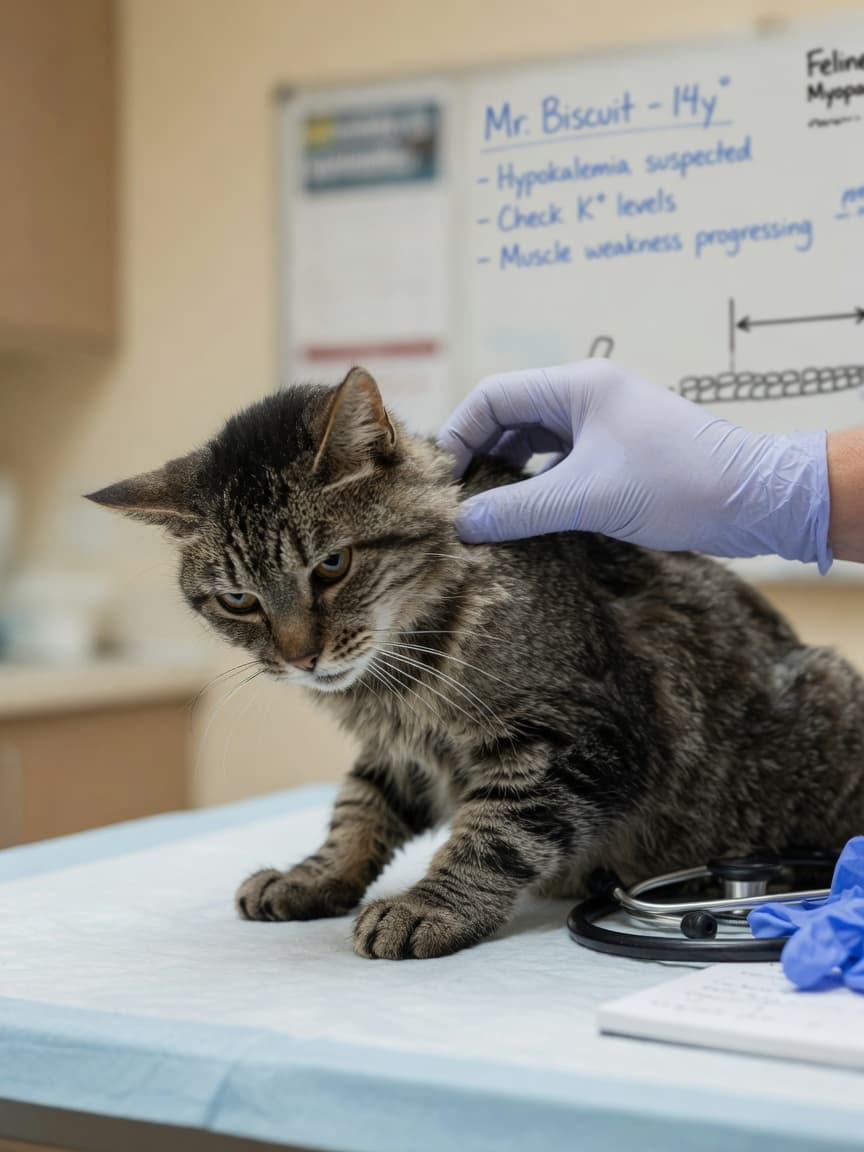
- Cervical ventroflexion — a distinctive drooping of the head and neck caused by profound neck muscle weakness
- Hypertension, which may manifest as sudden vision loss due to retinal haemorrhage or detachment
- Increased thirst and urination
- Lethargy and reduced activity
- Weight loss in some cases
Cervical ventroflexion in a cat is a striking and worrying sign that should always prompt urgent veterinary attention. It reflects severe hypokalaemia — dangerously low potassium levels — and the cat may be unable to lift its head at all in severe cases.
How the Diagnosis Is Made
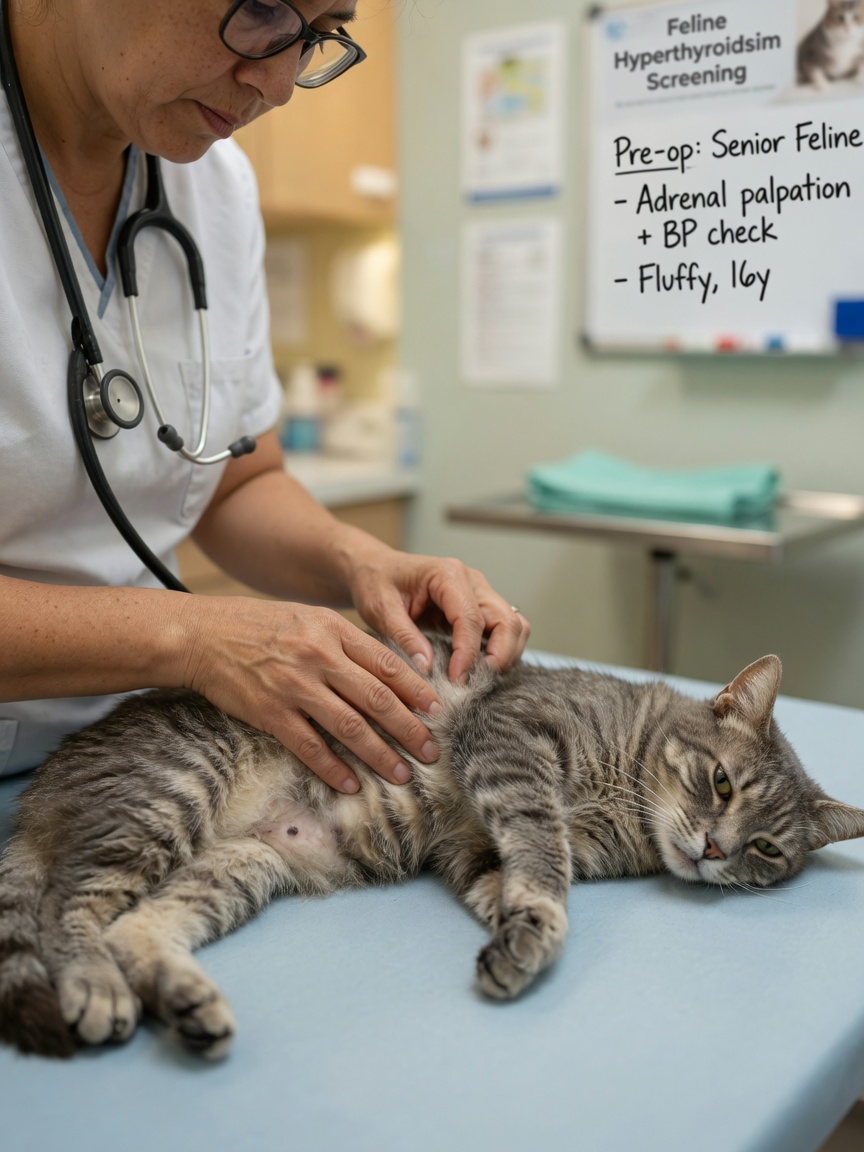
Diagnosis relies on a combination of laboratory findings and imaging. Blood tests typically reveal hypokalaemia, and some cats also show elevated creatine kinase due to muscle damage. Serum sodium may be at the high end of normal or mildly elevated. Blood pressure measurement, taken properly in a calm environment, often reveals significant hypertension.
Measuring plasma aldosterone concentration is an important diagnostic step. Elevated aldosterone alongside suppressed or low renin activity supports primary hyperaldosteronism, distinguishing it from secondary causes where aldosterone rises appropriately in response to another problem such as dehydration or heart disease.
Imaging of the adrenal glands — via abdominal ultrasound, CT scan, or MRI — helps identify whether one or both glands are affected and whether a discrete mass is visible. This is important for planning treatment. CT scanning provides better characterisation of adrenal masses and can help assess for vascular invasion if carcinoma is suspected.
The Link With Hypertension and Eye Damage
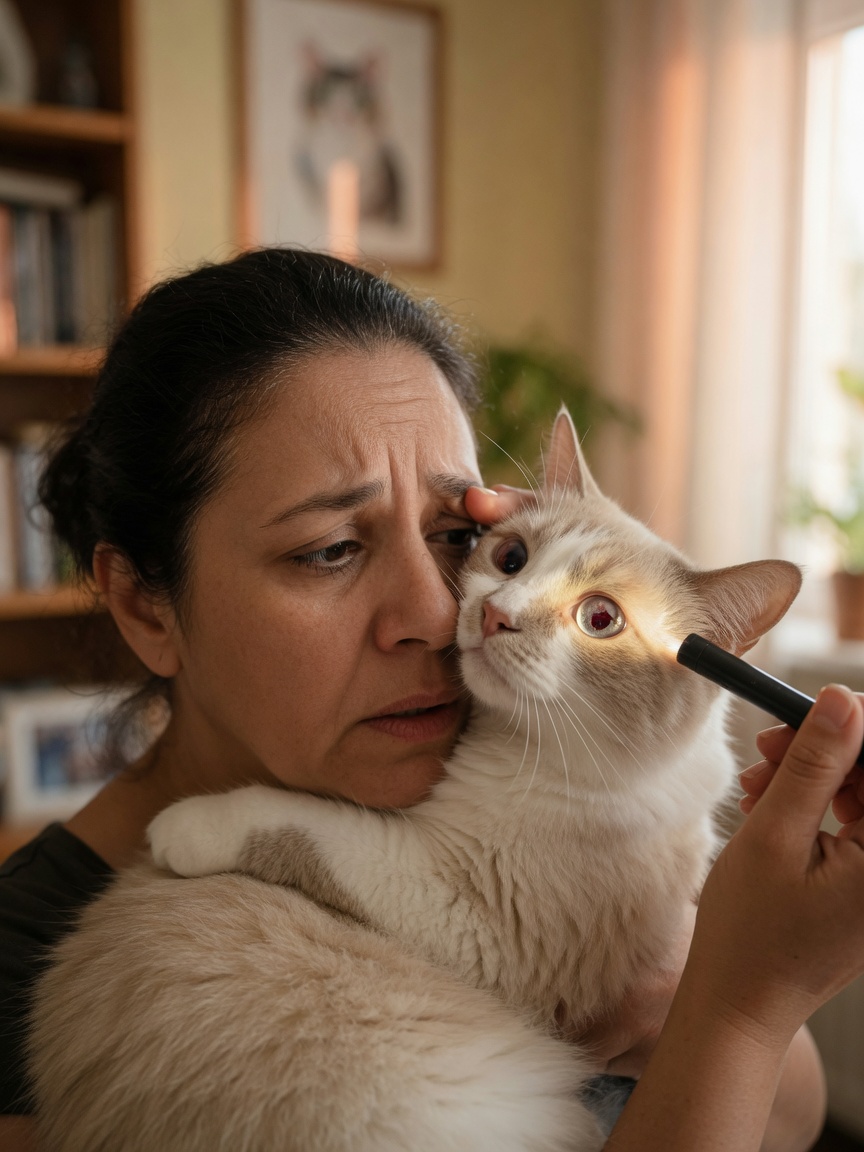
Hypertension in cats — systolic blood pressure consistently above 160 mmHg — is classified as a significant risk factor for target organ damage. The eyes are particularly vulnerable. High blood pressure can rupture retinal blood vessels, cause retinal haemorrhage, or result in complete retinal detachment, any of which can cause sudden, apparently painless blindness.
In a cat that presents with acute blindness, hypertension is one of the first conditions to rule out. Hyperaldosteronism is an important underlying cause of hypertension that is both diagnosable and treatable, meaning the blindness may be preventable with early identification. Partial vision recovery is possible after blood pressure is controlled, though complete or prolonged retinal detachment typically results in permanent vision loss.
Treatment Approaches
Surgical Adrenalectomy
For cats with a unilateral adrenal tumour, surgical removal is potentially curative. The surgery carries anaesthetic risks, particularly in older cats with concurrent hypertension and hypokalaemia, so stabilisation before the procedure — through potassium supplementation and blood pressure control — is essential. In cats where surgery is successful, aldosterone normalises, potassium levels recover, and blood pressure often improves markedly.
Medical Management
Cats who are poor surgical candidates, or those with bilateral disease, can be managed medically. Spironolactone is an aldosterone antagonist that blocks the effects of excess aldosterone at the receptor level, helping to restore potassium balance and lower blood pressure. Potassium supplementation — via oral supplementation or potassium-rich diets — is typically required alongside spironolactone, particularly in the initial stages when hypokalaemia may be severe.
Amlodipine, a calcium channel blocker, is the most commonly used antihypertensive agent in cats and is usually added to control blood pressure where spironolactone alone is insufficient. Regular blood pressure monitoring and electrolyte checking allow dose adjustments over time.
Ongoing Monitoring and Prognosis
Cats with hyperaldosteronism can do well with appropriate management, particularly those with a benign unilateral tumour that is surgically removed. Medically managed cats require consistent monitoring of potassium levels, blood pressure, and kidney function, as chronic hypertension and hypokalaemia both cause cumulative organ damage if not adequately controlled.
The prognosis is more guarded in cats with adrenal carcinoma, where the risk of metastasis is higher and surgical removal may be incomplete. Even in these cats, however, medical palliation can maintain reasonable quality of life for a meaningful period.
Because this condition mimics or coexists with other diseases common in older cats — chronic kidney disease, hyperthyroidism, and primary hypertension — thorough investigation is important. A diagnosis of hyperaldosteronism should always be considered when blood pressure is elevated, potassium is low, and muscle weakness is present. These three findings together are a compelling clinical triad.