
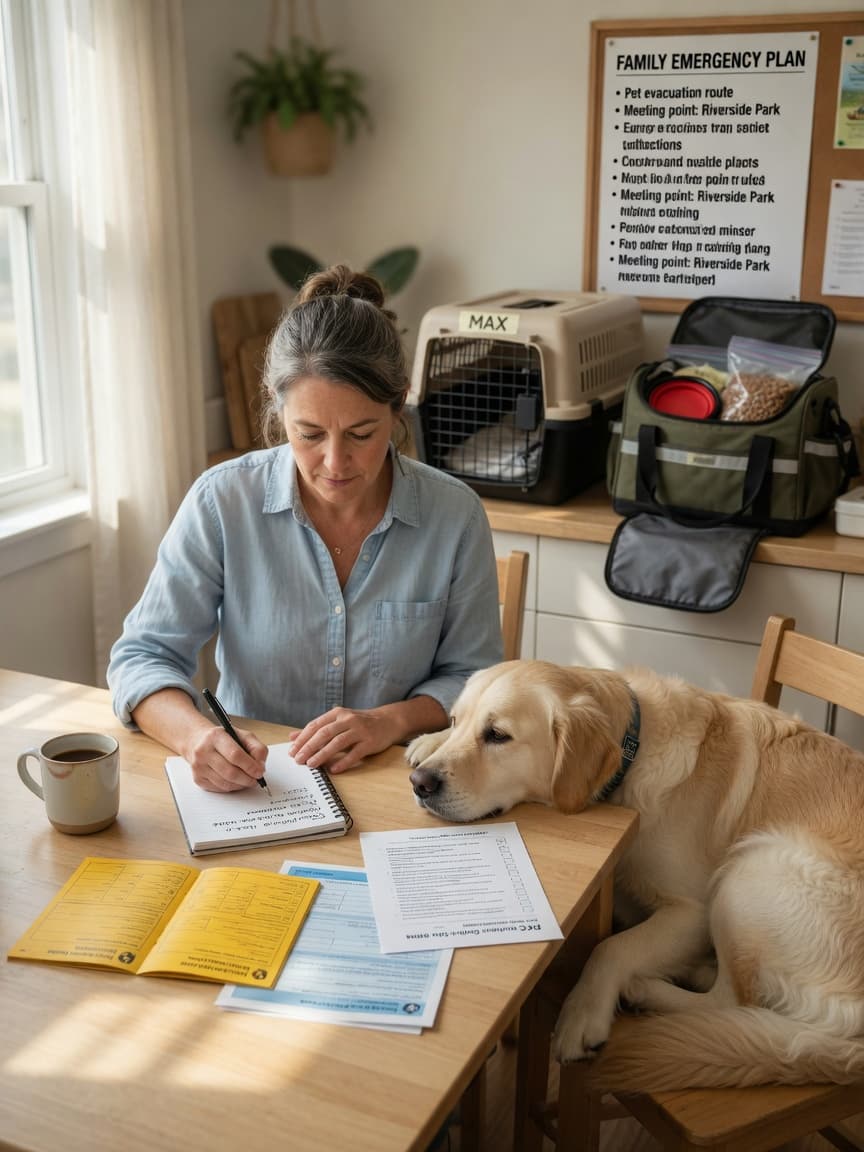
The Document Your Pet Needs and Most Owners Have Never Written
Most people with pets have never written down the information that would be needed to care for them in an emergency. It lives entirely in their heads — the feeding schedule, the medication dosages, the name of the vet, the specific phobias, the dietary quirks. In a situation where the owner is suddenly unavailable, whether through illness, accident, or natural disaster, the absence of this information creates real risk for the animal.
A pet care plan is not a complicated document. It takes most people under an hour to complete, and it could be the most important thing you do for your pet this year.
When Would a Pet Care Plan Be Used
There are two main scenarios to plan for. The first is a personal emergency — you are hospitalised, incapacitated, or unexpectedly away from home. The second is an environmental emergency — a flood, fire, gas leak, or other event that requires rapid evacuation. Both require different but overlapping information, and a thorough plan covers both.
Section One: Basic Identification and Medical Information
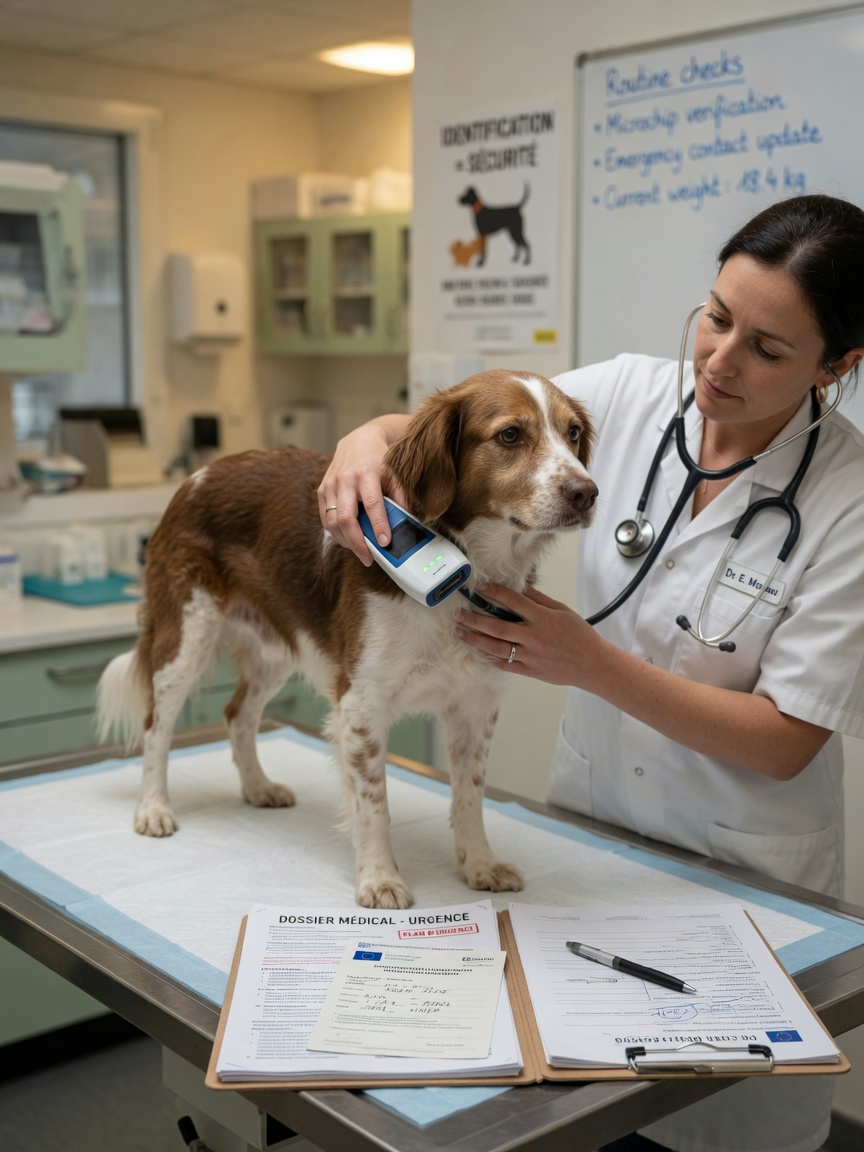
Begin the document with the fundamental information that any carer or emergency responder would need immediately:
- Pet's full name, species, breed, age, sex, and microchip number
- Current weight and any identifying markings or features
- Name and contact details of your regular veterinary practice
- Name and contact details of your nearest emergency veterinary service
- Your pet insurance provider, policy number, and claims contact number
- Any known allergies, including to medications
- Current medications, including dosage, frequency, and what the medication is for
- Any diagnosed health conditions
- Date of last vaccinations and what they covered
If you have more than one pet, create a separate section for each animal. In an emergency, a carer juggling multiple animals needs clarity, not cross-referencing.
Section Two: Daily Care Routine
This section should be detailed enough that someone with basic animal experience — but no knowledge of your specific pet — could step in and manage confidently:
- Feeding times, quantities, and exact food brand and type
- Whether the animal is fed wet food, dry food, raw, or a combination
- Any supplements added to meals
- Water bowl location and how often it is refreshed
- Toilet routine — how often and where the animal goes outside, or litter box maintenance schedule
- Exercise routine, including typical walk duration and preferred routes or parks
- Sleep location and any bedtime routine
- Any activities that are restricted due to health reasons
Section Three: Behavioural Profile
This is the section that many people forget and that carers value most. An animal's behaviour — their triggers, their quirks, their fears — is not obvious to a stranger, and mishandling it can result in stress for the animal or injury to the carer.
- Is the animal good with strangers, or do they need a slow introduction?
- Known fears or phobias (thunderstorms, fireworks, vacuum cleaners, specific types of people)
- Known triggers for aggression or anxiety
- How the animal signals that they are stressed or unwell
- Whether they are comfortable being handled by strangers for grooming, nail clipping, or medication
- Their relationship with other animals in the home, and how they behave with unknown dogs or cats
Section Four: Emergency Evacuation Protocol
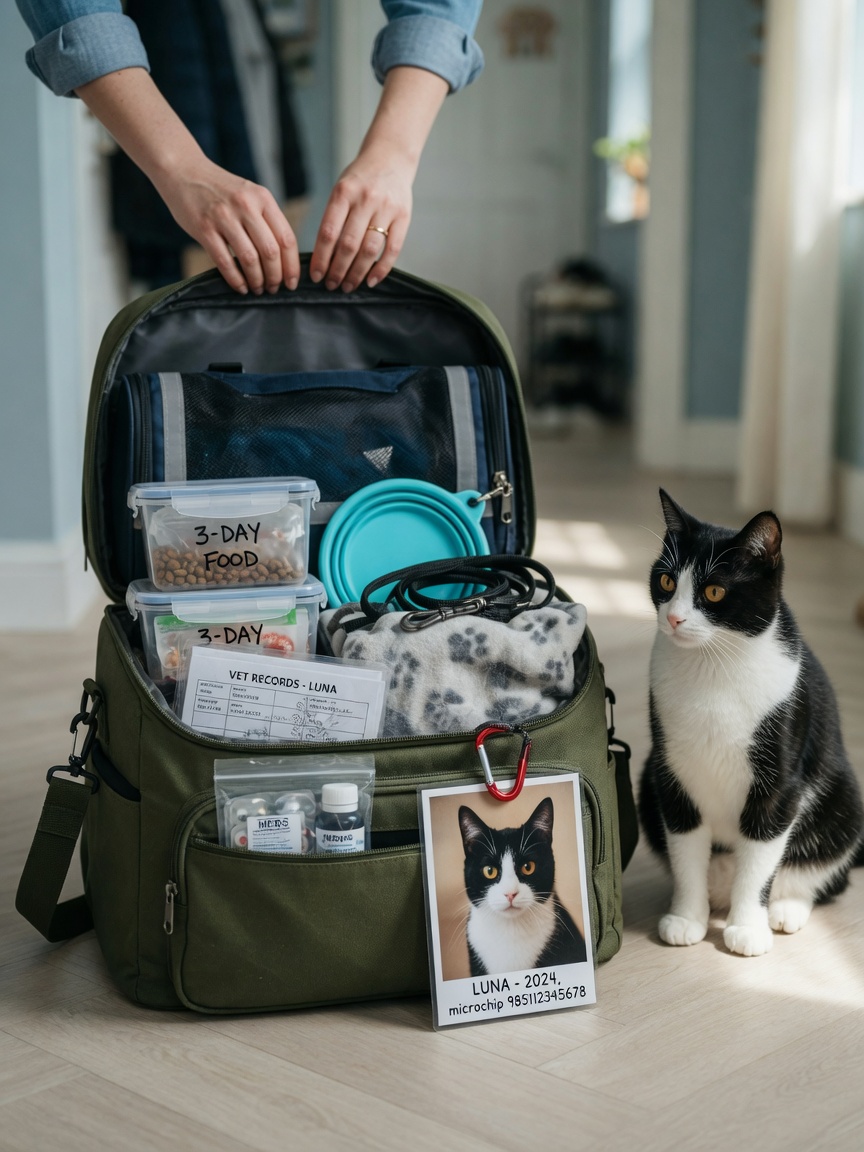
If you need to leave your home quickly, this section ensures your animal comes with you — and that anyone helping you knows exactly what to do.
The Go-Bag
Keep a pre-packed bag for your pet that contains: a three-day supply of food, a collapsible bowl, a copy of their vaccination records and microchip paperwork, any essential medications, a lead or carrier, a blanket with their scent, and a current photograph. The photograph is important — if your pet becomes separated from you in an emergency, a clear image is essential for any appeal or identification.
Evacuation Contacts
List at least two people who have agreed to take responsibility for your pet if you cannot. These individuals should have a key to your home, know where the go-bag is stored, and have a copy of the pet care plan themselves. Verbal agreements are not enough — make sure these people have reviewed the plan and confirmed they understand it.
Section Five: If the Owner Cannot Be Reached
Include a clear instruction for what should happen if you are completely unreachable. Name a primary and secondary contact. Specify whether the pet should be taken to a particular boarding facility, kept with a specific person, or what other arrangement you would want. If you have made financial provision for your pet's care in a legal document such as a will, note this here and provide the relevant contact details.
Keeping the Plan Current
A plan written once and never reviewed quickly becomes outdated. Set a reminder to review your pet care plan every six months, or immediately following any change in your pet's health, medication, or routine. Share updated versions with everyone who holds a copy.
Store one copy in a clearly labelled folder at home, email one to your emergency contacts, and keep a digital version — accessible from your phone — in cloud storage or a notes application. The plan is only useful if it can actually be found when it is needed.
The time this takes is genuinely small relative to what it protects. Your pet depends entirely on you — and on the systems you put in place for when you cannot be there yourself.